
Purpose
Domain Storytelling translates domain knowledge into a shared narrative of actors, objects, and workflows. It is especially useful when language, rules, and process understanding must be tightly connected.
Knowledge Modeling Mapping tool
Makes domain knowledge discussable through a concrete story of actors, work objects and activities.
Makes domain knowledge discussable through a concrete story of actors, work objects and activities.
How do actors work toward a business outcome, including exceptions?
The steps are a practical sequence; adapt them to the method’s purpose and available evidence.

Situation
Choose a bounded real business case with a beginning and outcome, not the entire process or target future.
Story
Let the domain expert narrate activities and number them in order without correcting the model prematurely.
Objects
Draw actors as doers and work objects as things worked on; connect each to the activity that uses or changes it.
Review
Replay the story, confirm meanings and label rules, variants and unresolved questions.
Revisit the model when evidence, context or outcomes change. Record what changed and why.
Use it when: Knowledge Transfer, Domain Discovery. The group can provide the evidence and authority the method requires.
Validated narrative with actors, activities, work objects and open business rules.
The artifact records scope, date, participants, source version, and owner, including changed assumptions and the reason for each revision.
Fictional worked example
Fictional, numbered story: (1) Patient asks for a follow-up. (2) Reception checks calendar. (3) Reception offers two slots. (4) Patient chooses one. (5) Reception confirms appointment. Work objects: calendar, slot, appointment. Domain question: when is the slot reserved as binding?
Describe a concrete domain case with start and outcome.
Fictional: patient books a follow-up.
Name participating people or systems.
Patient, reception.
Number activities and connect work objects.
Check calendar; offer two slots.
Record work objects with concrete domain meaning.
Calendar, slot, appointment.
Separate conditions, exceptions and unknown rules.
When is a slot reserved as binding?
The example text is fictional; replace it with sourced project information.
Choose a bounded real business case with a beginning and outcome, not the entire process or target future.
Domain Storytelling translates domain knowledge into a shared narrative of actors, objects, and workflows. It is especially useful when language, rules, and process understanding must be tightly connected.
First a concrete situation is chosen that everyone involved knows or can follow. Then actors, work objects, and steps are drawn as a story and checked with domain experts. Finally, terms and rules are extracted from the narrative for the model or implementation.
Domain Storytelling works because it ties domain knowledge to a concrete work scene, making terms, roles, and handoffs visible at the same time. The method shows its full strength when the story stays close to the real process and wording from the domain is adopted cleanly. Good use checks every episode against exceptions, media breaks, and responsibilities so the narrative can become a solid model for later decisions.
At the start, choose a real case that several participants know from their own experience, and set the story's boundary clearly. The critical point comes when abstract umbrella terms appear; that is when it pays to ask immediately for concrete actions and objects. Close with marked terms, open rule points, and a short decision on what gets carried into the model.
The method guide walks execution through 4 phases, timing, 4 pitfalls, and clear stop criteria.
Open method guideYour perspective
Your feedback helps shape the next improvements to methodatlas.
Prepare the decision, source evidence and next review.
To be confirmed
To be confirmed
Run the method Time: See catalog planning range; no universal duration.
Complete this worksheet on paper or in your own document during the work.
Describe a concrete domain case with start and outcome.
...
Name participating people or systems.
...
Number activities and connect work objects.
...
Record work objects with concrete domain meaning.
...
Separate conditions, exceptions and unknown rules.
...
This blank document contains only section prompts.
Quick-Start Guide · Domain Storytelling
Expected artifact: Story scope
Story scope
Entry:
...
Expected artifact: Numbered domain story
Numbered domain story
Entry:
...
Expected artifact: Pictographic model with legend
Pictographic model with legend
Entry:
...
Expected artifact: Validated story and question list
Validated story and question list
Entry:
...
...
Method guide: https://methodatlas.meierhoff-systems.de/en/methods/domain-storytelling/run-sheet
Fitting alternatives with decision guidance, followed by other related methods.
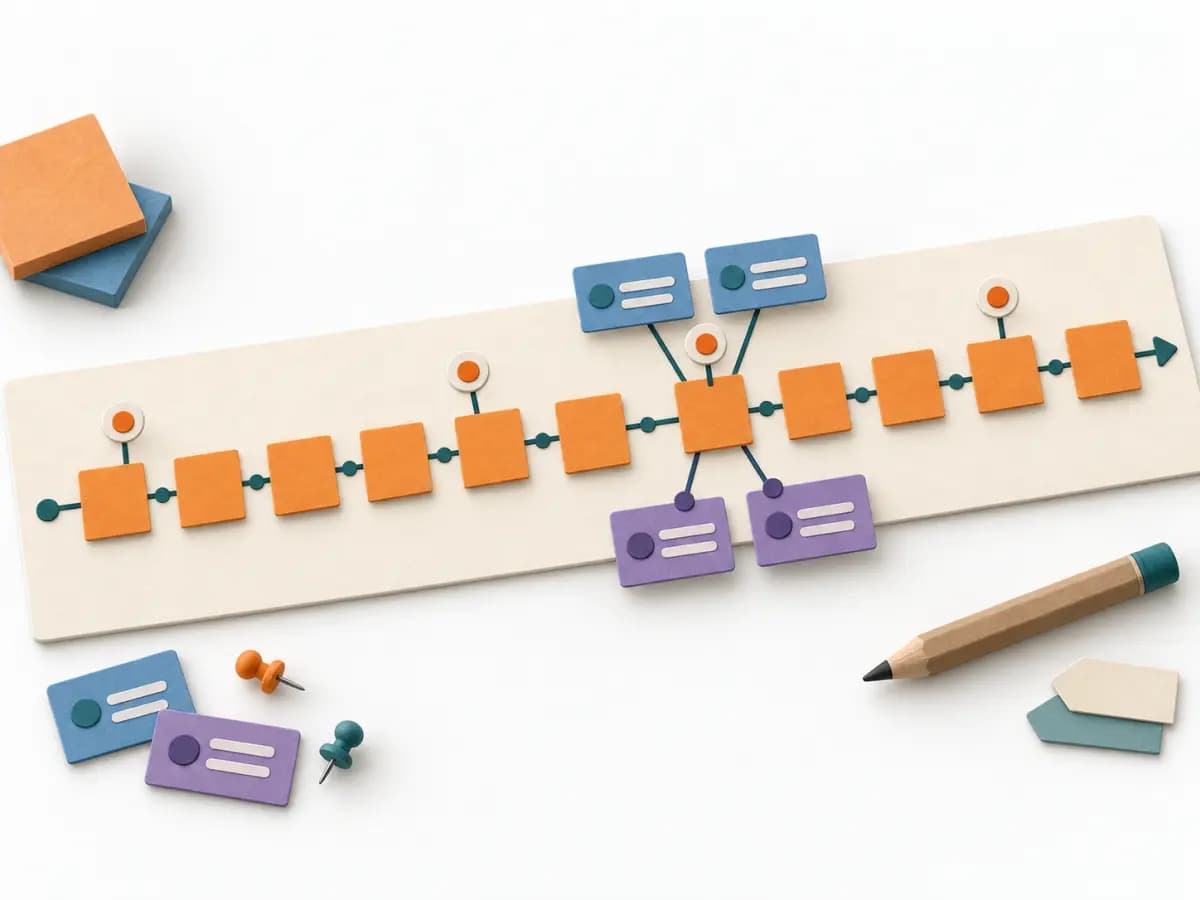
Instead of Domain Storytelling, when you want to explore the domain broadly together through events, roles, and boundaries.
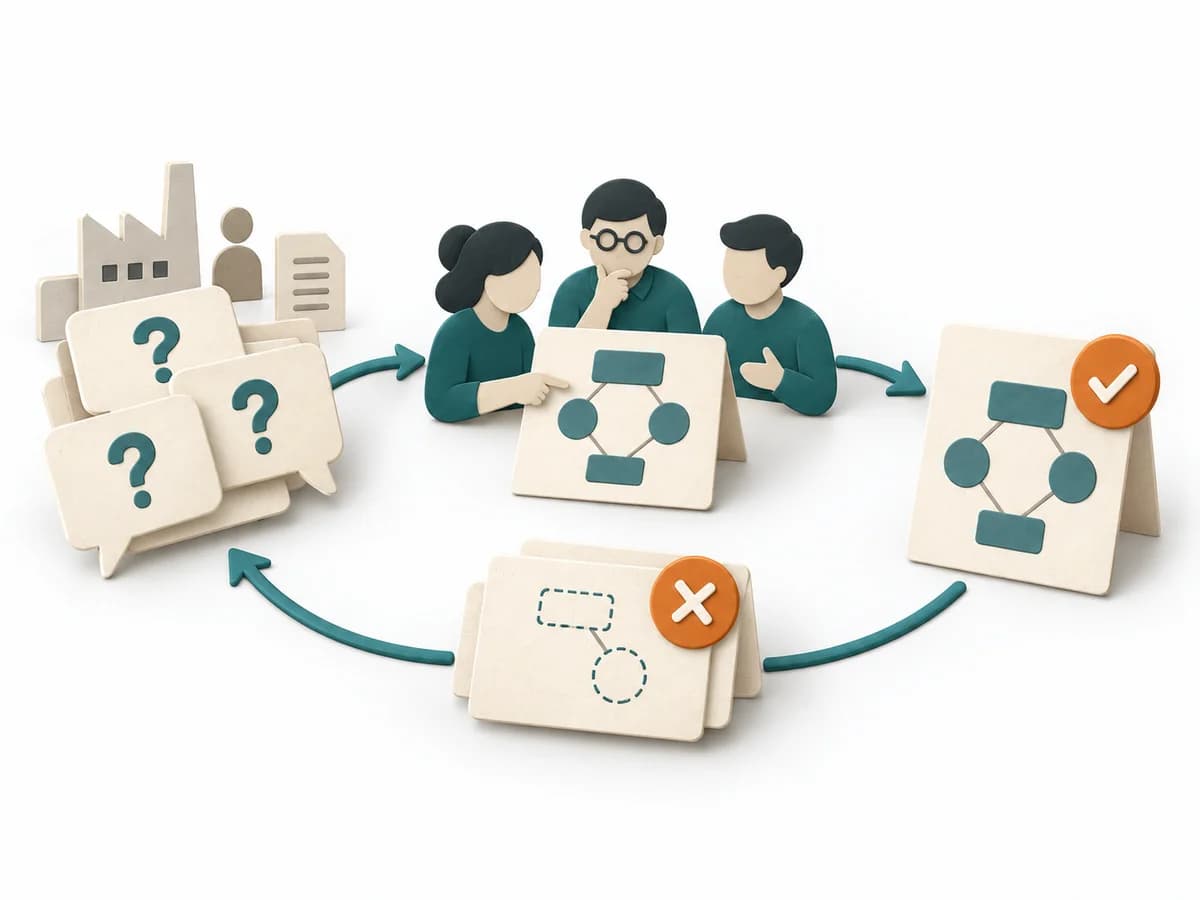
Concrete domain questions define what an ontology or knowledge model must be able to answer and test.
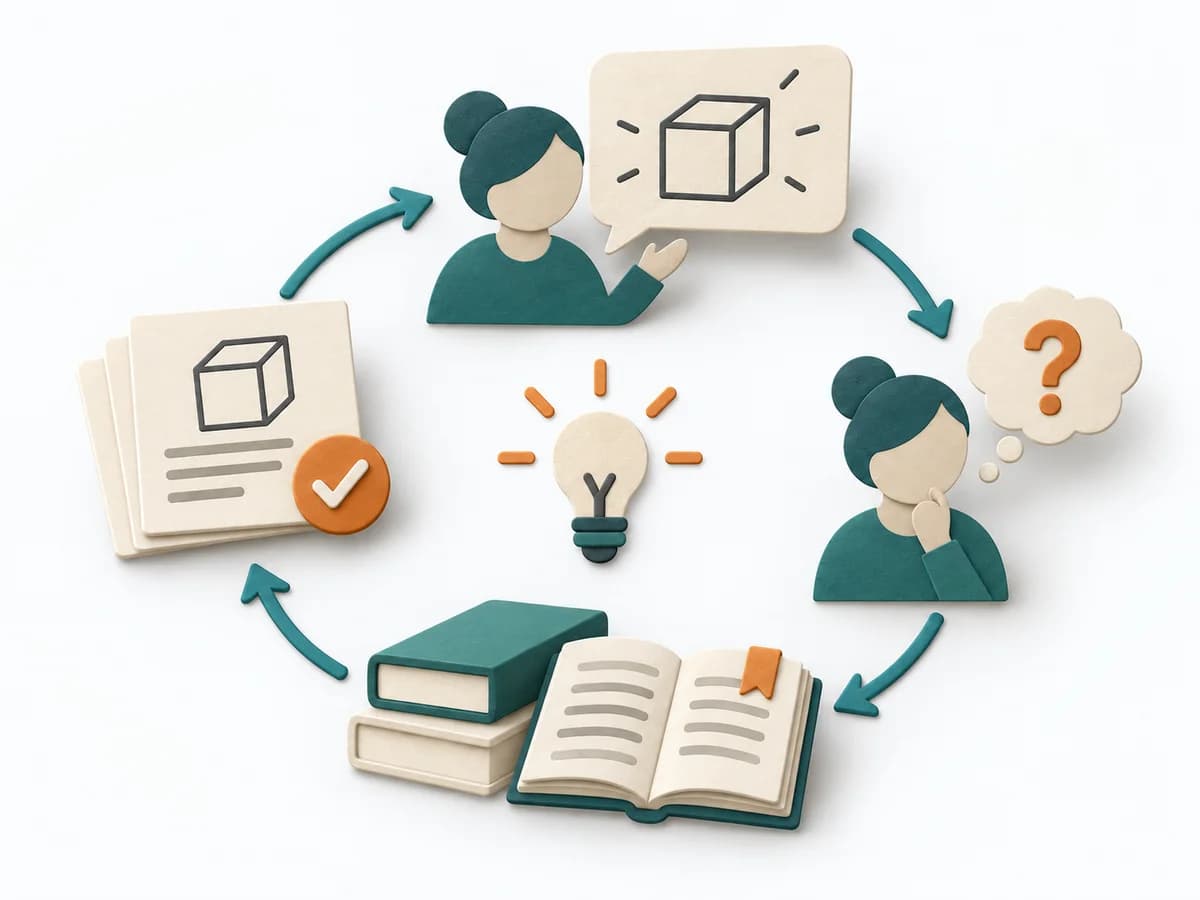
Forces complex content into simple language and immediately reveals which knowledge gaps still need closing.
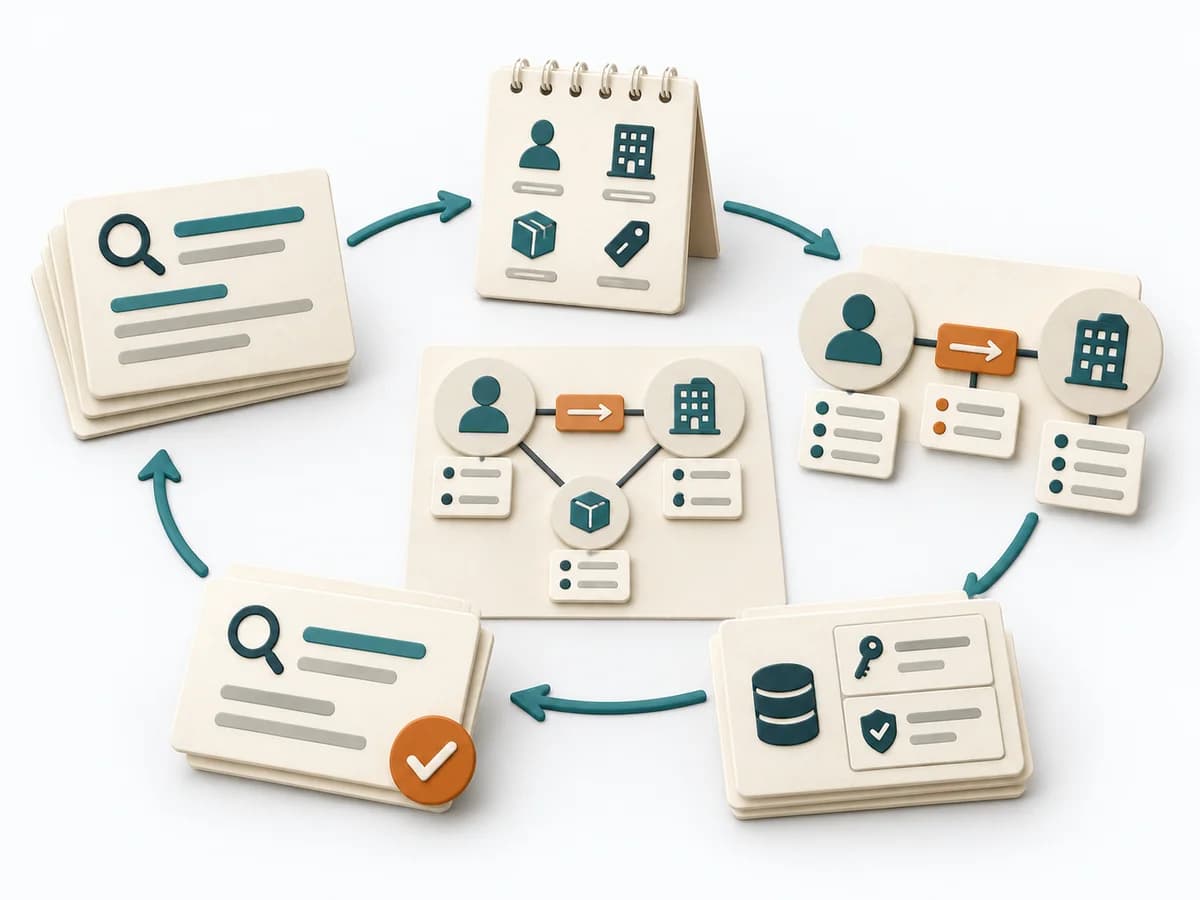
Query patterns drive node labels, relationships, and constraints so property graphs match real retrieval needs.

Clarifies concepts, relationships, and rules by framing the focus question, gathering concepts, and checking gaps and contradictions.

Clarifies concepts, relationships, and rules by framing the issue, collecting positions, and marking decisions or open questions.