
Purpose
IBIS structures thinking about complex questions as a sequence of issues, ideas, and arguments. The method keeps discussions open without forcing them into premature consensus.
Knowledge Modeling Mapping tool
Maps contested questions so positions, arguments, and decision status remain traceable.
IBIS represents deliberation as a network of Issues, Positions and Arguments. Each position answers a specific issue; pro and con arguments attach to one position. The map preserves what was selected, rejected or left open.
Which position answers the Issue most convincingly given the current arguments?

Issue
State an open, contested question that Positions can answer.
Positions
Capture each serious answer to the Issue as its own Position.
Arguments
Attach testable reasons as Pro or Con to the Position they address.
Sub-Issues
Model unresolved terms, conflicts and information needs as new Issues.
Status
Mark selected, rejected and open Positions with the governing rationale.
Add new questions as Issues, attach new evidence to existing Arguments and update the status of affected Positions.
For complex design, architecture or policy questions with several plausible positions and a need for durable rationale.
Linked Issues, Positions and Pro and Con Arguments.
Status, rationale, open sub-issues and agreed review triggers.
Fictional example
Typed entries keep the question, alternatives, reasons and decision state connected.
What open question must be decided? Add scope, owner and status.
Should the training provider confirm course bookings immediately?
What concrete answers are available? Write one assertion per Position.
A: confirm immediately; B: review manually first.
What reasons support or object to which Position? Add source or assumption status.
Pro A: 78% compliant. Con A: seat limits may be exceeded.
Which decision-relevant sub-questions arise from Positions or Arguments?
Can seat limits be checked automatically before confirmation?
Which Position was selected by whom, under what conditions and with what review trigger?
Pilot A after an automated seat check; review after 100 bookings.
The example is a small excerpt. In a real map, Arguments may generate additional Issues.
State one genuinely contested question as an Issue and define the decision boundary.
IBIS structures thinking about complex questions as a sequence of issues, ideas, and arguments. The method keeps discussions open without forcing them into premature consensus.
The team first formulates the central question as an issue. Then possible answers are collected as ideas and linked with pro and con arguments. This keeps the decision path transparent even when the situation is contradictory.
IBIS works well because it breaks discussions down into issues, positions, and arguments, exposing decision logic as a result. The benefit arises when controversial points are cleanly separated in language and reasoning is visibly attached to exactly one statement. Whoever uses the method well pays attention to sharply distinct questions, traceable counterarguments, and documented conclusions, so debates don't start over from scratch later.
Prepare a guiding question that works as a genuine decision problem, and introduce the team to the three building blocks early, so no mixed forms emerge. It becomes especially important when opinions show up disguised as facts; then they should immediately be recategorized as a position or an argument. In the end, a visible decision or a marked remaining uncertainty tied to the next appointment is needed.
The method guide walks execution through 5 phases, timing, 5 pitfalls, and clear stop criteria.
Open method guideYour perspective
Your feedback helps shape the next improvements to methodatlas.
State one genuinely contested question as an Issue and define the decision boundary.
To be confirmed
To be confirmed
Complete workflow Time: 60–120 minutes for an initial map; continue when new arguments emerge
Complete this worksheet on paper or in your own document during the work.
What open question must be decided? Add scope, owner and status.
...
What concrete answers are available? Write one assertion per Position.
...
What reasons support or object to which Position? Add source or assumption status.
...
Which decision-relevant sub-questions arise from Positions or Arguments?
...
Which Position was selected by whom, under what conditions and with what review trigger?
...
Type entries, assign stable IDs and document the direction of every relationship.
Expected artifact: Issue node
Question, scope, owner and status
Entry:
...
Expected artifact: Position nodes
One assertion per Position
Entry:
...
Expected artifact: Pro and Con Arguments
Claim, target, source and direction
Entry:
...
Expected artifact: Linked sub-Issues
Question, trigger, owner and due date
Entry:
...
Expected artifact: Statused IBIS map
Decision, rationale, conditions and review
Entry:
...
...
Method guide: https://methodatlas.meierhoff-systems.de/en/methods/ibis/run-sheet
Fitting alternatives with decision guidance, followed by other related methods.

Instead of IBIS, when you want to keep arguments and counterarguments apart with a clear reasoning structure.
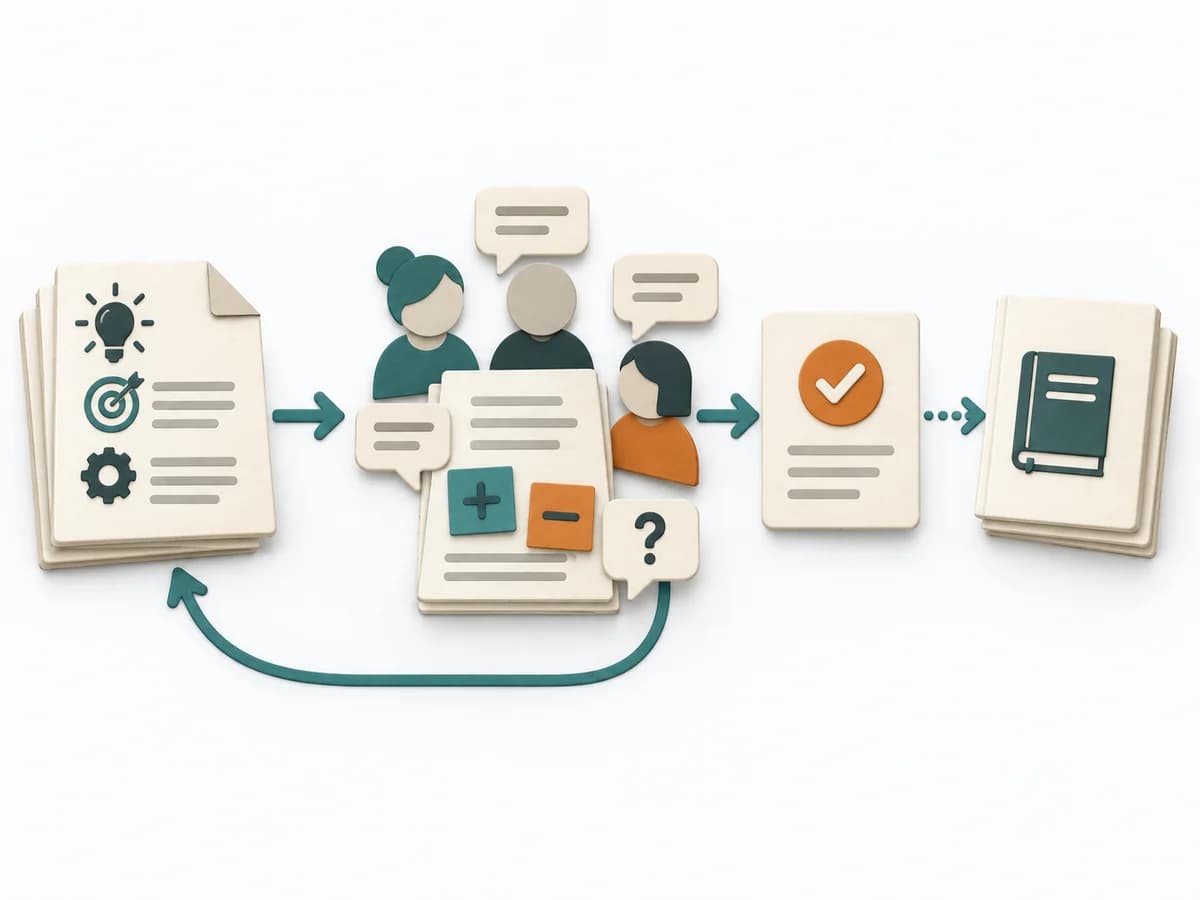
Uses a structured proposal and review process to make non-trivial technical or product changes discussable and decidable.
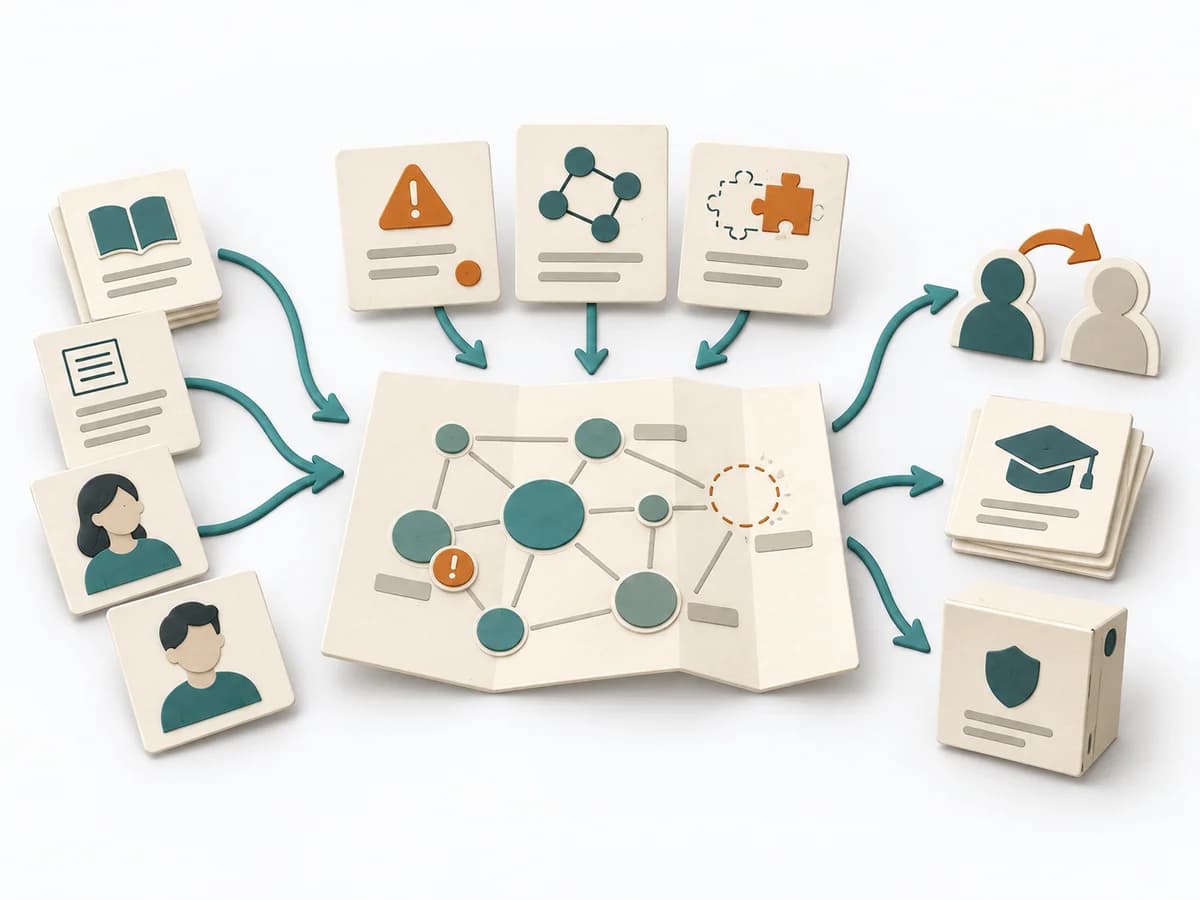
Maps critical knowledge, knowledge holders, and gaps so handovers and transfer can be planned deliberately.

Sorts knowledge into Projects, Areas, Resources, and Archive so personal knowledge work stays easier to steer.

Translates domain knowledge into a narrated situation where terms, relationships, and rules are checked together.

Forces complex content into simple language and immediately reveals which knowledge gaps still need closing.
