Complete firstDecision mandate
One Approver genuinely has authority to make the bounded decision.
Resolve the mandate first if several people claim final authority.
A practical method guide: clarify prerequisites and materials, understand the complete process, and look up outputs, pitfalls, and stop criteria.
What needs to be finished first
One Approver genuinely has authority to make the bounded decision.
Options, decision date and relevant constraints are known.
What needs to be ready before start
Decision document, DACI role matrix, options, evidence and deadlines for input and decision.
One Driver, one Approver, relevant Contributors and named Informed stakeholders.
Frame a decidable question, deadline and scope; the person holding final authority must be available.
30–60 minutes for role clarification; input and decision may span sessions
Open a decision document with question and deadline; confirm roles together before collecting options.
The one question this method answers
Who drives this decision, who decides, who provides input and who needs to know the result?
Phases with goal, actions, output and pitfall
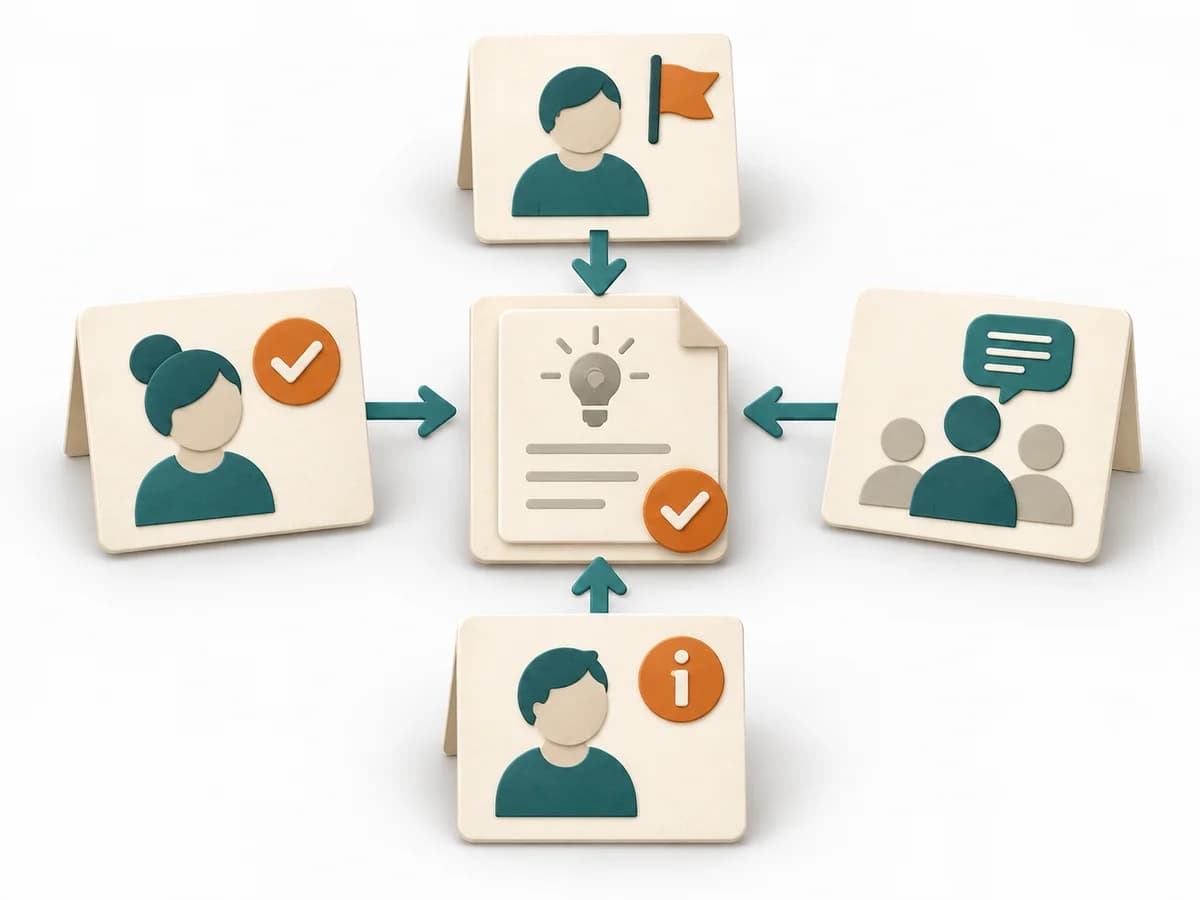
DACI clarifies four roles for a specific decision: the Driver runs the process, exactly one Approver decides, Contributors provide expertise and Informed receive the result. A Driver does not automatically hold decision authority.
Fictional example
DACI clarifies four roles for a specific decision: the Driver runs the process, exactly one Approver decides, Contributors provide expertise and Informed receive the result. A Driver does not automatically hold decision authority.
| Role | Person or group | Authority and responsibility | Contribution and handover |
|---|---|---|---|
| D · DriverWho drives the process with which deadlines? | Lea | Run process, gather input, maintain record | Options to Amir by Wednesday |
| A · ApproverWhich single person may make the final decision? | Amir | Choose form or vendor portal within budget | Reasoned decision on Friday |
| C · ContributorsWhat expert input is needed by when? | Nora and Jan | Assess privacy and operations; no additional veto | Assessments to Lea by Wednesday |
| I · InformedWho receives the result when and through which channel? | Course leads and support | Know the decision and account for local consequences | Project channel on Friday with rationale |
Fictional: by Friday choose between an internal booking form and a vendor portal; criteria are cost, privacy and operating effort. Amir selects the internal form because operating capability already exists. Jan implements by month end; unresolved privacy issues trigger reconsideration before launch.
Bound the decision
Goal
Decision brief
Inputs for this step
Actions
Output
Decision brief
Can the question be answered unambiguously at the end?
Quality check
Can the question be answered unambiguously at the end?
Pitfall
The whole project is treated as one decision. Isolate a specific choice with a clear boundary.
Timing: 10–15 minutes
Assign D, A, C and I
Goal
Confirmed DACI matrix
Inputs for this step
Actions
Output
Confirmed DACI matrix
Is exactly one Approver named with actual authority?
Quality check
Is exactly one Approver named with actual authority?
Pitfall
Driver and Approver each expect the other to decide. Explicitly separate process leadership and final authority.
Timing: 10–20 minutes
Prepare input and options
Goal
Decision-ready options
Inputs for this step
Actions
Output
Decision-ready options
Can the Approver compare options using the same criteria?
Quality check
Can the Approver compare options using the same criteria?
Pitfall
Endless consultation replaces the decision. Bound the input period and name remaining uncertainty for the Approver.
Timing: 30–60 minutes
Decide and communicate
Goal
Recorded decision
Inputs for this step
Actions
Output
Recorded decision
Are decision, implementation and communication recorded distinctly?
Quality check
Are decision, implementation and communication recorded distinctly?
Pitfall
A meeting ends with assumed agreement. Have the Approver explicitly confirm the decision and record it.
Timing: 15–30 minutes
What comes out at the end
Sketch: what the artifact looks like
DACI matrix and decision record with question, options, rationale, date, communication and implementation ownership.
Record date and scope; retain the previous version and reason when changing it.
Frame a decidable question, deadline and scope; the person holding final authority must be available.
To be confirmed
To be confirmed
Complete cycle Time: 30–60 minutes for role clarification; input and decision may span sessions
Complete this worksheet on paper or in your own document during the work.
| Role | Person or group | Authority and responsibility | Contribution and handover |
|---|---|---|---|
| D · Driver | |||
| A · Approver | |||
| C · Contributors | |||
| I · Informed |
Enter your own people, authority and handovers per role. Name exactly one Approver. Driver runs the process; Contributors provide input.
Expected artifact: Decision brief
Can the question be answered unambiguously at the end?
Entry:
...
Expected artifact: Confirmed DACI matrix
Is exactly one Approver named with actual authority?
Entry:
...
Expected artifact: Decision-ready options
Can the Approver compare options using the same criteria?
Entry:
...
Expected artifact: Recorded decision
Are decision, implementation and communication recorded distinctly?
Entry:
...
...
Method guide: https://methodatlas.meierhoff-systems.de/en/methods/daci/run-sheet
Concrete filled scenario, fictional example
Fictional example for orientation. Counts and timings describe this case and are not universal requirements.
Concrete filled scenario, fictional example
Decision question: Fictional: by Friday choose between an internal booking form and a vendor portal; criteria are cost, privacy and operating effort.
D · Driver: Lea gathers options by Wednesday and organises the decision.
A · Approver: Department lead Amir decides on Friday within the approved budget.
C · Contributors: Nora examines privacy, Jan operations and support; both provide assessments by Wednesday.
I · Informed: Course leads and support receive Friday’s reasoned decision in the project channel.
Decision and follow-through: Amir selects the internal form because operating capability already exists. Jan implements by month end; unresolved privacy issues trigger reconsideration before launch.
Recognize symptoms and steer against them
Quick overview, the full text is in the matching phase in the flow
The whole project is treated as one decision.
Isolate a specific choice with a clear boundary.
Driver and Approver each expect the other to decide.
Explicitly separate process leadership and final authority.
Endless consultation replaces the decision.
Bound the input period and name remaining uncertainty for the Approver.
A meeting ends with assumed agreement.
Have the Approver explicitly confirm the decision and record it.
When to pause, resolve prerequisites, or choose another approach
Go to the profile for purpose, similar methods, and sources or continue to the next method in the catalog.