Purpose
In dynamic situations, decisions become outdated faster than they can be prepared. The OODA Loop holds observing, orienting, deciding, and acting together as a recurring rhythm so reaction does not slide into inertia.
Decision Making Process model
Connects observation, orientation, action, and feedback in a fast decision cycle.
Beobachtungen werden laufend mit Kontext und möglichem Gegenwind abgeglichen, bevor die nächste Aktion gewählt wird. Der kurze Zyklus erzeugt einen Lernrhythmus, der Anpassung in unsicheren oder wettbewerbsintensiven Lagen beschleunigt. Entscheidend ist die Geschwindigkeit des Nachjustierens.
Which action will we test from the current situation, and which feedback starts the next OODA cycle?
The steps express the method mechanics; feedback may reopen an earlier step.
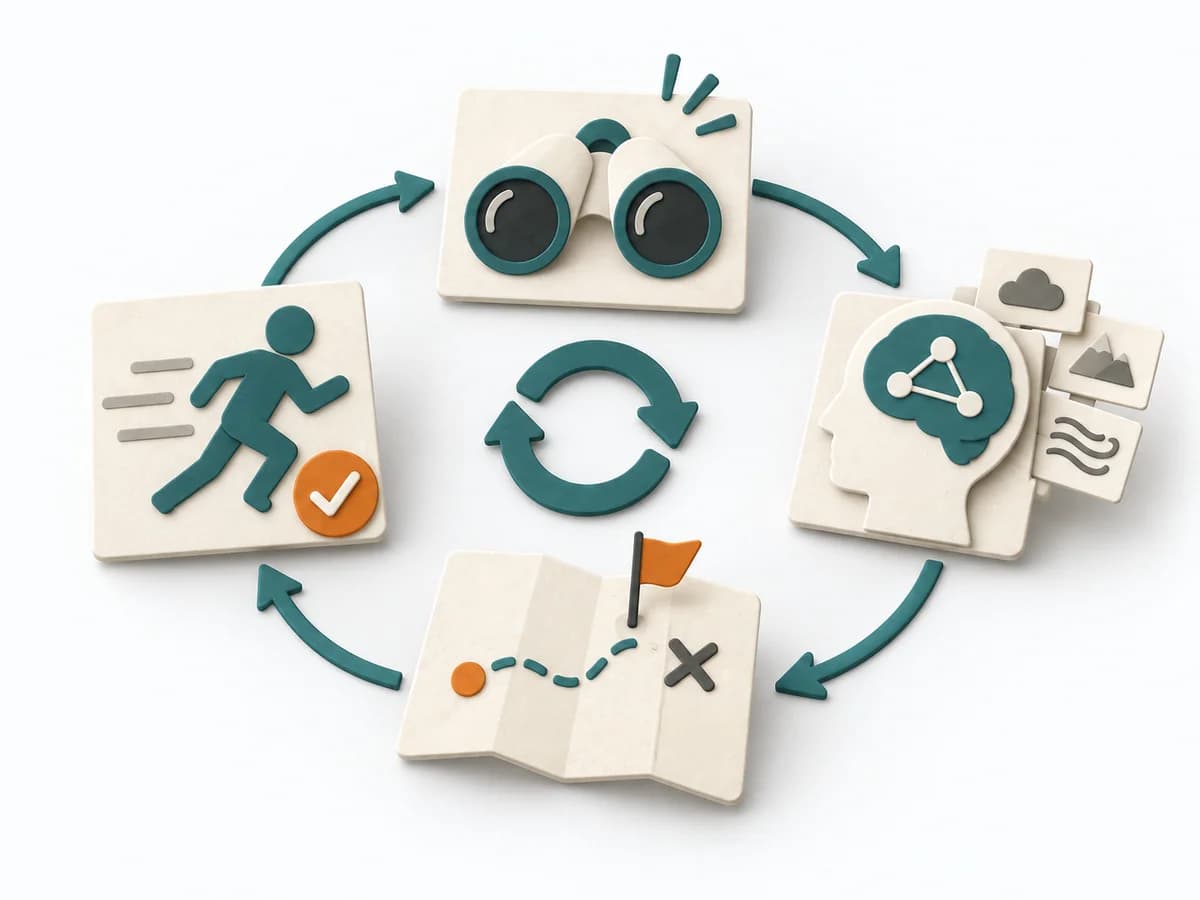
Observe
Collect raw signals from the system, environment, and unfolding interaction with source and timestamp; separate observation from interpretation.
Orient
Connect signals to the goal, capacity, experience, new information, and assumptions; test at least one alternative interpretation.
Decide
Choose one option as a testable hypothesis; record expected effect, guardrail, owner, and review time.
Act
Execute the chosen action within scope and log deviations, side effects, and new signals.
Feed back
Compare effect and guardrails with the hypothesis; feed surprises into the next cycle as new observations.
At review, add evidence, update assumptions, and version the next cycle.
In dynamischen Situationen veralten Entscheidungen schneller, als sie vorbereitet wurden. Der OODA Loop hält Wahrnehmen, Einordnen, Entscheiden und Handeln als wiederkehrenden Takt zusammen, damit Reaktion nicht in Trägheit kippt.
Versioned OODA log containing observations, orientation, decision hypothesis, action, and feedback.
Fictional example
Fictional values demonstrate the method-specific fields.
Collect raw signals from the system, environment, and unfolding interaction with source and timestamp; separate observation from interpretation.
Saturday 09:00–12:00: p80 wait 18 minutes; 12 bookings from 10 to 11; inventory sync 22 minutes old.
Connect signals to the goal, capacity, experience, new information, and assumptions; test at least one alternative interpretation.
Interpretation A: booking cluster exceeds eight handoffs per hour. B: stale inventory extends every search.
Choose one option as a testable hypothesis; record expected effect, guardrail, owner, and review time.
Cap at eight slots per hour for two Saturdays; expect p80 below 15 minutes; stop above 10% rejection.
Execute the chosen action within scope and log deviations, side effects, and new signals.
Lea applies the cap on 9 and 16 Nov; Support marks rejected bookings; Warehouse measures wait.
Compare effect and guardrails with the hypothesis; feed surprises into the next cycle as new observations.
p80 drops to 12 minutes, rejection is 7%; warehouse calls remain high. Next cycle observes sync and search time.
All values are fictional.
Set one time-sensitive decision with an observation window, room to act, and guardrails.
In dynamic situations, decisions become outdated faster than they can be prepared. The OODA Loop holds observing, orienting, deciding, and acting together as a recurring rhythm so reaction does not slide into inertia.
Observations are continuously matched against context and possible headwinds before the next action is chosen. The short cycle creates a learning rhythm that speeds up adaptation in uncertain or highly competitive situations. What matters most is the speed of readjusting.
The OODA Loop makes decision-making visible as a repeated learning cycle. Observations are not translated directly into action but first into orientation: Which patterns, assumptions, experiences, or constraints shape the situation? That is followed by a decision, whose action creates new observations. The strength lies in the speed and quality of orientation, not only in fast execution.
Prepare a visible loop with current signals, assumptions, the decision, and the action. Timebox each cycle and record which observation triggered which decision. After several cycles, run a short review to check whether the orientation still fits.
The method guide walks execution through 5 phases, timing, 5 pitfalls, and clear stop criteria.
Open method guideYour perspective
Your feedback helps shape the next improvements to methodatlas.
Set subject, evidence, roles, flow, and review.
To be confirmed
To be confirmed
Complete run Time: 30–90 minutes for the first cycle; further cycles follow the cadence of observable effects.
Complete this worksheet on paper or in your own document during the work.
Collect raw signals from the system, environment, and unfolding interaction with source and timestamp; separate observation from interpretation.
...
Connect signals to the goal, capacity, experience, new information, and assumptions; test at least one alternative interpretation.
...
Choose one option as a testable hypothesis; record expected effect, guardrail, owner, and review time.
...
Execute the chosen action within scope and log deviations, side effects, and new signals.
...
Compare effect and guardrails with the hypothesis; feed surprises into the next cycle as new observations.
...
The blank worksheet contains prompts only.
Reference · original teaching example
Expected artifact: Source-bound situation picture
Collect raw signals from the system, environment, and unfolding interaction with source and timestamp; separate observation from interpretation.
Entry:
...
Expected artifact: Orientation with alternatives
Connect signals to the goal, capacity, experience, new information, and assumptions; test at least one alternative interpretation.
Entry:
...
Expected artifact: Decision hypothesis
Choose one option as a testable hypothesis; record expected effect, guardrail, owner, and review time.
Entry:
...
Expected artifact: Executed test
Execute the chosen action within scope and log deviations, side effects, and new signals.
Entry:
...
Expected artifact: Next OODA cycle
Compare effect and guardrails with the hypothesis; feed surprises into the next cycle as new observations.
Entry:
...
...
Method guide: https://methodatlas.meierhoff-systems.de/en/methods/ooda-loop/run-sheet
Fitting alternatives with decision guidance, followed by other related methods.

Instead of OODA Loop, choose Decision Tree when a decision should be prepared and documented through branched if-then paths.
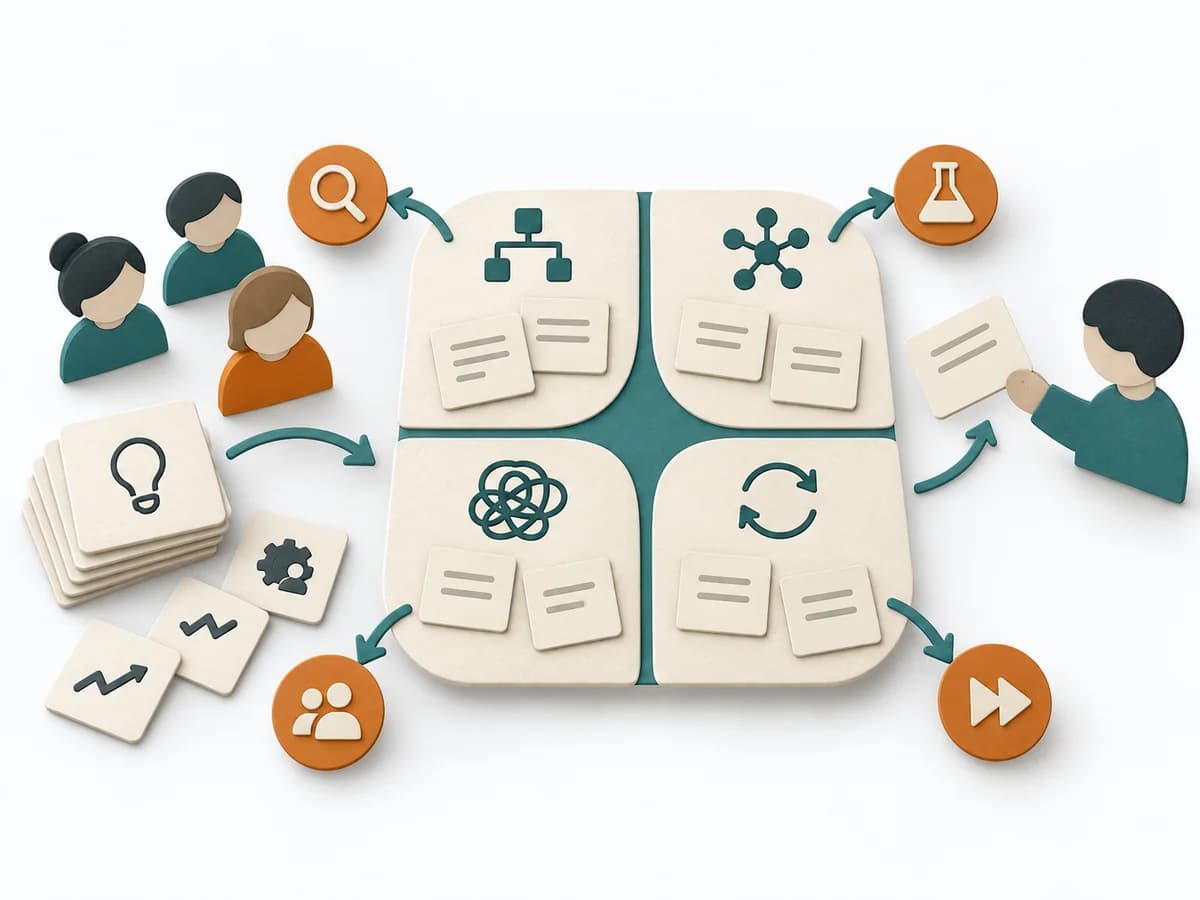
Sorts cases into the fitting domain and derives actions that match the degree of clarity or complexity.

Pits driving and restraining forces against each other to deliberately derive change levers and interventions.

Clarifies options, criteria, and risks by framing the initiative or decision, collecting implicit assumptions, and planning tests or research.
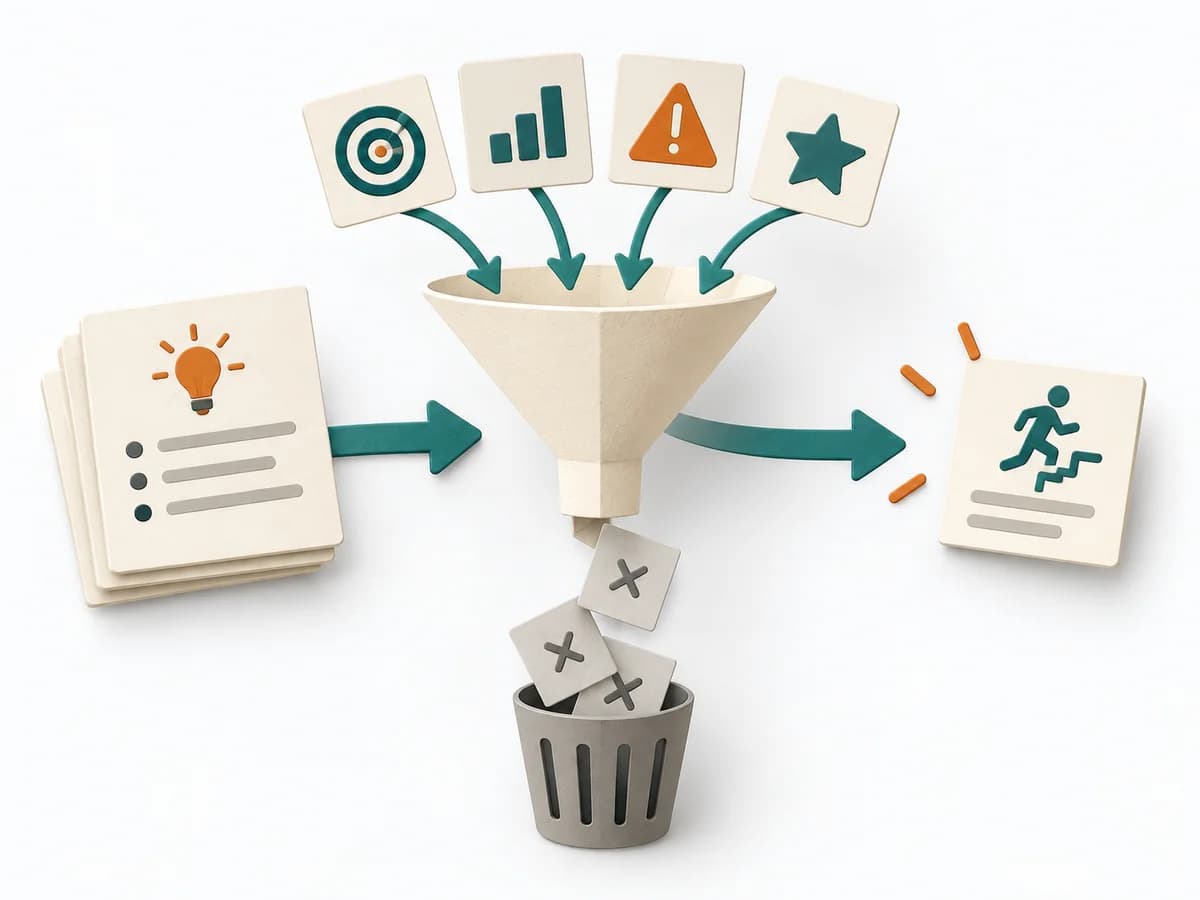
Sharpens a planned step through impact, success criteria, and risks down to the smallest sensible move.

Examines an initiative from an opposing perspective, collects weaknesses, and derives prioritized mitigations.