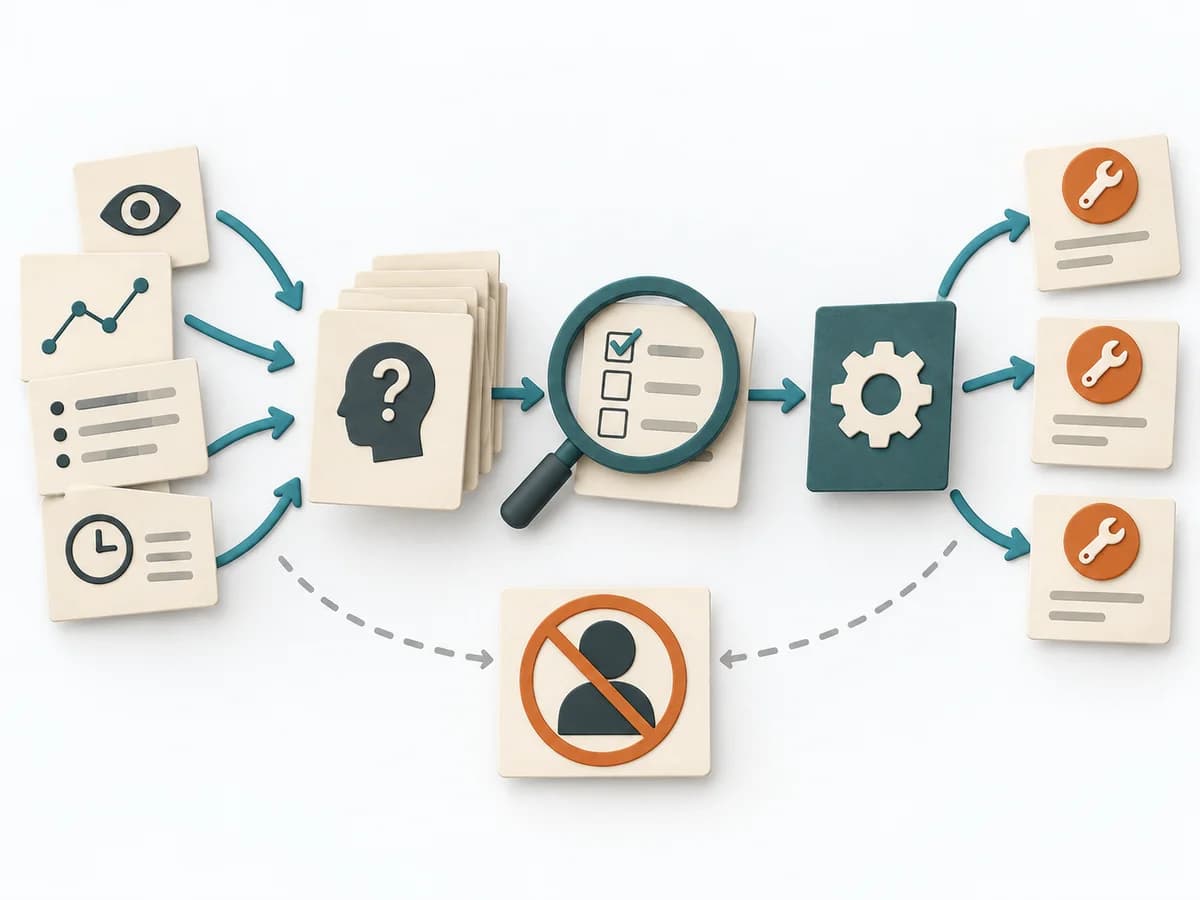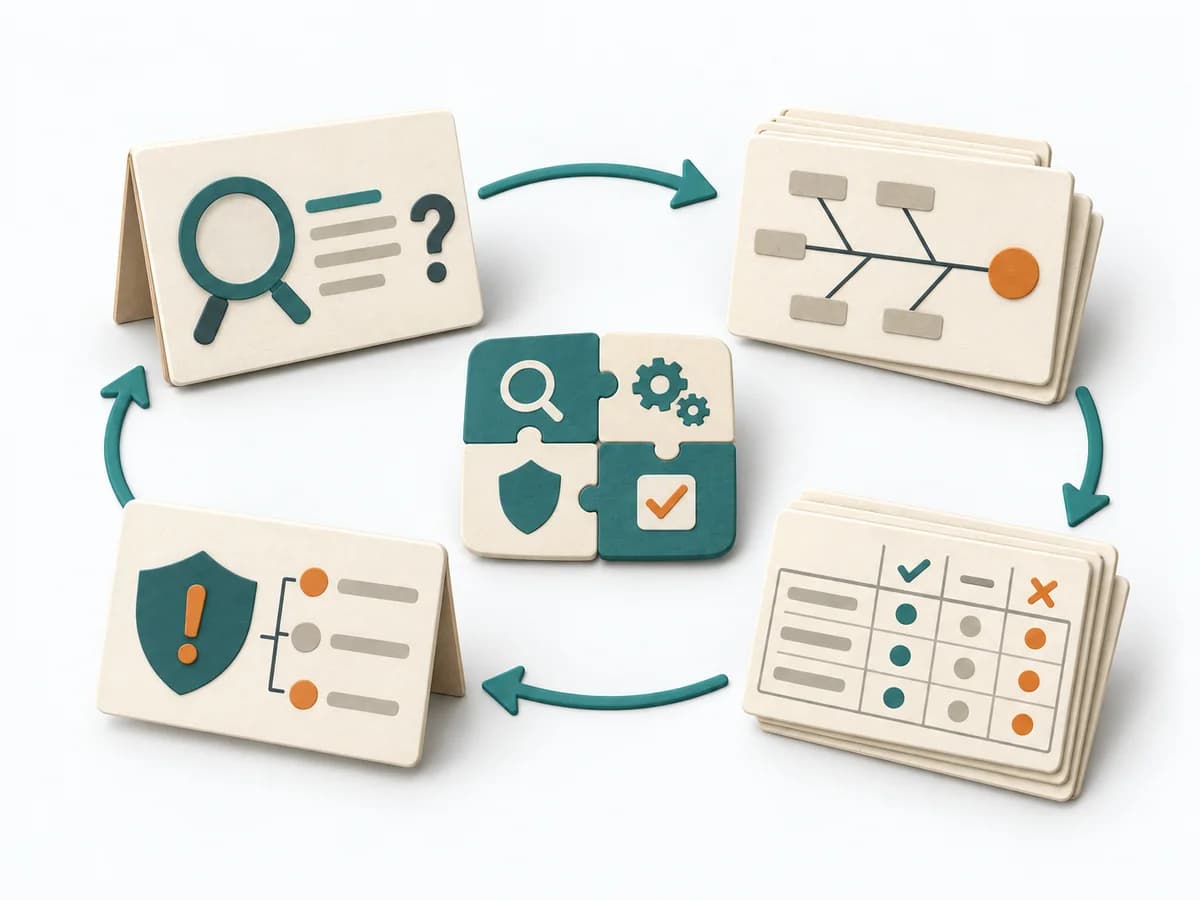
Purpose
For a deviation after a change, the method isolates the influence of the altered condition. It narrows down which differences are relevant and which are just accompanying noise.
Operations Analysis method
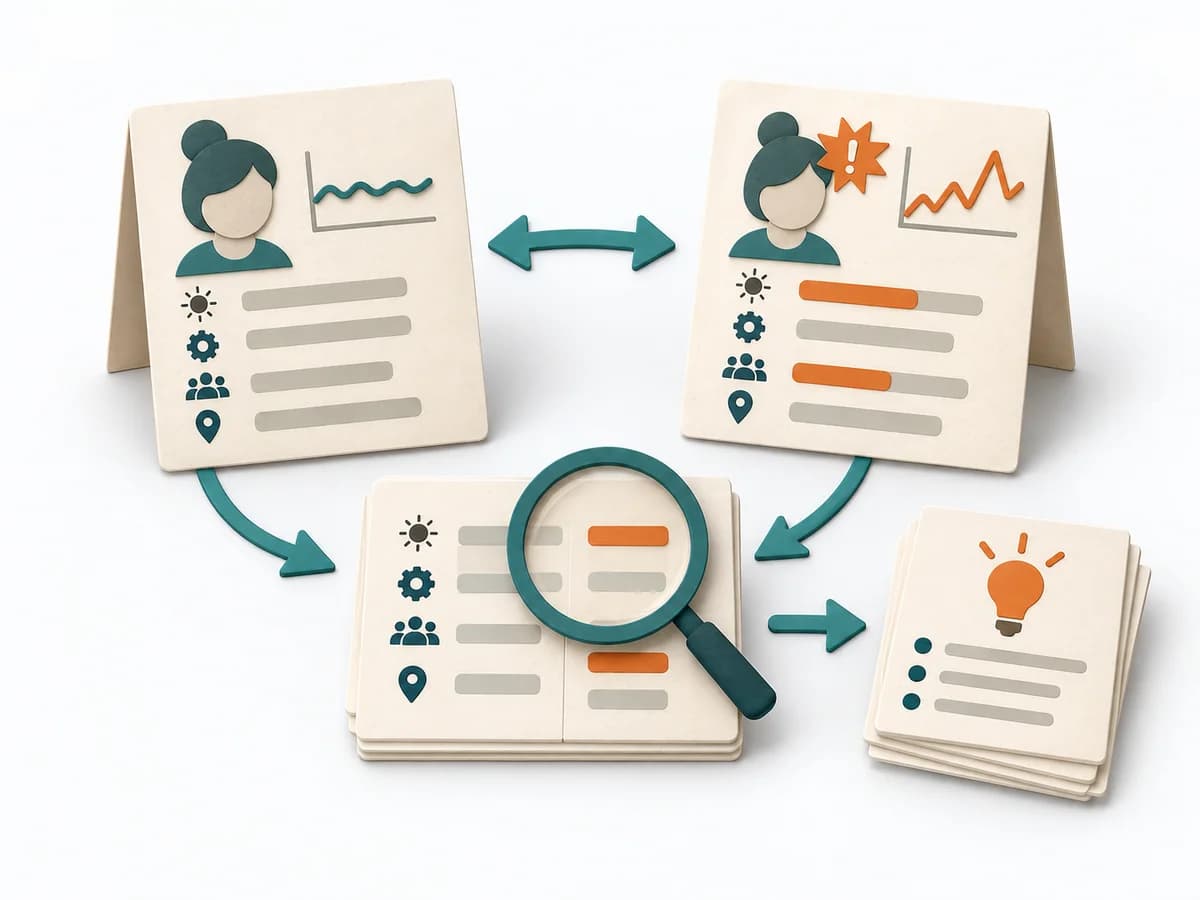
Change analysis compares an outlier with a stable case and filters differences that may explain the deviation.
Change analysis compares conditions before and after an observed shift. The comparison produces testable hypotheses about which change may have caused the effect.
Which evidenced change distinguishes the event from a comparable incident-free situation, and what effect did it have?
The steps form one complete method run.
Compare
Test event and incident-free reference for equivalent service, boundary, and conditions.
Changes
Capture differences across people, equipment, procedures, controls, and environment.
Sequence
Check whether each change was effective before the event; document source and uncertainty.
Effect
Test mechanism and magnitude of each relevant change; distinguish trigger from exposed latent weakness.
Conclude
Move evidenced causal changes and system weaknesses into further causal analysis or actions.
Add new evidence at review and version decisions with the prior state.
Bei einer Abweichung nach einer Veränderung isoliert die Methode den Einfluss des geänderten Zustands. Sie grenzt ein, welche Unterschiede relevant sind und welche nur Begleitrauschen darstellen.
Change analysis matrix with reference, event state, difference, time, effect, evidence, and causal status.
Fictional example
Fictional values show the actual method fields.
| Category | Reference | Event | Difference | Time | Effect | Evidence | Status |
|---|---|---|---|---|---|---|---|
| ProcessAdd evidence and rationale. | No batch during peak | Batch starts 09:08 | New parallel workload | 09:08 | Pool rises to 95%; checkout timeouts | Scheduler and pool log | Causal trigger |
| ControlAdd evidence and rationale. | Batch metric visible | Metric removed | Alert blind spot | Dashboard release 13 May | Batch use triggers no alert | Dashboard version | Contributing control gap |
| PeopleAdd evidence and rationale. | Same team | Same team | No difference | Unchanged | No observable effect | Roster | Not causal |
All values are fictional.
Choose the event and a genuinely comparable incident-free reference with the same boundary and similar conditions.
For a deviation after a change, the method isolates the influence of the altered condition. It narrows down which differences are relevant and which are just accompanying noise.
Comparing before and after highlights the conditions that actually shifted. This produces testable hypotheses about which change triggered the observed effect. Change is thereby not suspected across the board but analyzed specifically.
Change Analysis uses comparison as the main move: what is different from before or from a working case. The method does not search broadly for every possible cause but focuses on relevant changes around the time of the deviation. Differences become hypotheses that can be validated with data or observation. That makes hidden process, material, or context changes visible.
Prepare a good comparison case and collect data on time, place, people, material, and process. Keep the discussion strictly on what changed and separate relevant from random differences. Every change should turn into a testable cause hypothesis.
The method guide walks execution through 5 phases, timing, 5 pitfalls, and clear stop criteria.
Open method guideYour perspective
Your feedback helps shape the next improvements to methodatlas.
Set subject, evidence, roles, flow, and review.
To be confirmed
To be confirmed
Complete run Time: 90–180 minutes after securing the timeline; add evidence validation.
Complete this worksheet on paper or in your own document during the work.
| Category | Reference | Event | Difference | Time | Effect | Evidence | Status |
|---|---|---|---|---|---|---|---|
| Process | |||||||
| Control | |||||||
| People |
The blank worksheet contains prompts only.
Reference · original teaching example
Expected artifact: Comparison pair
Test event and incident-free reference for equivalent service, boundary, and conditions.
Entry:
...
Expected artifact: Change register
Capture differences across people, equipment, procedures, controls, and environment.
Entry:
...
Expected artifact: Evidence-backed chronology
Check whether each change was effective before the event; document source and uncertainty.
Entry:
...
Expected artifact: Effect assessment
Test mechanism and magnitude of each relevant change; distinguish trigger from exposed latent weakness.
Entry:
...
Expected artifact: Cause and action path
Move evidenced causal changes and system weaknesses into further causal analysis or actions.
Entry:
...
...
Method guide: https://methodatlas.meierhoff-systems.de/en/methods/change-analysis/run-sheet
Fitting alternatives with decision guidance, followed by other related methods.

Instead of Change Analysis, choose 5 Whys when there is no clear change acting as the trigger and you are looking for a simple cause chain.

Instead of Change Analysis, choose Fishbone Diagram when you want to gather causes into clear categories and keep discussions structured.
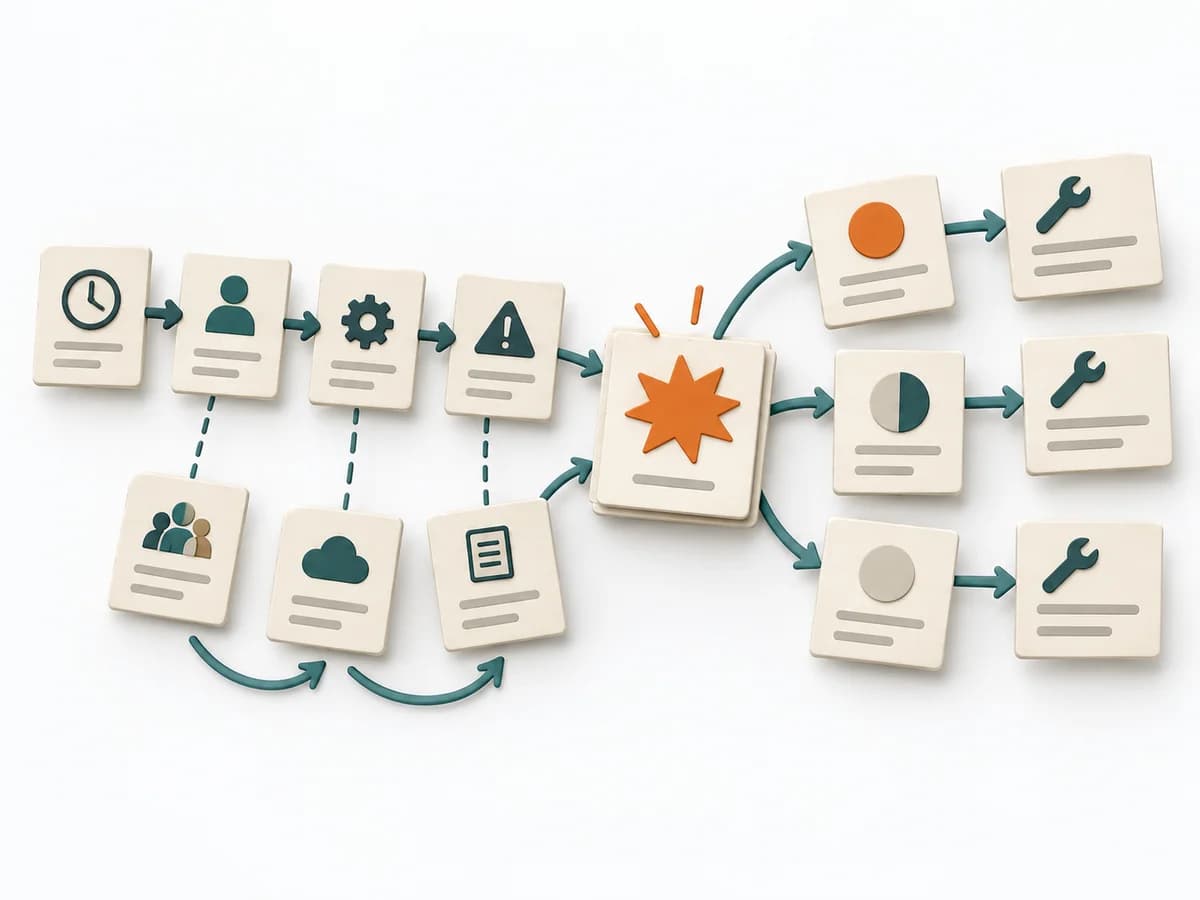
Reconstructs a chain of events, marks factors, and derives verifiable causes and corrective actions.
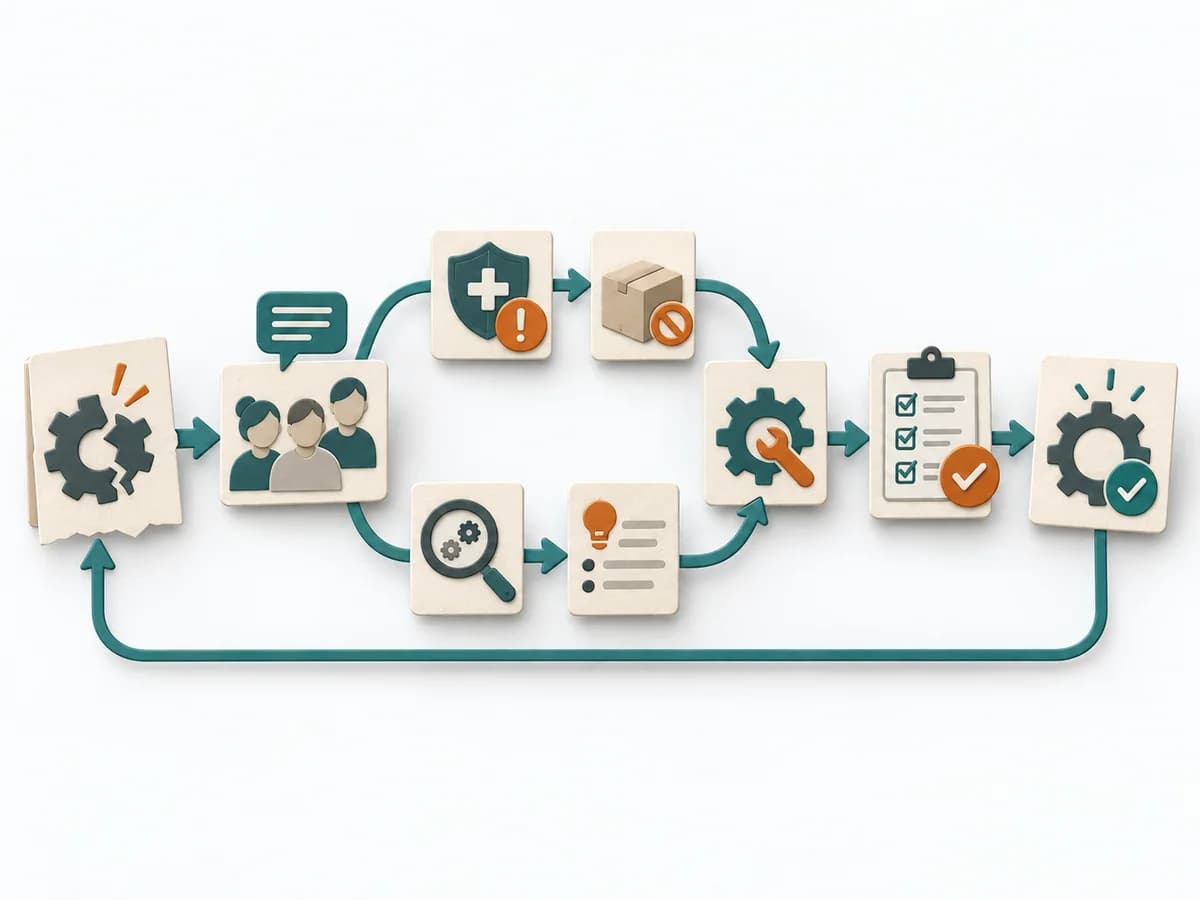
Coordinates team, immediate actions, root cause analysis, and prevention across eight steps to a verified solution.
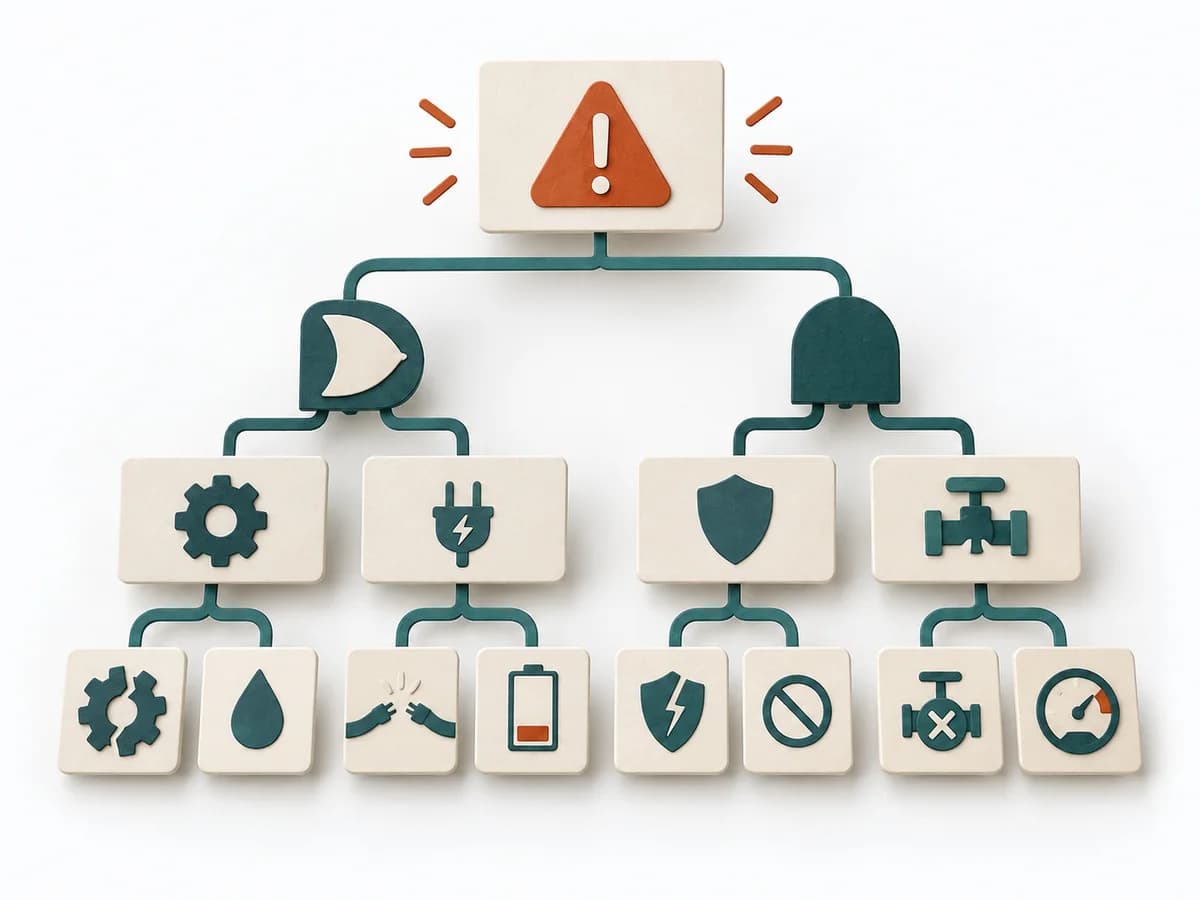
Models a top event with AND and OR branches to make critical paths and causes visible.
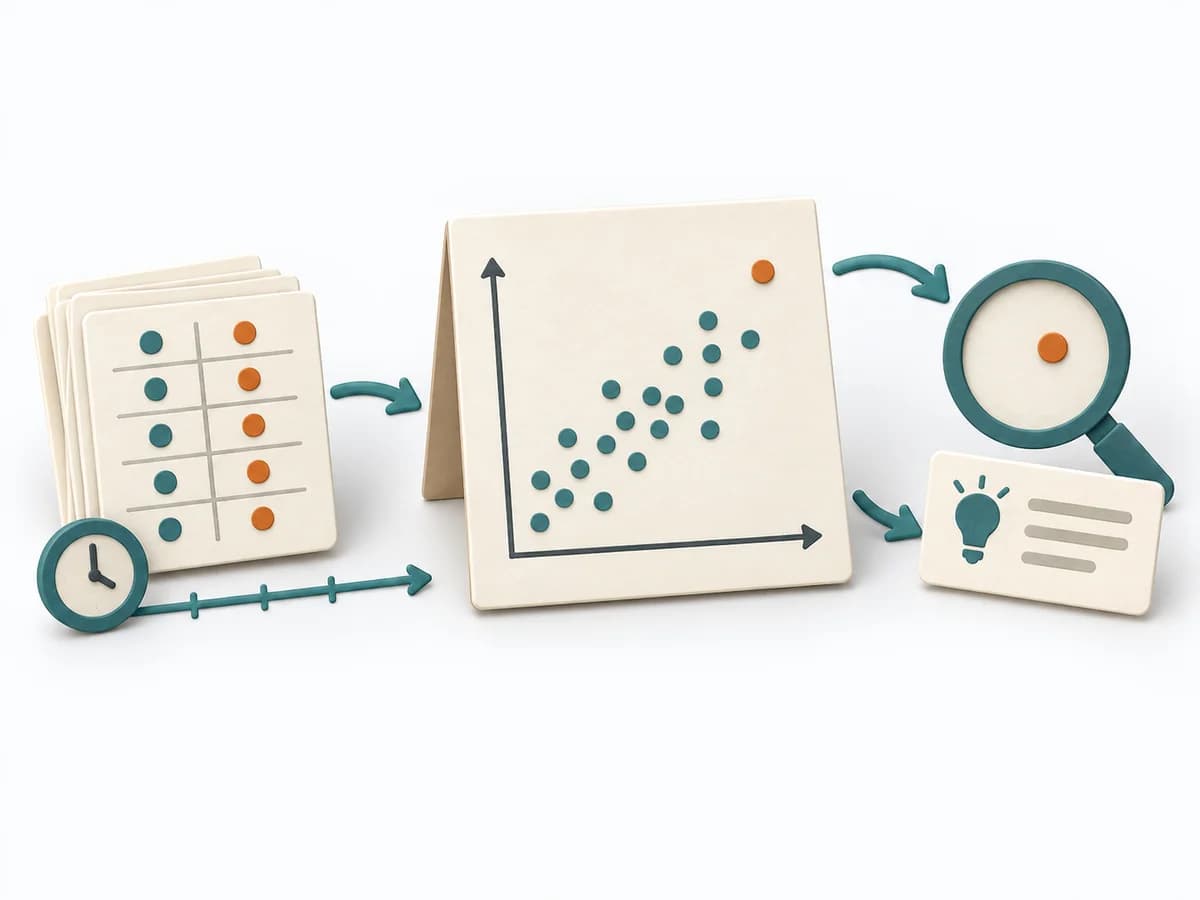
Paired data points reveal whether two variables move together and where a suspected relationship needs deeper proof.