
Purpose
For an event with a complicated course, the method breaks down the contributing factors along the timeline. It shows how conditions, decisions, and reactions together produce a course of events.
Operations Mapping tool
Causal factor analysis reconstructs an event chain, marks factors, and derives testable causes and corrective actions.
Causal factor analysis combines chronology with cause and effect to distinguish contributing from triggering factors. It keeps incidents from being reduced to a single moment when several small contributions shaped the outcome.
Which events and conditions demonstrably contributed to the undesired outcome, and how are they linked in time and causality?
Evidence building, analysis, and effectiveness review form a multi-stage initiative.
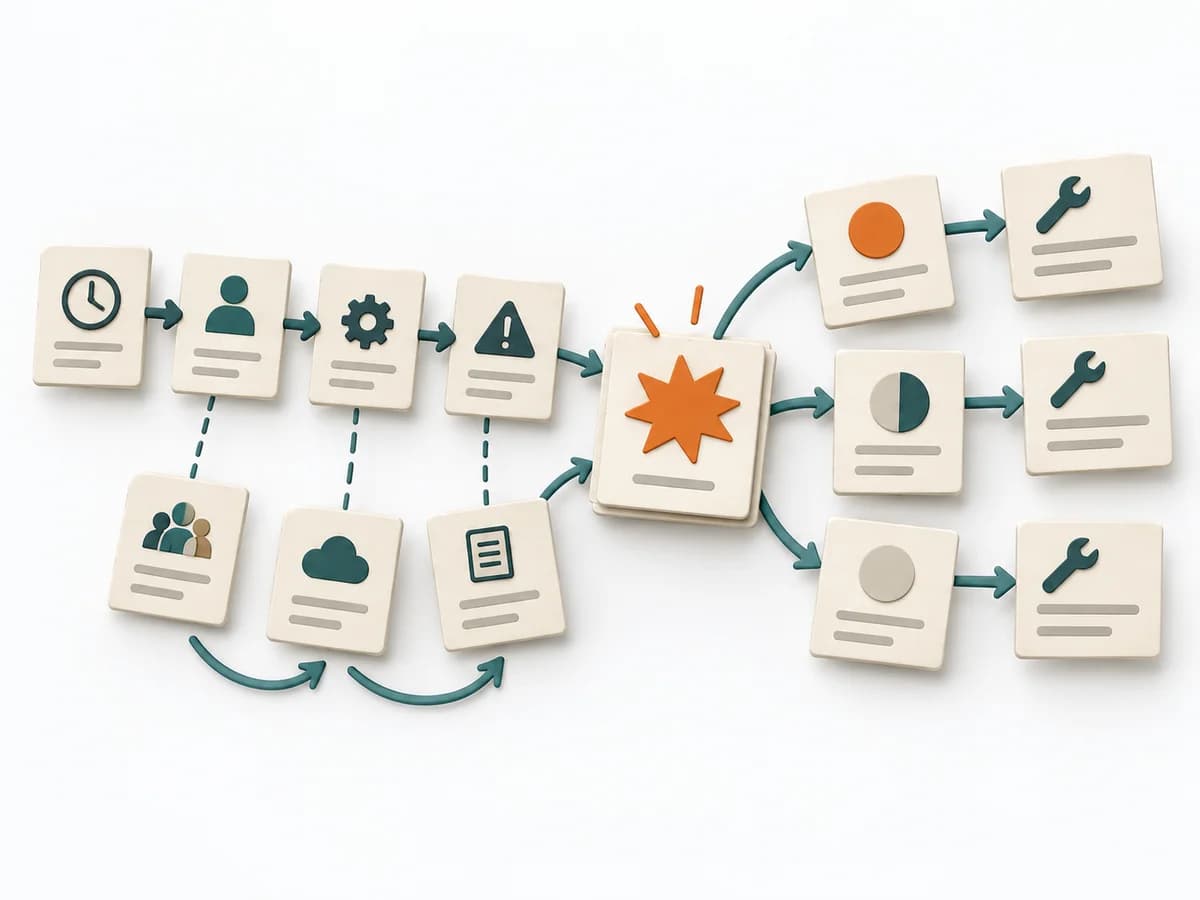
Boundary
Set final event, starting point, system boundary, and investigation question.
Sequence
Record events in time order with sources; show persistent conditions separately between events.
Evidence
Validate every node and connection with log, document, measurement, or corroborated account.
Factors
Mark an event or condition causal when its absence plausibly changes the course; state the mechanism.
Classify
Distinguish direct, contributing, and root causes; derive controls with effectiveness evidence.
Add new evidence at review and version decisions with the prior state.
Bei einem Ereignis mit kompliziertem Verlauf zerlegt die Methode die wirkenden Faktoren entlang der Zeit. Sie zeigt, wie Bedingungen, Entscheidungen und Reaktionen zusammen einen Verlauf erzeugen.
Events-and-causal-factors chart with evidenced sequence, conditions, barriers, direct and contributing factors, and action path.
Fictional example
Fictional values show the actual method fields.
| Node | Time | Event | Conditions | Barrier | Evidence | Causal link | Classification |
|---|---|---|---|---|---|---|---|
| E1Add evidence and rationale. | 08:55 | Deployment completes | Shared pool; no load isolation | Architecture boundary missing | Deploy and configuration log | Enables later batch start | Contributing condition |
| E2Add evidence and rationale. | 09:08 | Batch starts | 72 pool connections held | Alert excludes batch | Scheduler and pool log | Displaces checkout connections | Direct causal factor |
| E3Add evidence and rationale. | 09:12 | Checkout failures begin | Pool 95%; timeouts | Response only at 09:18 | APM and incident log | Undesired final event | Final event |
All values are fictional.
Set undesired outcome, investigation window, and system boundary; preserve sources and keep containment separate.
For an event with a complicated course, the method breaks down the contributing factors along the timeline. It shows how conditions, decisions, and reactions together produce a course of events.
The analysis connects chronology with cause and effect, making visible which factors were merely accompanying and which were triggering. This keeps the incident from being reduced to a single moment. The structure is especially strong when several small contributions combine to tip the balance.
Causal Factor Analysis combines timeline work with cause evaluation. First it makes clear what happened, then it marks conditions, decisions, gaps, and system factors that influenced the course of events. The method distinguishes between trigger event, contributing factor, and deeper cause. That creates a solid bridge from reconstruction to improvement measures.
Collect logs, statements, metrics, and decisions beforehand. Draw the chronology first before judging causes, otherwise memory errors and hindsight bias will dominate. Ask participants to label facts and interpretations separately.
The method guide walks execution through 5 phases, timing, 5 pitfalls, and clear stop criteria.
Open method guideYour perspective
Your feedback helps shape the next improvements to methodatlas.
Set subject, evidence, roles, flow, and review.
To be confirmed
To be confirmed
Whole initiative Time: One to three working days for data collection and analysis; 90–180 minutes for joint chart review.
Complete this worksheet on paper or in your own document during the work.
| Node | Time | Event | Conditions | Barrier | Evidence | Causal link | Classification |
|---|---|---|---|---|---|---|---|
| E1 | |||||||
| E2 | |||||||
| E3 |
The blank worksheet contains prompts only.
Reference · original teaching example
Expected artifact: Analysis frame
Set final event, starting point, system boundary, and investigation question.
Entry:
...
Expected artifact: Event chart
Record events in time order with sources; show persistent conditions separately between events.
Entry:
...
Expected artifact: Validated chart
Validate every node and connection with log, document, measurement, or corroborated account.
Entry:
...
Expected artifact: Causal factors
Mark an event or condition causal when its absence plausibly changes the course; state the mechanism.
Entry:
...
Expected artifact: Cause path
Distinguish direct, contributing, and root causes; derive controls with effectiveness evidence.
Entry:
...
...
Method guide: https://methodatlas.meierhoff-systems.de/en/methods/causal-factor-analysis/run-sheet
Fitting alternatives with decision guidance, followed by other related methods.
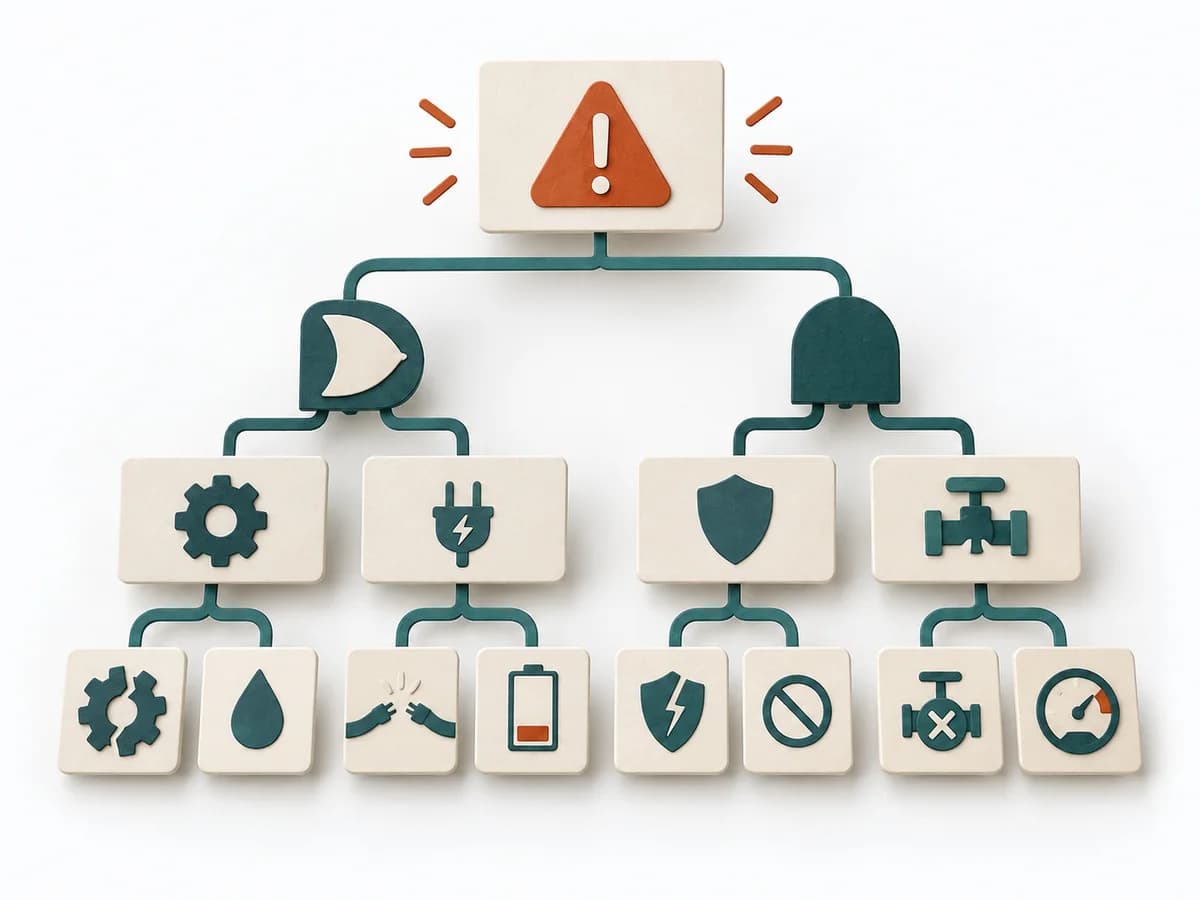
Instead of Causal Factor Analysis, choose Fault Tree Analysis when you want to break down a failure top-down through logical links and failure paths.
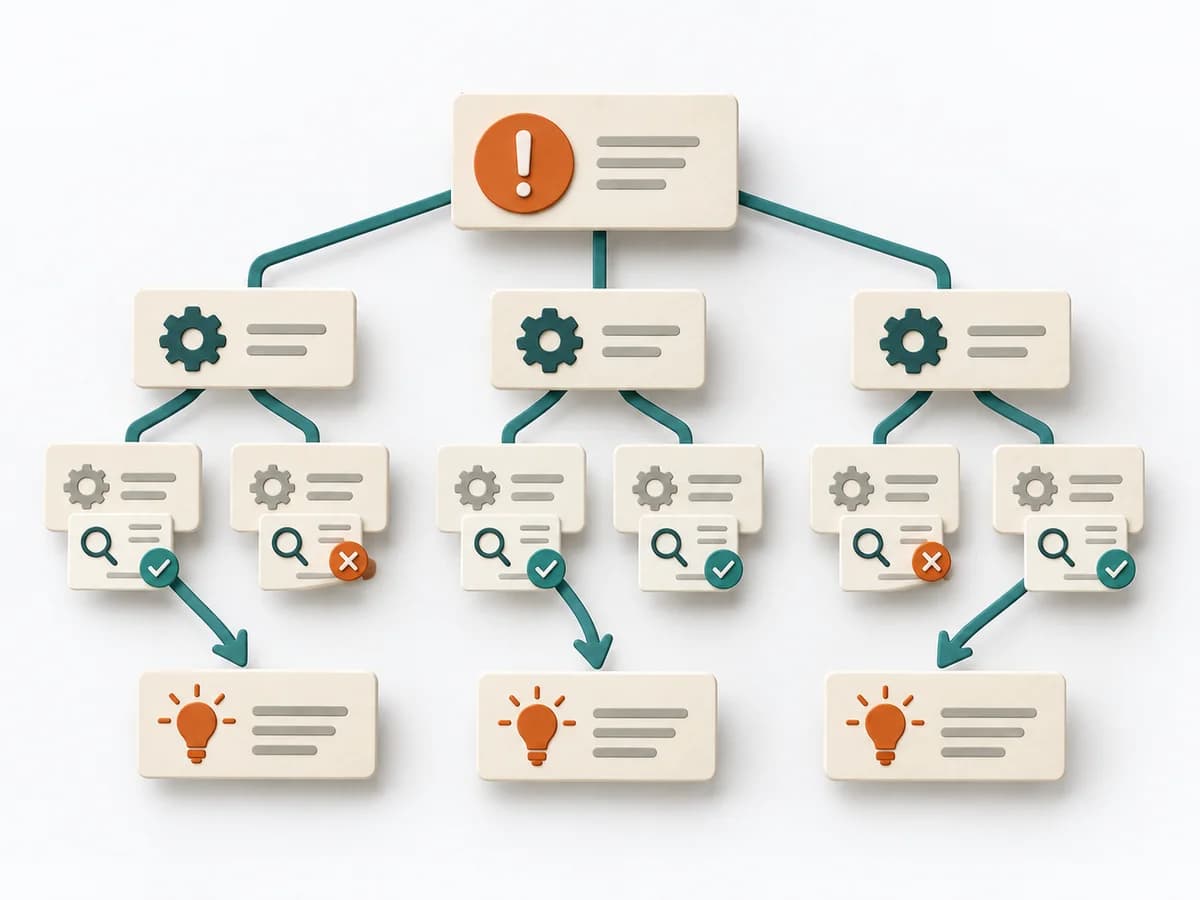
Instead of Causal Factor Analysis, choose Root Cause Tree Analysis when you want to trace causes as a branched tree with clear root causes.

Compares an outlier with a stable case and filters out the differences that explain the deviation.
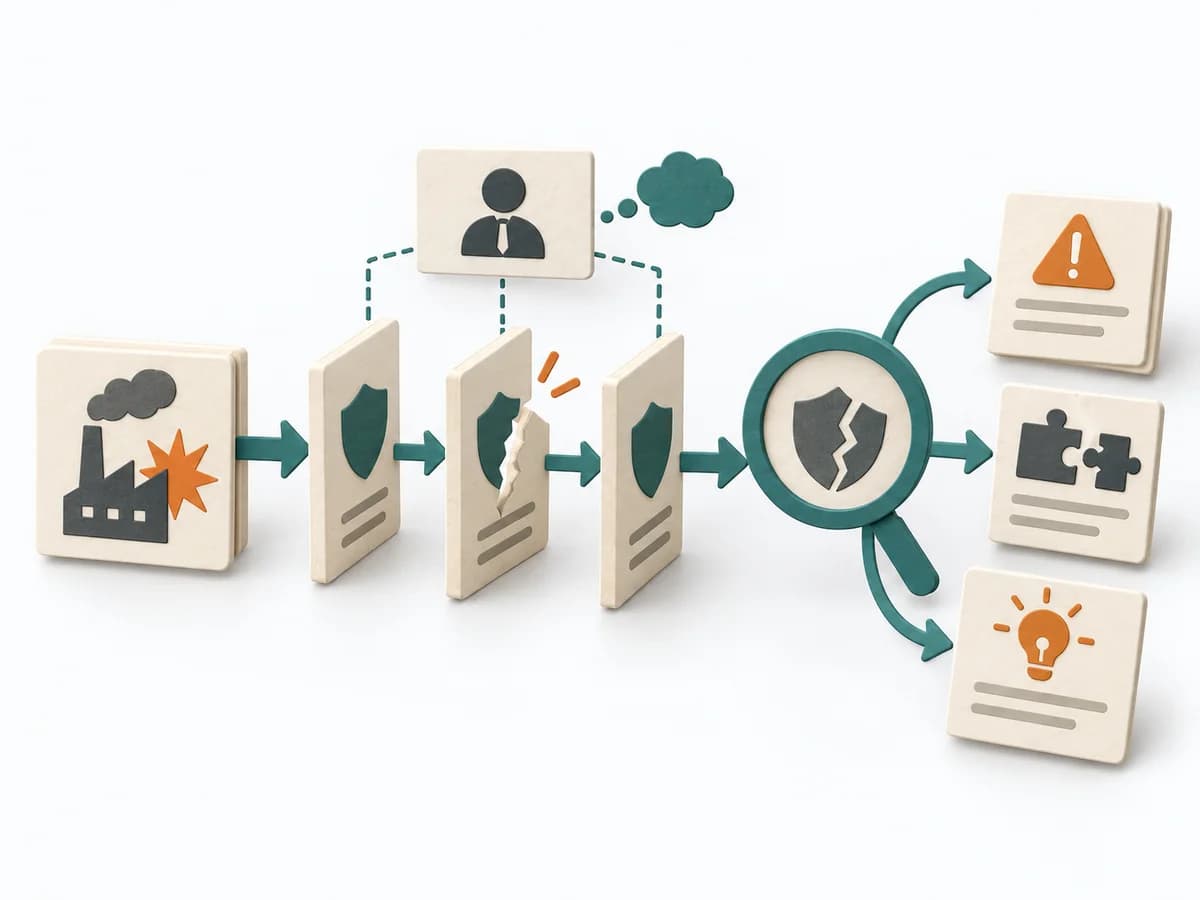
A structured accident tree separates management controls, barriers, and events so serious incidents become auditable.
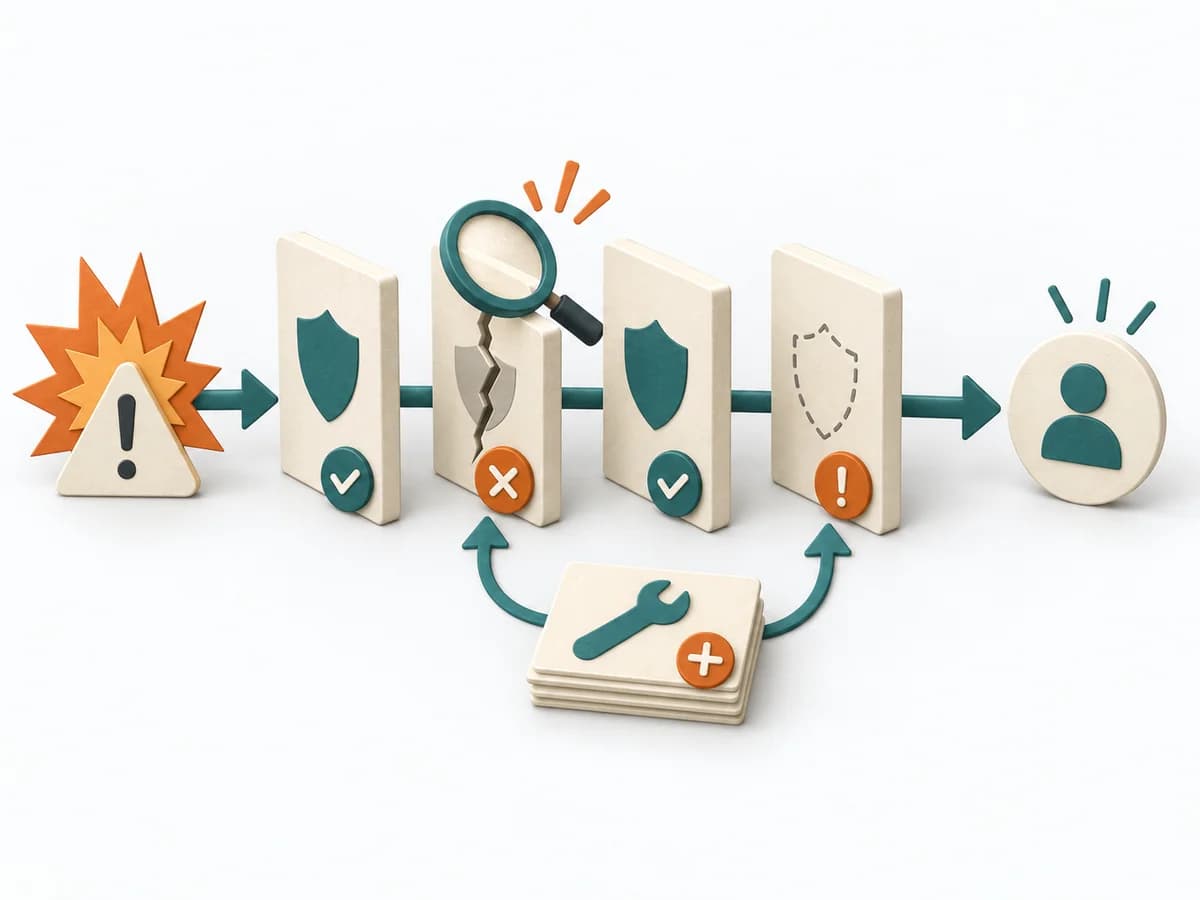
Hazards, targets, and failed barriers are mapped so controls can be strengthened at the point of exposure.

A recurring incident pattern links related cases across time so systemic causes become visible beyond one event.