Complete firstWorking basis
Write one concrete goal or decision question, identify relevant perspectives, and collect current goals, terms, and evidence.
Use a concrete case and observable outcome.
A practical method guide: clarify prerequisites and materials, understand the complete process, and look up outputs, pitfalls, and stop criteria.
What needs to be finished first
Write one concrete goal or decision question, identify relevant perspectives, and collect current goals, terms, and evidence.
Capture perspectives separately first. Mark common ground, open questions, contradictions, and dependencies as distinct states.
What needs to be ready before start
Alignment map with perspective, shared statement, conflict, and clarification; decision question; existing goals and evidence; timer.
Affected decision and delivery roles · facilitator · scribe · owner for each clarification
Write one concrete goal or decision question, identify relevant perspectives, and collect current goals, terms, and evidence.
60–90 minutes for one goal or decision; investigate open evidence questions afterwards.
Capture perspectives separately first. Mark common ground, open questions, contradictions, and dependencies as distinct states.
The one question this method answers
Which statements are shared, where do goals or assumptions diverge, and what clarification follows?
Phases with goal, actions, output and pitfall
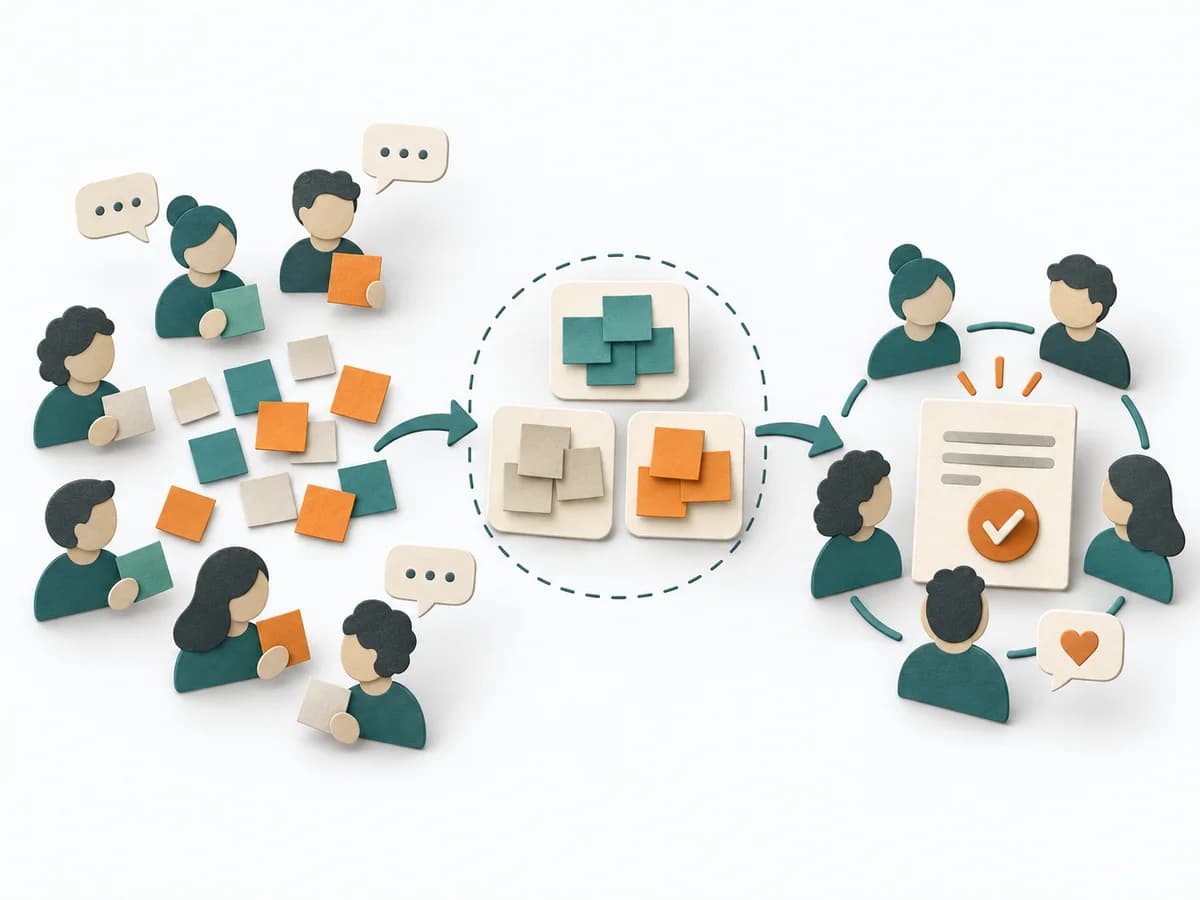
Alignment Mapping places several perspectives side by side. Agreement, open questions, and real contradictions are marked separately so verbal consensus is not mistaken for shared direction.
Fictional example
Fictional example for one concrete work case.
| Case | Perspective | Shared | Open or contradictory | Clarification step |
|---|---|---|---|---|
| Example caseWhich statements are shared, where do goals or assumptions diverge, and what clarification follows? | Support: fast first response; Product: durable root-cause removal | Stabilise critical customer outages first | Whether success means 24-hour response or 5-day root-cause analysis | Product Ops clarifies service target and problem class by Friday |
The example is fictional and must be adapted to mandate and context.
Question

Goal
Precise alignment question: State one shared question about a goal or decision.
Inputs for this step
Actions
Output
Precise alignment question
Precise alignment question
Quality check
Can the guiding question be answered by a decision or testable statement?
Pitfall
The question merely asks whether we are aligned and names no subject. Return to “Frame alignment question” and repeat this method step: State one shared question about a goal or decision.
Timing: 10–20 minutes
Perspectives
Goal
Unanchored perspectives: Participants record goal picture, priorities, and assumptions before group pressure.
Inputs for this step
Actions
Output
Unanchored perspectives
Unanchored perspectives
Quality check
Did every relevant role contribute target, priority, and assumption independently?
Pitfall
The first presented perspective anchors all later contributions. Return to “Collect views separately” and repeat this method step: Participants record goal picture, priorities, and assumptions before group pressure.
Timing: 10–20 minutes
Map
Goal
Shared alignment map: Sort statements into shared, open, contradictory, and dependent.
Inputs for this step
Actions
Output
Shared alignment map
Shared alignment map
Quality check
Does the map distinguish shared statements, open questions, contradictions, and dependencies?
Pitfall
Disagreement is disguised as an open question or overruled by majority marking. Return to “Map together” and repeat this method step: Sort statements into shared, open, contradictory, and dependent.
Timing: 10–20 minutes
Gaps
Goal
Named real gaps: Clarify terms and separate real goal or evidence gaps from misunderstandings.
Inputs for this step
Actions
Output
Named real gaps
Named real gaps
Quality check
Did the group determine whether differences arise from terms, goals, data, or mandate?
Pitfall
Long terminology debates replace examination of real goal or data conflicts. Return to “Examine meaning” and repeat this method step: Clarify terms and separate real goal or evidence gaps from misunderstandings.
Timing: 10–20 minutes
Action
Goal
Clarification and decision plan: Record decision questions, owners, needed evidence, and next date.
Inputs for this step
Actions
Output
Clarification and decision plan
Clarification and decision plan
Quality check
Does each open question have required evidence, an owner, and a decision date?
Pitfall
The map ends with many open points and no decision path. Return to “Plan clarification” and repeat this method step: Record decision questions, owners, needed evidence, and next date.
Timing: 10–20 minutes
What comes out at the end
Sketch: what the artifact looks like
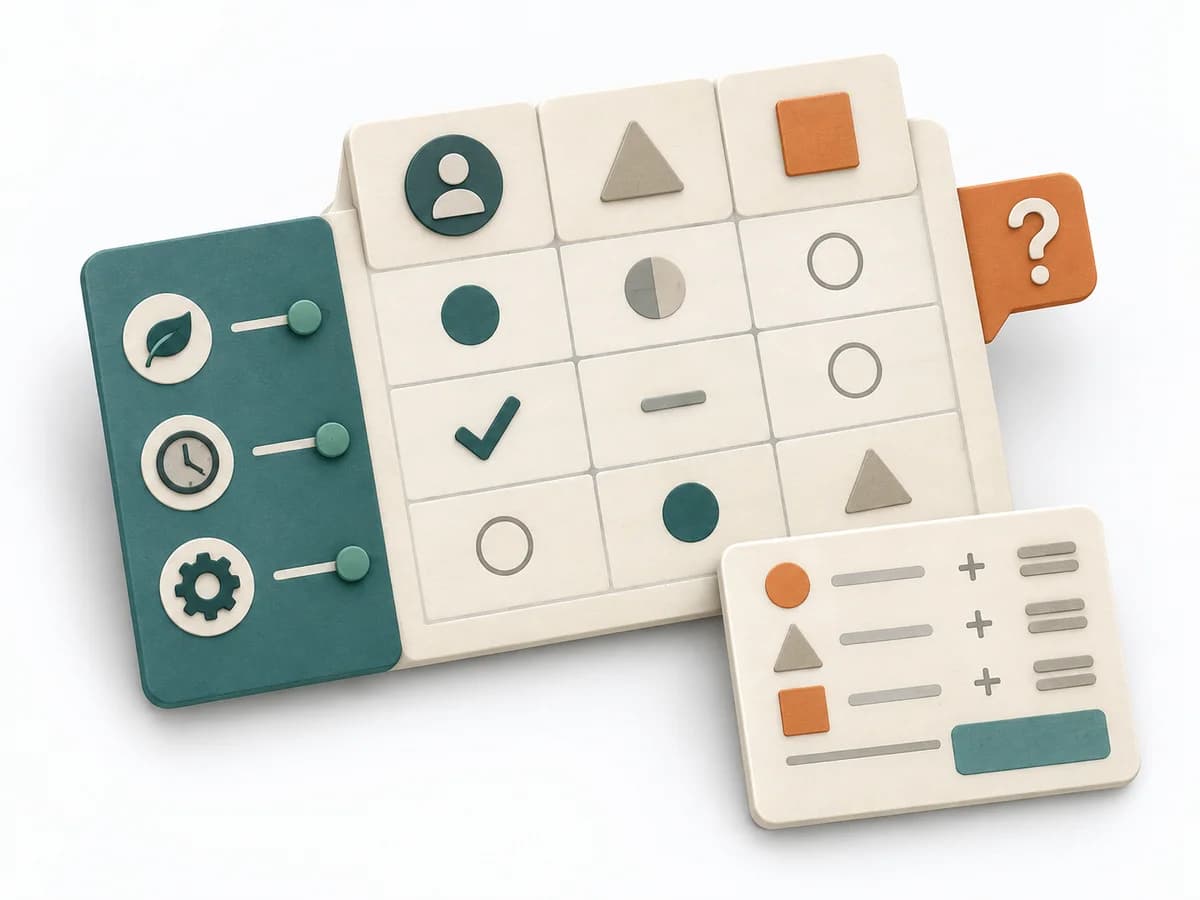
Alignment map with shared target, unresolved conflicts, clarified terms, evidence needs, owners, and decision date.
Version the clarification and decision plan with date, owner, source state, and review date. Preserve earlier observations and append changes with their reason.
Plan the question, inputs, complete run, and review with clear ownership.
To be confirmed
To be confirmed
Complete run Time: 60–90 minutes for one goal or decision; investigate open evidence questions afterwards.
Complete this worksheet on paper or in your own document during the work.
| Case | Perspective | Shared | Open or contradictory | Clarification step |
|---|---|---|---|---|
| Example case |
Use one specifically bounded case per row.
Reference source · original teaching example
Expected artifact: Precise alignment question
Precise alignment question
Entry:
...
Expected artifact: Unanchored perspectives
Unanchored perspectives
Entry:
...
Expected artifact: Shared alignment map
Shared alignment map
Entry:
...
Expected artifact: Named real gaps
Named real gaps
Entry:
...
Expected artifact: Clarification and decision plan
Clarification and decision plan
Entry:
...
...
Method guide: https://methodatlas.meierhoff-systems.de/en/methods/alignment-mapping/run-sheet
Concrete filled scenario, fictional example
Fictional example for orientation. Counts and timings describe this case and are not universal requirements.
Concrete filled scenario, fictional example
Guiding question: Which statements are shared, where do goals or assumptions diverge, and what clarification follows?
| Perspective | Shared | Open or contradictory | Clarification step |
|---|---|---|---|
| Support: fast first response; Product: durable root-cause removal | Stabilise critical customer outages first | Whether success means 24-hour response or 5-day root-cause analysis | Product Ops clarifies service target and problem class by Friday |
The example is fictional and must be adapted to mandate and context.
Recognize symptoms and steer against them
Quick overview, the full text is in the matching phase in the flow
The question merely asks whether we are aligned and names no subject.
Return to “Frame alignment question” and repeat this method step: State one shared question about a goal or decision.
The first presented perspective anchors all later contributions.
Return to “Collect views separately” and repeat this method step: Participants record goal picture, priorities, and assumptions before group pressure.
Disagreement is disguised as an open question or overruled by majority marking.
Return to “Map together” and repeat this method step: Sort statements into shared, open, contradictory, and dependent.
Long terminology debates replace examination of real goal or data conflicts.
Return to “Examine meaning” and repeat this method step: Clarify terms and separate real goal or evidence gaps from misunderstandings.
The map ends with many open points and no decision path.
Return to “Plan clarification” and repeat this method step: Record decision questions, owners, needed evidence, and next date.
When to pause, resolve prerequisites, or choose another approach
Go to the profile for purpose, similar methods, and sources or continue to the next method in the catalog.