methodatlas
Session Builder

Plan my session

Plan a concrete work block with agenda, roles, preparation, and a copyable result artifact.

Method session1-2 hWorkshopAlignment Map

Session: Alignment Mapping

The plan translates the method into a concrete facilitated work block. Your inputs flow directly into the session brief and work artifact.

Derived automatically

Method session with 4-12. The plan uses the existing method logic and the runsheet.

Runsheet
Participation logic
Team round, shared work and alignment

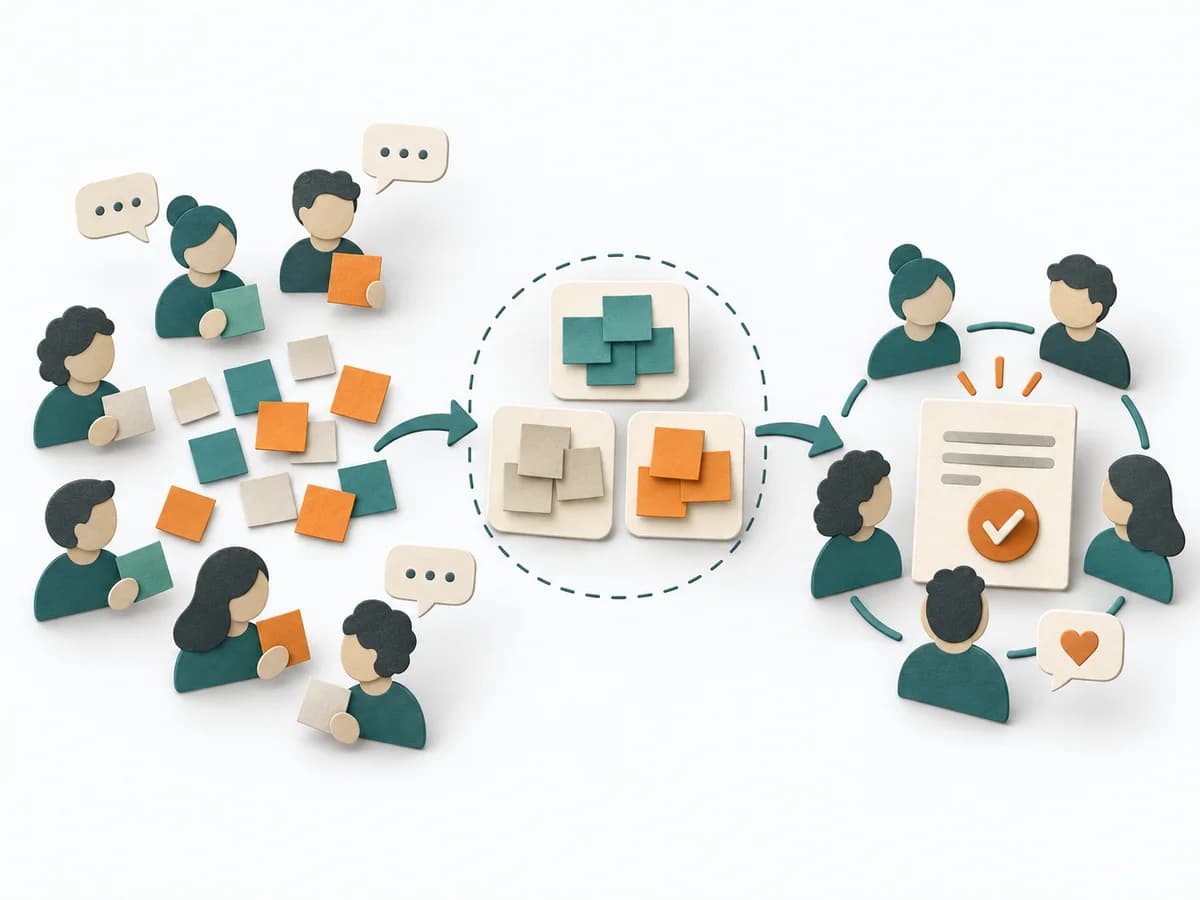
Use the session for shared understanding. Contributions are collected visibly, assumptions are aligned, and open differences remain traceable in the artifact.

Outcome logic
Finish artifact

The session works directly toward Alignment Map. After the session, the artifact should be shareable, reviewable, or reusable.

  1. 1

    0-10 min

    10 min

    Define the alignment question and confirm the decision horizon or situation under discussion. Hint: If the question is too broad, the map will become a wish list instead of an alignment tool.

    FacilitatorAlignment Map
  2. 2

    10-25 min

    15 min

    Collect stakeholder perspectives individually before the group starts to compare them. Hint: If only the loudest voices speak first, important differences will disappear.

    FacilitatorOpen Issues
  3. 3

    25-45 min

    20 min

    Map the goals, concerns, and assumptions for each perspective side by side. Hint: If the same statement appears in every column, the map is probably too abstract.

    FacilitatorDecision Questions
  4. 4

    45-70 min

    25 min

    Mark conflicts, missing information, and open questions that prevent alignment. Hint: Do not smooth over disagreement. The value of the map is to make the gap visible.

    FacilitatorAlignment Map
  5. 5

    70-120 min

    50 min

    Turn the map into clarification steps, owners, and a short list of decision questions. Hint: If the next step is not owned, the map becomes a static diagram instead of a working tool.

    OwnerOpen Issues
  6. 6

    Publish artifact

    10 min

    Check the artifact for completeness, define location, set version or status, and name review recipients.

    OwnerAlignment Map
Usable artifact

Session Brief

For invitations, boards, tickets, PR descriptions, or workshop notes.

session-brief.md

Session Brief: Alignment Mapping

Goal

Artifact: Alignment Map

Working Question

Where do stakeholders align, where do they diverge, and what clarifications are needed before a decision can move forward?

Context

The alignment question, the current context, the decision horizon, and any known constraints or non-negotiables.

Setup

  • Format: Method session
  • Duration: 1-2 h
  • Mode: Workshop
  • Participants: One facilitator, 4-12 stakeholders or representatives, and optionally a scribe for decisions and follow-ups.
  • Owner: One facilitator, 4-12 stakeholders or representatives, and optionally a scribe for decisions and follow-ups
  • Participation mode: Team round, shared work and alignment
  • Outcome logic: Finish artifact

Participation Logic

Use the session for shared understanding. Contributions are collected visibly, assumptions are aligned, and open differences remain traceable in the artifact.

Outcome Logic

The session works directly toward Alignment Map. After the session, the artifact should be shareable, reviewable, or reusable.

Input

Mapping canvas, sticky notes or digital cards, markers, a timer, and space for open issues and next steps.

Preparation

Create one column or zone per perspective plus space for conflicts and questions. Keep the alignment question visible at the top.

Agenda

  1. 0-10 min (10 min) Owner: Facilitator Action: Define the alignment question and confirm the decision horizon or situation under discussion. Hint: If the question is too broad, the map will become a wish list instead of an alignment tool. Output: Alignment Map

  2. 10-25 min (15 min) Owner: Facilitator Action: Collect stakeholder perspectives individually before the group starts to compare them. Hint: If only the loudest voices speak first, important differences will disappear. Output: Open Issues

  3. 25-45 min (20 min) Owner: Facilitator Action: Map the goals, concerns, and assumptions for each perspective side by side. Hint: If the same statement appears in every column, the map is probably too abstract. Output: Decision Questions

  4. 45-70 min (25 min) Owner: Facilitator Action: Mark conflicts, missing information, and open questions that prevent alignment. Hint: Do not smooth over disagreement. The value of the map is to make the gap visible. Output: Alignment Map

  5. 70-120 min (50 min) Owner: Owner Action: Turn the map into clarification steps, owners, and a short list of decision questions. Hint: If the next step is not owned, the map becomes a static diagram instead of a working tool. Output: Open Issues

  6. Publish artifact (10 min) Owner: Owner Action: Check the artifact for completeness, define location, set version or status, and name review recipients. Output: Alignment Map

Closeout

  • Update result artifact: Alignment Map
  • Define location, version, and review recipients.
  • Define owner, next step, and review date.
Usable artifact

Work artifact

Pre-filled starting point based on the matching template.

work-artifact.md

Alignment Map: Alignment Mapping

Working Question

Where do stakeholders align, where do they diverge, and what clarifications are needed before a decision can move forward?

Context

The alignment question, the current context, the decision horizon, and any known constraints or non-negotiables.

Participants

  • Owner: One facilitator, 4-12 stakeholders or representatives, and optionally a scribe for decisions and follow-ups
  • Participants: One facilitator, 4-12 stakeholders or representatives, and optionally a scribe for decisions and follow-ups.

Input

Mapping canvas, sticky notes or digital cards, markers, a timer, and space for open issues and next steps.

Template

Alignment Mapping Canvas

Context

What is this method used for?

Core question

Which question should be answered at the end?

Input

Which data, observations, or materials are available?

Working area

  • Area 1:
  • Area 2:
  • Area 3:
  • Relationships / patterns:

Output artifacts

  • Alignment Map:
  • Open Issues:
  • Decision Questions:

Open questions

  • ...

Next step

Owner, date, success signal.

Completion Check

  • Alignment Map is complete enough for review:
  • Location:
  • Version / status:
  • Review by:
  • Next step:

Next Step

  • Review result
  • Mark open questions
  • Schedule review or decision
Template base

Alignment Mapping Working Template

View templateCompact working template for Alignment Mapping with context, input, output artifacts, and next step.
canvas

alignment-mapping-working-template.md

Compact working template for Alignment Mapping with context, input, output artifacts, and next step.

Alignment Mapping Canvas

Context

What is this method used for?

Core question

Which question should be answered at the end?

Input

Which data, observations, or materials are available?

Working area

  • Area 1:
  • Area 2:
  • Area 3:
  • Relationships / patterns:

Output artifacts

  • Alignment Map:
  • Open Issues:
  • Decision Questions:

Open questions

  • ...

Next step

Owner, date, success signal.

Ready to use when
  • Working question, owner, and target artifact are visible.
  • The result fits Alignment Map.
  • Record the date, topic, participants, and decision owner. Update the map whenever key stakeholders, assumptions, or constraints change.
  • Open questions are noted as follow-ups.
  • The next review or decision point is scheduled.