Troika Consulting: Worksheet
Plan subject, participation, complete flow, and review.
# Troika Consulting: Worksheet

## Question
To be confirmed

## Desired outcome
To be confirmed

## Scope
Complete run
Time: 30–45 minutes for three consulting rounds.

Complete this worksheet on paper or in your own document during the work.

## Preparation for this scope

### Method setup
- **Materials:** Concrete challenges, timer, quiet triads, and notes for insights
- **Roles:** Triads with one client and two consultants; facilitator for timing and rotation
- **Advance information:** Set triads, equal airtime, and confidentiality; each person brings one real challenge and requested help. Prepare real cases, sources, and boundaries.
- **Overall time needed:** 30–45 minutes for three consulting rounds.
- **Setup:** Create a workspace with Working triad · Clear challenge · Clarified context · Peer advice · Personal insights; keep example values separate from live data.

### Prepare for the work steps

#### Frame: Working triad
- Set triads, equal airtime, and confidentiality; each person brings one real challenge and requested help.
- Concrete challenges, timer, quiet triads, and notes for insights

#### Case: Clear challenge
- Working triad

#### Questions: Clarified context
- Clear challenge

#### Consult: Peer advice
- Clarified context

#### Rotate: Personal insights
- Peer advice


## Troika Consulting · working structure

### Working triad
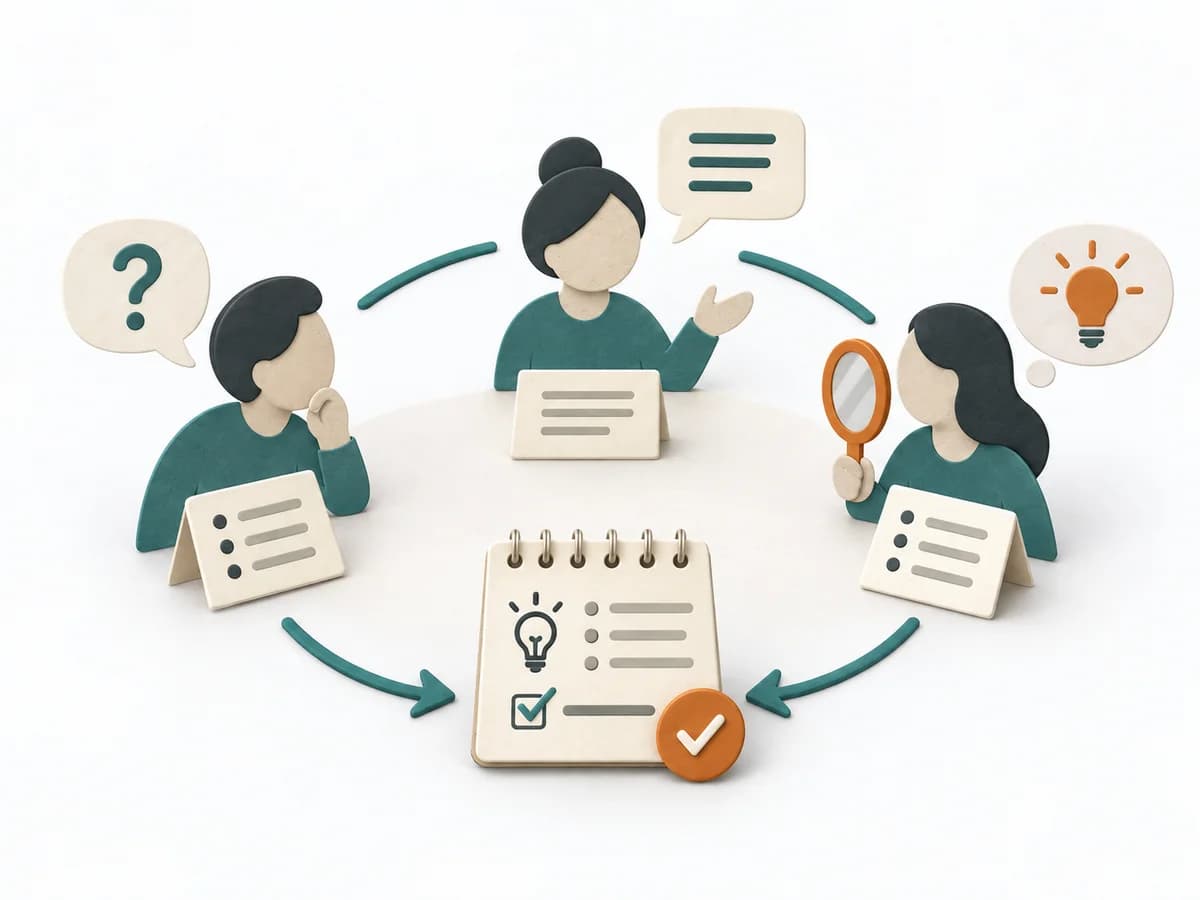
Form triads and clarify confidentiality and timing

...

### Clear challenge
The client describes the challenge and requested help in two minutes

...

### Clarified context
Consultants ask clarifying questions only, without offering solutions yet

...

### Peer advice
The client turns away while consultants discuss options and the client listens

...

### Personal insights
The client names useful insights; rotate until everyone has received consultation

...

The blank worksheet contains prompts only.

[Reference source · original teaching example](https://www.liberatingstructures.com/troika-consulting)


## Frame: Working triad
Expected artifact: Working triad

Form triads and clarify confidentiality and timing

Entry:

...

- [ ] Are roles, confidentiality, and equal airtime clear?

## Case: Clear challenge
Expected artifact: Clear challenge

The client describes the challenge and requested help in two minutes

Entry:

...

- [ ] Is the challenge concrete and the requested help named?

## Questions: Clarified context
Expected artifact: Clarified context

Consultants ask clarifying questions only, without offering solutions yet

Entry:

...

- [ ] Do questions remain short and free of hidden advice?

## Consult: Peer advice
Expected artifact: Peer advice

The client turns away while consultants discuss options and the client listens

Entry:

...

- [ ] Does the client remain silent during consultation and retain freedom to choose?

## Rotate: Personal insights
Expected artifact: Personal insights

The client names useful insights; rotate until everyone has received consultation

Entry:

...

- [ ] Does each person record their own next steps without forcing a group decision?

## Open questions and next steps

...

Method guide: https://methodatlas.meierhoff-systems.de/en/methods/troika-consulting/run-sheet
Fishbowl Discussion: Worksheet
Plan subject, participation, complete flow, and review.
# Fishbowl Discussion: Worksheet

## Question
To be confirmed

## Desired outcome
To be confirmed

## Scope
Complete run
Time: 60–120 minutes.

Complete this worksheet on paper or in your own document during the work.

## Preparation for this scope

### Method setup
- **Materials:** Guiding question, visible agenda, work surfaces, timer, and result repository
- **Roles:** Facilitator · participants · hosts or session owners · scribe
- **Advance information:** Set one focused discussion question, listening task, and rotation rule; arrange an inner circle with an open chair. Prepare real cases, sources, and boundaries.
- **Overall time needed:** 60–120 minutes.
- **Setup:** Create a workspace with Discussion frame · Fishbowl setup · Inner dialogue · Perspective shifts · Review; keep example values separate from live data.

### Prepare for the work steps

#### Frame: Discussion frame
- Set one focused discussion question, listening task, and rotation rule; arrange an inner circle with an open chair.
- Guiding question, visible agenda, work surfaces, timer, and result repository

#### Circles: Fishbowl setup
- Discussion frame

#### Dialogue: Inner dialogue
- Fishbowl setup

#### Rotate: Perspective shifts
- Inner dialogue

#### Review: Review
- Perspective shifts


## Fishbowl Discussion · working structure

### Discussion frame
Clarify the discussion question, listening task, and rotation rule

...

### Fishbowl setup
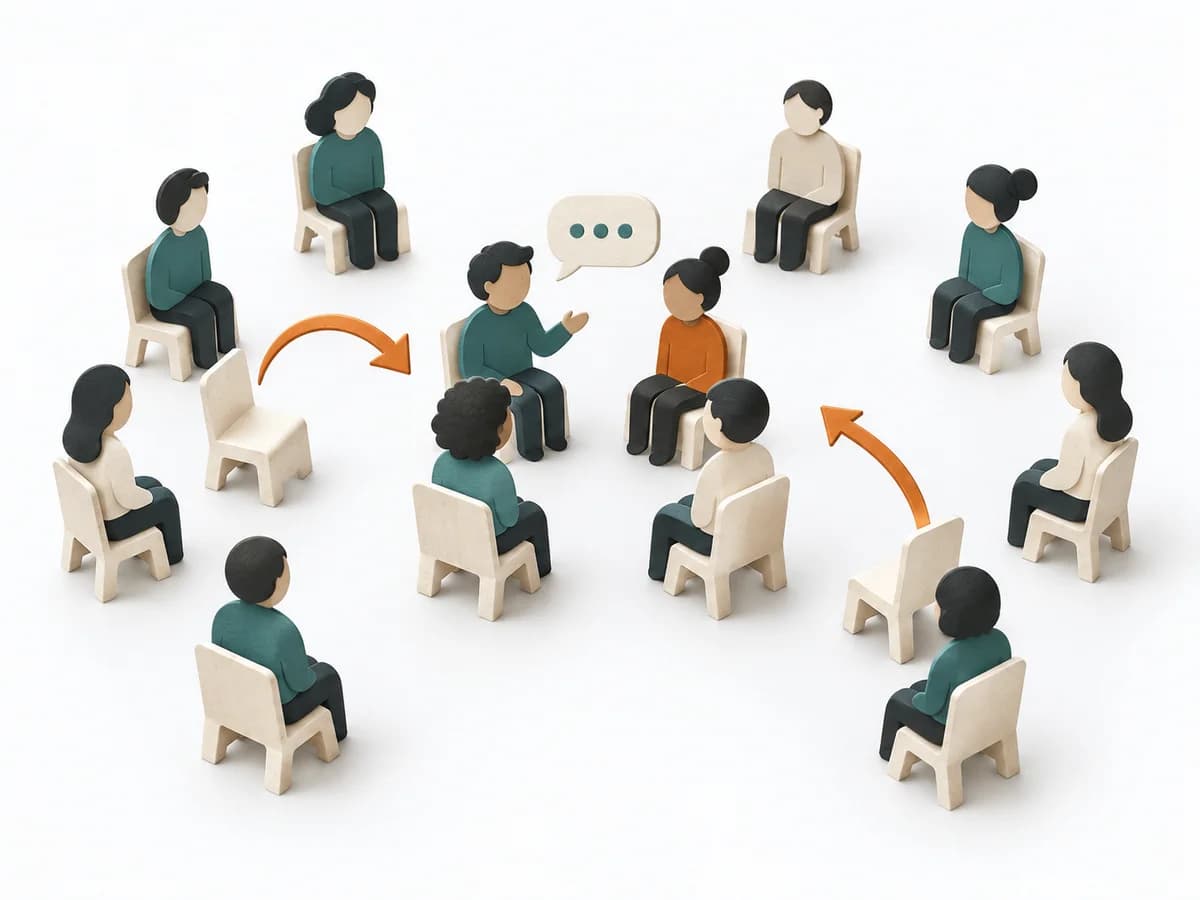
Form an inner circle with one empty chair and an outer observation circle

...

### Inner dialogue
The inner group discusses while the outer circle listens to the agreed task

...

### Perspective shifts
Outer participants use the empty chair or agreed rotation without taking over

...

### Review
Review content insights, tensions, and observations from both circles

...

The blank worksheet contains prompts only.

[Reference source · original teaching example](https://www.sessionlab.com/methods/fishbowl)


## Frame: Discussion frame
Expected artifact: Discussion frame

Clarify the discussion question, listening task, and rotation rule

Entry:

...

- [ ] Are question, listening task, speaking rule, and rotation clear to both circles?

## Circles: Fishbowl setup
Expected artifact: Fishbowl setup

Form an inner circle with one empty chair and an outer observation circle

Entry:

...

- [ ] Does at least one chair remain open for governed perspective shifts?

## Dialogue: Inner dialogue
Expected artifact: Inner dialogue

The inner group discusses while the outer circle listens to the agreed task

Entry:

...

- [ ] Does the inner circle discuss while the outer circle listens to the agreed task?

## Rotate: Perspective shifts
Expected artifact: Perspective shifts

Outer participants use the empty chair or agreed rotation without taking over

Entry:

...

- [ ] Do guests leave the open chair again so more perspectives can enter?

## Review: Review
Expected artifact: Review

Review content insights, tensions, and observations from both circles

Entry:

...

- [ ] Does the review separate content findings from observations about discussion dynamics?

## Open questions and next steps

...

Method guide: https://methodatlas.meierhoff-systems.de/en/methods/fishbowl-discussion/run-sheet
Alignment Mapping: Worksheet
Plan the question, inputs, complete run, and review with clear ownership.
# Alignment Mapping: Worksheet

## Question
To be confirmed

## Desired outcome
To be confirmed

## Scope
Complete run
Time: 60–90 minutes for one goal or decision; investigate open evidence questions afterwards.

Complete this worksheet on paper or in your own document during the work.

## Preparation for this scope

### Method setup
- **Materials:** Alignment map with perspective, shared statement, conflict, and clarification; decision question; existing goals and evidence; timer.
- **Roles:** Affected decision and delivery roles · facilitator · scribe · owner for each clarification
- **Advance information:** Write one concrete goal or decision question, identify relevant perspectives, and collect current goals, terms, and evidence.
- **Overall time needed:** 60–90 minutes for one goal or decision; investigate open evidence questions afterwards.
- **Setup:** Capture perspectives separately first. Mark common ground, open questions, contradictions, and dependencies as distinct states.

### Prepare for the work steps

#### Question: Frame alignment question
- Write one concrete goal or decision question, identify relevant perspectives, and collect current goals, terms, and evidence.

#### Perspectives: Collect views separately
- Precise alignment question

#### Map: Map together
- Unanchored perspectives

#### Gaps: Examine meaning
- Shared alignment map

#### Action: Plan clarification
- Named real gaps


## Alignment map

| Case | Perspective | Shared | Open or contradictory | Clarification step |
| --- | --- | --- | --- | --- |
| Example case |   |   |   |   |

- **Example case:** Which statements are shared, where do goals or assumptions diverge, and what clarification follows?

Use one specifically bounded case per row.

[Reference source · original teaching example](https://www.atlassian.com/team-playbook/plays/team-poster)


## Question: Frame alignment question
Expected artifact: Precise alignment question

Precise alignment question

Entry:

...

- [ ] Can the guiding question be answered by a decision or testable statement?

## Perspectives: Collect views separately
Expected artifact: Unanchored perspectives

Unanchored perspectives

Entry:

...

- [ ] Did every relevant role contribute target, priority, and assumption independently?

## Map: Map together
Expected artifact: Shared alignment map

Shared alignment map

Entry:

...

- [ ] Does the map distinguish shared statements, open questions, contradictions, and dependencies?

## Gaps: Examine meaning
Expected artifact: Named real gaps

Named real gaps

Entry:

...

- [ ] Did the group determine whether differences arise from terms, goals, data, or mandate?

## Action: Plan clarification
Expected artifact: Clarification and decision plan

Clarification and decision plan

Entry:

...

- [ ] Does each open question have required evidence, an owner, and a decision date?

## Open questions and next steps

...

Method guide: https://methodatlas.meierhoff-systems.de/en/methods/alignment-mapping/run-sheet
Decision Jam: Worksheet
Plan the session around the canonical method steps and a concrete decision.
# Decision Jam: Worksheet

## Question
To be confirmed

## Desired outcome
To be confirmed

## Scope
Full session
Time: 60–90 minutes

Complete this worksheet on paper or in your own document during the work.

## Preparation for this scope

### Method setup
- **Materials:** LDJ decision board, timer, notes, and decision log.
- **Roles:** Facilitator · decider · 3–8 affected participants
- **Advance information:** Collect existing evidence and constraints in advance.
- **Overall time needed:** 60–90 minutes
- **Setup:** Prepare the canonical blank structure and make timeboxes visible.

### Prepare for the work steps

#### Problems: Problems
- Concrete work context

#### Priority: Priority
- problem wall

#### HMW question: HMW question
- top problem

#### Solutions: Solutions
- HMW question

#### Effort/impact: Effort/impact
- solution portfolio


## LDJ decision board

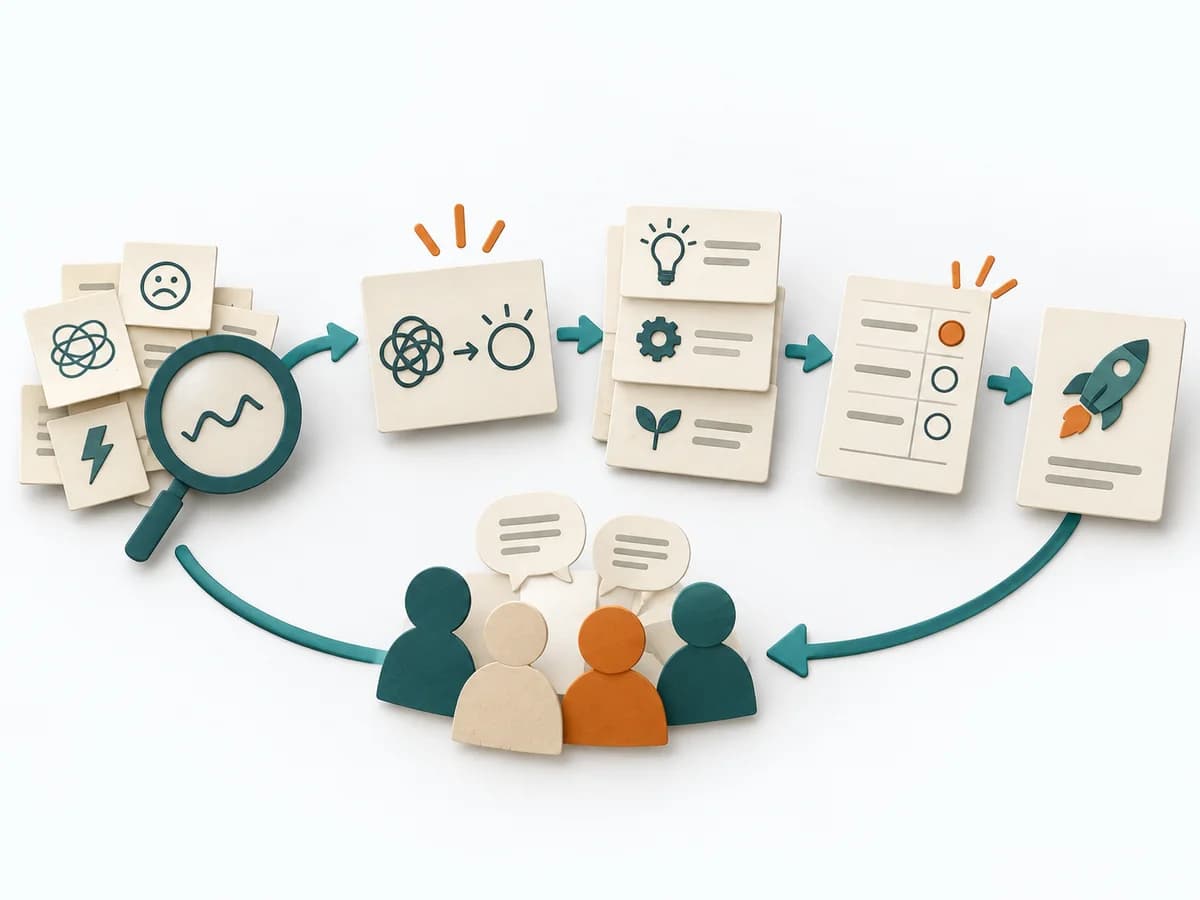
### Silent problems

...

### Top priority

...

### HMW

...

### Silent solutions

...

### Effort/impact

...

### Test

...

### Working policies

**Silent problems**
...

**Top priority**
...

**HMW**
...

**Silent solutions**
...

**Effort/impact**
...

**Test**
...

[AJ&Smart: Lightning Decision Jam](https://go.ajsmart.com/ldj)


## Problems: Problems
Expected artifact: problem wall

problem wall with evidence, owner, and next decision.

Entry:

...

- [ ] Are problems concrete and solution-free?

## Priority: Priority
Expected artifact: top problem

top problem with evidence, owner, and next decision.

Entry:

...

- [ ] Is exactly one problem selected for the next step?

## HMW question: HMW question
Expected artifact: HMW question

HMW question with evidence, owner, and next decision.

Entry:

...

- [ ] Does the question allow several solutions?

## Solutions: Solutions
Expected artifact: solution portfolio

solution portfolio with evidence, owner, and next decision.

Entry:

...

- [ ] Are solutions concrete enough for effort/impact?

## Effort/impact: Effort/impact
Expected artifact: experiment card

experiment card with evidence, owner, and next decision.

Entry:

...

- [ ] Does the experiment define behaviour, threshold, and guardrail?

## Open questions and next steps

...

Method guide: https://methodatlas.meierhoff-systems.de/en/methods/decision-jam/run-sheet