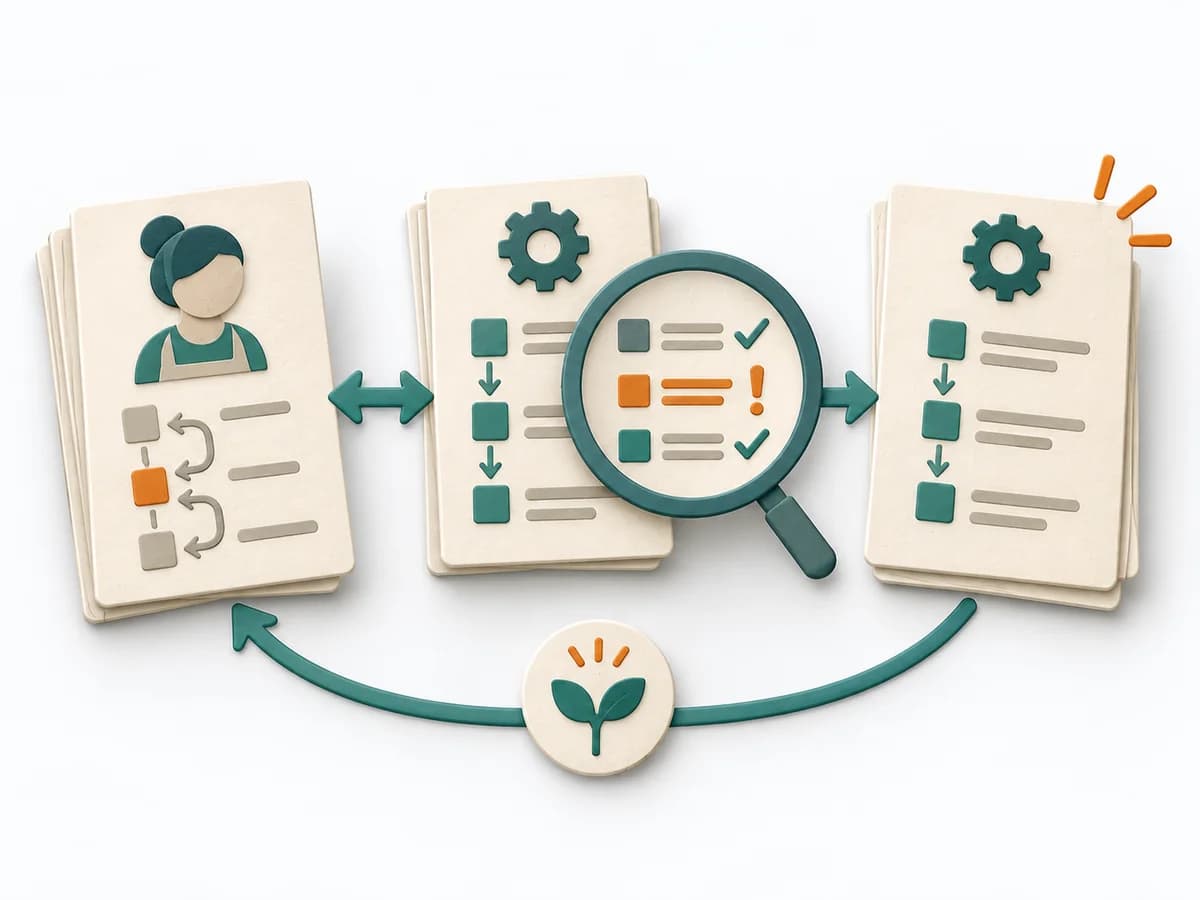
Purpose
For a process problem with fluctuating performance, the method brings analysis and improvement into a disciplined sequence. It creates a framework in which numbers, causes, and control come together.
Operations Process model
DMAIC directs improvement work from problem definition through measurement and analysis to controls and lasting transfer.
DMAIC narrows work from the problem space through measurement and analysis to improvement and control. The sequence keeps the measured effect and its stabilisation visible.
How will we improve an existing process through valid measurement, confirmed drivers, and sustainably controlled changes?
Evidence building, analysis, and effectiveness review form a multi-stage initiative.
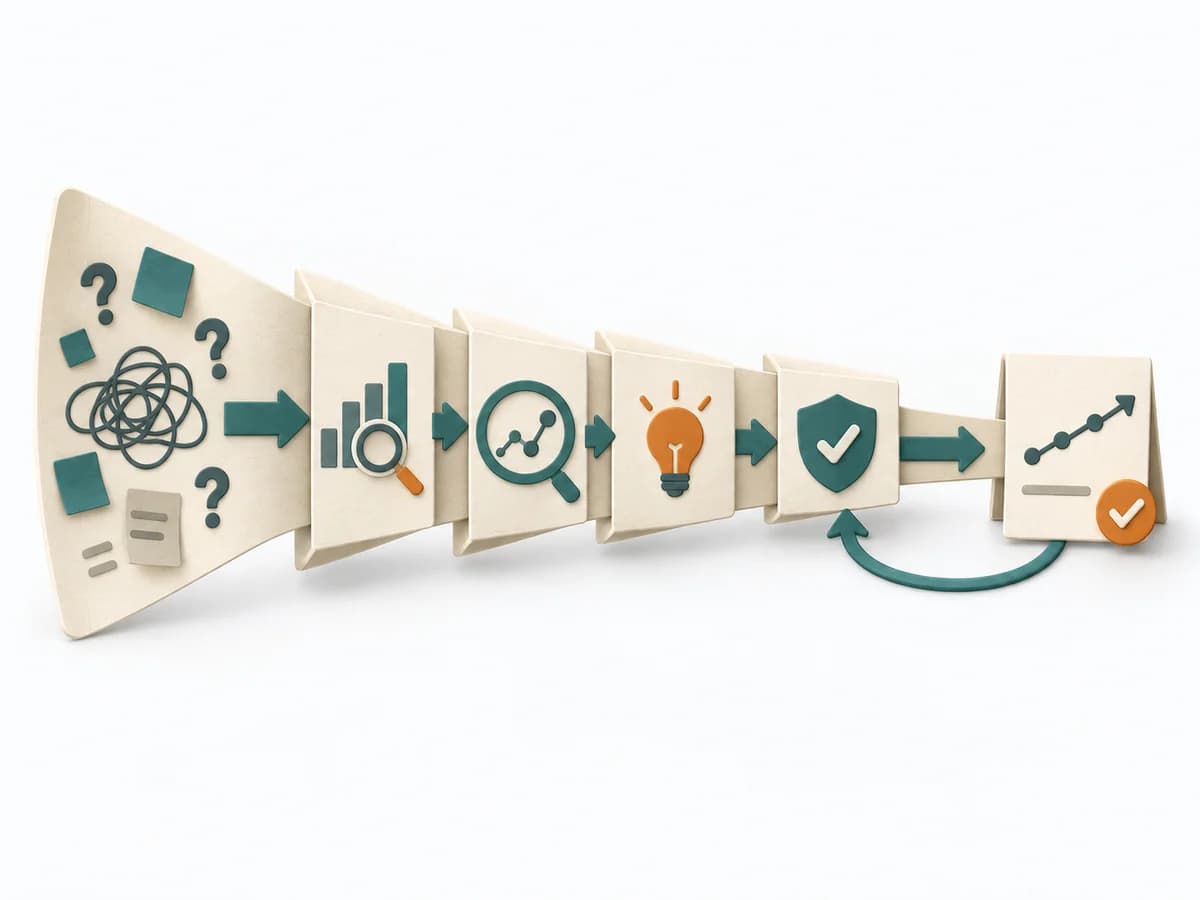
Define
Set problem, customer requirement, CTQ, goal, scope, business case, team, and sponsor in a charter.
Measure
Map current process, operationalise measures, validate the measurement system, and collect a stratified baseline.
Analyze
Derive potential X drivers from process and data; confirm causes through analysis, comparison, or experiment.
Improve
Design solutions against confirmed Xs, assess risk, pilot, and verify against baseline.
Control
Set process standard, monitoring, reaction plan, owner, and handover; verify stability after implementation.
Add new evidence at review and version decisions with the prior state.
Bei einem Prozessproblem mit schwankender Leistung bringt die Methode Analyse und Verbesserung in eine disziplinierte Folge. Sie schafft einen Rahmen, in dem Zahlen, Ursachen und Steuerung zusammenlaufen.
DMAIC project record with charter, validated baseline, confirmed causes, verified pilot, and handed-over control plan.
Fictional example
Fictional values show the actual method fields.
Set problem, customer requirement, CTQ, goal, scope, business case, team, and sponsor in a charter.
Checkout p80 is 18 vs target 10 minutes; scope Saturday pickup Hamburg; sponsor Operations; goal ≤12 by 31 Mar.
Map current process, operationalise measures, validate the measurement system, and collect a stratified baseline.
Arrival-to-handoff time; 240 cases over four Saturdays; timer agreement ±20 sec; p80 18 minutes.
Derive potential X drivers from process and data; confirm causes through analysis, comparison, or experiment.
Slot clustering explains 46% of variation; inventory sync has no stable effect; regression and shift comparison recorded.
Design solutions against confirmed Xs, assess risk, pilot, and verify against baseline.
Eight slots/hour on two Saturdays: p80 11.8; rejection 6%; no complaint increase.
Set process standard, monitoring, reaction plan, owner, and handover; verify stability after implementation.
Weekly p80; warning >13, action >15; Ops owner; inspect slot profile after two warnings; 30/60-day review.
All values are fictional.
Select an existing process with a measurable performance gap, customer requirement, sponsor, and clear boundary.
For a process problem with fluctuating performance, the method brings analysis and improvement into a disciplined sequence. It creates a framework in which numbers, causes, and control come together.
The work narrows step by step from the problem space to measurement, analysis, optimization, and control. This keeps visible which improvement actually carries the measured effect. Completion is only reached once the new performance is also stably secured.
DMAIC structures problem solving along a reliable data flow. Define clarifies problem, scope, and target; Measure creates a trustworthy measurement base. Analyze identifies causes, Improve develops and tests solutions, and Control anchors the new performance in the process. That connects analysis, implementation, and stabilization in one closed improvement frame.
Clarify sponsor, process boundaries, measurement definitions, and data access in advance. Do not jump straight into Improve before Measure and Analyze are solid. Plan reviews per phase and document decisions on scope, cause, and control plan.
The method guide walks execution through 5 phases, timing, 5 pitfalls, and clear stop criteria.
Open method guideYour perspective
Your feedback helps shape the next improvements to methodatlas.
Set subject, evidence, roles, flow, and review.
To be confirmed
To be confirmed
Whole initiative Time: Four to twelve weeks for a typical improvement project; each phase ends with an evidence gate.
Complete this worksheet on paper or in your own document during the work.
Set problem, customer requirement, CTQ, goal, scope, business case, team, and sponsor in a charter.
...
Map current process, operationalise measures, validate the measurement system, and collect a stratified baseline.
...
Derive potential X drivers from process and data; confirm causes through analysis, comparison, or experiment.
...
Design solutions against confirmed Xs, assess risk, pilot, and verify against baseline.
...
Set process standard, monitoring, reaction plan, owner, and handover; verify stability after implementation.
...
The blank worksheet contains prompts only.
Reference · original teaching example
Expected artifact: Project charter
Set problem, customer requirement, CTQ, goal, scope, business case, team, and sponsor in a charter.
Entry:
...
Expected artifact: Valid baseline
Map current process, operationalise measures, validate the measurement system, and collect a stratified baseline.
Entry:
...
Expected artifact: Confirmed drivers
Derive potential X drivers from process and data; confirm causes through analysis, comparison, or experiment.
Entry:
...
Expected artifact: Verified improvement
Design solutions against confirmed Xs, assess risk, pilot, and verify against baseline.
Entry:
...
Expected artifact: Control plan
Set process standard, monitoring, reaction plan, owner, and handover; verify stability after implementation.
Entry:
...
...
Method guide: https://methodatlas.meierhoff-systems.de/en/methods/dmaic/run-sheet
Fitting alternatives with decision guidance, followed by other related methods.
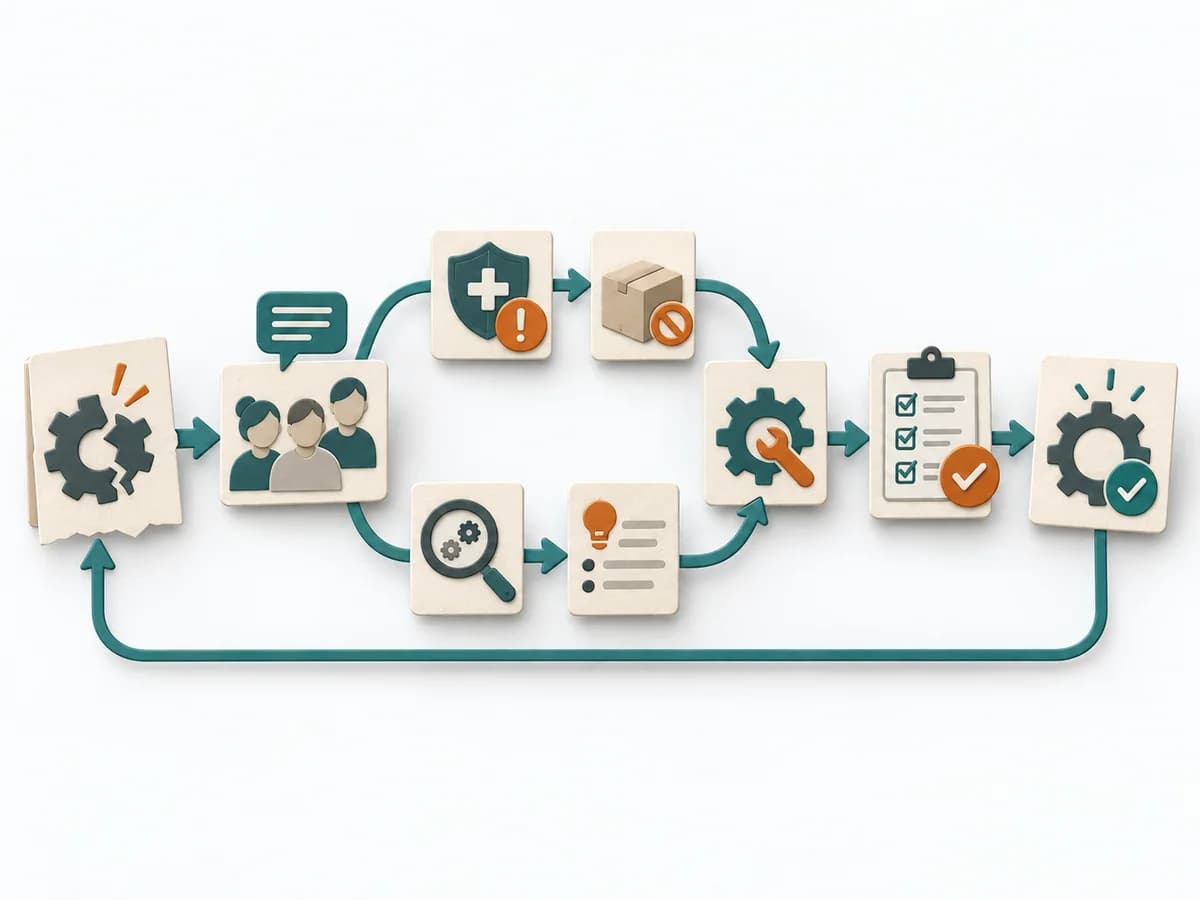
Instead of DMAIC, choose 8D Problem Solving when you want to work through a problem in a disciplined way with clear roles, actions, and verification.
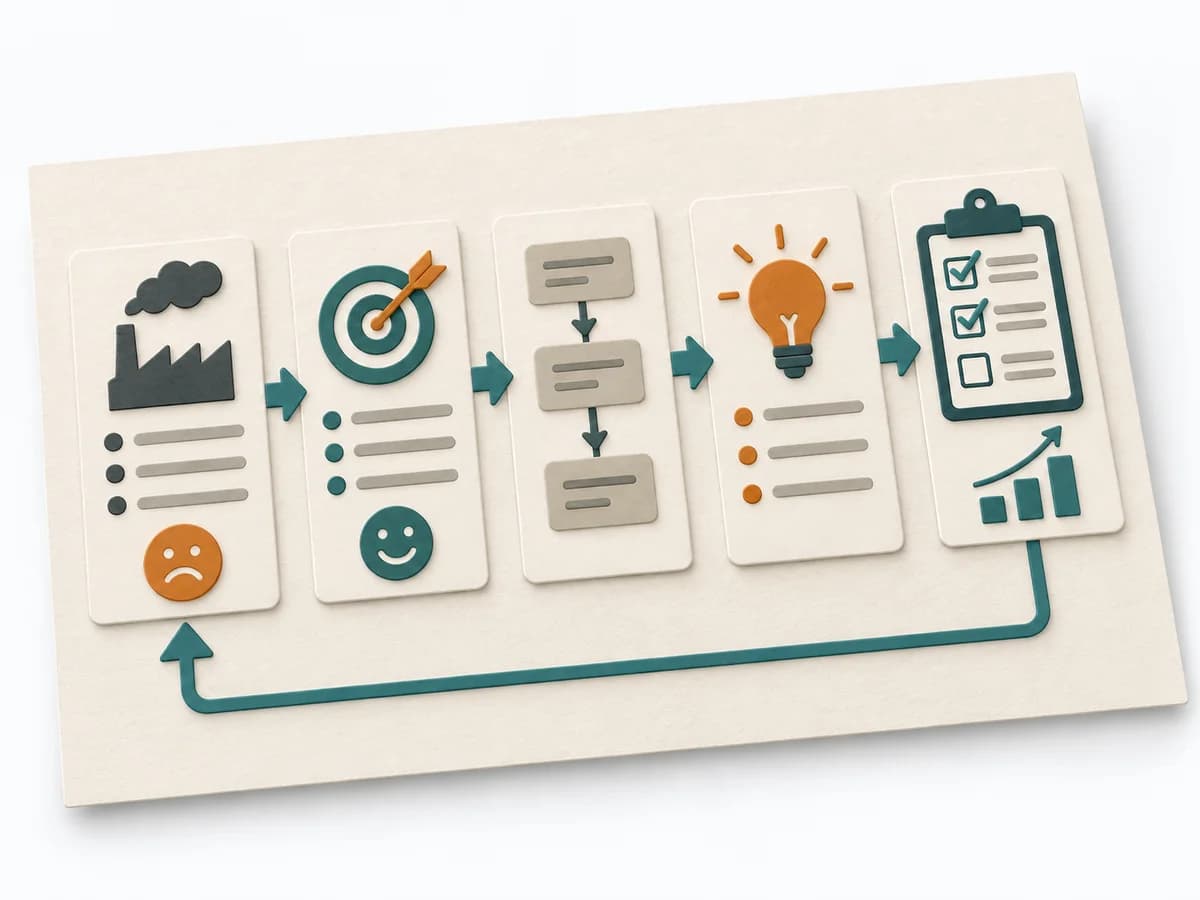
Instead of DMAIC, choose A3 Problem Solving when a lighter problem-solving format is enough and the improvement cycle should not run as a large-scale process.
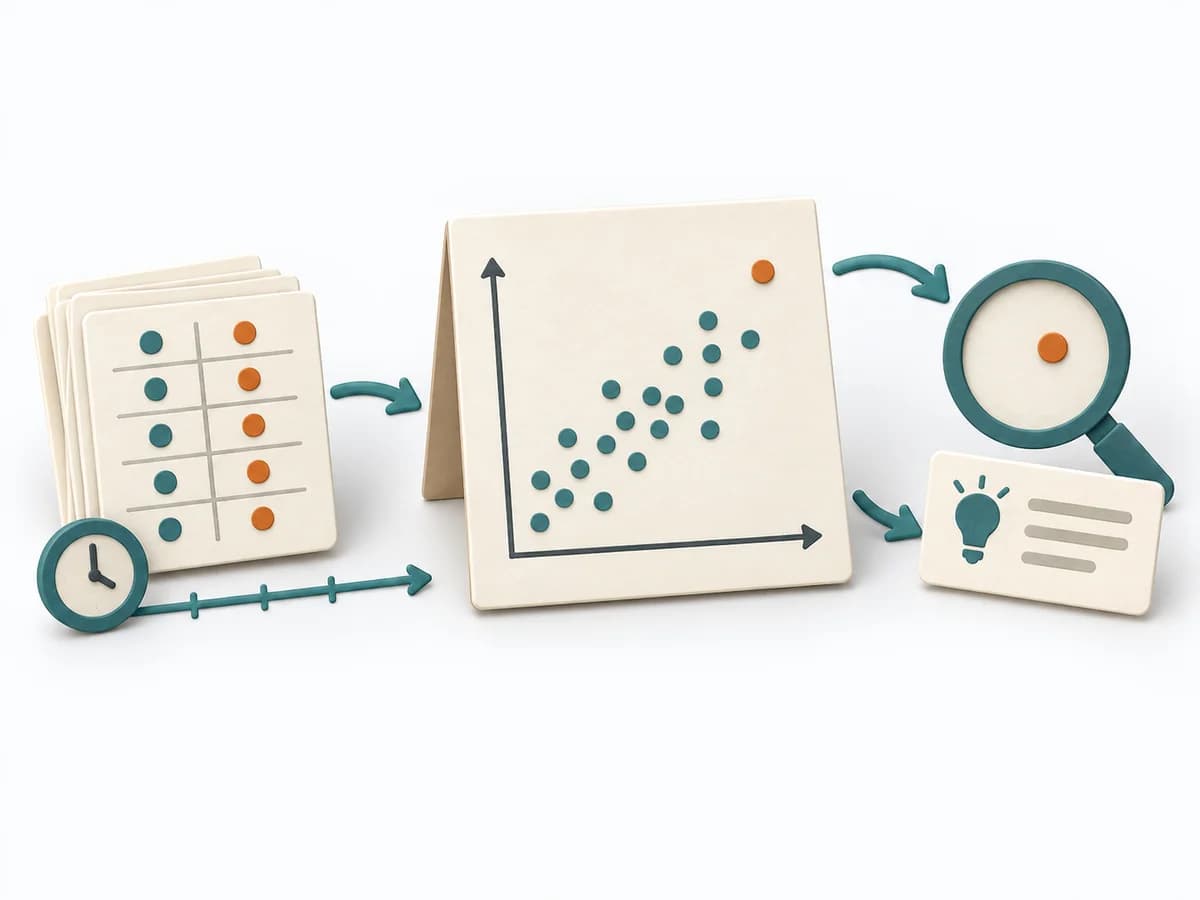
Paired data points reveal whether two variables move together and where a suspected relationship needs deeper proof.
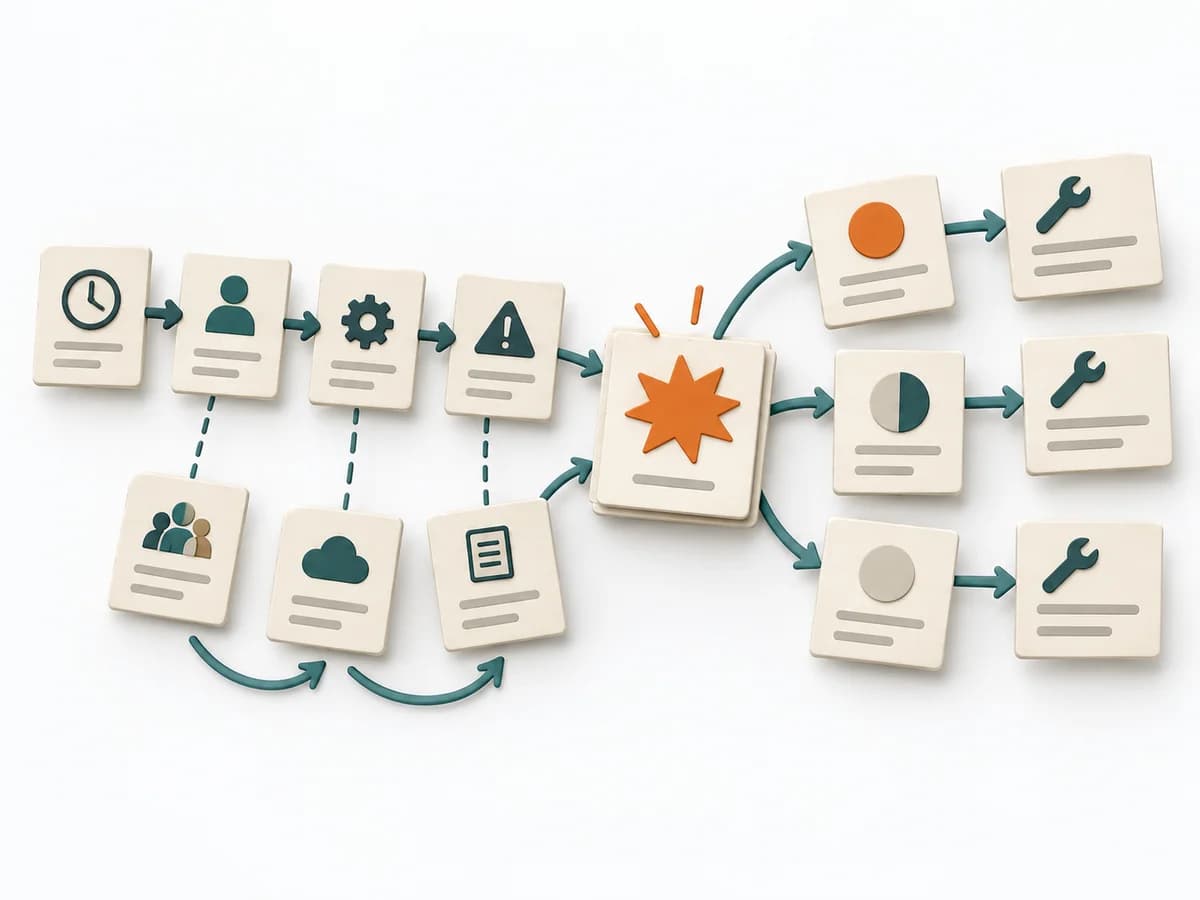
Reconstructs a chain of events, marks factors, and derives verifiable causes and corrective actions.
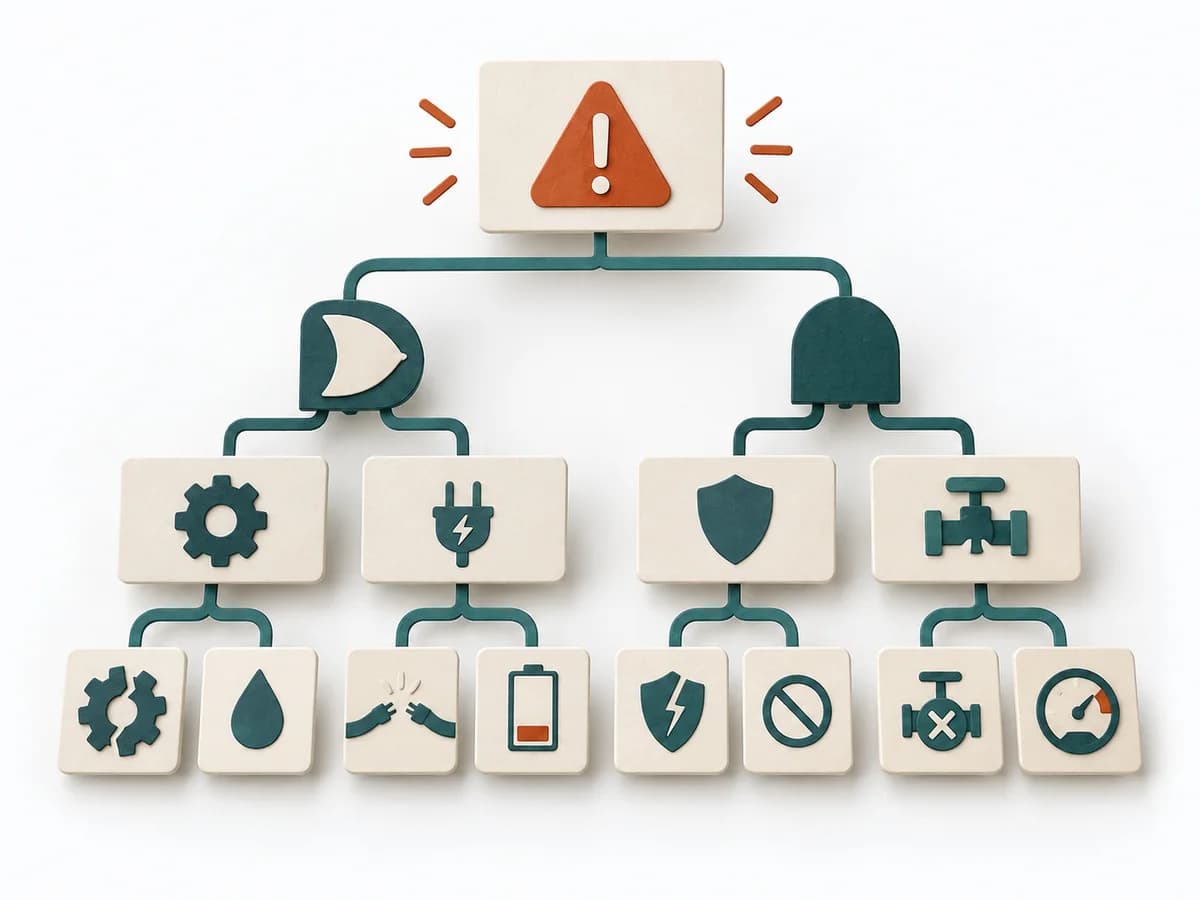
Models a top event with AND and OR branches to make critical paths and causes visible.
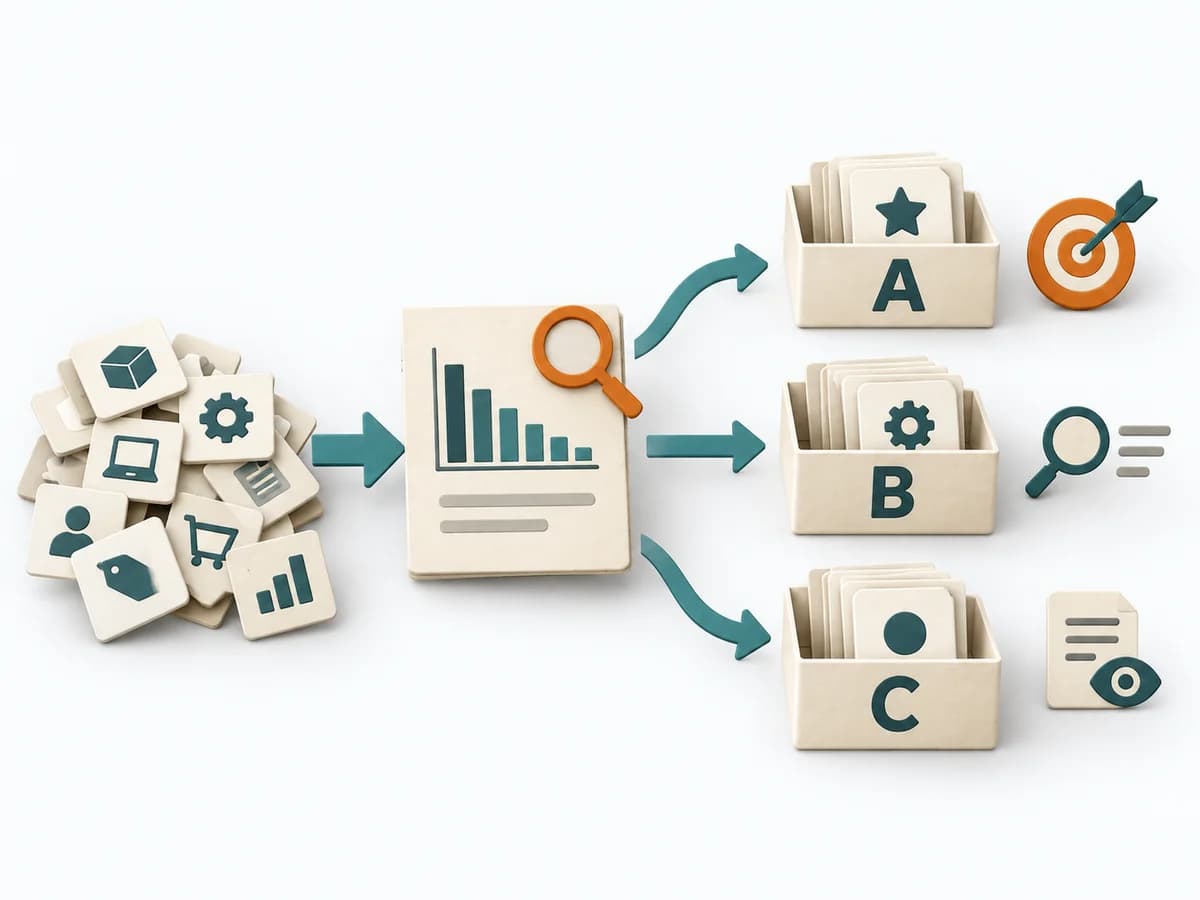
Splits items into A, B, and C by value or effect and directs focus to the most impactful ones.