
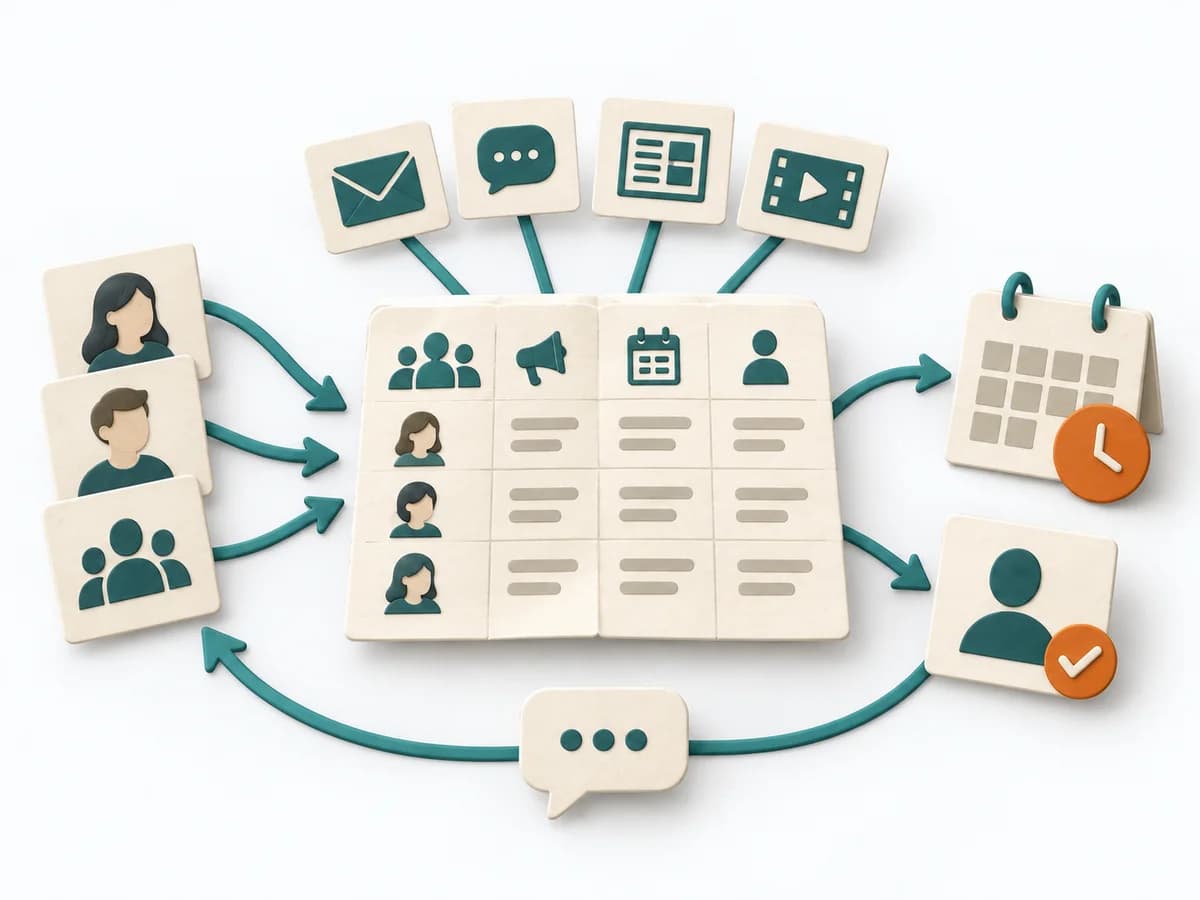
Purpose
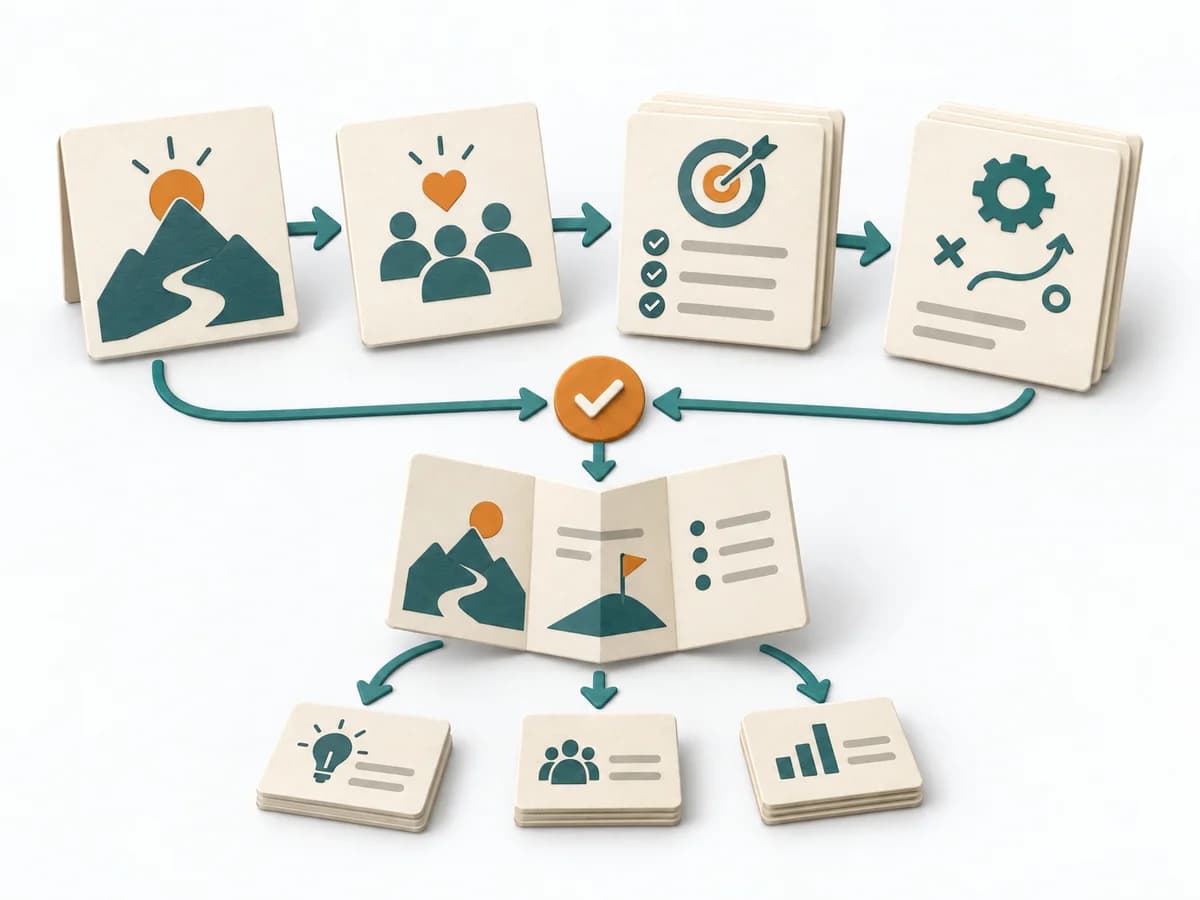
VMGS arranges vision, mission, goals, and strategies into a clear guiding logic. Direction, purpose, and priorities are connected so teams can decide more coherently.
Business Strategy Planning tool
Connects vision and mission with verifiable goals and chosen strategies.
VMGS connects Vision, Mission, Goals and Strategies: desired future, organisational purpose, measurable goals and chosen routes. Here it is a compact editorial strategy outline related to VMOSA, without claiming a single canonical originator.
How do our chosen strategies lead through verifiable goals to mission and vision?
Vision
Describe the desirable future from the perspective of affected people.
Mission
Define whom the entity serves, its contribution to the vision and what lies outside its remit.
Goals
State a few outcome goals with baseline, target, deadline, source and owner.
Strategies
Compare alternative routes for each goal and choose a reasoned approach with resources and trade-offs.
Coherence
Trace each strategy back to goal, mission and vision and resolve conflicting commitments.
Review goals and strategic assumptions at agreed dates; deliberately revisit vision and mission when direction changes.
For aligning a team or initiative with decision authority, affected stakeholder perspectives and realistic resources.
Connected Vision–Mission–Goals–Strategies document with goal metrics, resource decisions, assumptions and review.
The agreed strategy records the decision, next implementation steps, and review against goal metrics.
Fictional example
VMGS connects Vision, Mission, Goals and Strategies: desired future, organisational purpose, measurable goals and chosen routes. Here it is a compact editorial strategy outline related to VMOSA, without claiming a single canonical originator.
What future state do affected people seek?
Fictional: adults in the neighbourhood can keep learning regardless of working hours.
For whom do we contribute what, and what boundaries apply?
Our learning association offers flexible introductory courses to working adults; accredited vocational qualifications are out of scope.
Give baseline, target, deadline, data source and owner per outcome goal.
Increase completion from 50% to 70% by 30 June; course register, owner Lea. Baseline: previous two cohorts.
Which approaches do we choose per goal, why, with what resources and trade-offs?
Pilot asynchronous modules with a weekly office hour; assumption: flexible timing reduces dropout. Two instructors run one pilot instead of three new in-person courses.
Who decides, which assumptions are reviewed when and what follows from variance?
The board approves pilot resources; after six weeks Lea reviews participation and dropout reasons, then completion at cohort end.
All example details are fictional and illustrate the application.
Define scope and horizon; collect needs, baseline data, resources and existing commitments.
VMGS arranges vision, mission, goals, and strategies into a clear guiding logic. Direction, purpose, and priorities are connected so teams can decide more coherently.
First the team formulates the vision as a target picture and sharpens the mission as its purpose. Then goals and fitting strategies are derived and checked for coherence and measurability. What remains is a compact strategy form that gives orientation for several initiatives.
VMGS works because it cleanly separates vision, mission, goals, and strategy as different levels of direction. The approach becomes valuable when each level keeps its own distinct meaning while still visibly feeding into the next. In daily practice, linguistic precision, realistic goal horizons, and recognizable consequences for priorities matter, so guiding statements turn into genuine everyday orientation.
Start with the question of which decisions should become easier once vision and mission are formulated more clearly. You should pay particular attention when goals already contain operational measures or the strategy just repeats slogans; then the separation of levels needs to be redone. Close with a few reference sentences and a plan for how the wording appears in portfolio, communication, and reviews.
The method guide walks execution through 5 phases, timing, 5 pitfalls, and clear stop criteria.
Open method guideYour perspective
Your feedback helps shape the next improvements to methodatlas.
Compact briefing for strategic context, target state, priorities, and non-goals.
Why is this strategic clarification needed now?
What should be different in 6-12 months?
Which decisions should follow from this?
Define scope and horizon; collect needs, baseline data, resources and existing commitments.
To be confirmed
To be confirmed
Complete cycle Time: Several work sessions with research and alignment; 60–120 minutes per section
Complete this worksheet on paper or in your own document during the work.
What future state do affected people seek?
...
For whom do we contribute what, and what boundaries apply?
...
Give baseline, target, deadline, data source and owner per outcome goal.
...
Which approaches do we choose per goal, why, with what resources and trade-offs?
...
Who decides, which assumptions are reviewed when and what follows from variance?
...
Answer the prompts with your own information. Explicitly mark unknowns and assumptions.
Expected artifact: Future picture
Does the vision describe a desirable state?
Entry:
...
Expected artifact: Mission
Is the contribution clear and distinct from the future picture?
Entry:
...
Expected artifact: Outcome goals
Can progress be verified clearly for every goal?
Entry:
...
Expected artifact: Chosen approaches
Is each approach linked to a goal and causal assumption?
Entry:
...
Expected artifact: Strategy and review
Are contribution, resources and review clear for each approach?
Entry:
...
...
Method guide: https://methodatlas.meierhoff-systems.de/en/methods/vmgs/run-sheet
Fitting alternatives with decision guidance, followed by other related methods.
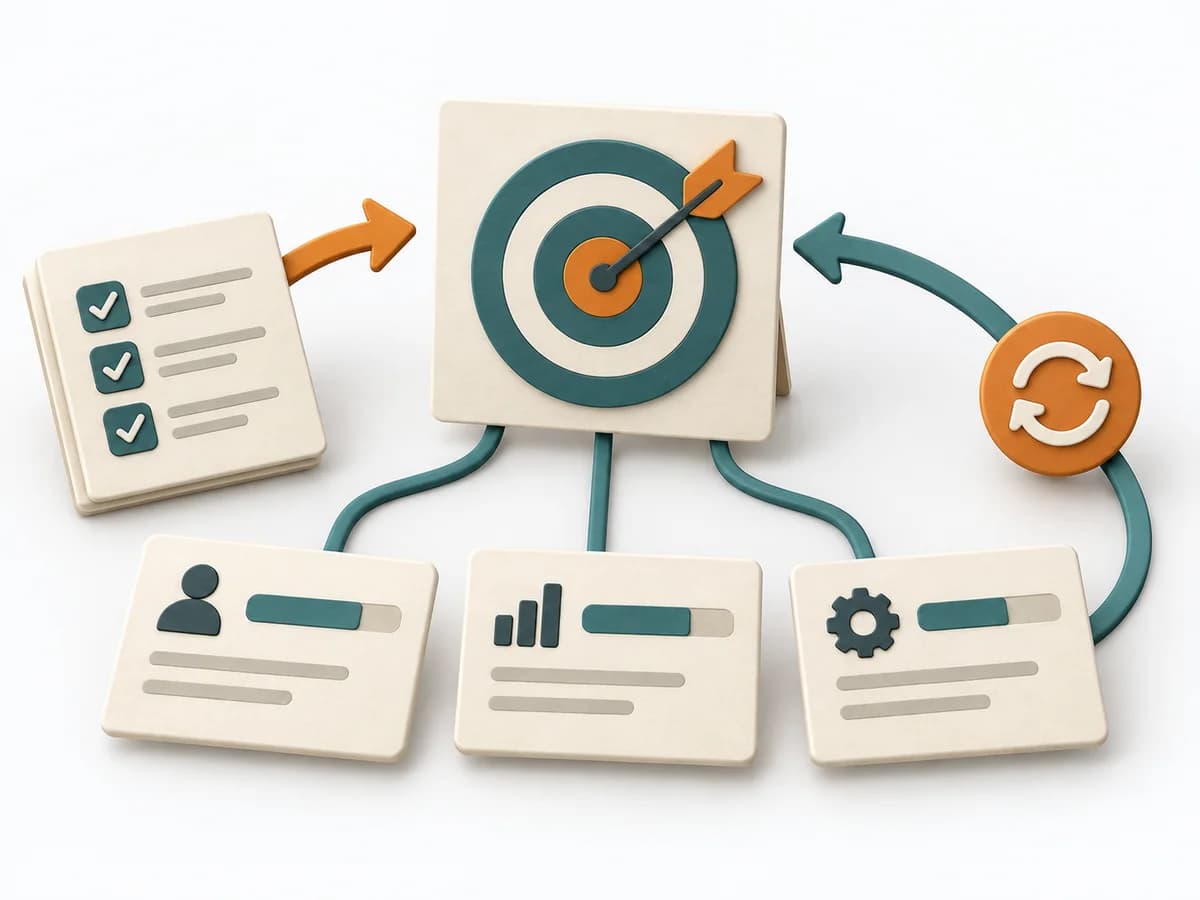
Instead of VMGS, when you want to use OKRs to sharply align impact goals with a few measurable results.
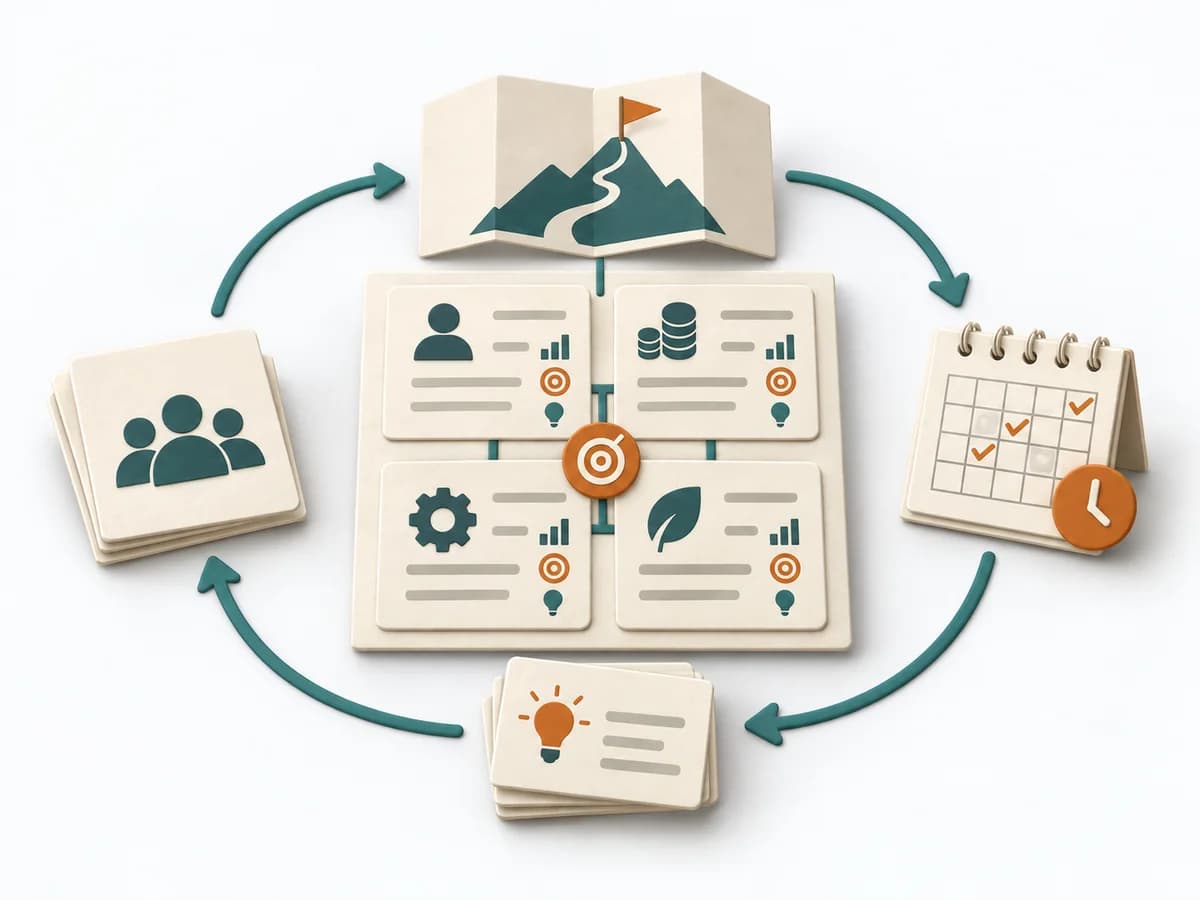
Instead of VMGS, when you want to use Balanced Scorecard to depict strategy across multiple perspectives with metrics and steering.
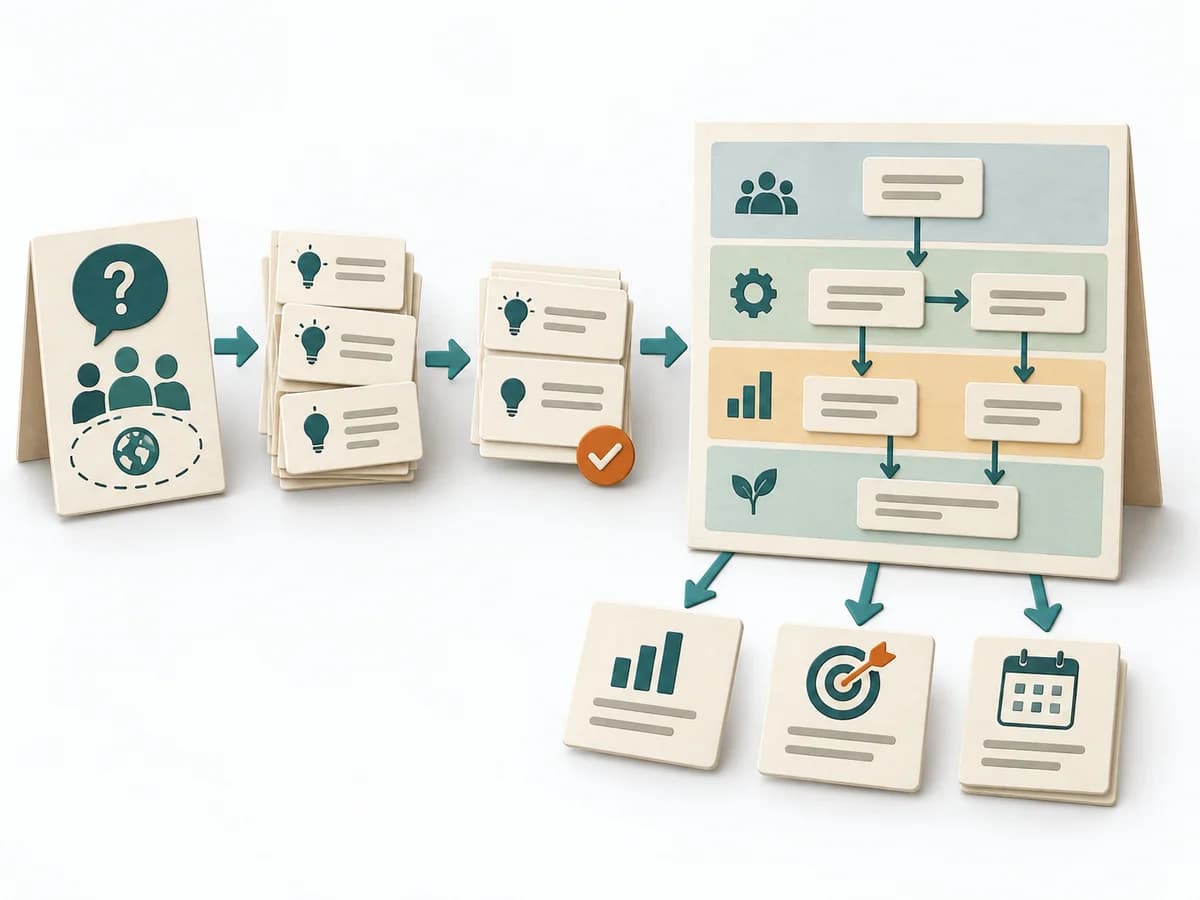
Visualizes strategic objectives and cause-and-effect relationships so a leadership team sees the same strategy story.

Compares target and actual state, exposes gaps, and derives prioritized measures with clear risks.
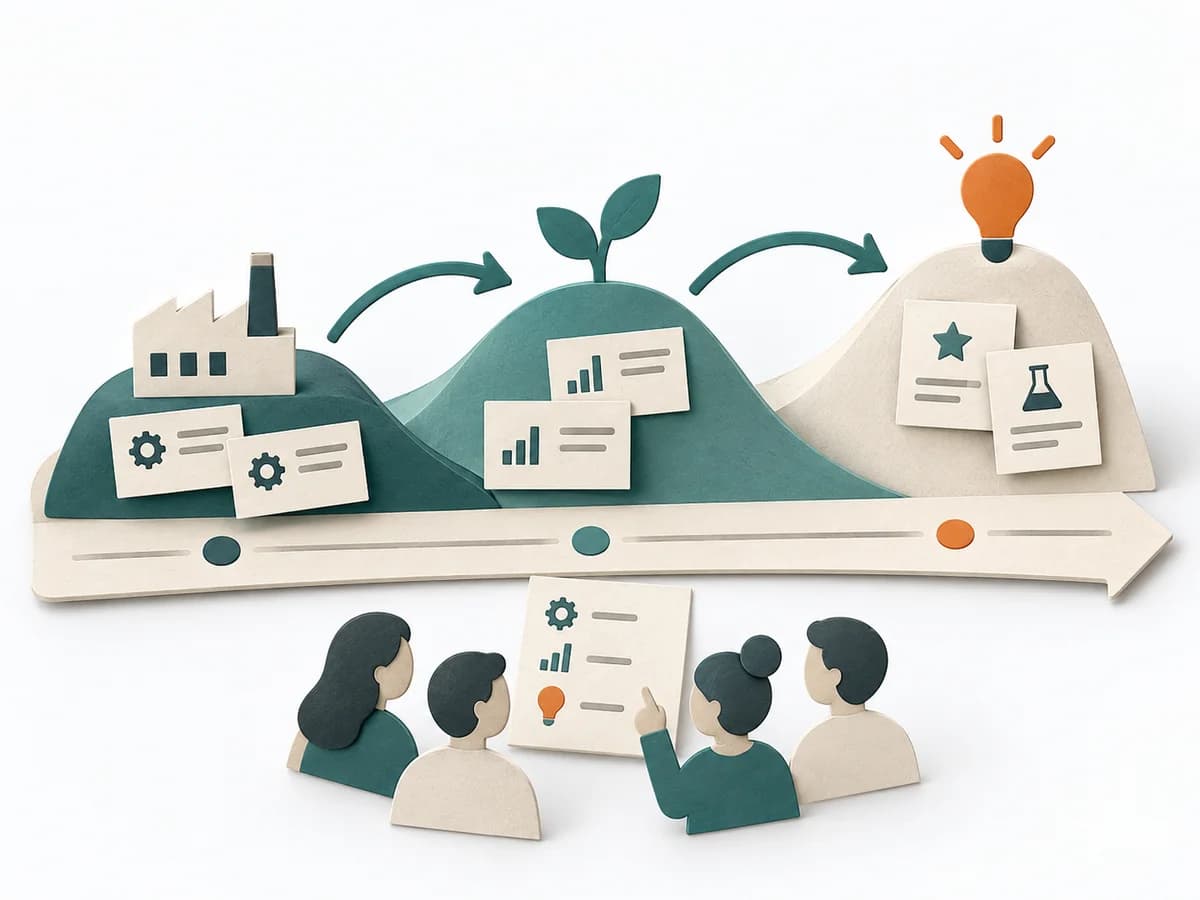
Structures current business, emerging growth fields, and future options across three horizons so portfolio decisions can balance today, tomorrow, and later.
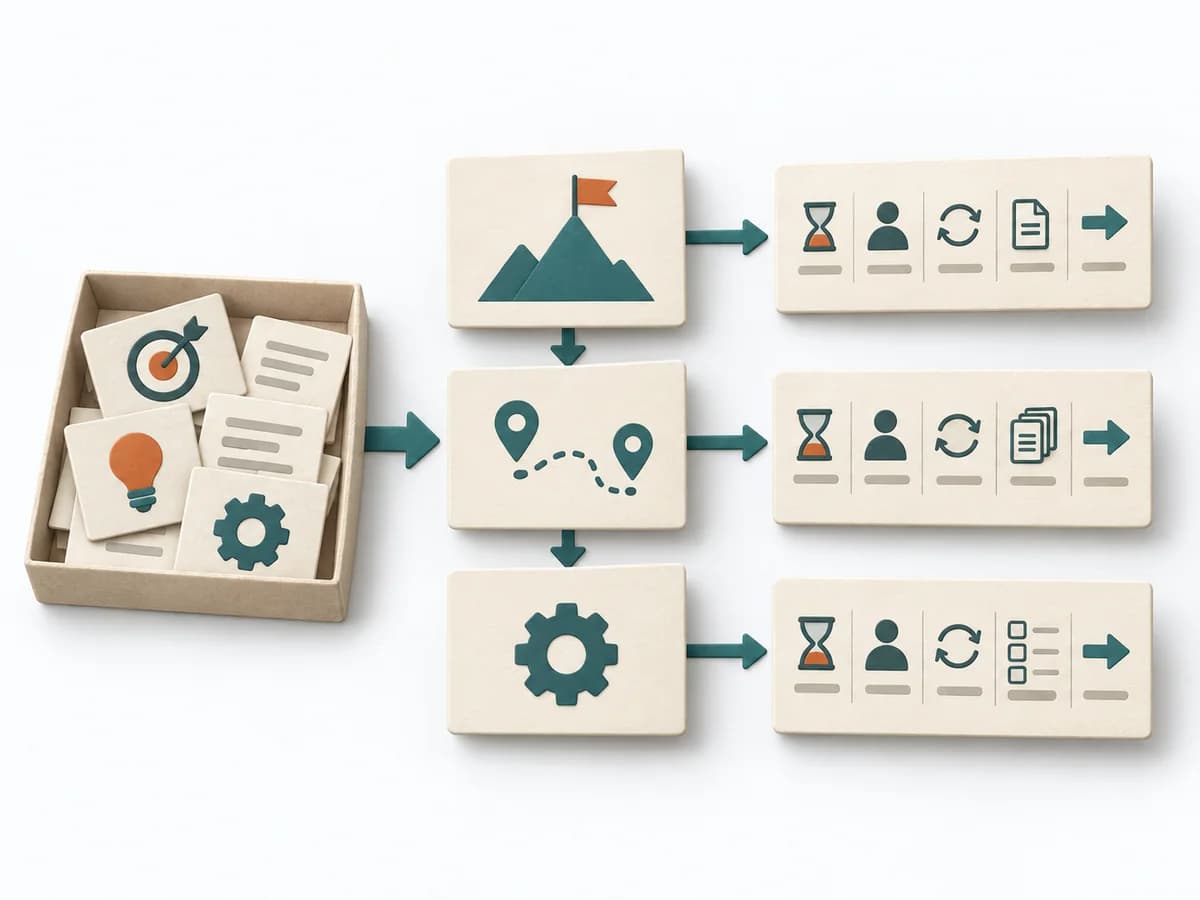
Separates planning levels by time horizon, decision type, and control logic, so strategy does not get mixed up with day-to-day business.