Purpose
It places decisions and artifacts at the right level. Strategic planning clarifies direction, tactical planning translates it into programs, and operational planning steers concrete processes.
Business Strategy Planning tool
Translates direction into medium-term capabilities and short-term executable plans with feedback.
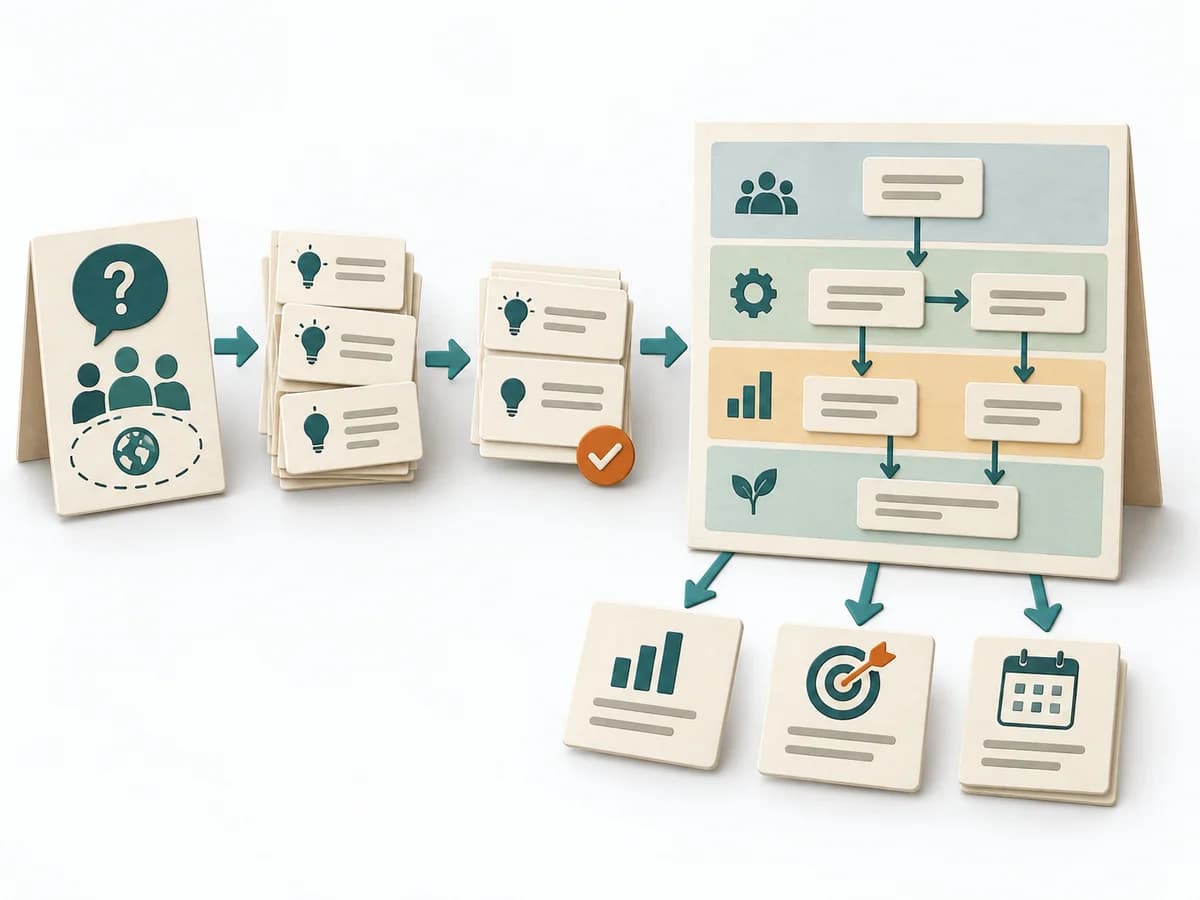
Strategic sets outcomes and boundaries, tactical translates them into programmes, capabilities, and allocation, and operational plans concrete work and controls. Each level has horizon, decision, owner, and feedback.
How is strategic direction translated into tactical capabilities and operational work without losing feedback?
Strategic-Tactical-Operational Planning uses strategic outcomes → tactical capabilities/initiatives → operational plans/controls. Assessments remain justified and context-bound.
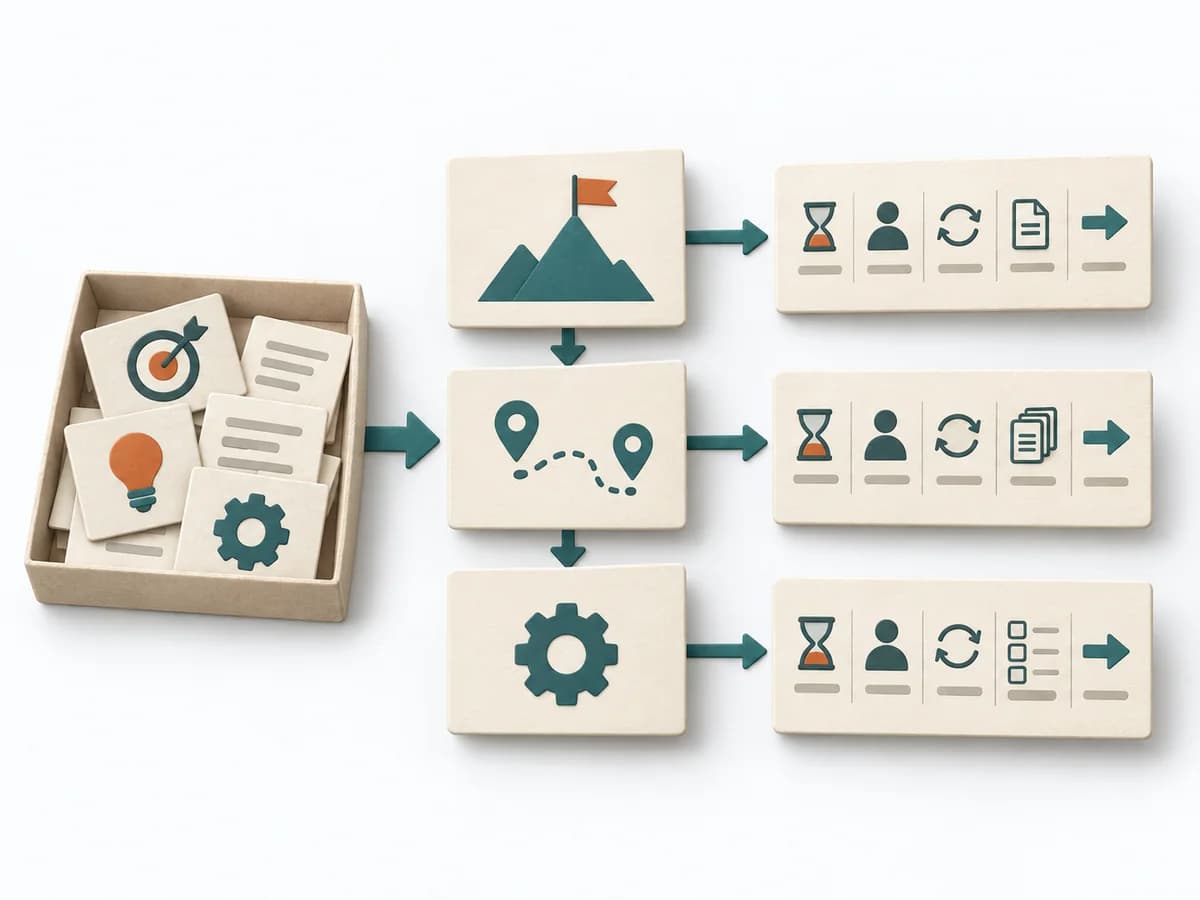
Strategic
Decide outcome, positioning, boundaries, and long horizon.
Tactical
Derive capabilities, initiatives, budget, and quarterly goals.
Operational
Set work plans, controls, SLOs, and short cadence.
Feedback
Feed operational data into tactical and strategic decisions.
Update after new evidence or a material context change and retain the previous version.
For organisations with several planning horizons and clear decision rights.
three-level planning map with traceable sources, assumptions, and domain decisions.
Owners, dates, and next review for three-level planning map.
Fictional worked example
strategic outcomes → tactical capabilities/initiatives → operational plans/controls as a precise working structure with a fictional example.
Strategic information to record
99,95 % Verfügbarkeit; NRR >110 %.
Tactical information to record
Observability + On-call, 180 T€.
Operational information to record
SLO-Dashboard, Runbook-Test, Error Budget.
Feedback/traceability information to record
Monatsdaten zurück ins Portfolio.
The example demonstrates the domain logic of Strategic-Tactical-Operational Planning; worksheets remain blank.
Start with the core question: How is strategic direction translated into tactical capabilities and operational work without losing feedback?
It places decisions and artifacts at the right level. Strategic planning clarifies direction, tactical planning translates it into programs, and operational planning steers concrete processes.
First, current objectives, initiatives, and routines are collected. They are then assigned to the strategic, tactical, and operational levels. For each level, horizon, owner, review rhythm, artifacts, and handoffs are clarified.
Strategic, Tactical and Operational Planning works because different planning levels answer different questions. Strategic planning decides direction and resource logic, tactical planning translates this direction into programs, capabilities, and roadmaps, operational planning organizes daily or weekly execution. The method becomes valuable when handoffs between the levels become explicit and an operational issue does not slip through as a substitute for strategy.
Have the group sort real artifacts: roadmap, OKRs, budget, daily board, KPI review, strategy paper. The discussion becomes clearer once every artifact gets a level, an owner, and a review cadence. Conflicts often arise where tactical programs run without a strategic decision behind them.
The method guide walks execution through 4 phases, timing, 4 pitfalls, and clear stop criteria.
Open method guideYour perspective
Your feedback helps shape the next improvements to methodatlas.
Plan Strategic-Tactical-Operational Planning around its domain steps and the concrete decision question.
To be confirmed
To be confirmed
Full initiative Time: Annual/quarterly/weekly rhythm by level
Complete this worksheet on paper or in your own document during the work.
Strategic information to record
...
Tactical information to record
...
Operational information to record
...
Feedback/traceability information to record
...
Enter only real input, sources, and decisions.
ISO 9001:2015 Quality management systems
Expected artifact: strategic direction
strategic direction · source · uncertainty · next decision
Entry:
...
Expected artifact: tactical portfolio
tactical portfolio · source · uncertainty · next decision
Entry:
...
Expected artifact: operational plan
operational plan · source · uncertainty · next decision
Entry:
...
Expected artifact: feedback loop
feedback loop · source · uncertainty · next decision
Entry:
...
...
Method guide: https://methodatlas.meierhoff-systems.de/en/methods/strategic-tactical-operational-planning/run-sheet
Fitting alternatives with decision guidance, followed by other related methods.
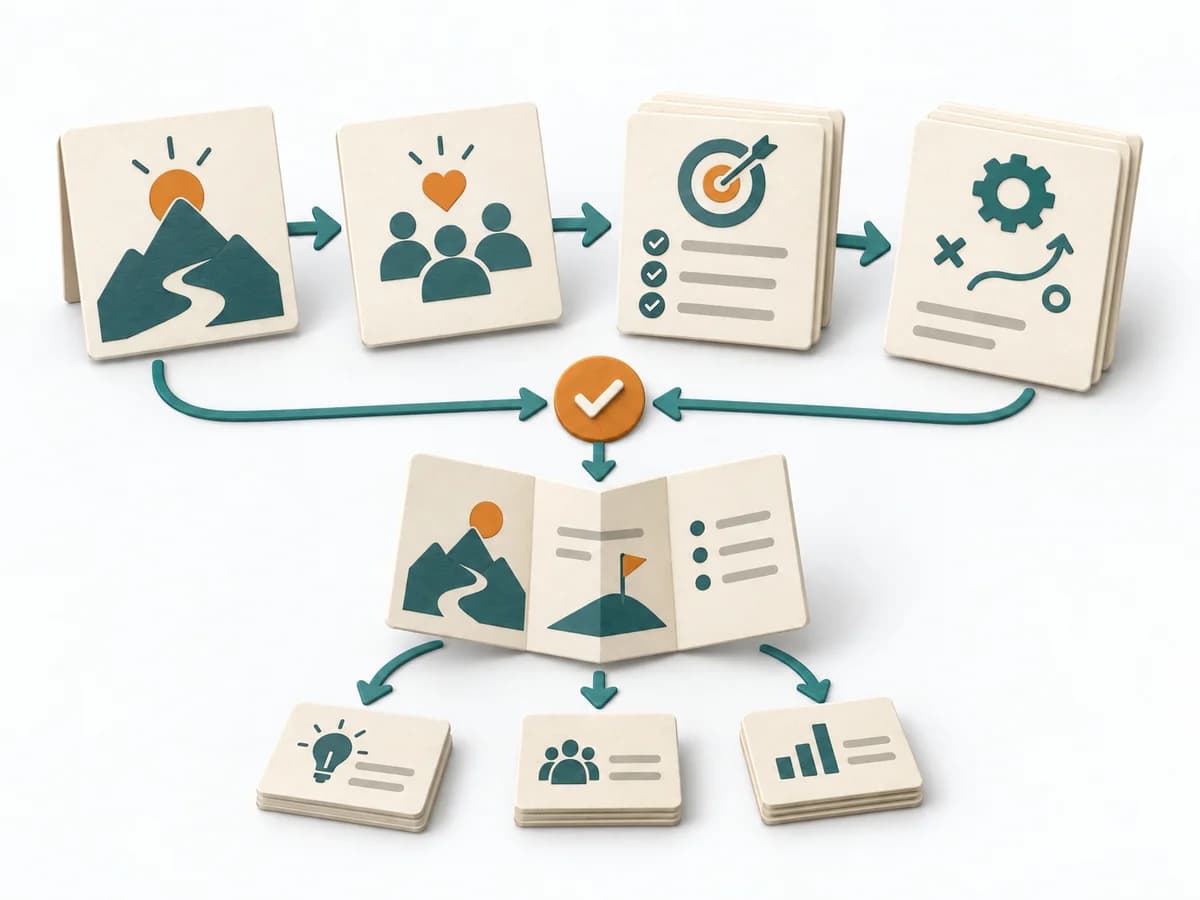
Instead of Planning Levels, choose VMGS when vision, mission, goals, and strategies still need to be formulated in substance.
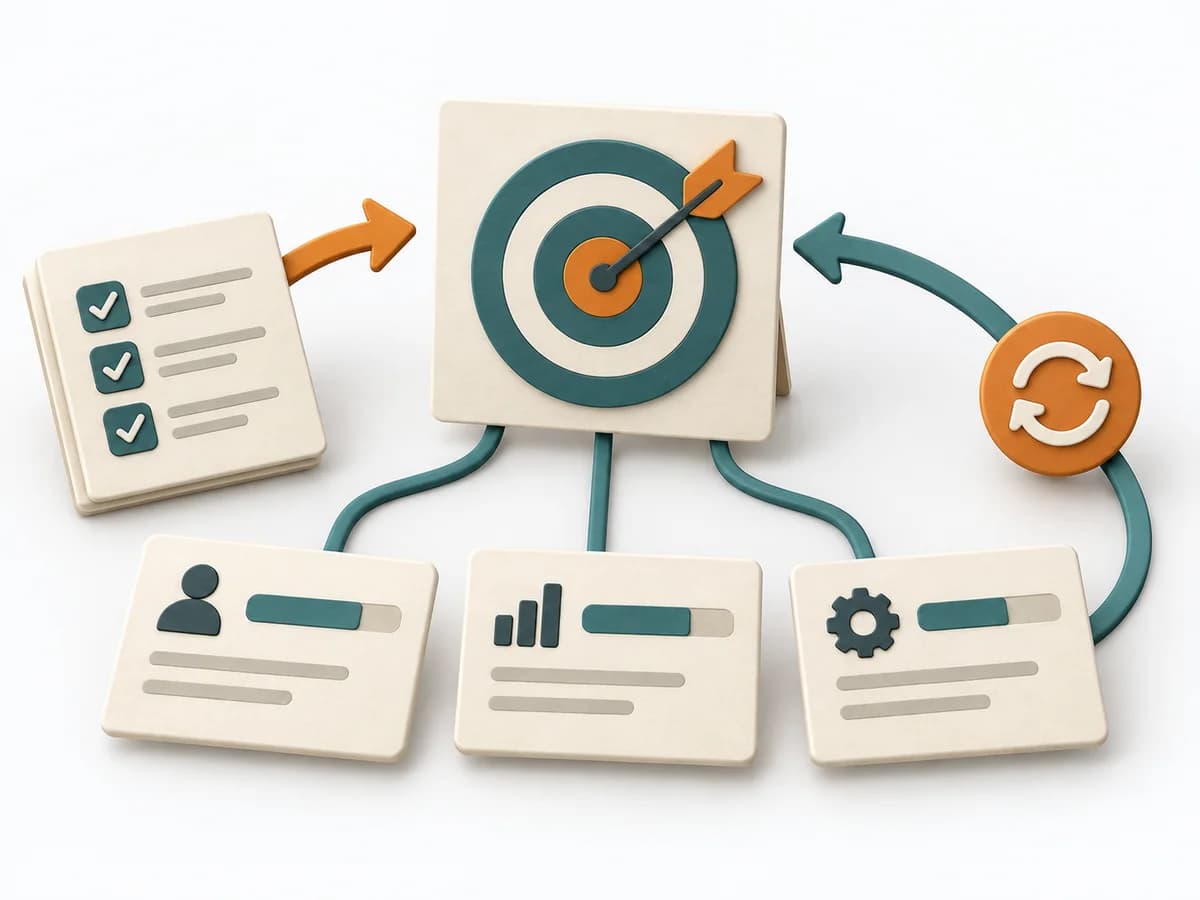
Instead of Planning Levels, choose OKRs when it is already clear which level is meant and teams need measurable quarterly goals.
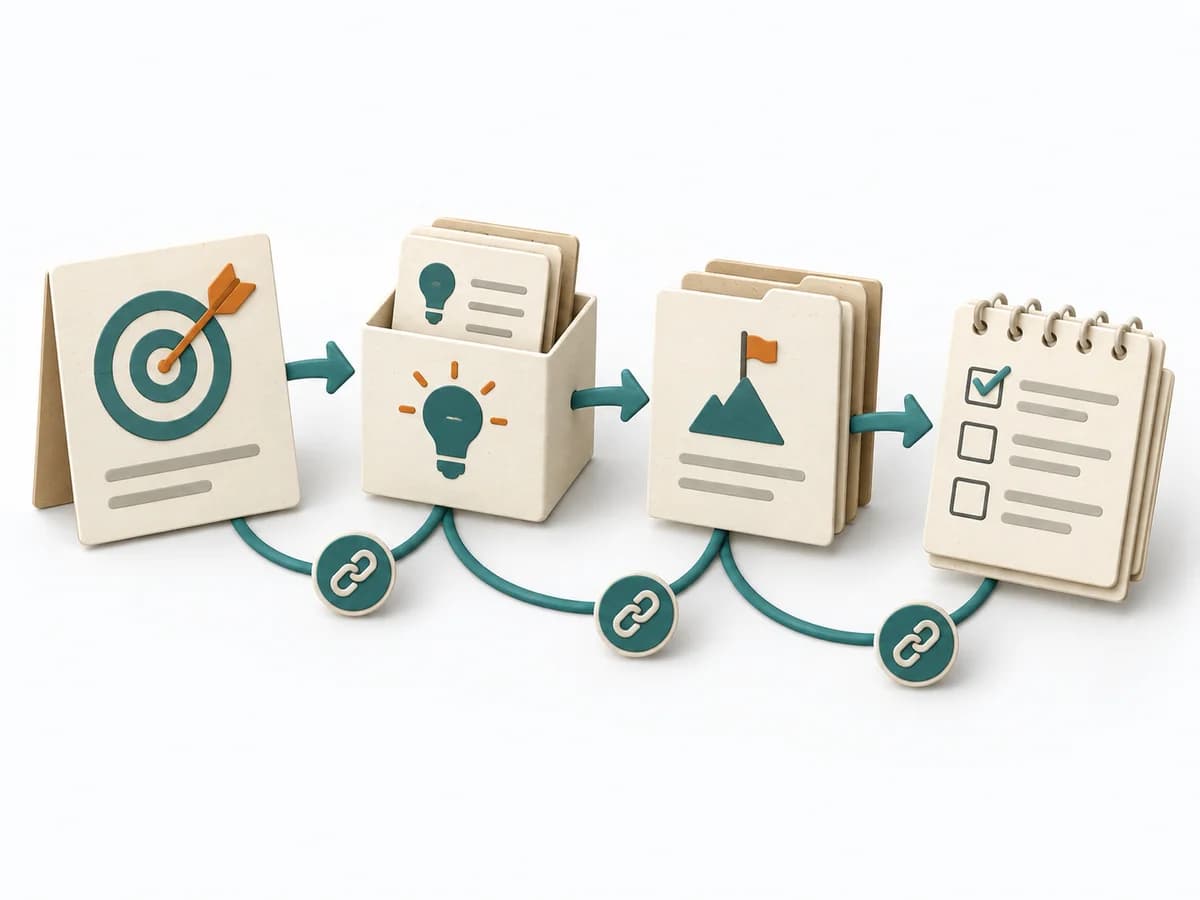
Instead of Planning Levels, choose GIST Planning when goals, ideas, steps, and tasks should be connected in a flexible, product-oriented planning system.

Connects strategy development, translation, operational planning, monitoring, and adjustment into a repeatable leadership cycle.
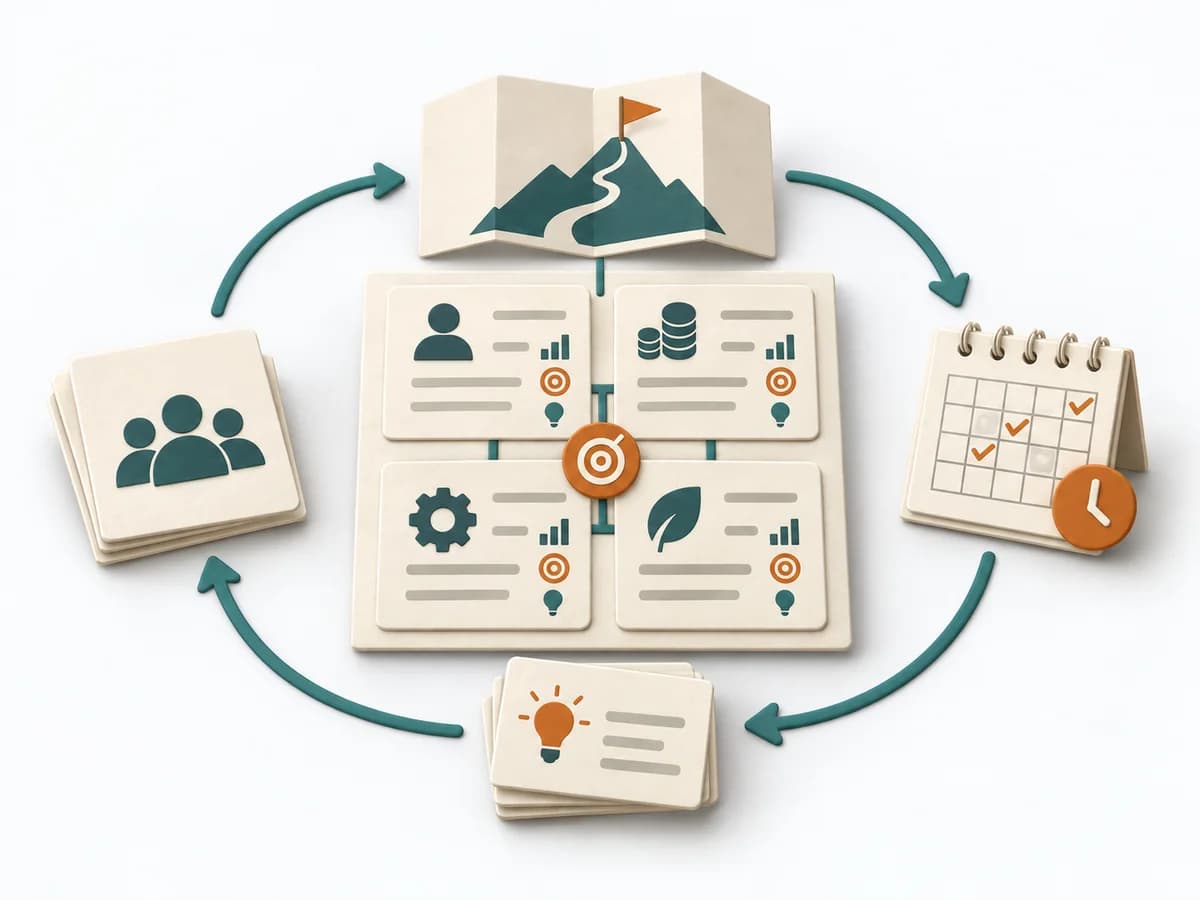
Links perspectives, metrics, and initiatives into a scorecard that makes strategy traceable in daily work.

Compares target and actual state, exposes gaps, and derives prioritized measures with clear risks.