Purpose
A Strategy Map translates strategy into a few connected objectives across perspectives such as finance, customers, processes, and learning. This makes visible which capabilities and activities are meant to drive which results.
Business Strategy Mapping tool
Visualizes causal hypotheses across learning, internal process, customer, and financial perspectives.
A strategy map arranges strategic objectives across four Balanced Scorecard perspectives and connects them with justified causal arrows. Measures test the hypotheses.
Which capabilities and processes should create which customer value and financial result?
Strategy Map uses objectives and causal links across learning, process, customer, and financial perspectives. Assessments remain justified and context-bound.
Value proposition
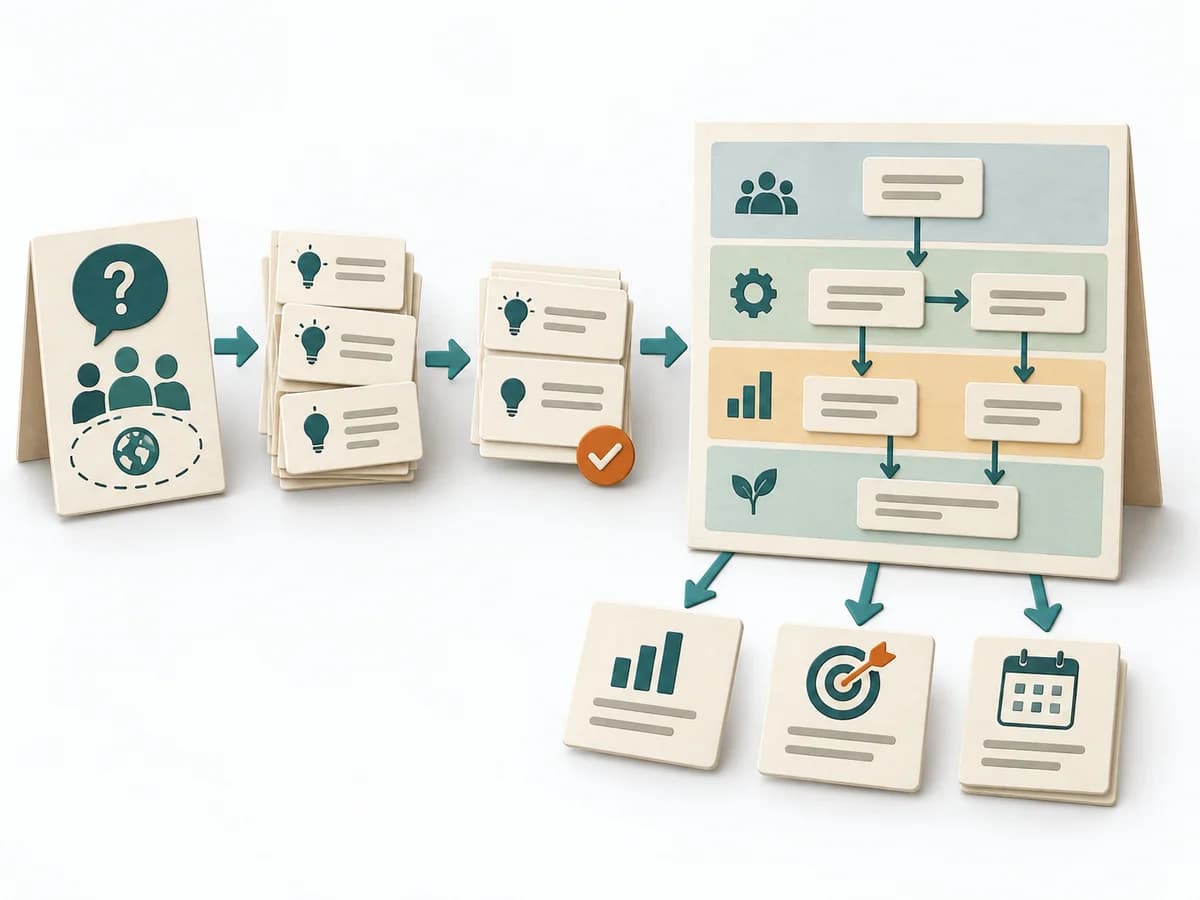
Clarify strategy unit, target customer, and value proposition.
Objectives
State and prioritise objectives in four perspectives.
Causal links
Justify causal arrows with mechanism and uncertainty.
Measures
Set lead/lag measures, owners, and review rhythm.
Update after new evidence or a material context change and retain the previous version.
For a bounded strategy unit with a clear value proposition and measurable objectives.
strategy map with traceable sources, assumptions, and domain decisions.
Owners, dates, and next review for strategy map.
Fictional worked example
objectives and causal links across learning, process, customer, and financial perspectives as a precise working structure with a fictional example.
Learning/growth information to record
Mapping-Kompetenz aufbauen.
Internal process information to record
Erstimportfehler senken.
Customer information to record
Time-to-Value <7 Tage.
Financial/links information to record
NRR >110 %; Links quartalsweise testen.
Harvard Business Review: Having Trouble with Your Strategy? Then Map It
Start with the core question: Which capabilities and processes should create which customer value and financial result?
A Strategy Map translates strategy into a few connected objectives across perspectives such as finance, customers, processes, and learning. This makes visible which capabilities and activities are meant to drive which results.
First, the strategic question and scope are set. Objectives per perspective are then collected, reduced to a few load-bearing statements, and connected via cause-and-effect paths. In the end, a map remains that serves as the basis for metrics, initiatives, and reviews.
Strategy Maps work because they represent strategy as a checkable logic of impact. Instead of merely listing objectives side by side, the method arranges them into perspectives and connects them into hypotheses: capabilities enable processes, processes create customer value, customer value affects financial or organizational results. The map becomes valuable when every objective is concrete enough to later be connected to metrics, initiatives, and review questions.
Work from the top and the bottom at once: sharpen the outcome objectives, then check the capabilities and processes that plausibly drive these outcomes. Keep the map small enough that a leadership team can tell its story. Every edge is a hypothesis and later needs measurement or review.
The method guide walks execution through 4 phases, timing, 4 pitfalls, and clear stop criteria.
Open method guideYour perspective
Your feedback helps shape the next improvements to methodatlas.
Plan Strategy Map around its domain steps and the concrete decision question.
To be confirmed
To be confirmed
Full initiative Time: 2–4 hours plus validation
Complete this worksheet on paper or in your own document during the work.
Learning/growth information to record
...
Internal process information to record
...
Customer information to record
...
Financial/links information to record
...
Harvard Business Review: Having Trouble with Your Strategy? Then Map It
Expected artifact: strategy frame
strategy frame · source · uncertainty · next decision
Entry:
...
Expected artifact: objective set
objective set · source · uncertainty · next decision
Entry:
...
Expected artifact: strategy map
strategy map · source · uncertainty · next decision
Entry:
...
Expected artifact: measurement plan
measurement plan · source · uncertainty · next decision
Entry:
...
...
Method guide: https://methodatlas.meierhoff-systems.de/en/methods/strategy-map/run-sheet
Fitting alternatives with decision guidance, followed by other related methods.
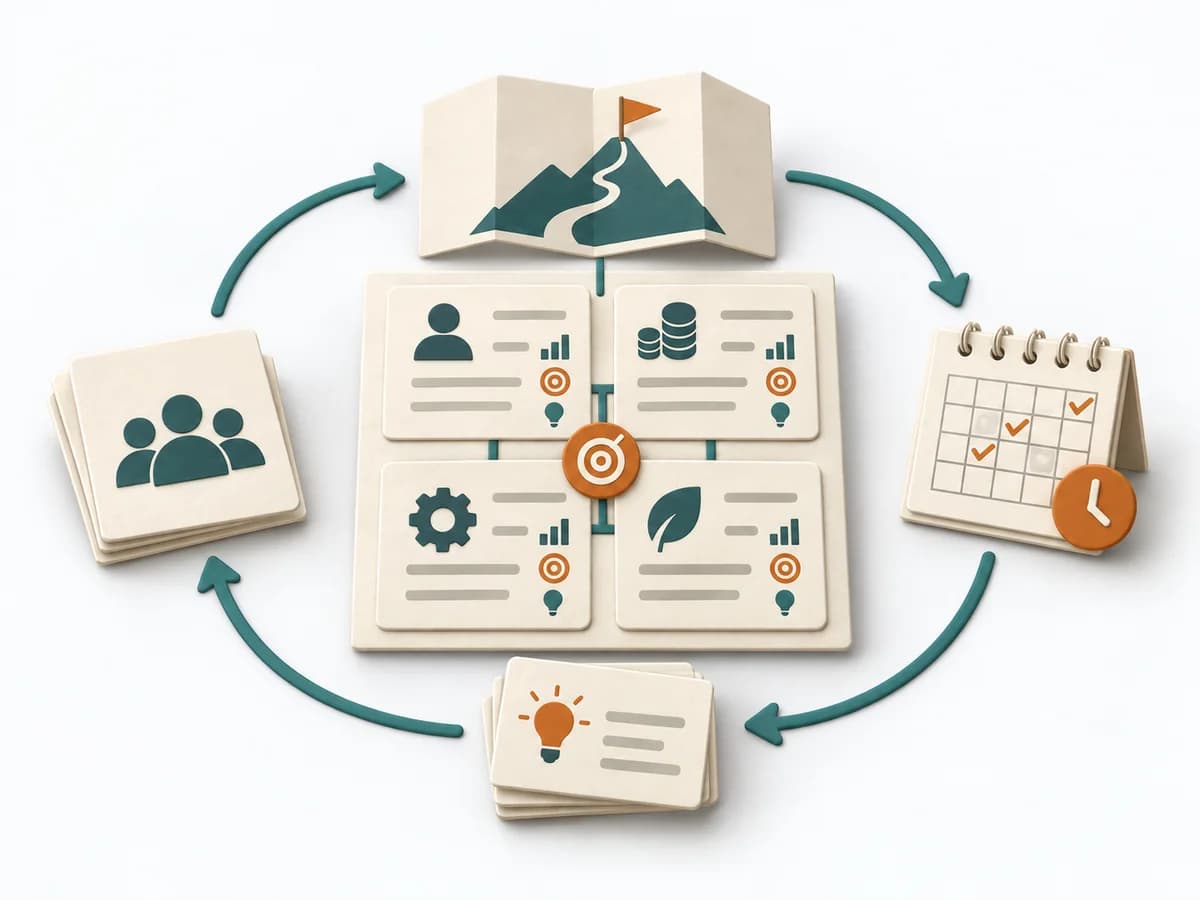
Instead of Strategy Map, choose Balanced Scorecard when goals are already set and concrete metrics, targets, and initiatives should be worked out as a steering system.
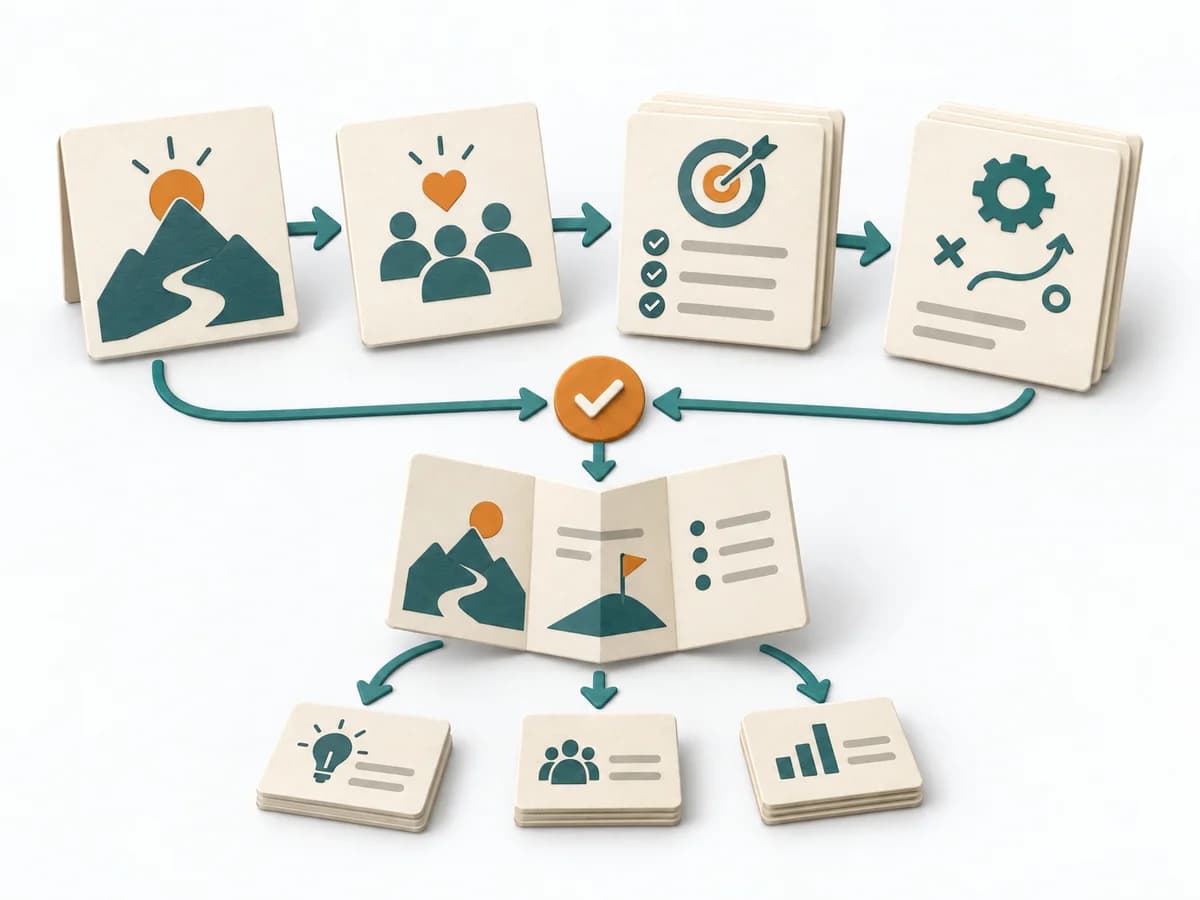
Instead of Strategy Map, choose VMGS when vision, mission, goals, and strategies still need to be formulated from the ground up.
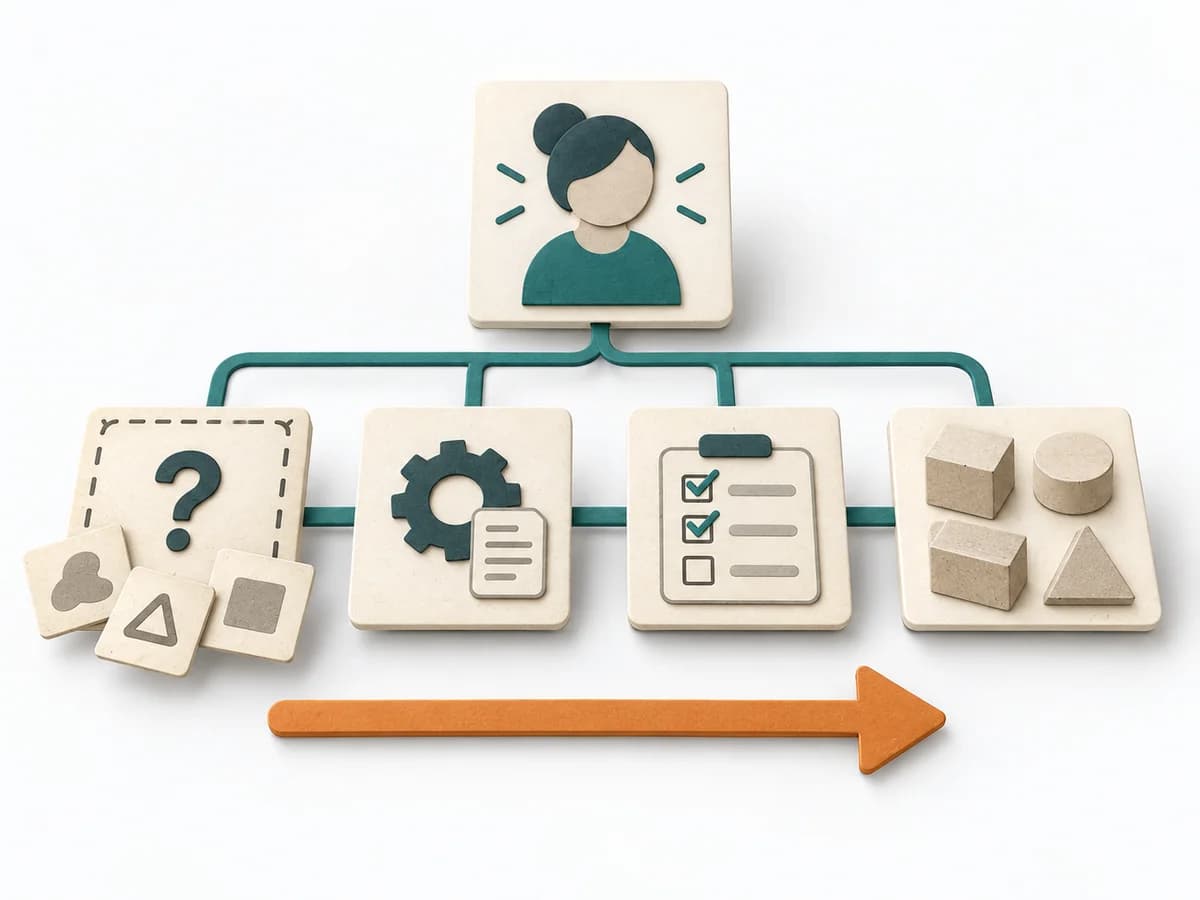
Instead of Strategy Map, choose Wardley Mapping when the strategic question depends more strongly on value chain, market movement, and evolutionary stage.
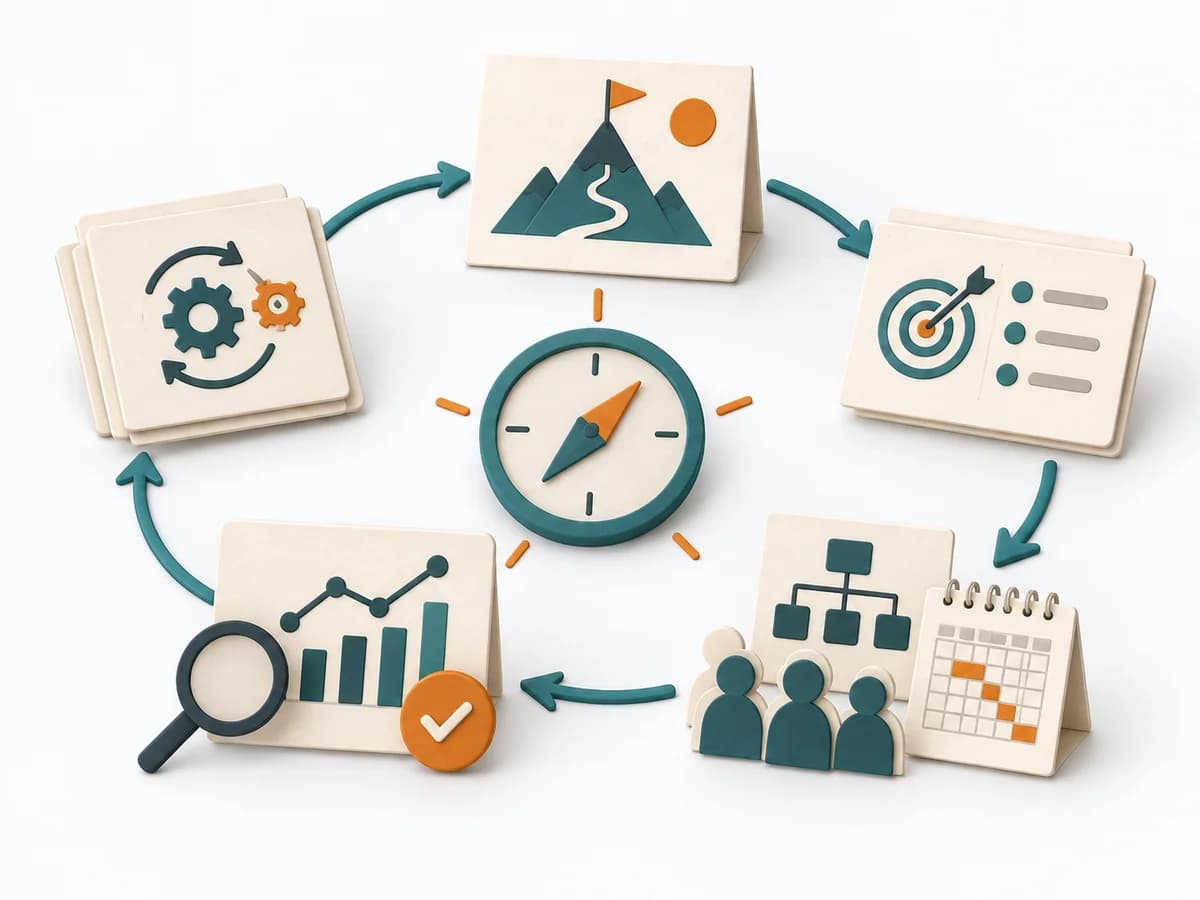
Connects strategy development, translation, operational planning, monitoring, and adjustment into a repeatable leadership cycle.

Compares target and actual state, exposes gaps, and derives prioritized measures with clear risks.
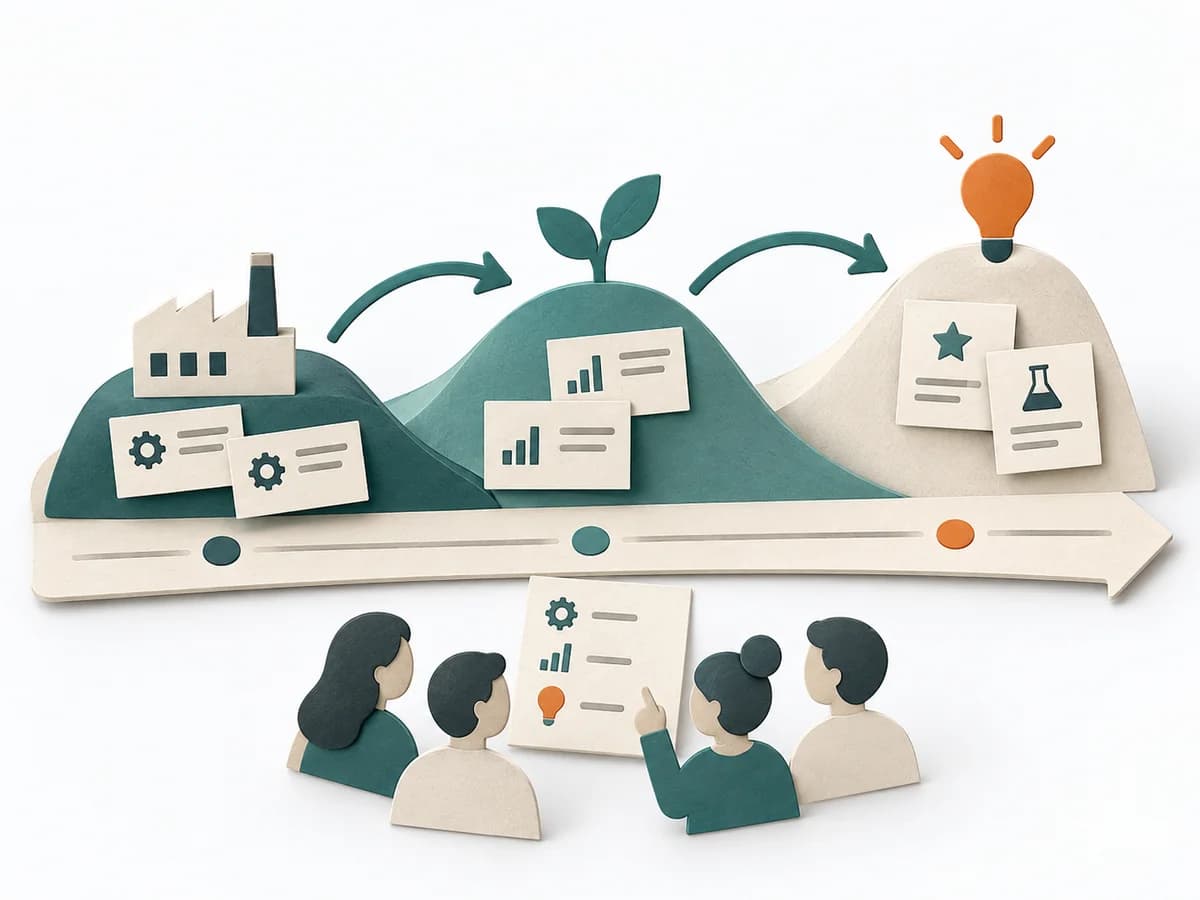
Structures current business, emerging growth fields, and future options across three horizons so portfolio decisions can balance today, tomorrow, and later.