Purpose
When a decision is stuck, Decision Jam loosens the knot through structured separation of problem, idea, and selection. The format creates movement without jumping prematurely at the first seemingly elegant answer.
Facilitation Facilitation method
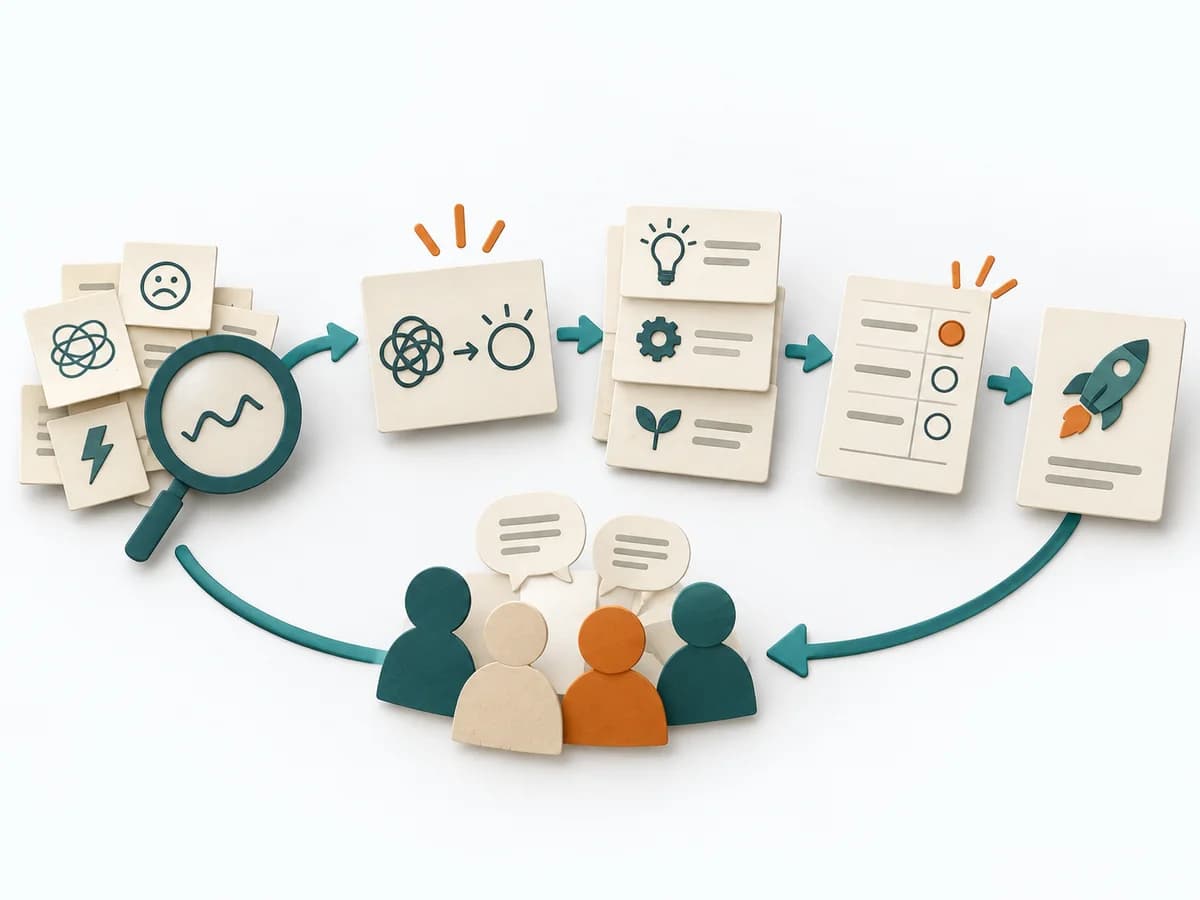
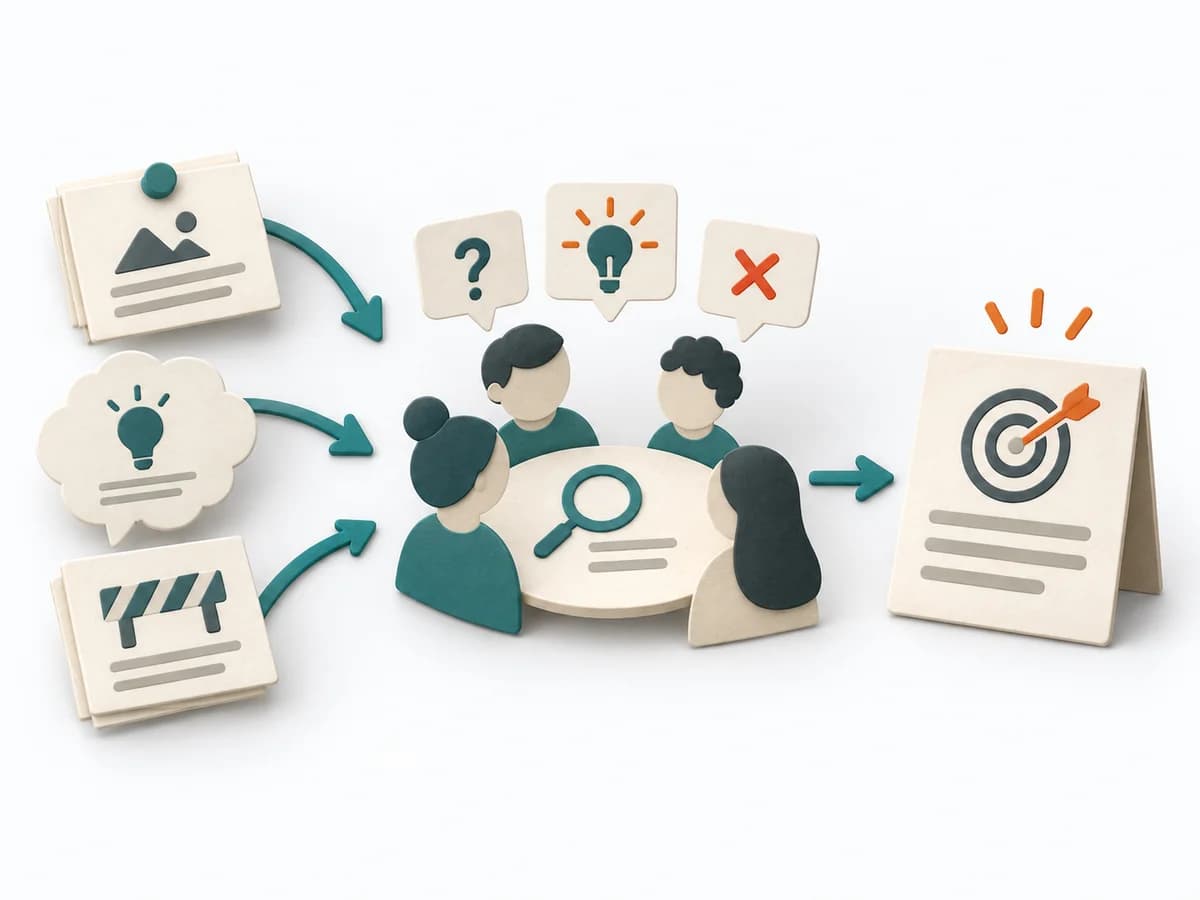
A Decision Jam moves a group silently and in timeboxes from problems through HMW and solutions to a prioritised experiment.
AJ&Smart's Lightning Decision Jam separates silent problem notes, dot voting, HMW reframing, silent solutions, another vote, effort-impact decision, and test planning. The decider resolves ties.
Which most important problem will we address with which solution as the next experiment?
Problems and solutions are generated silently to reduce status and airtime bias. Votes prioritise; they do not replace decision authority.
Problems
Write problems silently, read them out, and collect without debate.
Priority
Run dot voting and let the decider resolve ties.
HMW question
Reframe the top problem positively and solution-neutrally as How Might We.
Solutions
Sketch solutions silently, vote, and choose top ideas.
Effort/impact
Place top solutions on effort/impact and plan a test with a threshold.
Update with versioning when evidence or scope changes.
For a concrete team problem that can become a testable action within one session.
LDJ board with top problem, HMW, solution portfolio, effort-impact decision, and experiment.
Rationales, open assumptions, owners, and review date remain traceable.
Fictional LDJ run
The complete LDJ flow remains visible in distinct columns.
Example 1
Ownership unclear after reviews; actions stall.
Example 2
Six votes; decider selects ownership gap.
Example 3
How might we visibly confirm ownership at closure?
Example 4
Owner confirms card; closure shows missing owners; auto-reminder.
Example 5
Owner confirmation: high impact, low effort.
Example 6
Two reviews; ≥80% within 24 h; no longer review duration.
Start with the core question: Which most important problem will we address with which solution as the next experiment?
When a decision is stuck, Decision Jam loosens the knot through structured separation of problem, idea, and selection. The format creates movement without jumping prematurely at the first seemingly elegant answer.
The group first examines the friction in the system, then collects countermeasures, and afterward assesses which option has the greatest leverage. This brings uncertainty and action back together without skipping over the actual cause.
Decision Jam turns diffuse problems into prioritized decisions and concrete next steps in a short time. The format is especially useful when groups need to move quickly from complaints to options for action. Its effect comes from clear switches between collecting, sorting, assessing, and deciding, so energy doesn't get stuck in endless problem description.
Start with a narrowly defined problem space and make sure the group can actually influence the relevant levers of action. Particular care is needed when lists of causes grow too long or discussions get caught up in dwelling on the past. Close with a few decided actions, owners, and a date for checking the effect.
The method guide walks execution through 5 phases, timing, 5 pitfalls, and clear stop criteria.
Open method guideYour perspective
Your feedback helps shape the next improvements to methodatlas.
Plan the session around the canonical method steps and a concrete decision.
To be confirmed
To be confirmed
Full session Time: 60–90 minutes
Complete this worksheet on paper or in your own document during the work.
...
...
...
...
...
...
Silent problems ...
Top priority ...
HMW ...
Silent solutions ...
Effort/impact ...
Test ...
AJ&Smart: Lightning Decision Jam
Expected artifact: problem wall
problem wall with evidence, owner, and next decision.
Entry:
...
Expected artifact: top problem
top problem with evidence, owner, and next decision.
Entry:
...
Expected artifact: HMW question
HMW question with evidence, owner, and next decision.
Entry:
...
Expected artifact: solution portfolio
solution portfolio with evidence, owner, and next decision.
Entry:
...
Expected artifact: experiment card
experiment card with evidence, owner, and next decision.
Entry:
...
...
Method guide: https://methodatlas.meierhoff-systems.de/en/methods/decision-jam/run-sheet
Fitting alternatives with decision guidance, followed by other related methods.
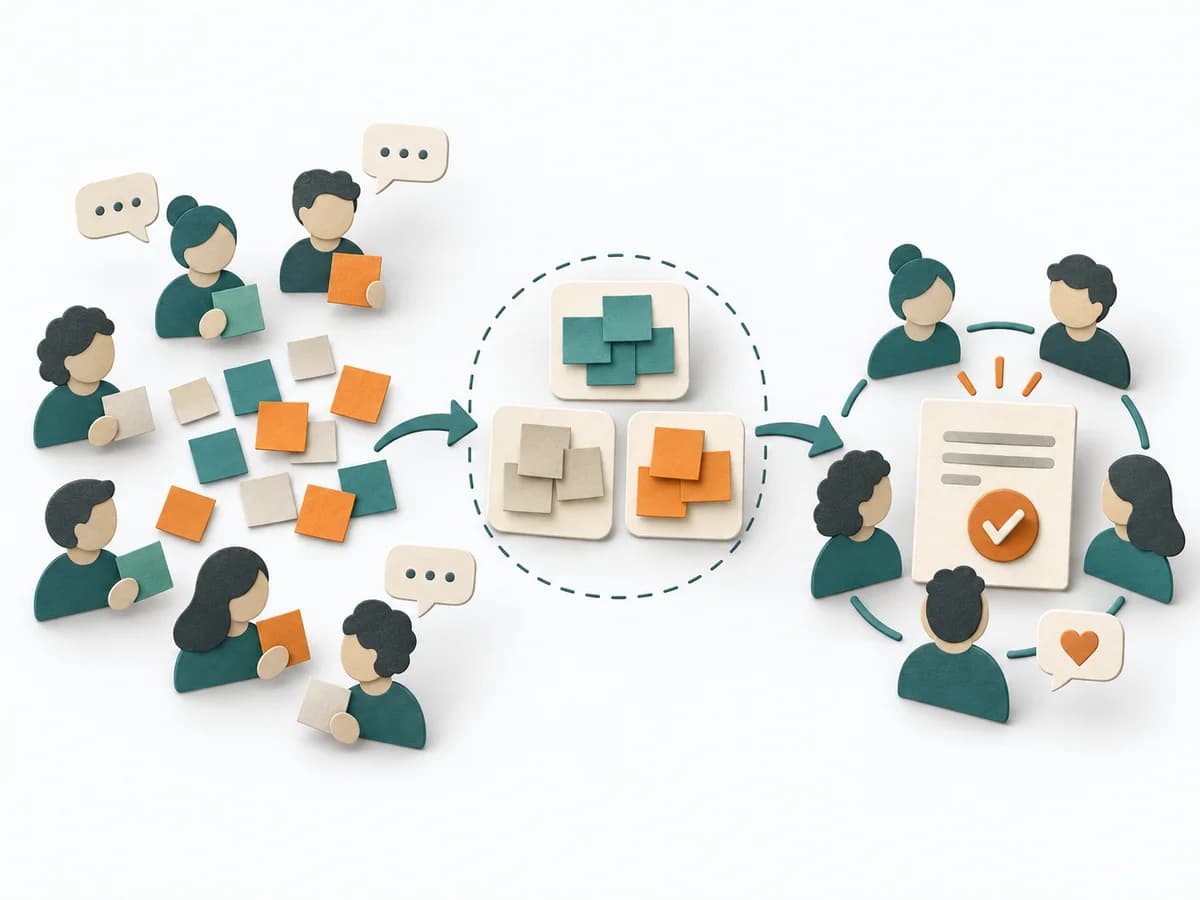
Instead of Decision Jam, when you need a resilient shared position and really want to bring the group along.
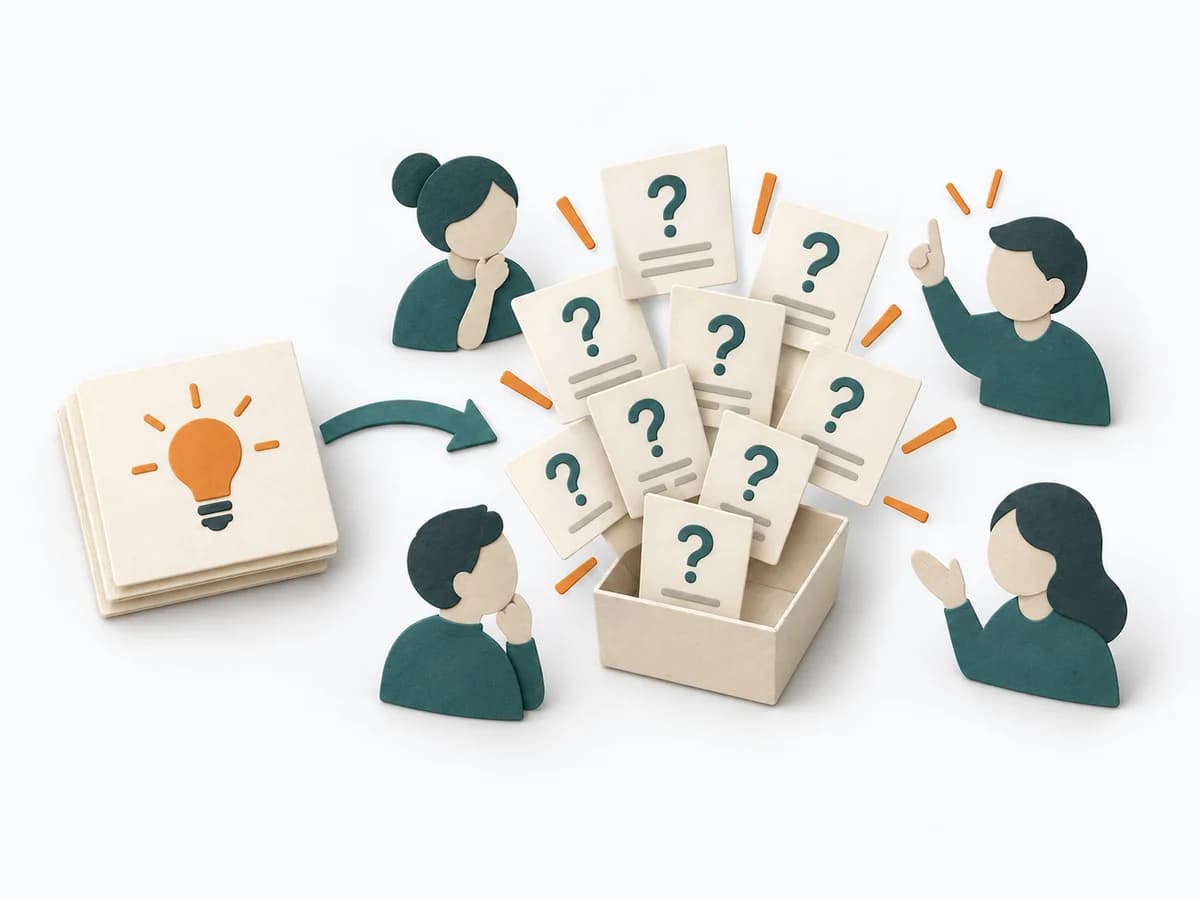
Clarifies group input, selection, and decision-making by framing the challenge, collecting questions only, and deriving new insights and next steps.
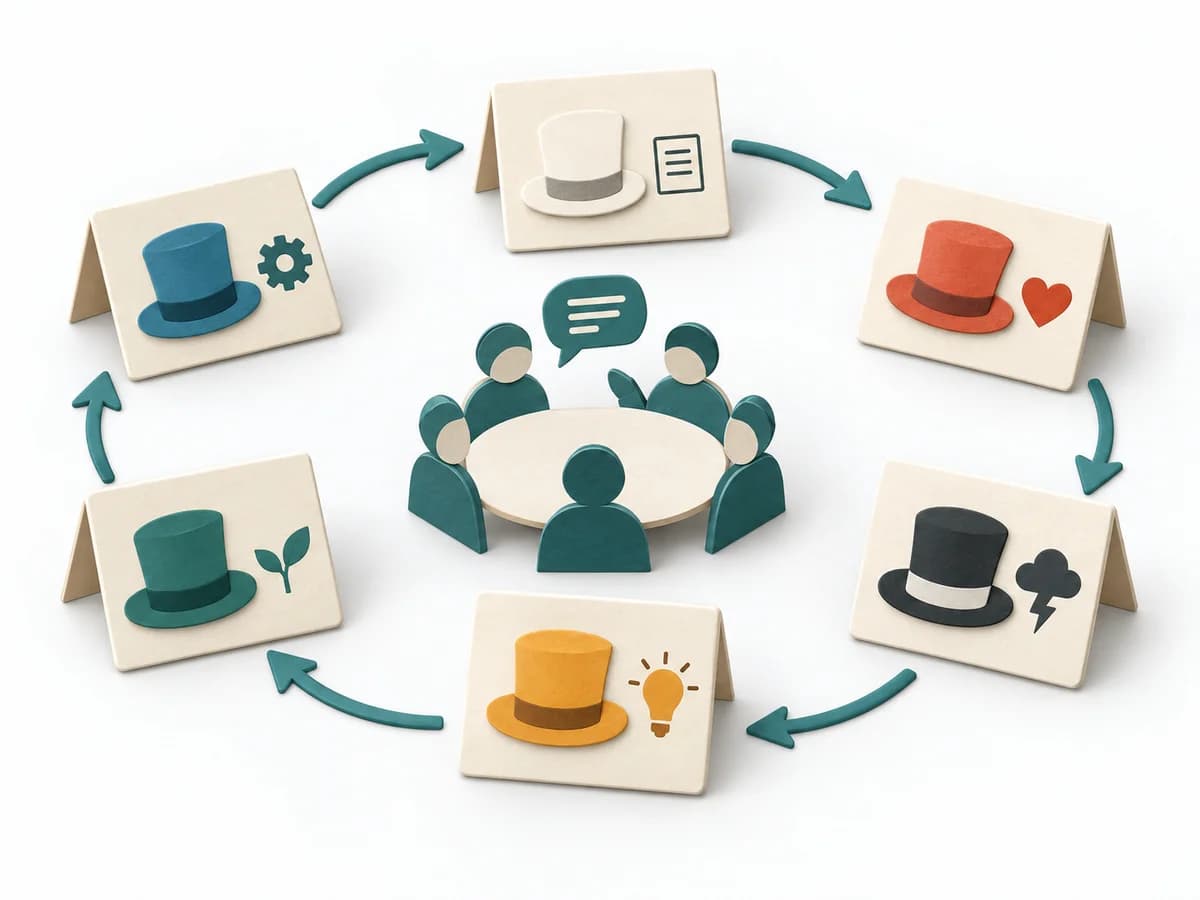
Deliberately switches between perspectives to gather decision inputs in a structured way and spot blind spots.
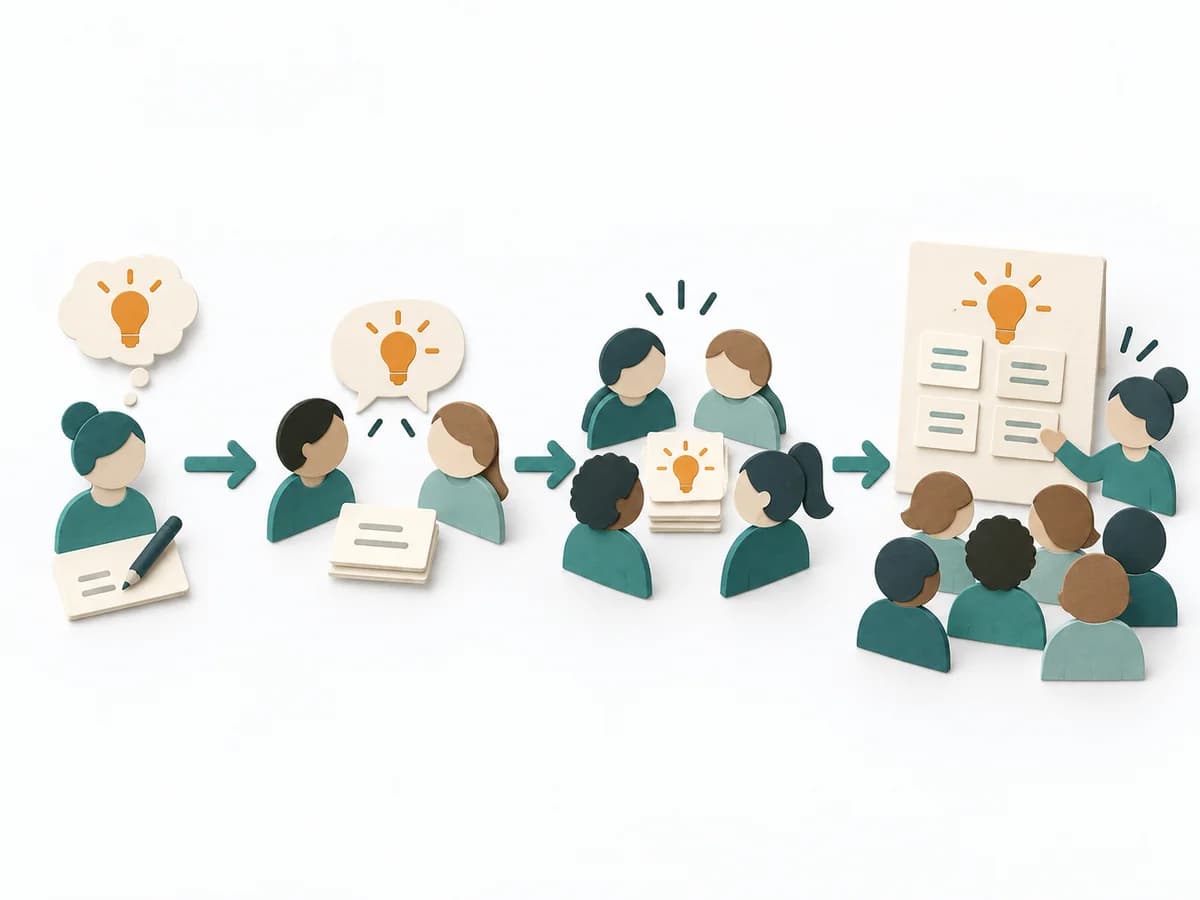
Moves ideas from silent reflection through pair exchange into the group and condenses patterns.
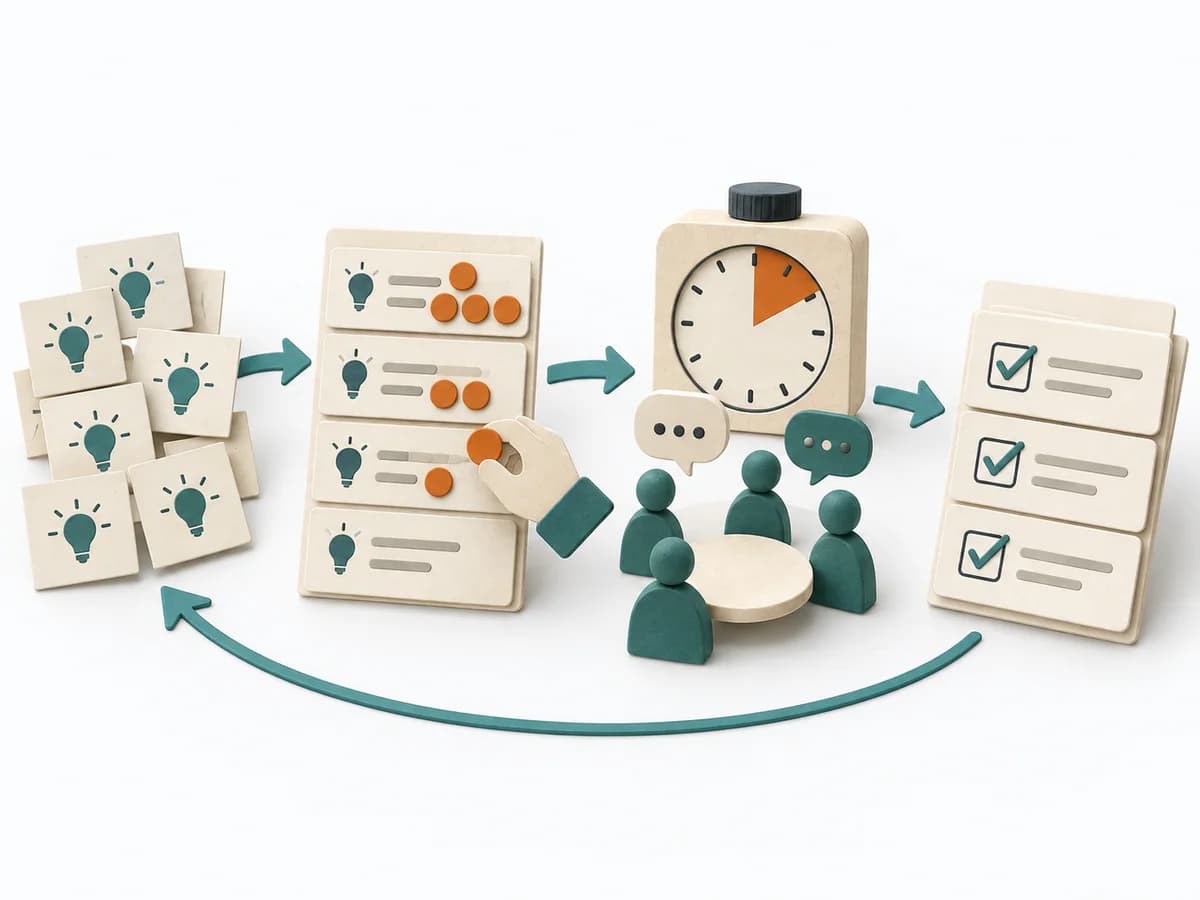
Prioritizes topics by voting and timeboxed discussion, so many points turn into clear action items.
Collects the starting situation, assumptions, and boundaries, and turns them into a precise problem statement.