methodatlas
Innovation

Starbursting

Moves ideas, open questions, and testable next steps toward a concrete result through "place the core idea in the center", "label the six points with who, what, when, where, how, and why", and "mark gaps and follow-up questions".

Core question
Which questions around who, what, when, where, how and why must the team answer before meaningful solution work can start?
LowWorkshop + async30-60 min
Purpose

Helps clarify ideas, open questions, and testable next steps in concrete terms. It opens the thinking space, collects ideas, and leads to testable options. The result is captured as a star-shaped question map, question list, and assumption list.

How it works

The team follows the steps "place the core idea in the center", "label the six points with who, what, when, where, how, and why", "generate as many questions as possible per point", "work out answers and assumptions", and "mark gaps and follow-up questions". Each step is made visible. At the end, a star-shaped question map, question list, and assumption list are available so decisions, tests, or actions can continue directly.

Visual orientation

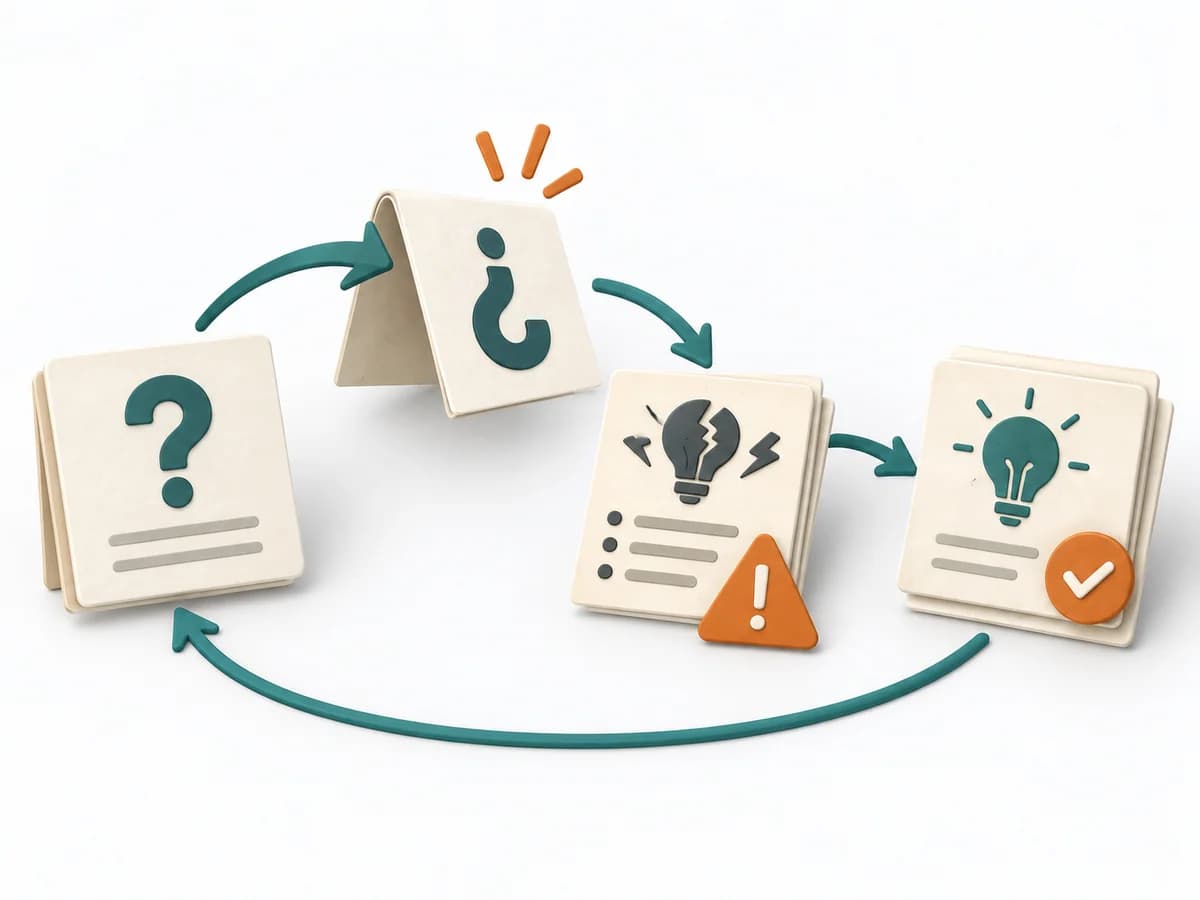
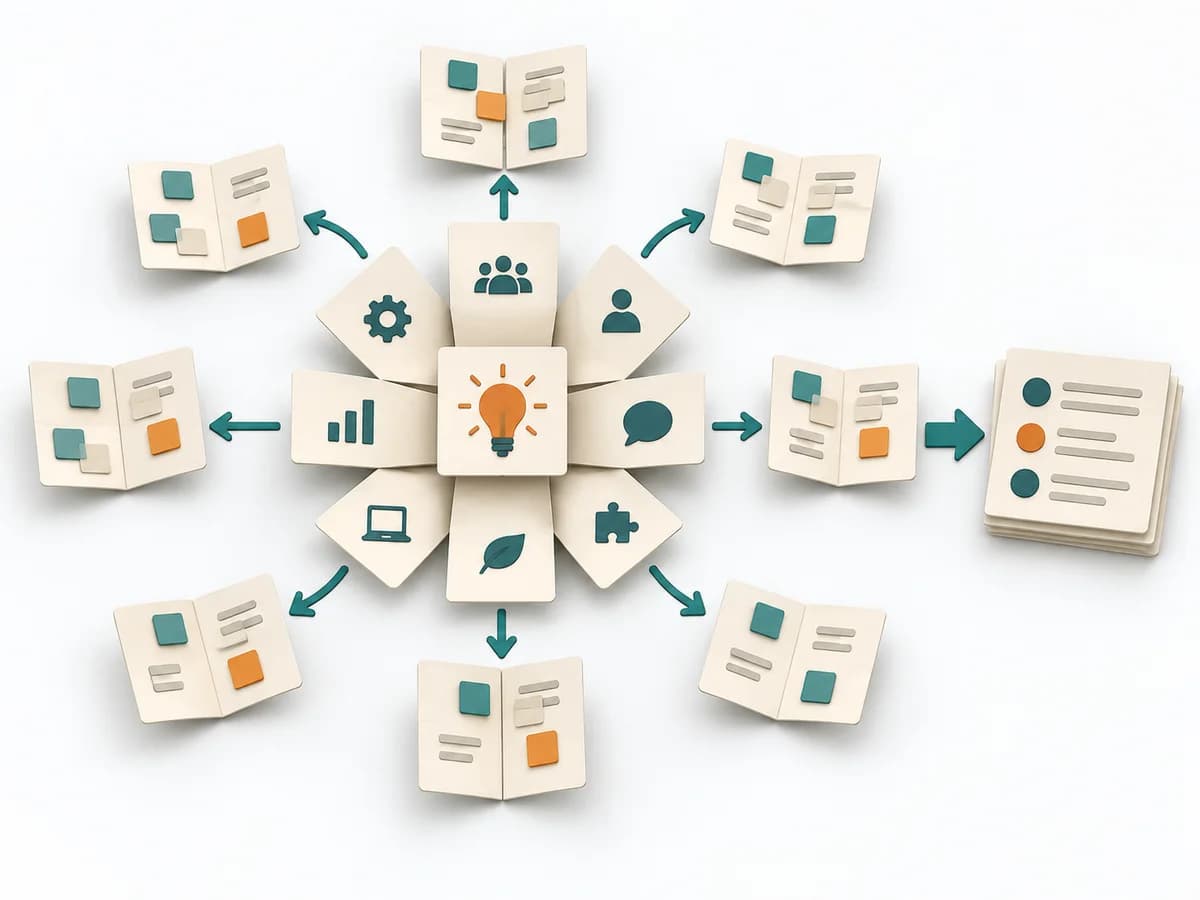
Method sketch for a quick mental model.

Starbursting · Illuminate an Idea through W QuestionsQuestion one core idea systematically with who, what, when, where, how, and why before solutions are discussed
StarburstingThe visual shows a core idea in the center, six question nodes in a star shape, and a box for answers and assumptions.Open an idea through questions firstStarbursting prevents premature solutions by collecting six question perspectives around the idea.Core ideanew service conceptWho?users, buyers,...What?problem, value, outcomeWhen?timing, trigger, deadlineWhere?context, channel, placeHow?workflow, means, accessWhy?motive, risk, assumptionAnswers & assumptionsmark gaps, derive researchquestions first, then solutionsopen question spacenext research

Flow

  1. 1Place the core idea in the center
  2. 2Label the six points with who, what, when, where, how, and why
  3. 3Generate as many questions as possible per point
  4. 4Work out answers and assumptions
  5. 5Mark gaps and follow-up questions

The runsheet guides execution with 4 phases, timeboxes, 6 pitfalls, and clear stop criteria.

Open runsheet

Ideal for

  • Concept clarification
  • Pre-mortem for new ideas
  • Workshops before solution design

Not good for

  • Pure divergence without focus
  • Very abstract vision debates

Deep dive

In detail

Starbursting follows a clear logic: instead of searching for solutions immediately, it first opens the question space systematically. Each point of the star generates many questions that expose open assumptions, blind spots, and needed research. Only then are answers developed so that a solid base exists for the next phase.

Facilitation

Prepare a star template and time-box the question rounds separately for each point. Make sure the group collects questions before discussing answers, otherwise the exercise quickly turns into a solution debate.

Output artifacts
Sternförmige FragenkarteFragelisteAnnahmenliste
Tags
Artifact templates
Starbursting Working TemplateCompact working template for Starbursting with context, input, output artifacts, and next step.
markdown

starbursting-working-template.md

Compact working template for Starbursting with context, input, output artifacts, and next step.

Starbursting Working Template

Goal

Question-driven ideation across Who, What, When, Where, How, and Why.

Context

When and for what do we use this method?

Input

Which data, observations, decisions, or materials are available?

Execution

Short notes along the runsheet.

Output artifacts

  • Star-shaped question map:
  • Question list:
  • Assumption list:

Assumptions and open questions

  • ...

Decision / next step

Owner, date, and success signal.

When to choose differently

Short decision aid for existing alternatives.

How Might We

Statt Starbursting, wenn du mit How Might We ein Problem in offene, lösungsfreundliche Fragen übersetzen willst.

Similar methods

All methods