Purpose
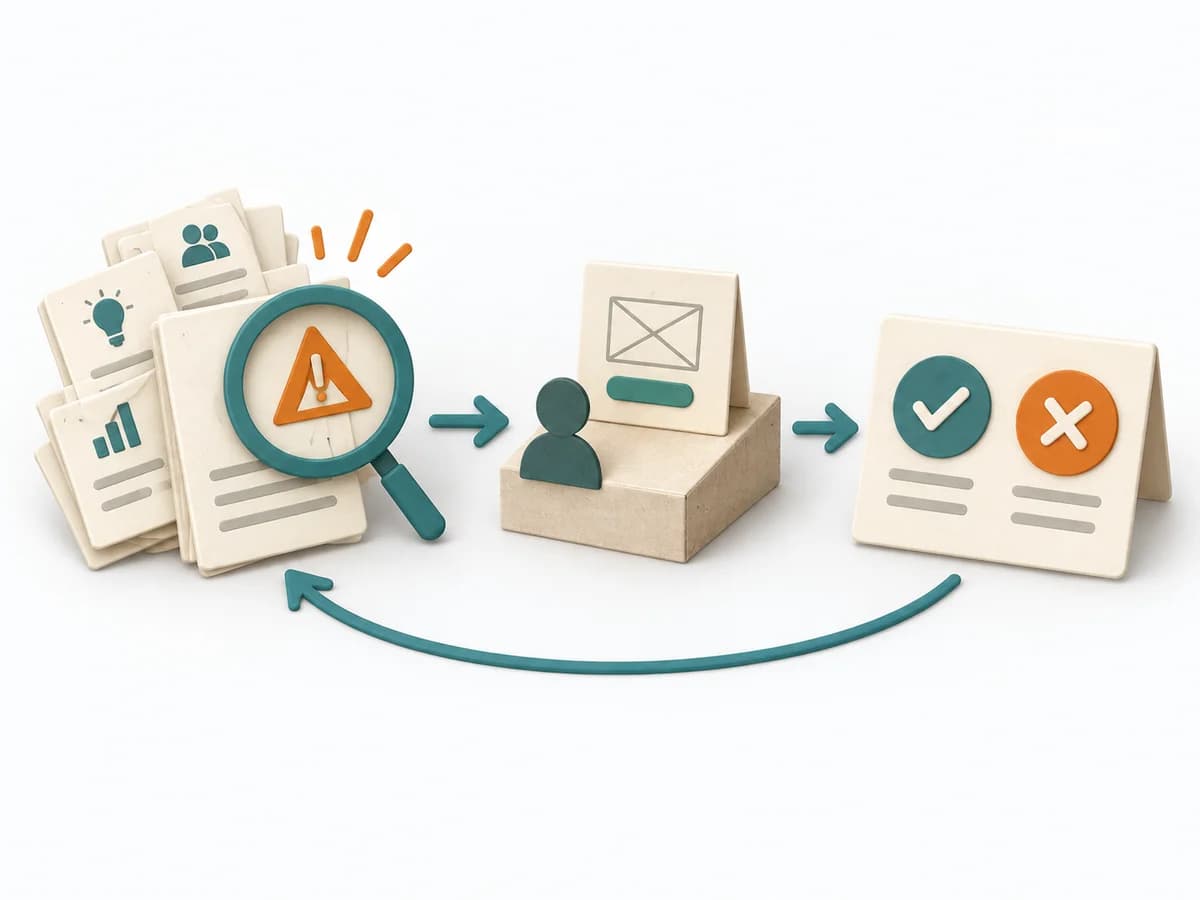
For persistent errors or blockages, the method shifts the view to the opposite of the desired effect. It exposes the mechanics of failure and makes hidden causes easier to grasp. This makes improvement more concrete and the problem clearer.
Innovation Workshop method
Reverses the problem deliberately, examines ways to worsen it, and derives insights for solving it.
The goal question is reversed. The team deliberately generates ways to worsen the problem, examines their mechanisms and translates them into useful countermeasures.
How could we worsen the problem and what does that teach us about solving it?

Reverse question
Reverse the desired outcome into a question about deliberately making things worse.
Worsening ideas
Collect worsening ideas without judging and describe a concrete effect for each.
Counter-ideas
Translate each negative mechanism into a concrete preventive or improving action.
Test selection
Select a feasible counter-idea by impact and effort and plan a small test.
After testing, check which reversed mechanism actually helps and revise weak countermeasures.
For stalled ideation about a concrete situation the group can influence.
Traceable chain from negative idea through mechanism to constructive reversal and next test.
The test brief contains an owner, the observation to collect, and the review date.
Fictional example
The goal question is reversed. The team deliberately generates ways to worsen the problem, examines their mechanisms and translates them into useful countermeasures.
Which outcome do we want to improve?
Fictional: how can we make instructors’ first session easier?
What is the direct opposite of this effect?
How can we make the first session as confusing as possible?
Which action worsens the problem, and why?
Announce room changes after the start: orientation arrives too late.
Which concrete action prevents this mechanism?
Confirm room and contact the previous day; send changes through direct messages.
Who tests what with whom and how is impact recognised?
Lea trials confirmation with three new instructors and asks before the start whether room and contact are clear.
All example details are fictional and illustrate the application.
Define positive goal and context; label negative ideas as a thought experiment only.
For persistent errors or blockages, the method shifts the view to the opposite of the desired effect. It exposes the mechanics of failure and makes hidden causes easier to grasp. This makes improvement more concrete and the problem clearer.
The reversal creates distance from the normal solution mode and loosens ingrained thinking patterns. Deliberately looking at how to worsen, misuse, or destroy something often reveals faster where the system is vulnerable. From this negative logic, robust countermeasures or design principles can be derived.
Reverse Brainstorming helps because it breaks up thinking patterns by deliberately searching for ways to worsen a problem or miss a goal. The method delivers insights when the negative ideas are afterward carefully translated into safeguards, counter-principles, or new solution directions. Effect comes from this back-translation and from the reasons behind destructive patterns, so provocation turns into usable insight.
Formulate the original problem so the reversal is clearly understandable and no one drifts into general silliness. The interesting point comes when absurd proposals suddenly reveal real weaknesses; serious analysis pays off there. At the end, a brief turn back into concrete preventions, design principles, or next experiments helps.
The method guide walks execution through 4 phases, timing, 4 pitfalls, and clear stop criteria.
Open method guideYour perspective
Your feedback helps shape the next improvements to methodatlas.
Define positive goal and context; label negative ideas as a thought experiment only.
To be confirmed
To be confirmed
Complete cycle Time: 30–60 minutes
Complete this worksheet on paper or in your own document during the work.
Which outcome do we want to improve?
...
What is the direct opposite of this effect?
...
Which action worsens the problem, and why?
...
Which concrete action prevents this mechanism?
...
Who tests what with whom and how is impact recognised?
...
Answer the prompts with your own information. Explicitly mark unknowns and assumptions.
IAF Library / SessionLab: Reverse Brainstorming
Expected artifact: Reverse question
Does the reversal address the same problem?
Entry:
...
Expected artifact: Negative mechanisms
Is the harmful mechanism clear?
Entry:
...
Expected artifact: Concrete counter-ideas
Is the counter-idea more than simply not doing it?
Entry:
...
Expected artifact: Test brief
Does the test examine the expected effect?
Entry:
...
...
Method guide: https://methodatlas.meierhoff-systems.de/en/methods/reverse-brainstorming/run-sheet
Fitting alternatives with decision guidance, followed by other related methods.

Instead of Reverse Brainstorming, when you want to use Brainstorming to generate many ideas together, spontaneously and openly.

Moves ideas, open questions, and testable next steps toward a concrete result through "place the core idea in the center", "label the six points with who, what, when, where, how, and why", and "mark gaps and follow-up questions".
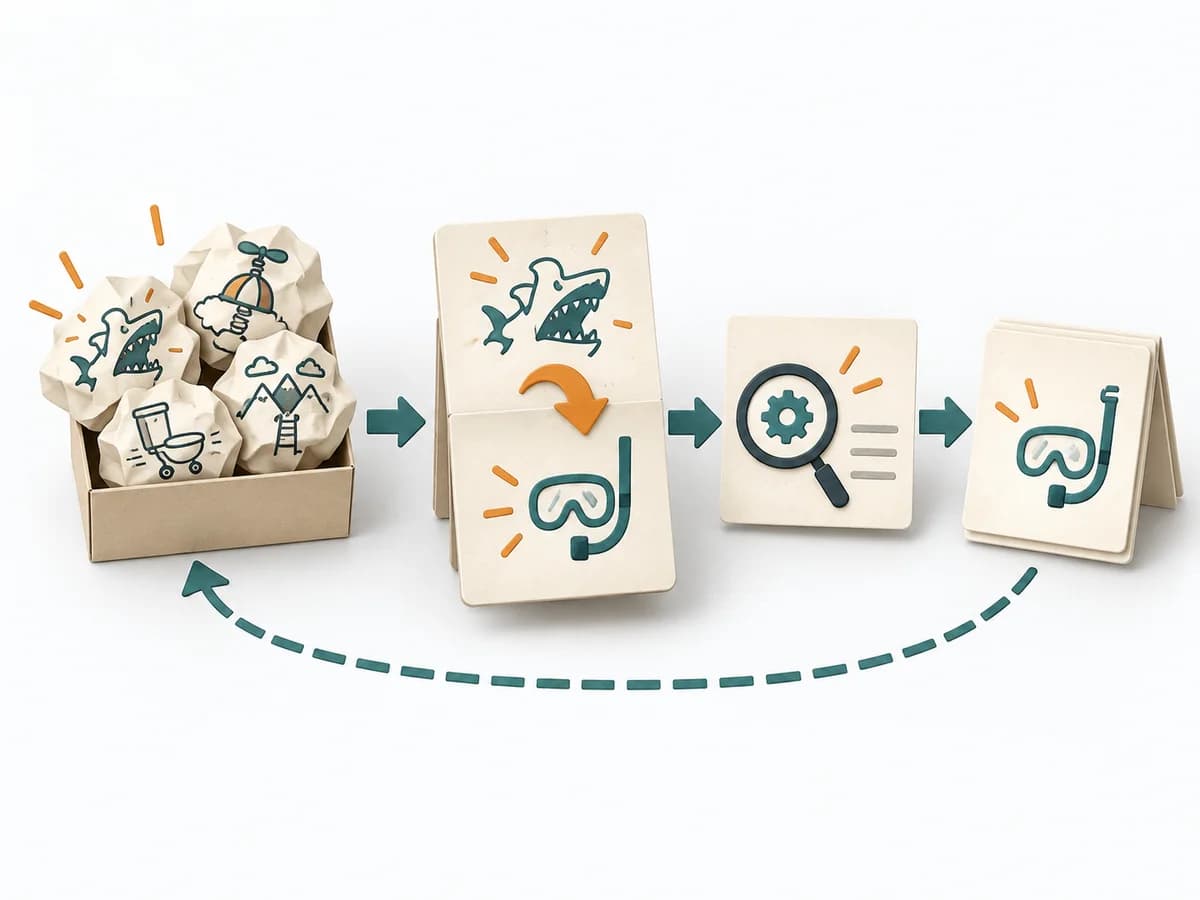
Deliberately collects bad ideas, reverses their mechanics, and turns them into usable approaches.

Expands a core question into topic fields, filters out patterns, and condenses interesting paths into a shortlist.

Invented roles shift perspective during ideation and surface options that the normal team viewpoint would miss.
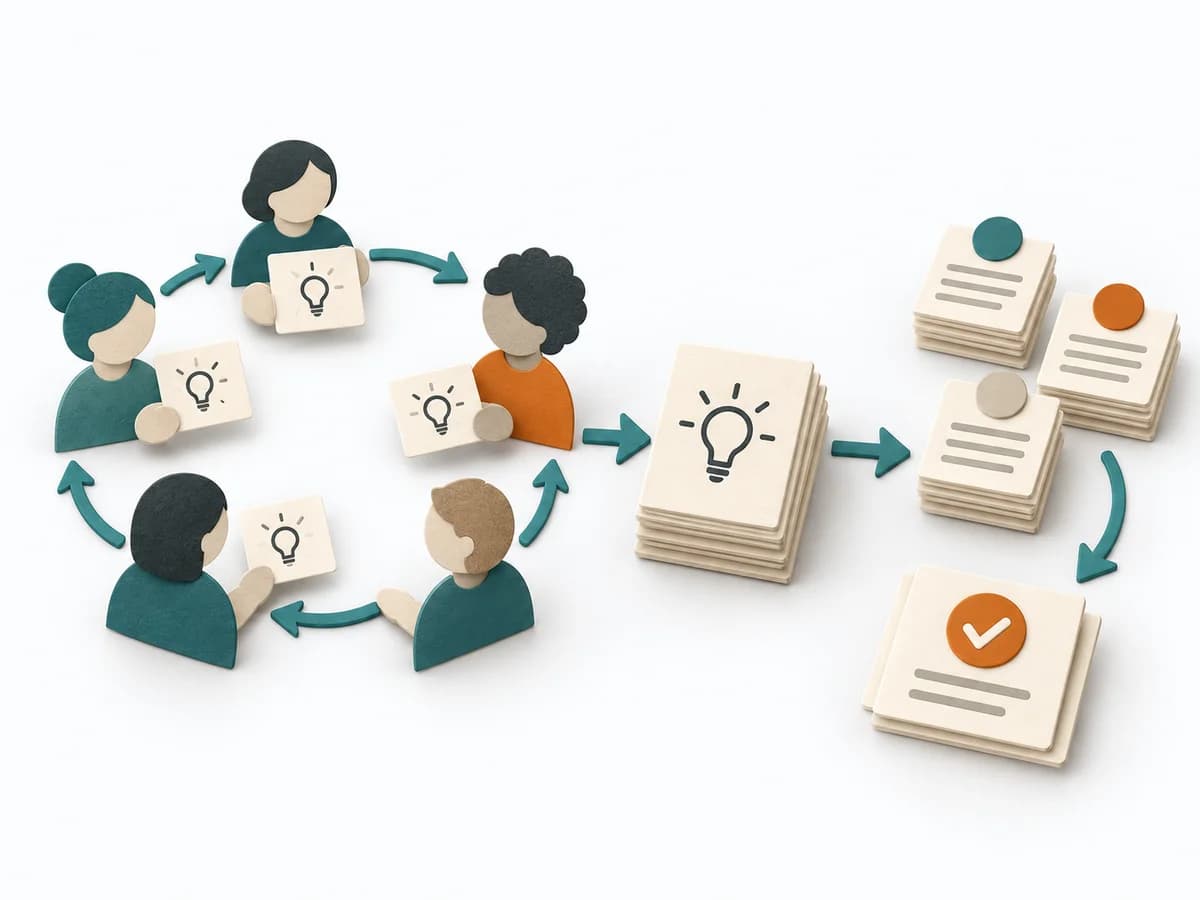
Ensures participation in turn, produces a broad idea list, and then leads it into clusters and a shortlist.