
Purpose
When capabilities, maturity levels, or market positions need to be compared across several dimensions, overview is easily lost. Radar brings different characteristics into a shared picture and shows patterns faster than tables do.
Decision Making Decision method
Compares several dimensions of one shared object on an evidence-backed scale.
A radar chart displays several categories as axes on a common scale. As a working method it makes current and desired profiles, divergent assessments and development areas visible. Meaning comes from operationalized axes and evidence, not polygon area.
Where do we stand on each dimension with evidence, what profile do we need and what change will we test next?
Example and worksheet use the same method-specific structure.

Scale
Every axis measures the same object through observable anchors.
Rate
Values are documented as reasoned assessments, not decorative area.
Patterns
The radar reveals tensions and priorities without invalidly aggregating different axes.
Action
A few relevant axes receive concrete experiments and a new measurement point.
Keep dimensions and scale stable across comparison periods; add new values with date, evidence and context change.
Useful for recurring reflection on a team, product or capability across several dimensions. Unsuitable when axes lack a common scale or an exact total ranking is expected.
Current and target per dimension with scale anchors, evidence and uncertainty.
Focused experiments with signal, owner and next radar date.
Fictional team radar
Fictional 1–5 assessment of a product team. Values are read with evidence per axis; polygon area is not a total score.
| Dimension | Current 1–5 | Target 1–5 | Fictional evidence |
|---|---|---|---|
| DiscoveryHow confidently do we understand problem and users? | 2 | 4 | Three interviews, no usage data yet. |
| DeliveryHow reliably do we release small changes? | 4 | 4 | Weekly releases, stable pipeline. |
| QualityHow visible and controlled are quality risks? | 2 | 4 | Regressions are found late by Support. |
| LearningHow regularly do we review impact and assumptions? | 1 | 3 | No recurring outcome reviews. |
| AlignmentHow clear are aim, priorities and decision rights? | 3 | 4 | Quarterly aim is clear; trade-off rule is missing. |
Scale: 1 = ad hoc, 3 = repeatable, 5 = measured and improved.
Clarify decision question, assessment object, date and five to eight relevant dimensions.
When capabilities, maturity levels, or market positions need to be compared across several dimensions, overview is easily lost. Radar brings different characteristics into a shared picture and shows patterns faster than tables do.
Several axes are brought onto the same scale so strengths, weaknesses, and asymmetries become visible. The format fits when relative differences matter more than exact individual values. This makes a profile quick to read and discuss.
A Radar makes change visible across categories and maturity levels when a group has to watch many topics at once. Clear criteria per ring, justified movements, and regular upkeep keep the representation resilient. As a poster surface it stays pretty; as a working tool it directs attention and structures adoption, observation, or rejection.
Define the search question, the time horizon, and the kind of signal that should be captured on the radar at all. The format becomes useful when weak signals are condensed without faking early certainty. Close with a clear classification into observe, assess, or adopt, and record when a topic gets reassessed.
The method guide walks execution through 4 phases, timing, 4 pitfalls, and clear stop criteria.
Open method guideYour perspective
Your feedback helps shape the next improvements to methodatlas.
Prepare the whole flow or one selected phase with real inputs.
To be confirmed
To be confirmed
Set up and repeat the radar Time: 60–120 minutes; repeat at an agreed cadence
Complete this worksheet on paper or in your own document during the work.
| Dimension | Current rating 1–5 | Target rating 1–5 | Evidence and uncertainty |
|---|---|---|---|
| Discovery | |||
| Delivery | |||
| Quality | |||
| Learning | |||
| Alignment |
Define scale anchors before rating and record at least one piece of evidence per value.
Minnesota Department of Health · Radar chart
Expected artifact: Radar rubric
Object · date · dimensions · scale anchors
Entry:
...
Expected artifact: Evidence-backed ratings
Current value · evidence · uncertainty
Entry:
...
Expected artifact: Prioritized tensions
Gap · dependency · uncertainty
Entry:
...
Expected artifact: Improvement plan
Axis · experiment · signal · owner · review
Entry:
...
...
Method guide: https://methodatlas.meierhoff-systems.de/en/methods/radar/run-sheet
Fitting alternatives with decision guidance, followed by other related methods.
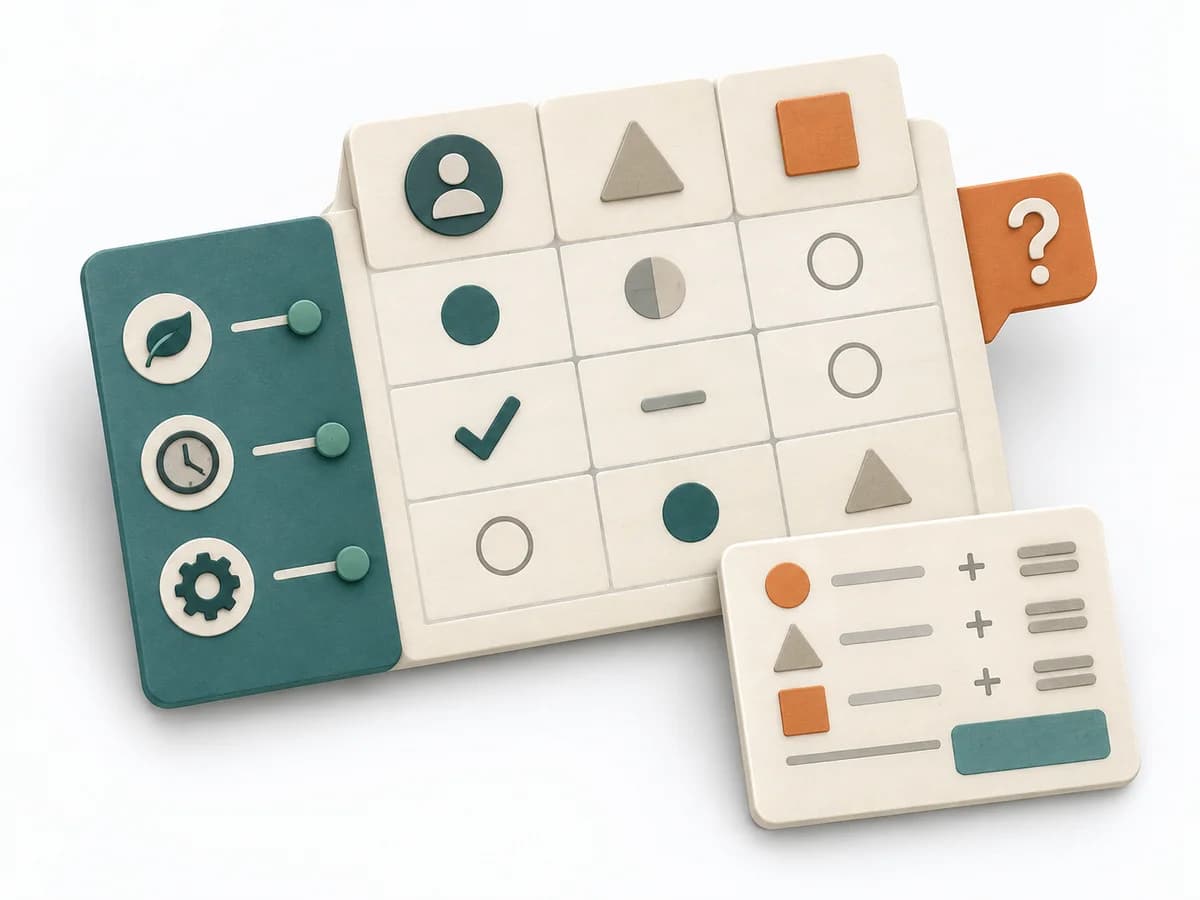
Instead of Radar, when you're not classifying maturity levels but selecting between options using weighting and reasoning.

Clarifies options, criteria, and risks by framing the central question, recording the main claim, and marking weak spots.
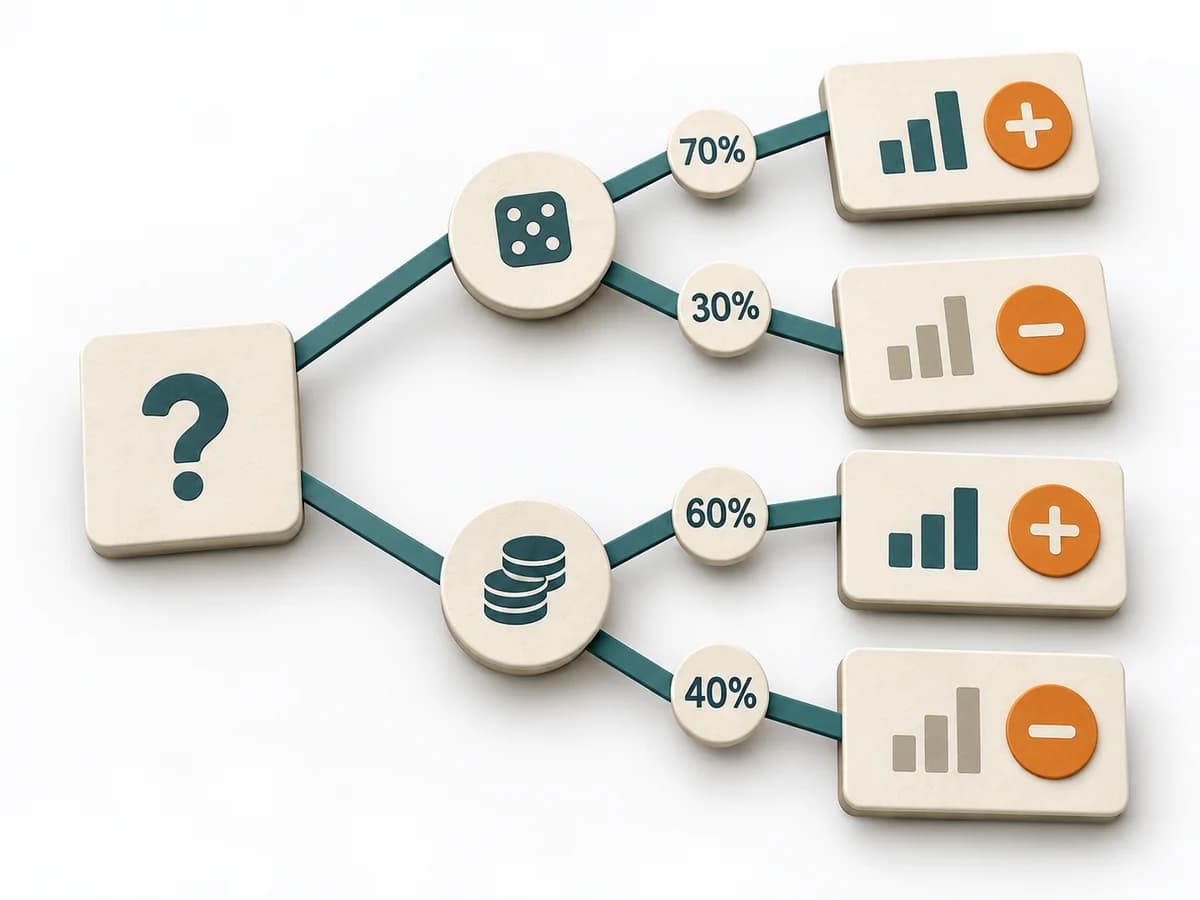
Draws decisions as branching paths so options, conditions, and consequences become clearer in comparison.
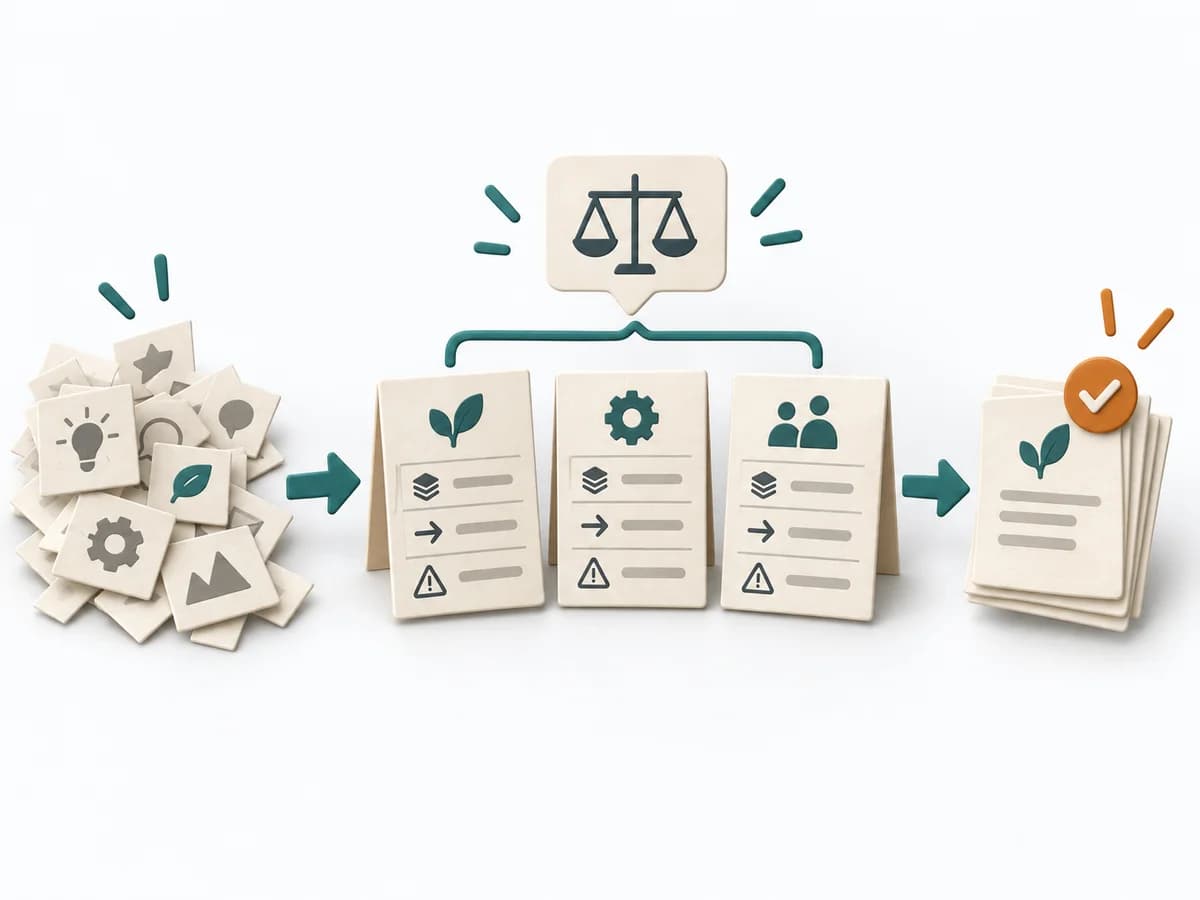
Shapes raw options into comparable descriptions with assumptions and consequences for a real shortlist.

Arranges decision responsibility across five roles and makes recommendation, input, and follow-up unambiguous.
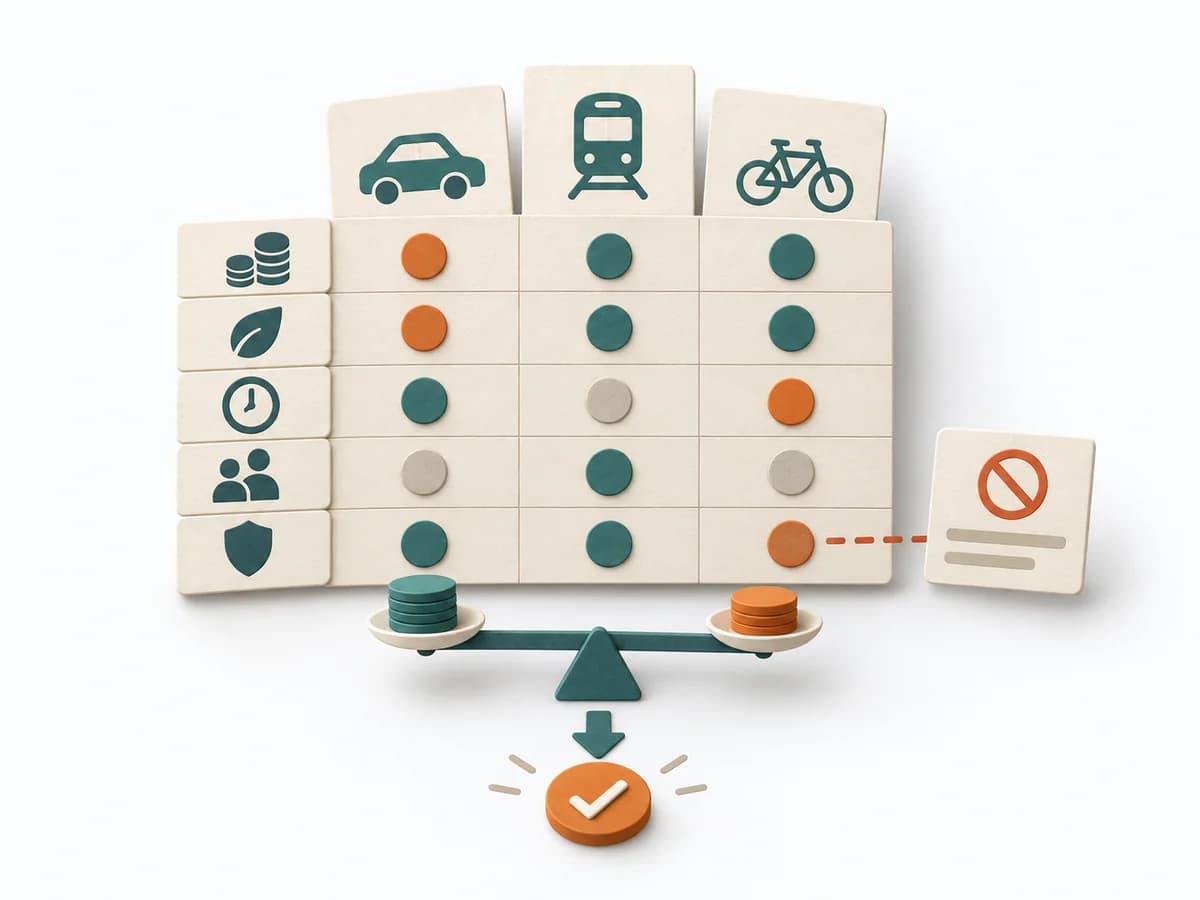
Compares options against criteria and accepted downsides so the decision stays transparently justifiable.