Purpose
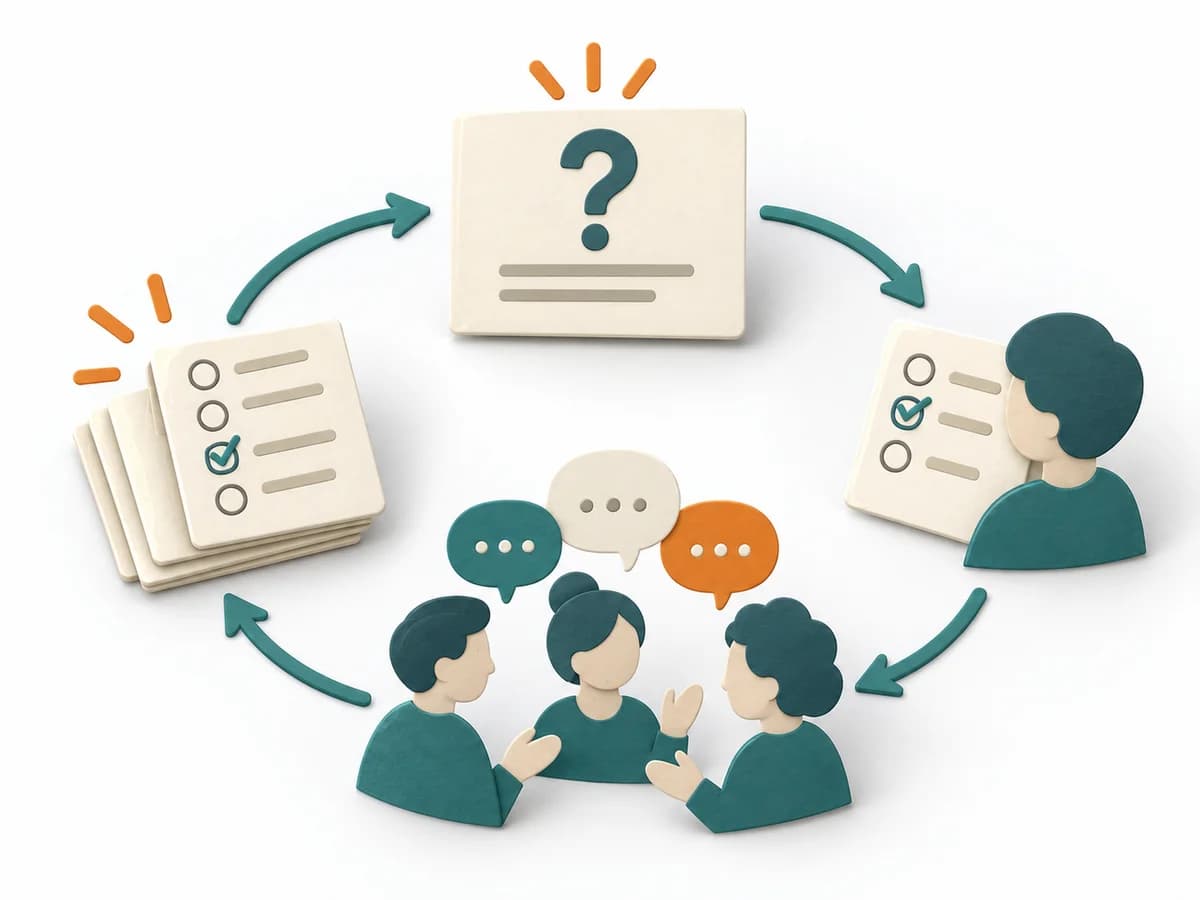
Teach-back checks whether an explanation actually got through to the other person. The method makes misunderstandings visible early and strengthens shared understanding in advisory and learning situations.
Knowledge Modeling Facilitation method
Checks understanding by having content repeated in the learner’s own words so gaps become visible immediately.
One person explains information or a procedure in their own words. The other person then repeats the content and reveals what is understood and where gaps remain. The shared version is refined until it is usable.
Can the learner restate and apply the information correctly in their own words?
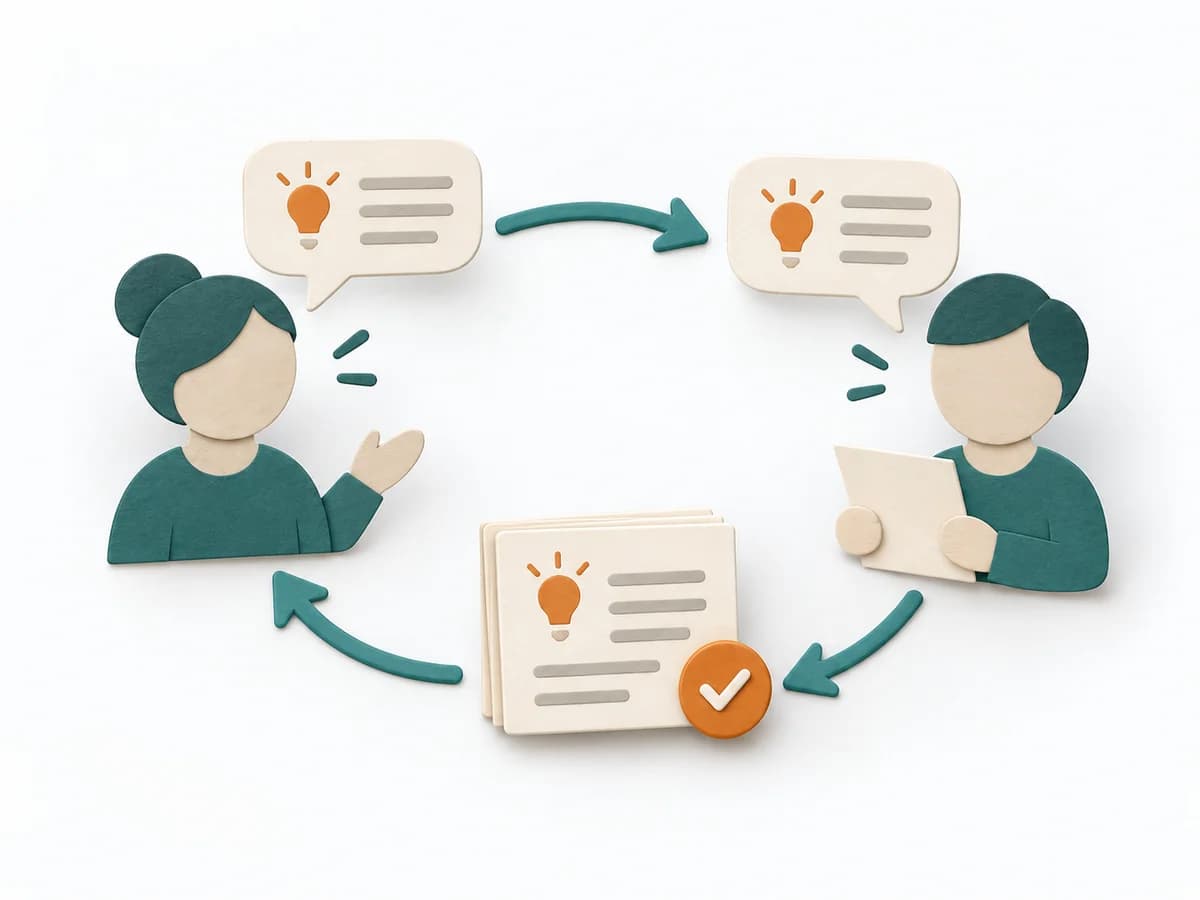
The steps express the method mechanics in one complete run.
Explain
Explain and demonstrate one learning item in plain language
Restate
Ask the learner respectfully to restate it in their own words
Gap
Listen and note correct application and misunderstandings
Correct
Re-explain only missing points using different words or representation
Transfer
Request teach-back again and close with an application case
Test open questions through the agreed next step and append new evidence as a version.
Teach-back prüft, ob eine Erklärung beim Gegenüber wirklich angekommen ist. Die Methode macht Missverständnisse früh sichtbar und stärkt gemeinsames Verständnis in Beratungs- und Lernsituationen.
Confirmed use with evidence, open points, owner, and review.
Fictional example
Fictional values are assigned to explicit method fields.
Explain and demonstrate one learning item in plain language
Explanation: cancel a reservation by 18:00; call Support afterwards.
Ask the learner respectfully to restate it in their own words
“I can cancel in the portal at any time and see the refund there.”
Listen and note correct application and misunderstandings
Gap: the learner does not know about the 18:00 lock and still expects portal cancellation.
Re-explain only missing points using different words or representation
New explanation uses a calendar image and two times rather than repeating the rule.
Request teach-back again and close with an application case
Saturday 19:00 case: learner names the support number and keeps the booking ID ready.
All details are fictional.
Choose one learning item and one application case; clarify that the explanation is being tested.
Teach-back checks whether an explanation actually got through to the other person. The method makes misunderstandings visible early and strengthens shared understanding in advisory and learning situations.
One person explains information or a process in their own words. The other person then plays the content back, showing what was understood and where something is missing. Gaps are then closed briefly until the shared version holds up.
Teach-back works because understanding only becomes visible when re-explaining under real pressure to formulate. The method delivers its benefit when the person does not recite from memory but reconstructs meaning, sequence, and reasoning in their own words. Good application listens for missing causality, omitted boundary conditions, and shaky terms, so feedback turns directly into deeper learning.
Define in advance which content should be played back and what prior knowledge may be assumed of the other person. The critical moment comes when the right keywords appear but the connection between them stays empty; a step back to the basic logic pays off then. A good close consists of a precise correction, a second short round, and a note on where the knowledge will be applied next.
The method guide walks execution through 5 phases, timing, 5 pitfalls, and clear stop criteria.
Open method guideYour perspective
Your feedback helps shape the next improvements to methodatlas.
Plan subject, participation, complete flow, and review.
To be confirmed
To be confirmed
Complete run Time: 5–20 minutes per learning item; explain gaps and check again.
Complete this worksheet on paper or in your own document during the work.
Explain and demonstrate one learning item in plain language
...
Ask the learner respectfully to restate it in their own words
...
Listen and note correct application and misunderstandings
...
Re-explain only missing points using different words or representation
...
Request teach-back again and close with an application case
...
The blank worksheet contains prompts only.
Reference source · original teaching example
Expected artifact: Clear explanation
Explain and demonstrate one learning item in plain language
Entry:
...
Expected artifact: Restatement
Ask the learner respectfully to restate it in their own words
Entry:
...
Expected artifact: Understanding gap
Listen and note correct application and misunderstandings
Entry:
...
Expected artifact: New explanation
Re-explain only missing points using different words or representation
Entry:
...
Expected artifact: Confirmed use
Request teach-back again and close with an application case
Entry:
...
...
Method guide: https://methodatlas.meierhoff-systems.de/en/methods/teach-back/run-sheet
Fitting alternatives with decision guidance, followed by other related methods.
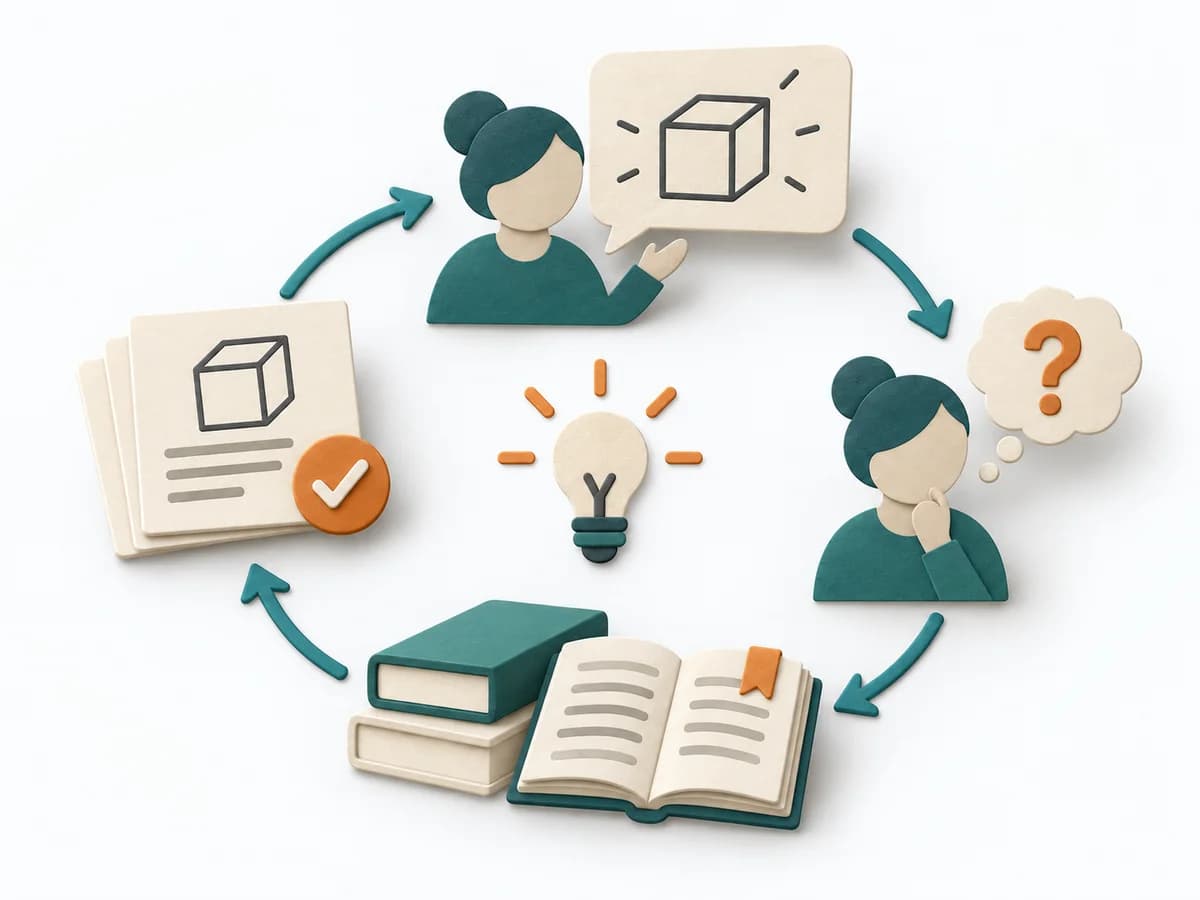
Instead of Teach-back, choose Feynman Technique when you check your understanding by whether you can explain it simply and without gaps.
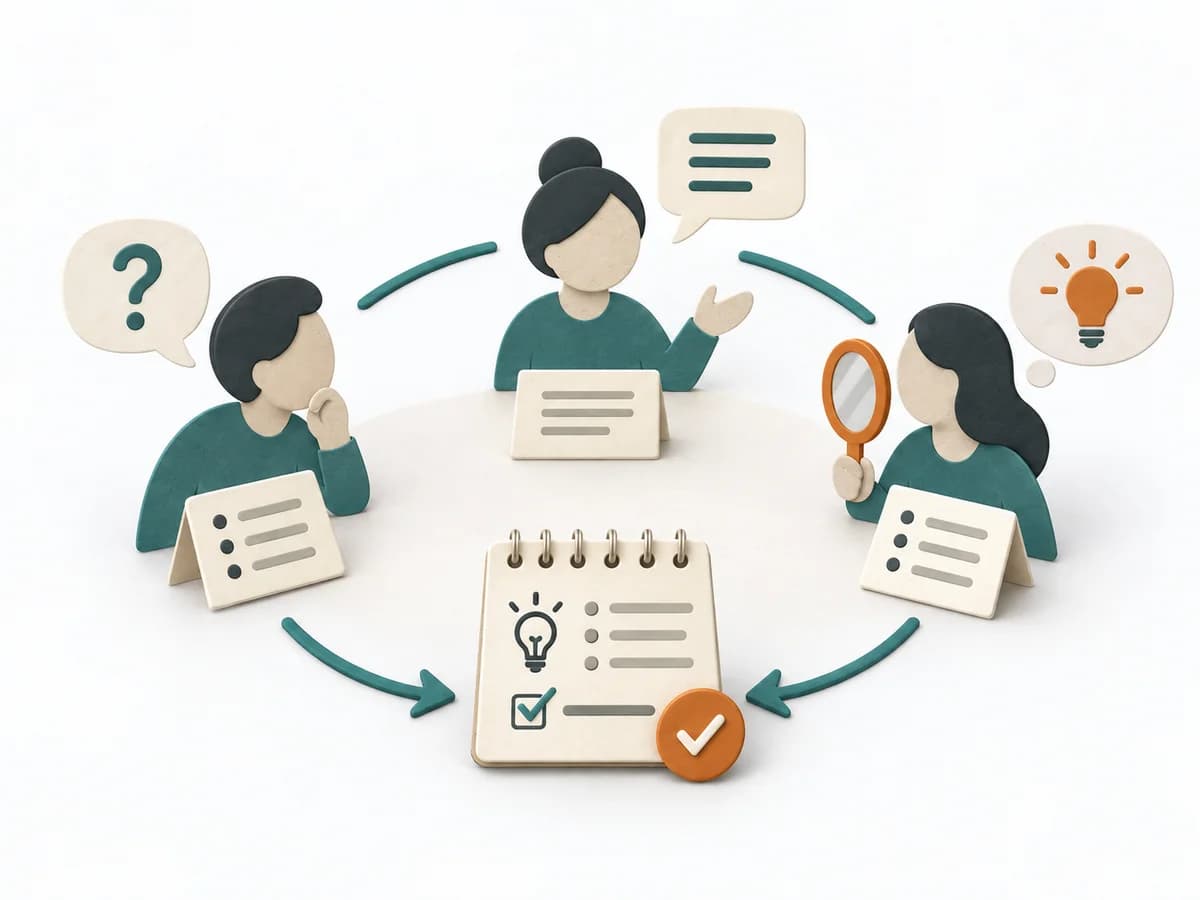
Gives one person precise peer feedback through three roles and records key next actions and observations.
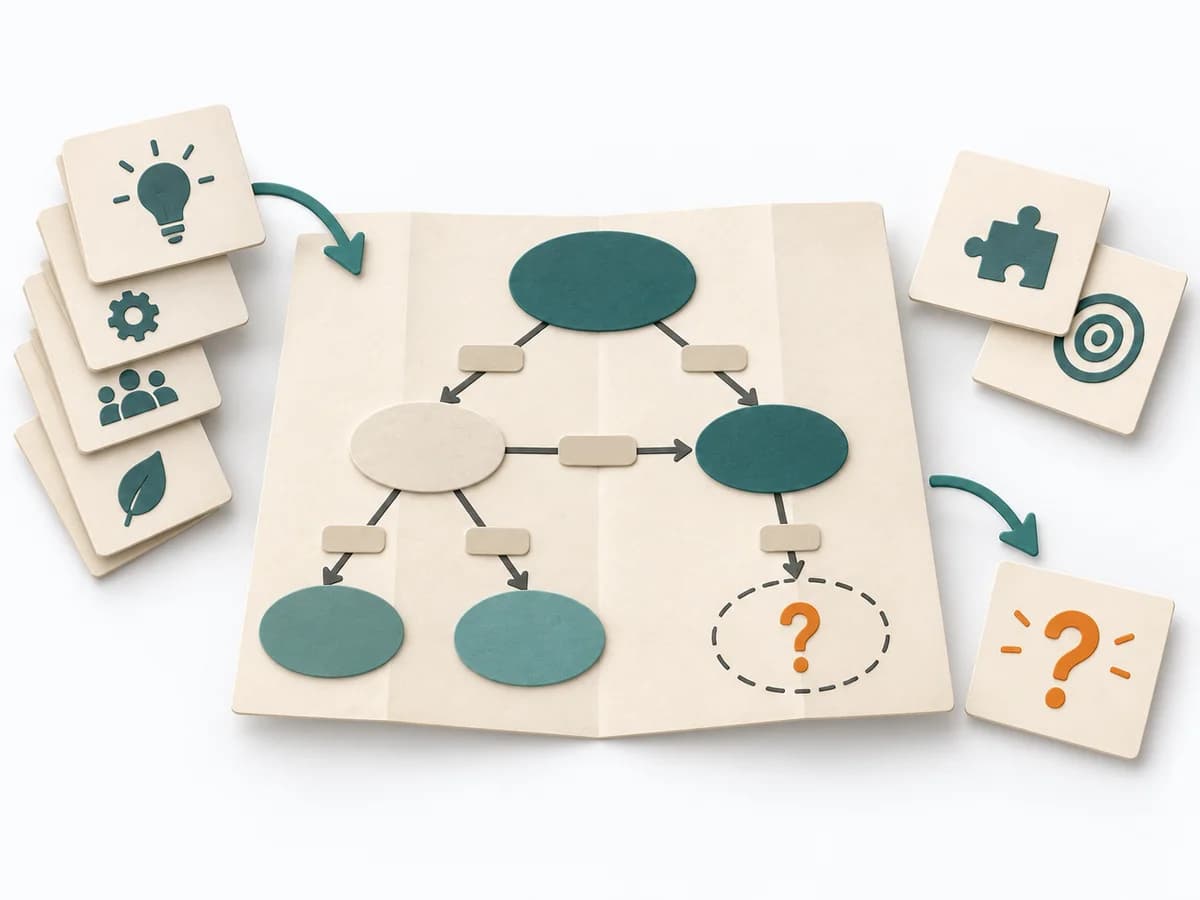
Clarifies concepts, relationships, and rules by framing the focus question, gathering concepts, and checking gaps and contradictions.
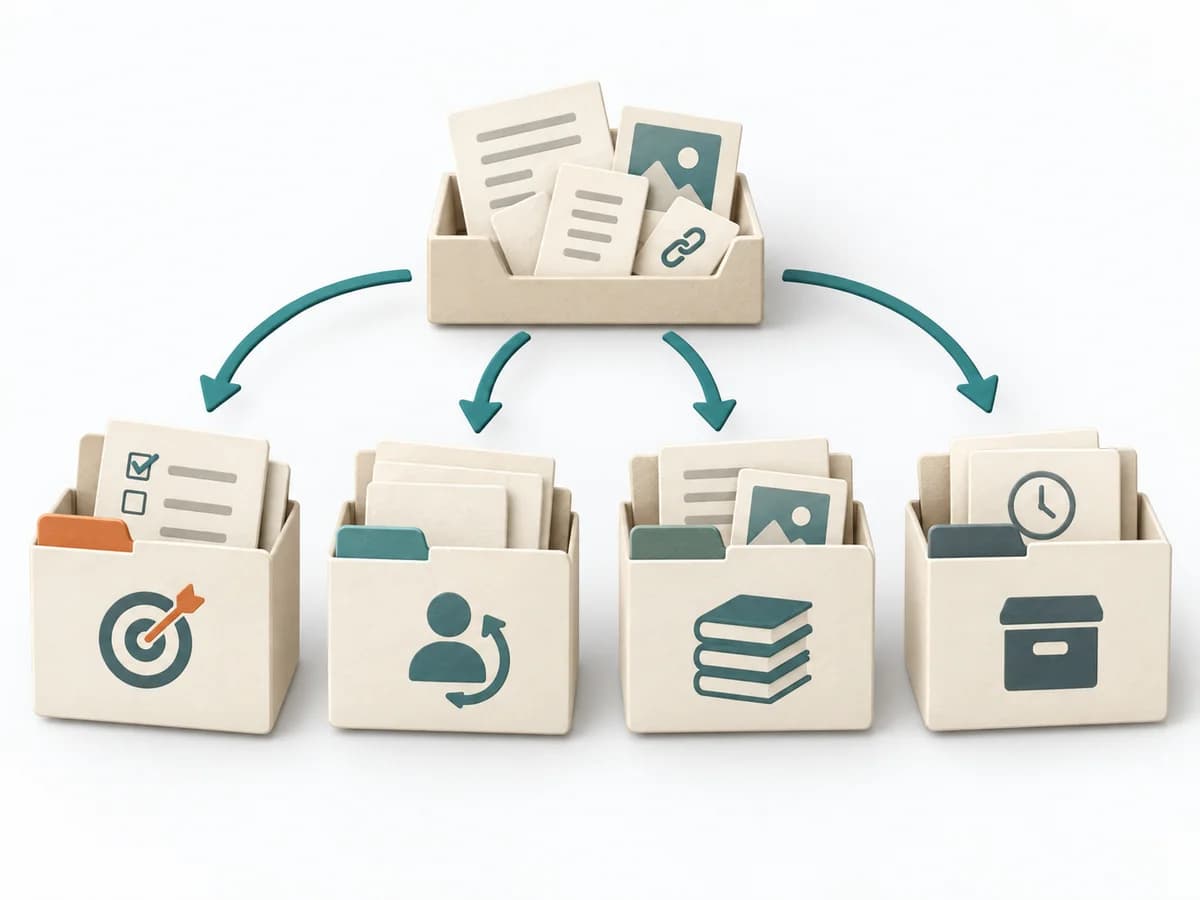
Sorts knowledge into Projects, Areas, Resources, and Archive so personal knowledge work stays easier to steer.
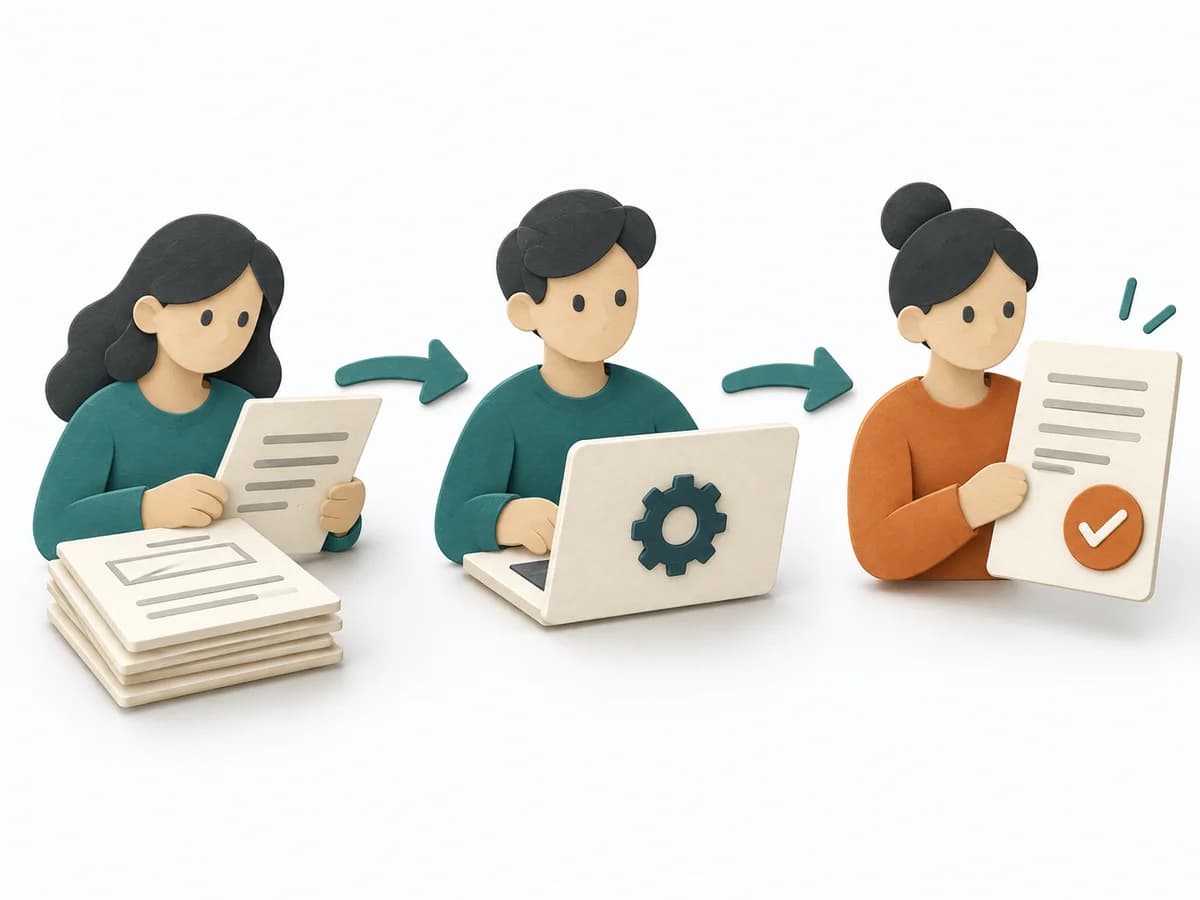
Translates domain knowledge into a narrated situation where terms, relationships, and rules are checked together.
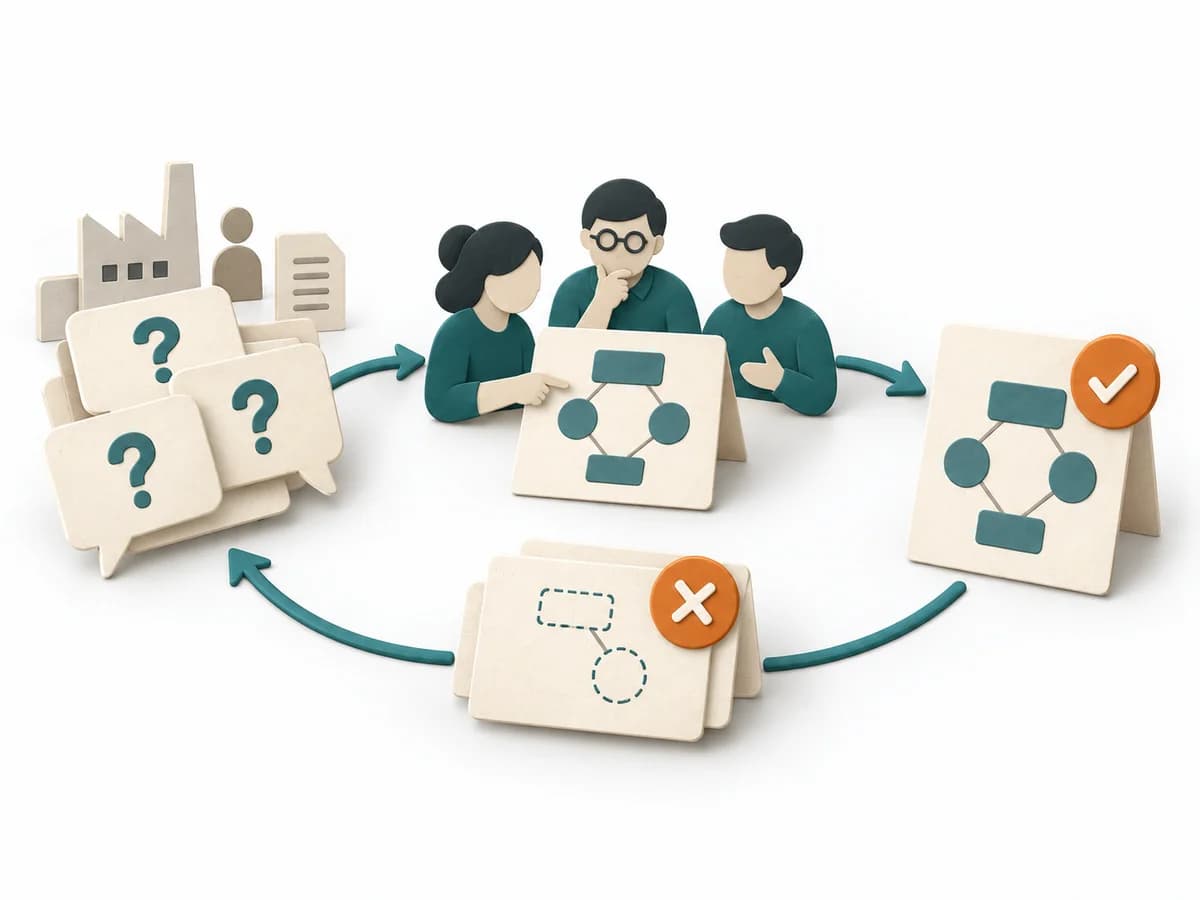
Concrete domain questions define what an ontology or knowledge model must be able to answer and test.