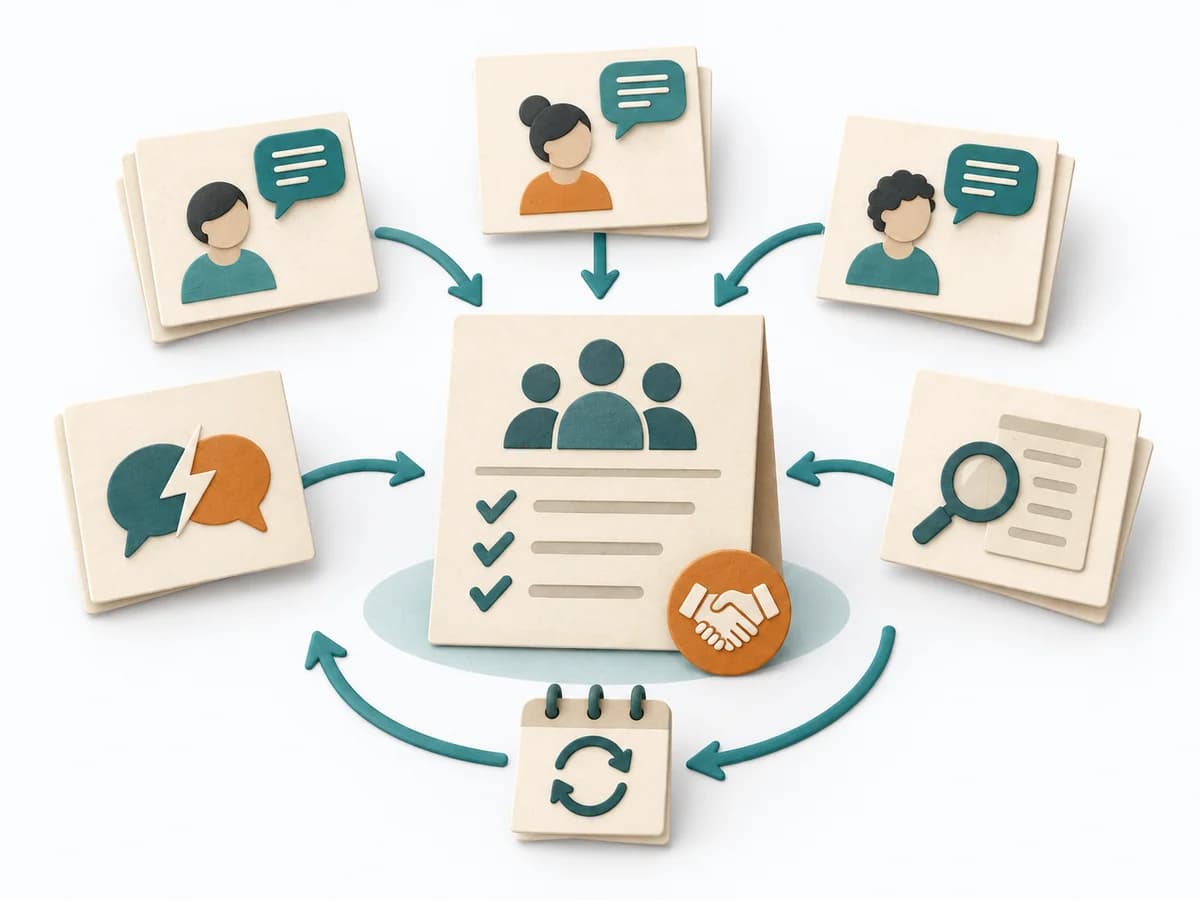
Complete firstWorking basis
Bound one collaboration or handoff. Participants prepare two expectations of others and two commitments of their own.
Use a concrete case and observable outcome.
A practical method guide: clarify prerequisites and materials, understand the complete process, and look up outputs, pitfalls, and stop criteria.
What needs to be finished first
Bound one collaboration or handoff. Participants prepare two expectations of others and two commitments of their own.
Collect expectations silently and separately. Translate wishes into feasible agreements only after all perspectives are visible.
What needs to be ready before start
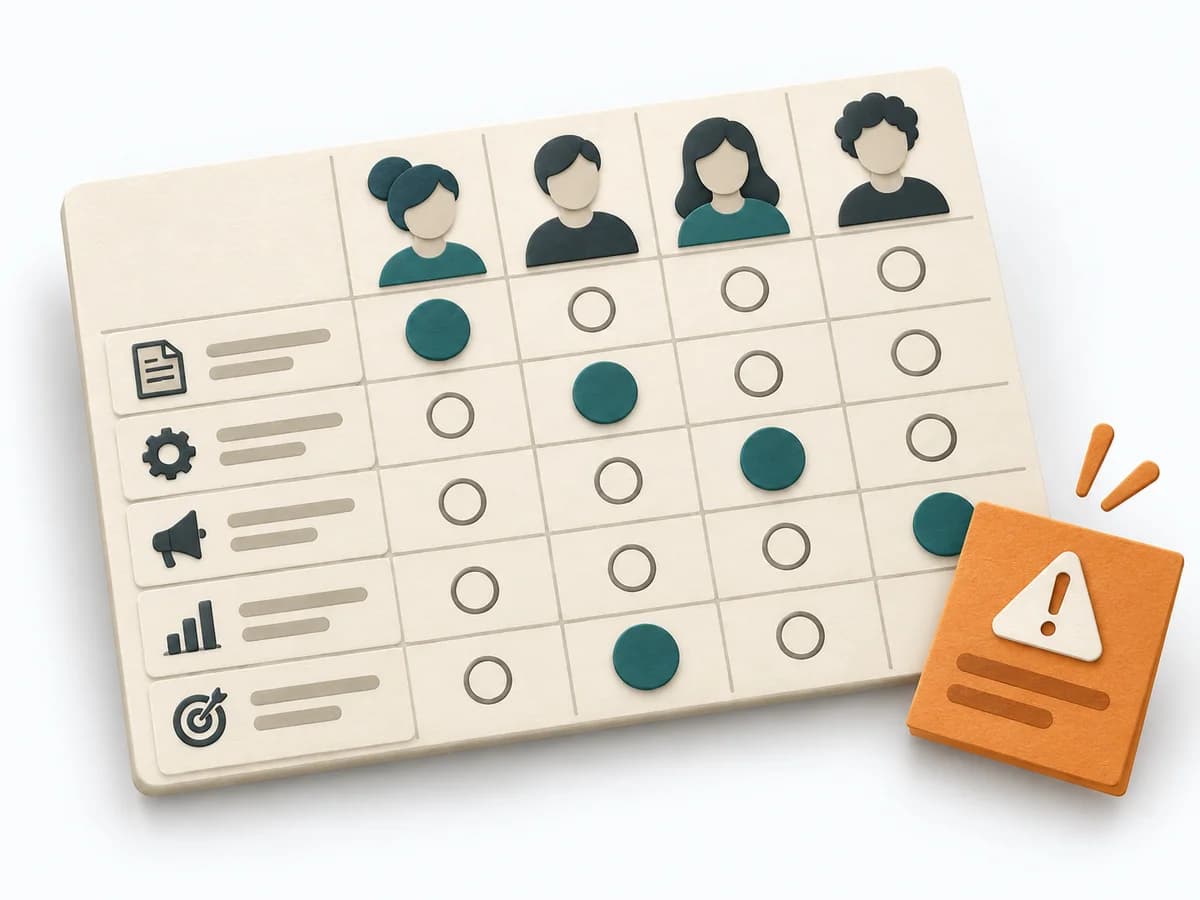
Matrix for expectation, own commitment, observable signal, and clarification; sticky notes; concrete handoff examples; calendar.
All sides of the interface · neutral facilitator · owner for each agreement · decider for capacity or mandate conflicts
Bound one collaboration or handoff. Participants prepare two expectations of others and two commitments of their own.
60–90 minutes for one bounded interface; review after 2–4 weeks.
Collect expectations silently and separately. Translate wishes into feasible agreements only after all perspectives are visible.
The one question this method answers
Which expectations, commitments, and observable signals must be clarified at this interface?
Phases with goal, actions, output and pitfall
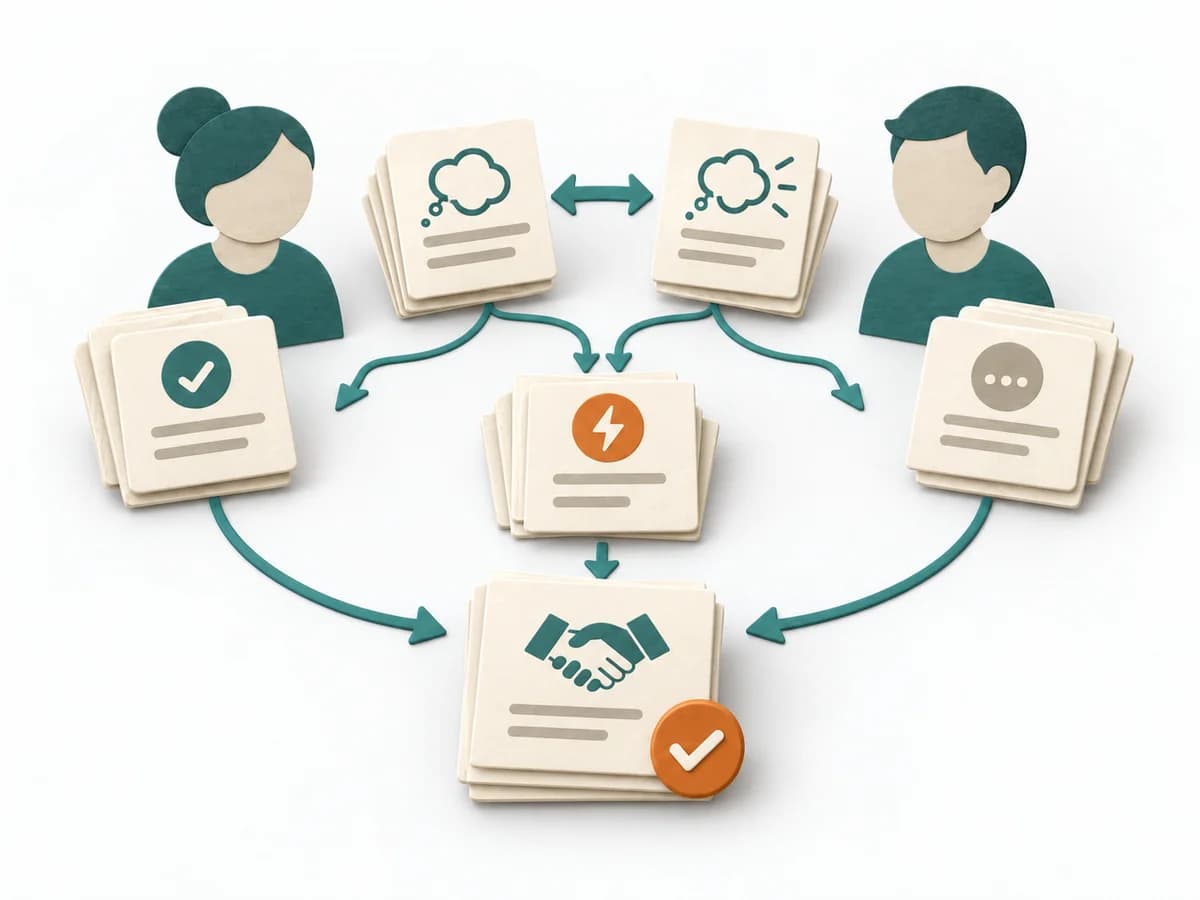
Expectation Mapping separates what one person expects from others, what they commit to, and how fulfilment can be observed. It addresses differences before they become everyday disappointment.
Fictional example
Fictional example for one concrete work case.
| Case | Role and expectation | Own commitment | Observable signal | Clarification and review |
|---|---|---|---|---|
| Example caseWhich expectations, commitments, and observable signals must be clarified at this interface? | Support expects Product to classify critical feedback within 2 working days | Support provides ticket link, impact, and affected customers | Product marks decision, question, or date in the ticket | Product Ops owner; four-week review of response cases |
The example is fictional and must be adapted to mandate and context.
Interface
Goal
Bounded interface: Bound the occasion, roles, and concrete handover or collaboration.
Inputs for this step
Actions
Output
Bounded interface
Bounded interface
Quality check
Is one concrete collaboration or handoff named?
Pitfall
The group maps good collaboration without a concrete interface. Return to “Bound scope” and repeat this method step: Bound the occasion, roles, and concrete handover or collaboration.
Timing: 10–20 minutes
Expectations
Goal
Independent expectations and commitments: Each person records what they expect from others and can commit to themselves.
Inputs for this step
Actions
Output
Independent expectations and commitments
Independent expectations and commitments
Quality check
Does every perspective contain both an expectation and an own commitment?
Pitfall
Participants write demands of others but no commitments of their own. Return to “Gather silently” and repeat this method step: Each person records what they expect from others and can commit to themselves.
Timing: 10–20 minutes
Patterns
Goal
Clustered expectation gaps: Place expectations, commitments, and observable signals side by side and cluster them.
Inputs for this step
Actions
Output
Clustered expectation gaps
Clustered expectation gaps
Quality check
Are similar statements clustered without hiding differences in meaning or capacity?
Pitfall
Similar-sounding cards are merged although response time and quality mean different things. Return to “Compare views” and repeat this method step: Place expectations, commitments, and observable signals side by side and cluster them.
Timing: 10–20 minutes
Tension
Goal
Negotiated boundaries: Discuss differences between wish, commitment, capacity, and evidence.
Inputs for this step
Actions
Output
Negotiated boundaries
Negotiated boundaries
Quality check
Were infeasible wishes explicitly bounded or escalated?
Pitfall
The team agrees for harmony although capacity or mandate is missing. Return to “Work through gaps” and repeat this method step: Discuss differences between wish, commitment, capacity, and evidence.
Timing: 10–20 minutes
Agreement
Goal
Testable agreements: Record observable agreement, owner, example, and review date.
Inputs for this step
Actions
Output
Testable agreements
Testable agreements
Quality check
Does every agreement name observable behaviour, owner, and review date?
Pitfall
The result contains wishes without examples, owners, or review. Return to “Set next check” and repeat this method step: Record observable agreement, owner, example, and review date.
Timing: 10–20 minutes
What comes out at the end
Sketch: what the artifact looks like
Expectation matrix with mutual expectation, own commitment, observable signal, boundaries, owner, and review date.
Version the testable agreements with date, owner, source state, and review date. Preserve earlier observations and append changes with their reason.
Plan the question, inputs, complete run, and review with clear ownership.
To be confirmed
To be confirmed
Complete run Time: 60–90 minutes for one bounded interface; review after 2–4 weeks.
Complete this worksheet on paper or in your own document during the work.
| Case | Role and expectation | Own commitment | Observable signal | Clarification and review |
|---|---|---|---|---|
| Example case |
Use one specifically bounded case per row.
Reference source · original teaching example
Expected artifact: Bounded interface
Bounded interface
Entry:
...
Expected artifact: Independent expectations and commitments
Independent expectations and commitments
Entry:
...
Expected artifact: Clustered expectation gaps
Clustered expectation gaps
Entry:
...
Expected artifact: Negotiated boundaries
Negotiated boundaries
Entry:
...
Expected artifact: Testable agreements
Testable agreements
Entry:
...
...
Method guide: https://methodatlas.meierhoff-systems.de/en/methods/expectation-mapping/run-sheet
Concrete filled scenario, fictional example
Fictional example for orientation. Counts and timings describe this case and are not universal requirements.
Concrete filled scenario, fictional example
Guiding question: Which expectations, commitments, and observable signals must be clarified at this interface?
| Role and expectation | Own commitment | Observable signal | Clarification and review |
|---|---|---|---|
| Support expects Product to classify critical feedback within 2 working days | Support provides ticket link, impact, and affected customers | Product marks decision, question, or date in the ticket | Product Ops owner; four-week review of response cases |
The example is fictional and must be adapted to mandate and context.
Recognize symptoms and steer against them
Quick overview, the full text is in the matching phase in the flow
The group maps good collaboration without a concrete interface.
Return to “Bound scope” and repeat this method step: Bound the occasion, roles, and concrete handover or collaboration.
Participants write demands of others but no commitments of their own.
Return to “Gather silently” and repeat this method step: Each person records what they expect from others and can commit to themselves.
Similar-sounding cards are merged although response time and quality mean different things.
Return to “Compare views” and repeat this method step: Place expectations, commitments, and observable signals side by side and cluster them.
The team agrees for harmony although capacity or mandate is missing.
Return to “Work through gaps” and repeat this method step: Discuss differences between wish, commitment, capacity, and evidence.
The result contains wishes without examples, owners, or review.
Return to “Set next check” and repeat this method step: Record observable agreement, owner, example, and review date.
When to pause, resolve prerequisites, or choose another approach
Go to the profile for purpose, similar methods, and sources or continue to the next method in the catalog.