
Purpose
When a problem gets covered up too quickly with answers, Question Burst puts the better question at the center. The format opens the thinking space before the group commits to an interpretation.
Facilitation Facilitation method
Reframes a stuck challenge by producing many new questions before solutions are judged.
In a Question Burst, the challenge owner gives a brief description. The group then spends four minutes generating only questions, with no answers or explanations. The owner selects and develops the questions that open new paths.
Which questions change how we understand and approach the challenge?

Challenge
The owner gives only essential context and the desired better outcome.
Rules
Orient the group toward quantity, short questions and suspended answers.
Burst
Produce as many different questions about the challenge as possible.
Select
The owner selects questions that shift assumptions or open new paths.
Next step
Refine one catalytic question and define a small learning move.
Repeat the four-minute burst for two or three rounds when useful, inviting different perspectives.
For stuck problems, premature solution fixation and situations where existing assumptions narrow the view.
An unjudged list of diverse questions about the challenge.
A selected catalytic question with learning move, owner, date and signal.
Fictional example
Challenge, raw questions, selection and next step remain separate.
What concrete situation should improve? How does the owner currently feel about it?
Falling evening-course enrolment despite more page views.
Which questions emerge in four minutes? One per line, without answer or commentary.
What if the journey home, not the course, is the problem?
Which three to five questions open a new thinking or investigation space?
What information is missing immediately before booking?
How will one question be investigated? Add owner, date and expected signal.
Interview eight abandoners by Friday; recurring barrier in three conversations.
Questions intentionally remain unanswered during the burst; selection comes afterwards.
Name a challenge owner and describe the challenge in no more than two minutes without advocating a solution.
When a problem gets covered up too quickly with answers, Question Burst puts the better question at the center. The format opens the thinking space before the group commits to an interpretation.
Starting from an initial topic, as many precise questions as possible are generated in a short time, without solving or evaluating them right away. The quality lies in the group making blind spots, assumptions, and the actual need for insight visible.
Question Burst works because it puts the focus entirely on good questions for a moment, breaking premature fixation on solutions. The method creates depth when questions expose real assumptions, blind spots, and directional options. Good application then carefully evaluates the resulting questions, so that expanding the thinking space produces new priorities or paths to insight.
Put a clear starting challenge into the room and strictly hold to the rule that only questions are collected at first. The exciting moment comes when a question noticeably shifts the view of the problem; such points deserve immediate marking. Close with a few key questions and decide which of them should shape research, ideation, or decision-making next.
The method guide walks execution through 5 phases, timing, 5 pitfalls, and clear stop criteria.
Open method guideYour perspective
Your feedback helps shape the next improvements to methodatlas.
Name a challenge owner and describe the challenge in no more than two minutes without advocating a solution.
To be confirmed
To be confirmed
Complete workflow Time: 20–35 minutes
Complete this worksheet on paper or in your own document during the work.
What concrete situation should improve? How does the owner currently feel about it?
...
Which questions emerge in four minutes? One per line, without answer or commentary.
...
Which three to five questions open a new thinking or investigation space?
...
How will one question be investigated? Add owner, date and expected signal.
...
During the burst, enter questions only. Answers and judgement come later.
Hal Gregersen: Better Brainstorming
Expected artifact: Challenge statement
Situation, desired outcome and mood
Entry:
...
Expected artifact: Active burst rules
Four minutes, questions only
Entry:
...
Expected artifact: Unjudged question list
One question per line or card
Entry:
...
Expected artifact: Catalytic questions
Selection with brief rationale
Entry:
...
Expected artifact: Investigation brief
Question, action, owner, date and signal
Entry:
...
...
Method guide: https://methodatlas.meierhoff-systems.de/en/methods/question-burst/run-sheet
Fitting alternatives with decision guidance, followed by other related methods.
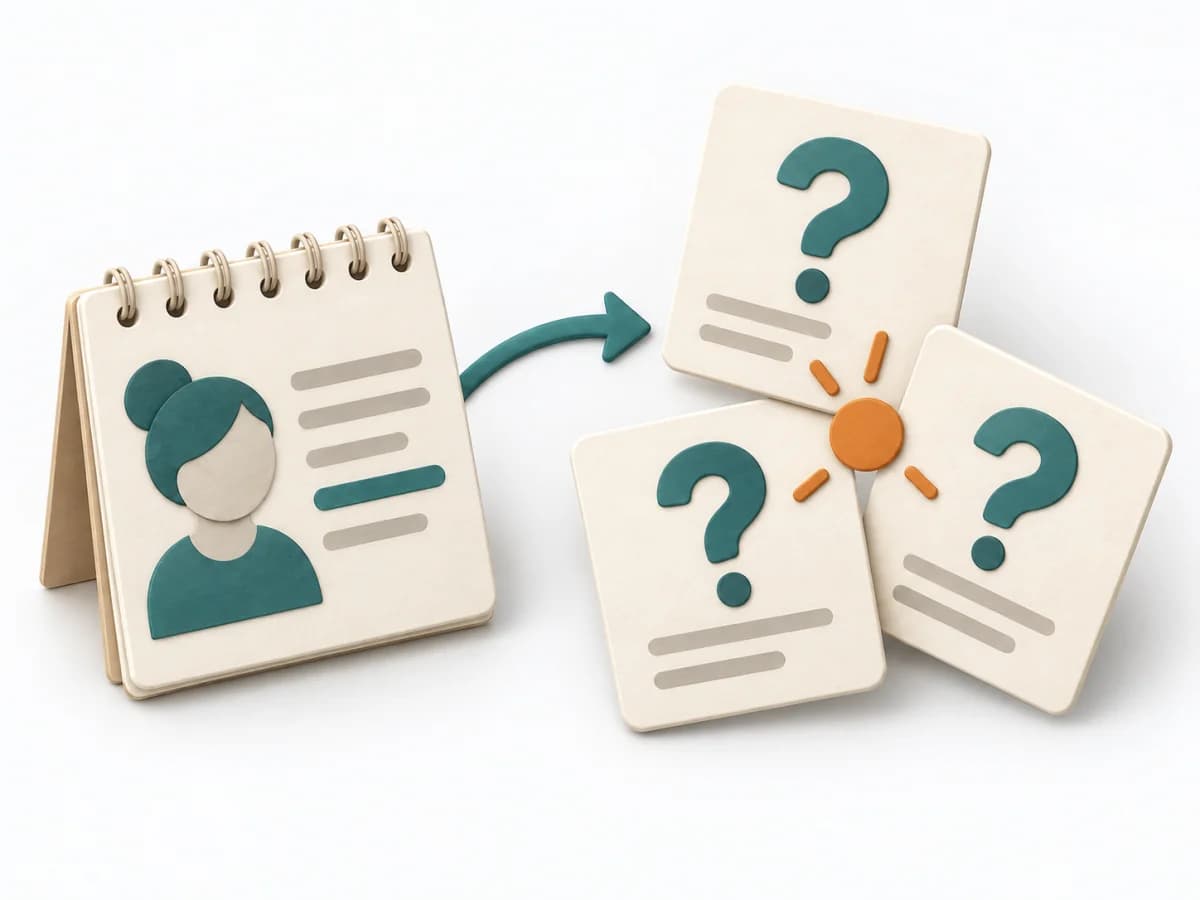
Instead of Question Burst, when you want to open up the problem question first, before pushing into solutions or phrasing.

Sorts problems, reframes the top issue, and derives experiments that quickly turn frustration into movement.
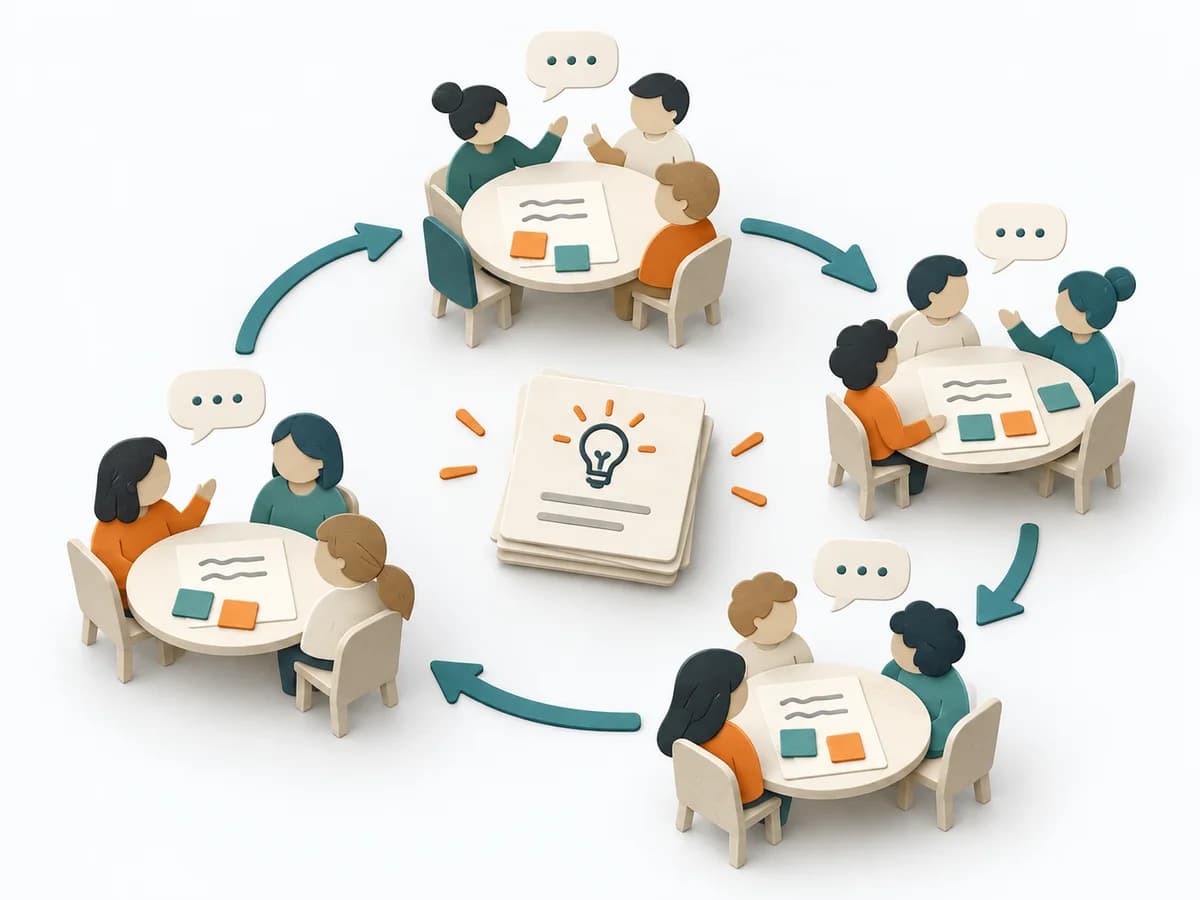
Rotates small conversation groups so table notes, questions, and emergent themes are built on together.

Moves ideas from silent reflection through pair exchange into the group and condenses patterns.

Compares three perspectives in a shared picture and makes overlaps as visible as differences.

Lets a group prioritize options with sticker dots, making preferences visible within minutes.
