Complete firstInformation needs
Recipient representatives can explain the decisions or actions they need to prepare.
Mailing lists alone do not explain needs.
A practical method guide: clarify prerequisites and materials, understand the complete process, and look up outputs, pitfalls, and stop criteria.
What needs to be finished first
Recipient representatives can explain the decisions or actions they need to prepare.
Senders and required approvers are available.
What needs to be ready before start
Stakeholder list, milestones, existing channels, communication matrix and feedback log.
Initiative owner, recipient representatives, senders and approvers where needed.
Bound the initiative and communication objectives; collect affected groups and existing channels.
45–90 minutes to draft; maintenance throughout the initiative
Make the matrix accessible to senders and recipient representatives; start with one blank row per event.
The one question this method answers
Who needs which information when, from whom and through which feedback channel?
Phases with goal, actions, output and pitfall
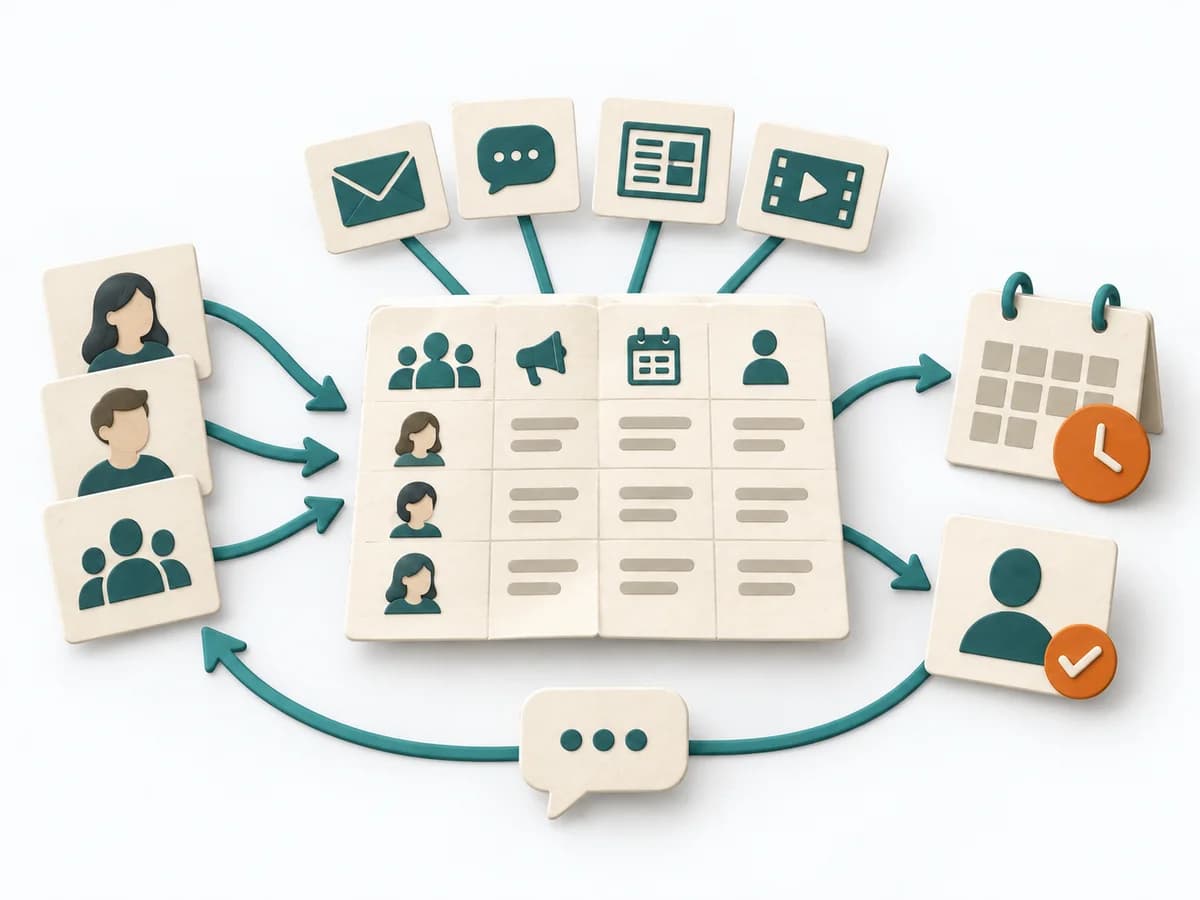
A communication plan connects information needs to message, channel, timing or trigger, ownership and feedback. Each communication event specifies how recipients can use the information.
Fictional example
A communication plan connects information needs to message, channel, timing or trigger, ownership and feedback. Each communication event specifies how recipients can use the information.
| Event | Audience | Purpose and message | Channel | Trigger or cadence | Owner and approval | Feedback and review |
|---|---|---|---|---|---|---|
| 1Describe one communication event and all responsibilities. | Participants | Activate account before course start | Email linking to instructions | Five days before launch | Lea, copy approved by course lead | Support reply; Lea checks pending activations two days before launch |
| 2Describe one communication event and all responsibilities. | Instructors | Understand the new registration process | Short recorded demo | One week before launch | Course lead, coordination as backup | Q&A; instructors restate the process |
| 3Describe one communication event and all responsibilities. | Support team | Handle known issues and escalations | Shared FAQ and handover | Before launch; then on material change | Support lead, technical approval by product team | Review open tickets daily during launch |
All example details are fictional and illustrate the application.
Recipients and needs
Goal
Needs list
Inputs for this step
Actions
Output
Needs list
Does every audience have a specific information purpose?
Quality check
Does every audience have a specific information purpose?
Pitfall
Everyone receives the same status report. Group by action needed and remove unnecessary messages.
Timing: 10–15 minutes
Messages and channels
Goal
Message-channel mapping
Inputs for this step
Actions
Output
Message-channel mapping
Does the channel reach the group clearly and on time?
Quality check
Does the channel reach the group clearly and on time?
Pitfall
The channel requires access that guests lack. Choose an accessible channel or provision access first.
Timing: 10–15 minutes
Cadence and ownership
Goal
Scheduled communication matrix
Inputs for this step
Actions
Output
Scheduled communication matrix
Is it clear who acts on which trigger?
Quality check
Is it clear who acts on which trigger?
Pitfall
Weekly delivery is planned but nobody prepares content. Assign a responsible person and realistic preparation date.
Timing: 10–15 minutes
Feedback and maintenance
Goal
Agreed feedback and review cycle
Inputs for this step
Actions
Output
Agreed feedback and review cycle
Do we check understanding beyond delivery counts?
Quality check
Do we check understanding beyond delivery counts?
Pitfall
A sent newsletter counts as understood information. Ask recipients about the next action and review responses.
Timing: 10–20 minutes
What comes out at the end
Sketch: what the artifact looks like
Communication matrix with audience, purpose/message, channel, trigger/cadence, owner and feedback plus review date.
Record date and scope; retain the previous version and reason when changing it.
Bound the initiative and communication objectives; collect affected groups and existing channels.
To be confirmed
To be confirmed
Complete cycle Time: 45–90 minutes to draft; maintenance throughout the initiative
Complete this worksheet on paper or in your own document during the work.
| Event | Audience | Purpose and message | Channel | Trigger or cadence | Owner and approval | Feedback and review |
|---|---|---|---|---|---|---|
| 1 | ||||||
| 2 | ||||||
| 3 |
Enter one communication event per row. Check access and information needs with recipients; agree a specific owner, trigger and feedback route.
Expected artifact: Needs list
Does every audience have a specific information purpose?
Entry:
...
Expected artifact: Message-channel mapping
Does the channel reach the group clearly and on time?
Entry:
...
Expected artifact: Scheduled communication matrix
Is it clear who acts on which trigger?
Entry:
...
Expected artifact: Agreed feedback and review cycle
Do we check understanding beyond delivery counts?
Entry:
...
...
Method guide: https://methodatlas.meierhoff-systems.de/en/methods/communication-plan/run-sheet
Concrete filled scenario, fictional example
Fictional example for orientation. Counts and timings describe this case and are not universal requirements.
Concrete filled scenario, fictional example
Scope and objective: Fictional: a course platform changes enrolment; participants need to activate their accounts in time.
Communication event: Participants receive an activation-link email five days before launch. Lea sends it; questions go to support.
Effectiveness review: Two days before launch Lea checks inactive accounts and questions; unclear instructions trigger a corrected message.
Recognize symptoms and steer against them
Quick overview, the full text is in the matching phase in the flow
Everyone receives the same status report.
Group by action needed and remove unnecessary messages.
The channel requires access that guests lack.
Choose an accessible channel or provision access first.
Weekly delivery is planned but nobody prepares content.
Assign a responsible person and realistic preparation date.
A sent newsletter counts as understood information.
Ask recipients about the next action and review responses.
When to pause, resolve prerequisites, or choose another approach
Go to the profile for purpose, similar methods, and sources or continue to the next method in the catalog.