Complete firstClear boundary
Set undesired outcome, investigation window, and system boundary; preserve sources and keep containment separate.
Without a boundary, cases, periods, or variables become mixed.
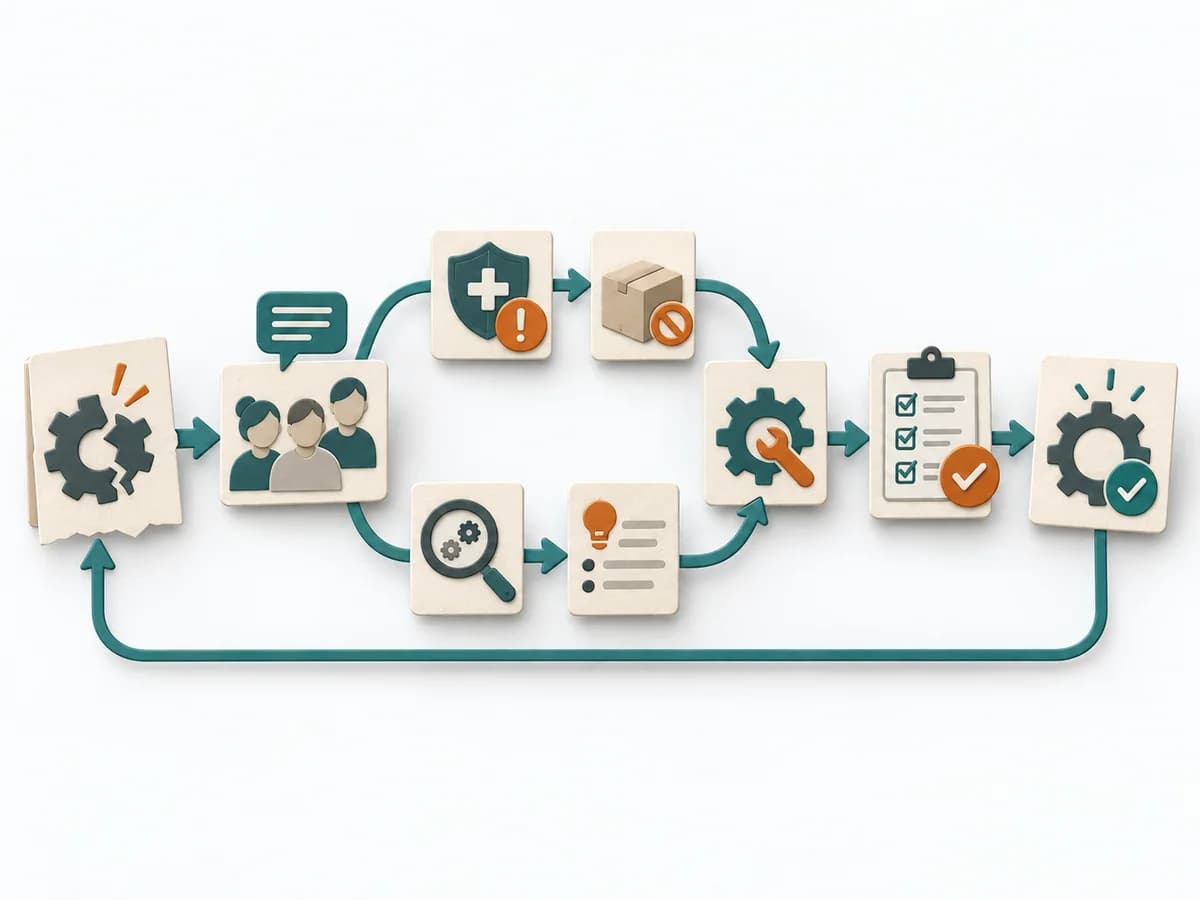
A practical method guide: clarify prerequisites and materials, understand the complete process, and look up outputs, pitfalls, and stop criteria.
What needs to be finished first
Set undesired outcome, investigation window, and system boundary; preserve sources and keep containment separate.
Preserved event data, timeline, events-and-causal-factors chart, evidence register, and cause classification
What needs to be ready before start
Preserved event data, timeline, events-and-causal-factors chart, evidence register, and cause classification
Investigation lead · people with event knowledge · evidence owner · system/process experts · action owners
Set undesired outcome, investigation window, and system boundary; preserve sources and keep containment separate.
One to three working days for data collection and analysis; 90–180 minutes for joint chart review.
Prepare a workspace with Boundary · Sequence · Evidence · Factors · Classify; separate example from live data.
The one question this method answers
Which events and conditions demonstrably contributed to the undesired outcome, and how are they linked in time and causality?
Phases with goal, actions, output and pitfall
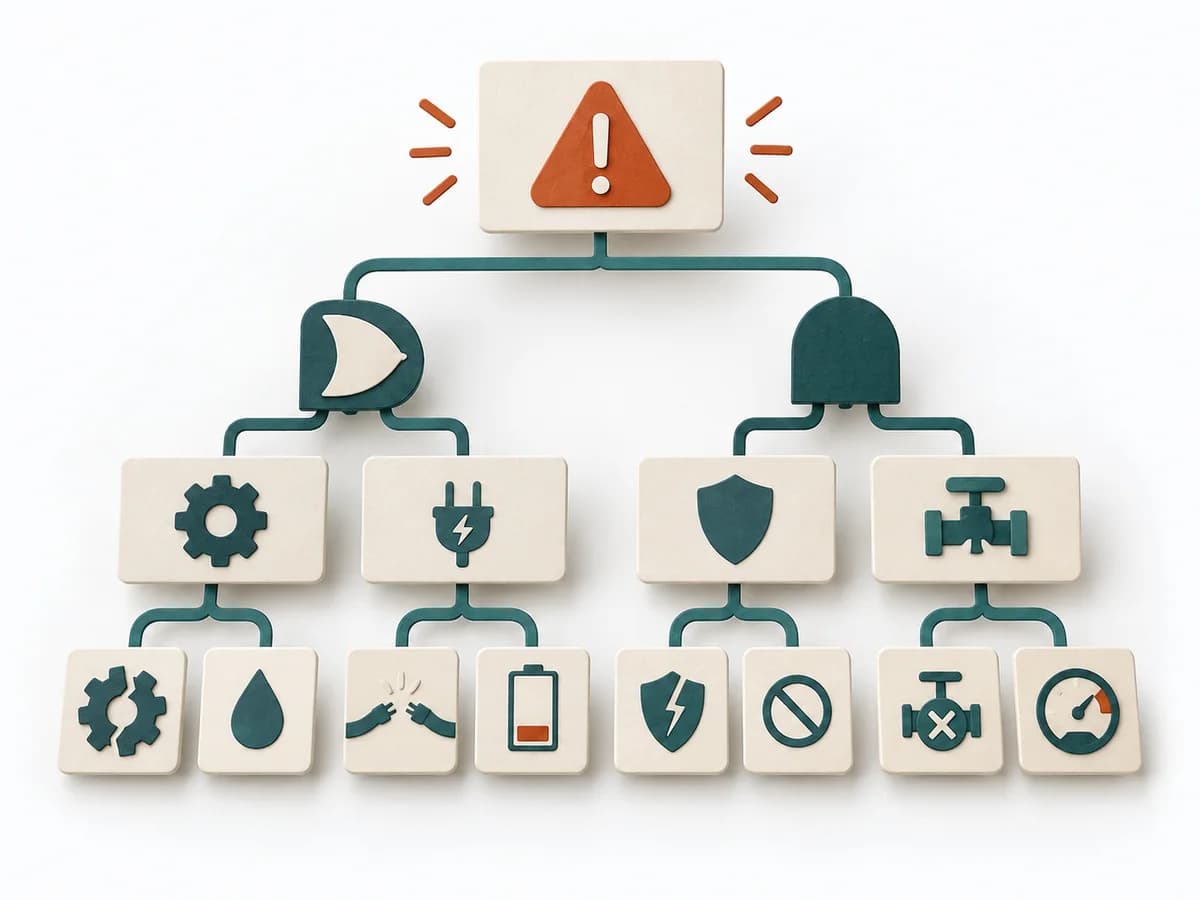
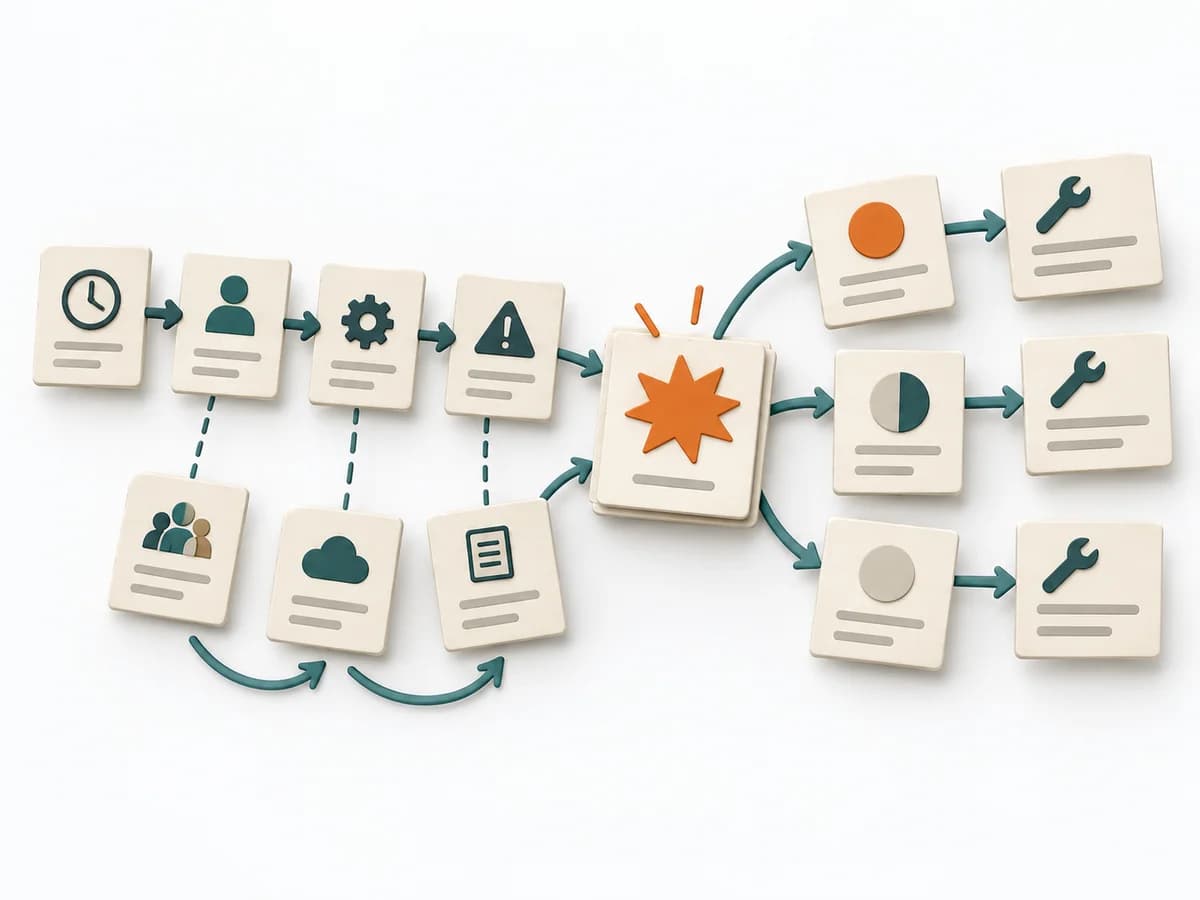
Causal factor analysis combines chronology with cause and effect to distinguish contributing from triggering factors. It keeps incidents from being reduced to a single moment when several small contributions shaped the outcome.
Fictional example
Fictional values show the actual method fields.
| Node | Time | Event | Conditions | Barrier | Evidence | Causal link | Classification |
|---|---|---|---|---|---|---|---|
| E1Add evidence and rationale. | 08:55 | Deployment completes | Shared pool; no load isolation | Architecture boundary missing | Deploy and configuration log | Enables later batch start | Contributing condition |
| E2Add evidence and rationale. | 09:08 | Batch starts | 72 pool connections held | Alert excludes batch | Scheduler and pool log | Displaces checkout connections | Direct causal factor |
| E3Add evidence and rationale. | 09:12 | Checkout failures begin | Pool 95%; timeouts | Response only at 09:18 | APM and incident log | Undesired final event | Final event |
All values are fictional.
Boundary
Goal
Analysis frame: Set final event, starting point, system boundary, and investigation question.
Inputs for this step
Actions
Output
Analysis frame
Set final event, starting point, system boundary, and investigation question.
Quality check
Are start, end, impact, and exclusions explicit?
Pitfall
Investigation starts at the alert and omits earlier conditions. Start before the first relevant change and justify exclusions.
Timing: 30–45 minutes
Sequence
Goal
Event chart: Record events in time order with sources; show persistent conditions separately between events.
Inputs for this step
Actions
Output
Event chart
Record events in time order with sources; show persistent conditions separately between events.
Quality check
Are events represented as actions/state changes and conditions as persistent circumstances?
Pitfall
Opinions and causes are entered as events in the timeline. Code observable event, persistent condition, and interpretation separately.
Timing: 2–6 hours
Evidence
Goal
Validated chart: Validate every node and connection with log, document, measurement, or corroborated account.
Inputs for this step
Actions
Output
Validated chart
Validate every node and connection with log, document, measurement, or corroborated account.
Quality check
Does every relevant node have source, time, and confidence status?
Pitfall
Gaps are filled with a coherent story. Keep the gap visible and seek targeted evidence or a counterexample.
Timing: 45–90 minutes
Factors
Goal
Causal factors: Mark an event or condition causal when its absence plausibly changes the course; state the mechanism.
Inputs for this step
Actions
Output
Causal factors
Mark an event or condition causal when its absence plausibly changes the course; state the mechanism.
Quality check
Is the counterfactual plausible and the mechanism evidenced?
Pitfall
Everything on the chart is labelled causal. Mark only factors that alter course or severity through an evidenced mechanism.
Timing: 45–75 minutes
Classify
Goal
Cause path: Distinguish direct, contributing, and root causes; derive controls with effectiveness evidence.
Inputs for this step
Actions
Output
Cause path
Distinguish direct, contributing, and root causes; derive controls with effectiveness evidence.
Quality check
Are classification and action traceable to the chart and separate from containment?
Pitfall
The immediate technical cause automatically becomes the root cause. Test prevention, feasibility, and system control; set an effectiveness review.
Timing: 45–75 minutes
What comes out at the end
Sketch: what the artifact looks like
Events-and-causal-factors chart with evidenced sequence, conditions, barriers, direct and contributing factors, and action path.
Record date, owner, source state, and review date; preserve prior versions.
Set subject, evidence, roles, flow, and review.
To be confirmed
To be confirmed
Whole initiative Time: One to three working days for data collection and analysis; 90–180 minutes for joint chart review.
Complete this worksheet on paper or in your own document during the work.
| Node | Time | Event | Conditions | Barrier | Evidence | Causal link | Classification |
|---|---|---|---|---|---|---|---|
| E1 | |||||||
| E2 | |||||||
| E3 |
The blank worksheet contains prompts only.
Reference · original teaching example
Expected artifact: Analysis frame
Set final event, starting point, system boundary, and investigation question.
Entry:
...
Expected artifact: Event chart
Record events in time order with sources; show persistent conditions separately between events.
Entry:
...
Expected artifact: Validated chart
Validate every node and connection with log, document, measurement, or corroborated account.
Entry:
...
Expected artifact: Causal factors
Mark an event or condition causal when its absence plausibly changes the course; state the mechanism.
Entry:
...
Expected artifact: Cause path
Distinguish direct, contributing, and root causes; derive controls with effectiveness evidence.
Entry:
...
...
Method guide: https://methodatlas.meierhoff-systems.de/en/methods/causal-factor-analysis/run-sheet
Concrete filled scenario, fictional example
Fictional example for orientation. Counts and timings describe this case and are not universal requirements.
Concrete filled scenario, fictional example
| Node | Time | Event | Conditions | Barrier | Evidence | Causal link | Classification |
|---|---|---|---|---|---|---|---|
| E1 | 08:55 | Deployment completes | Shared pool; no load isolation | Architecture boundary missing | Deploy and configuration log | Enables later batch start | Contributing condition |
| E2 | 09:08 | Batch starts | 72 pool connections held | Alert excludes batch | Scheduler and pool log | Displaces checkout connections | Direct causal factor |
| E3 | 09:12 | Checkout failures begin | Pool 95%; timeouts | Response only at 09:18 | APM and incident log | Undesired final event | Final event |
Recognize symptoms and steer against them
Quick overview, the full text is in the matching phase in the flow
Investigation starts at the alert and omits earlier conditions.
Start before the first relevant change and justify exclusions.
Opinions and causes are entered as events in the timeline.
Code observable event, persistent condition, and interpretation separately.
Gaps are filled with a coherent story.
Keep the gap visible and seek targeted evidence or a counterexample.
Everything on the chart is labelled causal.
Mark only factors that alter course or severity through an evidenced mechanism.
The immediate technical cause automatically becomes the root cause.
Test prevention, feasibility, and system control; set an effectiveness review.
When to pause, resolve prerequisites, or choose another approach
Go to the profile for purpose, similar methods, and sources or continue to the next method in the catalog.