Incident Timeline
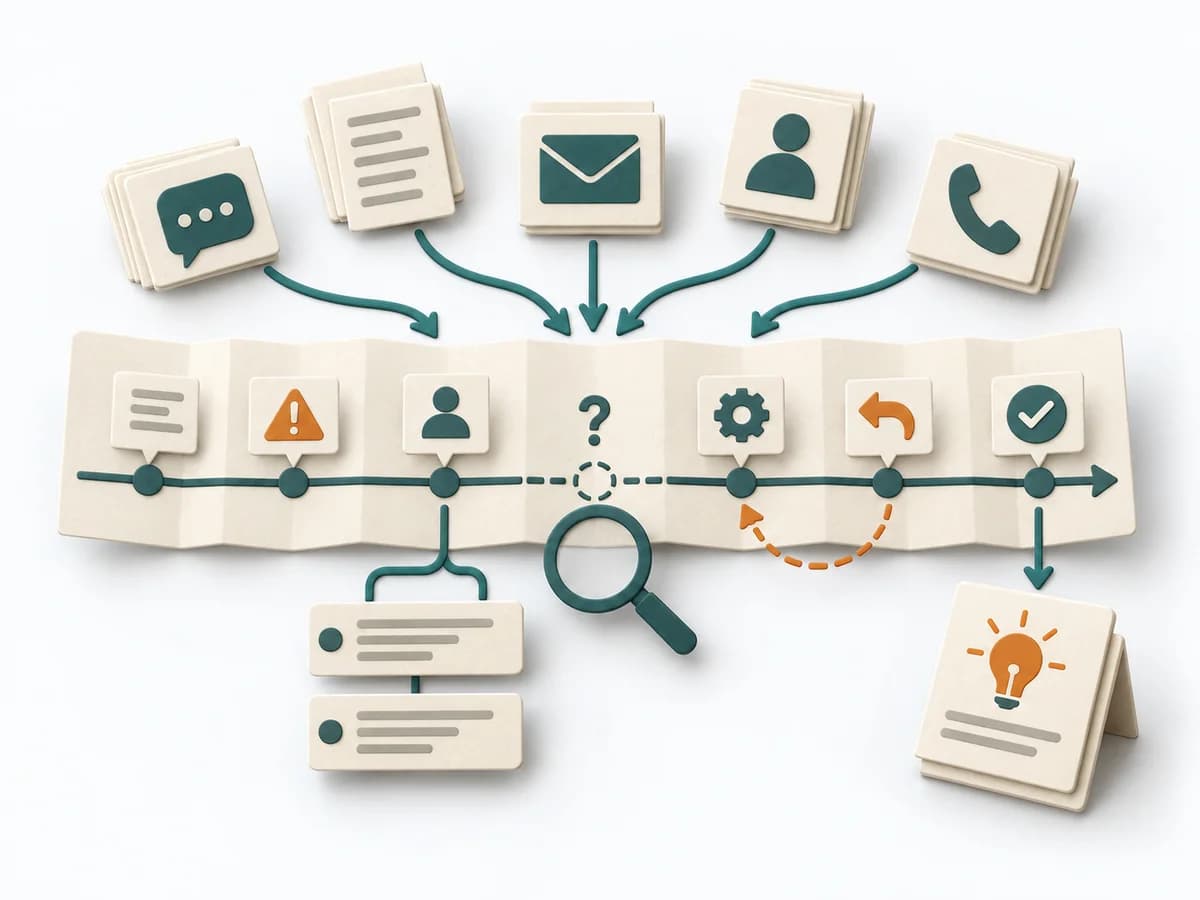
Chronological template for incident reconstruction with sources and uncertainty.
# Incident Timeline

**Incident:** ...
**Period:** ...
**Sources:** logs, alerts, chat, tickets

| Time | Event | Source | Confidence | Note |
|---|---|---|---|---|
| HH:MM | | | high/medium/low | |

## Observed delays

- ...

## Open gaps

- ...

## Learnings

- ...
Blameless Postmortem: Worksheet
Prepare Blameless Postmortem with a clear question, roles, and sources.
# Blameless Postmortem: Worksheet

## Question
To be confirmed

## Desired outcome
To be confirmed

## Scope
Plan the full method
Time: Set according to scope and available evidence

Complete this worksheet on paper or in your own document during the work.

## Preparation for this scope

### Method setup
- **Materials:** Shared workspace, accessible sources, and a decision log.
- **Roles:** Incident responders · facilitator · action owners
- **Advance information:** Clarify the question, timeframe, data access, roles, and known uncertainties in advance.
- **Overall time needed:** 60–90 minutes after stabilization; evidence preparation and action tracking are separate.
- **Setup:** Create a shared version. Label facts, assumptions, and decisions separately.

### Prepare for the work steps

#### Facts: Set learning frame and evidence
- Resolved incident and review purpose

#### Timeline: Reconstruct the timeline
- Logs, status updates, and knowledge at the time

#### Conditions: Examine conditions
- Timeline, system conditions, and safeguards

#### Actions: Track actions
- Learning, action tracker, and owners


## Timeline, conditions, and actions

### Impact
Record incident ID, impact, period, and review purpose.

...

### Timeline
Order events with source and contemporaneous knowledge.

...

### Conditions
Record process, tool, and system conditions plus uncertainty.

...

### Actions
Add prevention/detection/mitigation action, owner, and date.

...

Blank worksheet: start with a bounded question. Enter observed facts only, mark assumptions, and record open questions and sources.

[Using SRE to meet reliability challenges · Google Cloud](https://cloud.google.com/blog/products/management-tools/meeting-reliability-challenges-with-sre-principles)


## Facts: Set learning frame and evidence
Expected artifact: Bounded incident with preserved evidence

Bounded incident with preserved evidence

Entry:

...

- [ ] Is immediate response complete?

## Timeline: Reconstruct the timeline
Expected artifact: Evidence-based timeline

Evidence-based timeline

Entry:

...

- [ ] Are facts separated from interpretation?

## Conditions: Examine conditions
Expected artifact: Systemic contributing conditions without blame

Systemic contributing conditions without blame

Entry:

...

- [ ] Are multiple contributing conditions examined?

## Actions: Track actions
Expected artifact: Trackable improvement actions

Trackable improvement actions

Entry:

...

- [ ] Are actions verifiable and tracked?

## Open questions and next steps

...

Method guide: https://methodatlas.meierhoff-systems.de/en/methods/blameless-postmortem/run-sheet
Runbook: Worksheet
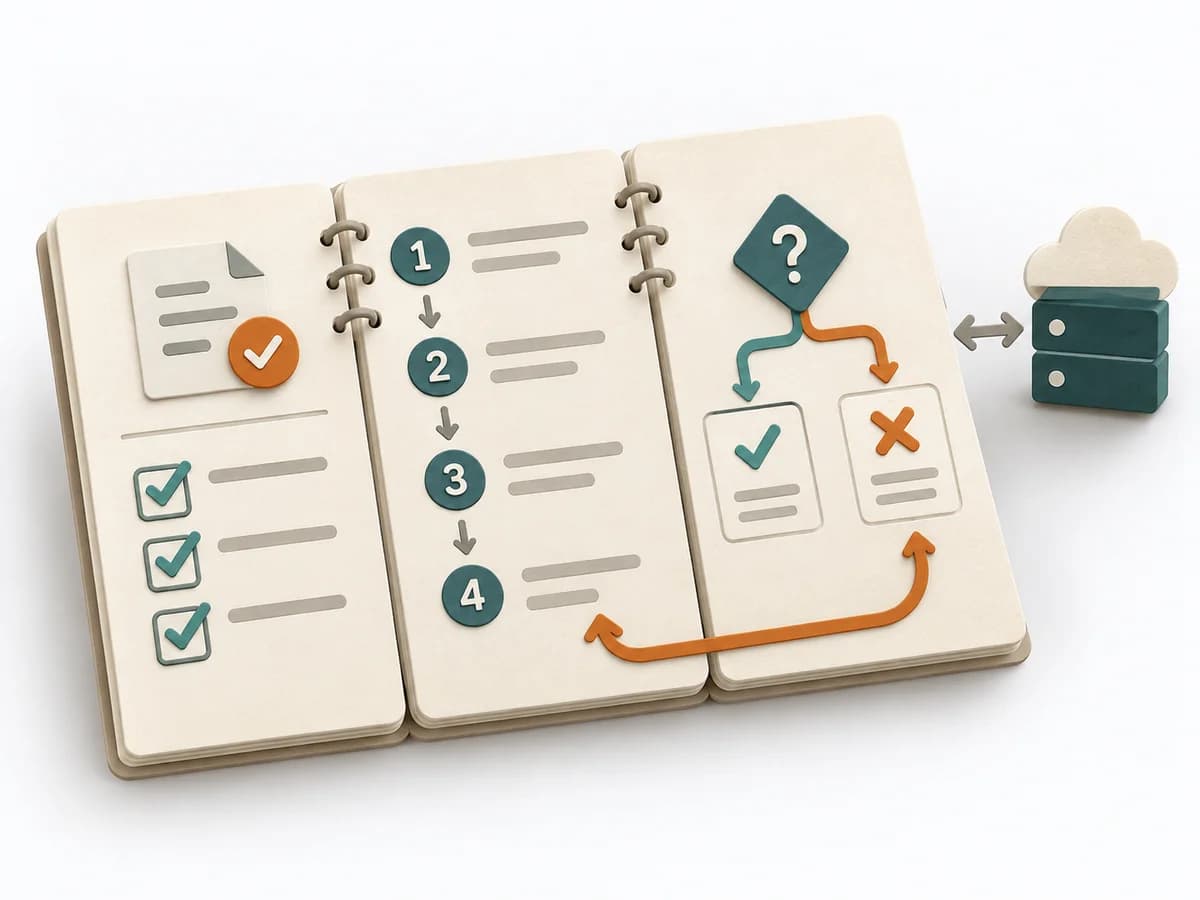
Prepare Runbook with a clear question, roles, and sources.
# Runbook: Worksheet

## Question
To be confirmed

## Desired outcome
To be confirmed

## Scope
Plan the full method
Time: Set according to scope and available evidence

Complete this worksheet on paper or in your own document during the work.

## Preparation for this scope

### Method setup
- **Materials:** Shared workspace, accessible sources, and a decision log.
- **Roles:** On-call expert · service owner · reviewer
- **Advance information:** Clarify the question, timeframe, data access, roles, and known uncertainties in advance.
- **Overall time needed:** Maintain as ongoing practice; retest after changes and during agreed operational exercises.
- **Setup:** Create a shared version. Label facts, assumptions, and decisions separately.

### Prepare for the work steps

#### Trigger: Define trigger and scope
- Service, alert, trigger, and scope

#### Procedure: Write safe steps
- Access, read-only checks, and expected results

#### Escalation: Define escalation and recovery
- Escalation, approval, rollback, and success criterion

#### Maintenance: Exercise and maintain
- Exercise outcome, owner, and review date


## Trigger, diagnosis, escalation, and recovery

### Trigger
Define signal, service, prerequisites, and non-applicability.

...

### Diagnose
List read-only checks with expected results.

...

### Action
Record authorization, escalation contact, and recovery path.

...

### Verify
Record tester, exercise date, owner, and freshness.

...

Blank worksheet: start with a bounded question. Enter observed facts only, mark assumptions, and record open questions and sources.

[Being On-Call · Google SRE Workbook](https://sre.google/workbook/on-call/)


## Trigger: Define trigger and scope
Expected artifact: Measurable trigger and procedure boundary

Measurable trigger and procedure boundary

Entry:

...

- [ ] Is the trigger measurable?

## Procedure: Write safe steps
Expected artifact: Validated safe diagnostic sequence

Validated safe diagnostic sequence

Entry:

...

- [ ] Can each step be executed with safe context?

## Escalation: Define escalation and recovery
Expected artifact: Escalation, rollback, and success criteria

Escalation, rollback, and success criteria

Entry:

...

- [ ] Is there a clear stop point?

## Maintenance: Exercise and maintain
Expected artifact: Exercised runbook with review ownership

Exercised runbook with review ownership

Entry:

...

- [ ] Is the procedure current and tested?

## Open questions and next steps

...

Method guide: https://methodatlas.meierhoff-systems.de/en/methods/runbook/run-sheet