Purpose
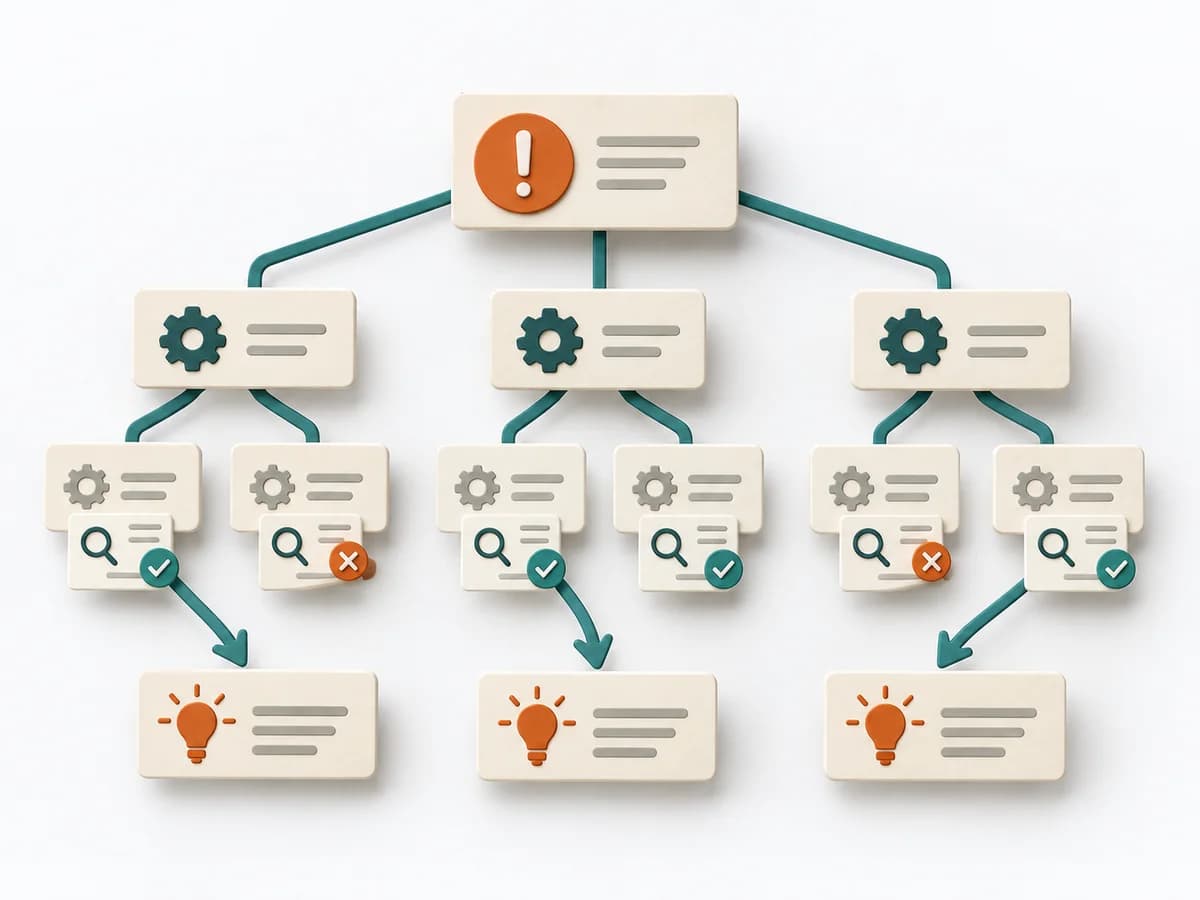
For a series of incidents with a similar pattern, the method arranges individual events as branches of a common origin. It makes visible which conditions keep recurring.
Operations Mapping tool
Family tree analysis compares related events through shared causes, barriers, and conditions.
Family tree analysis groups similar events using a transparent relationship criterion and compares event chains. Recurring factors are derived only from evidenced commonalities.
Which recurring condition connects related events, and which systemic action is missing?
Family Tree Analysis uses form an event family using fixed attributes and compare common causal and barrier patterns. Assessments remain justified and context-bound.

Define family
Define comparison criterion, horizon, and population.
Map events
Normalise chronology, conditions, barriers, and consequences for each event.
Compare patterns
Compare commonalities, differences, and counterexamples.
Correct system
Address the common cause or barrier gap and measure effectiveness.
Update after new evidence or a material context change and retain the previous version.
For several similar incidents, near misses, or quality deviations over time.
event family tree with traceable sources, assumptions, and domain decisions.
Owners, dates, and next review for event family tree.
Fictional worked example
form an event family using fixed attributes and compare common causal and barrier patterns as a precise working structure with a fictional example.
Attribute · horizon · exclusion
Faulty data leave review; six months.
Chain · conditions · barriers
Manual CSV; mandatory-field test missing.
Commonality · n/N · counterexample
4/5 share transformation; one different cause.
System change · exposure · effectiveness
Validator before export; errors per 100 exports.
The example demonstrates the domain logic of Family Tree Analysis; worksheets remain blank.
Start with the core question: Which recurring condition connects related events, and which systemic action is missing?
For a series of incidents with a similar pattern, the method arranges individual events as branches of a common origin. It makes visible which conditions keep recurring.
Every event is traced back to its predecessors, triggers, and contributing factors. This produces a picture of recurring family resemblances instead of isolated individual cases. The structure helps recognize systemic patterns that are easily lost in individual reports.
Family Tree Analysis makes recurring incidents visible as related events instead of treating them in isolation. Triggers, precursors, and contributing conditions are compared across several cases. The method helps recognize shared patterns and derive systemic countermeasures.
Gather several comparable cases before claiming commonalities, and describe family traits as concretely as possible. The method gains strength when recurring patterns across events become clearer than the differences in the individual case. Close with a systemic theme, an observation indicator, and a hypothesis for the next check.
The method guide walks execution through 4 phases, timing, 4 pitfalls, and clear stop criteria.
Open method guideYour perspective
Your feedback helps shape the next improvements to methodatlas.
Plan Family Tree Analysis around its domain steps and the concrete decision question.
To be confirmed
To be confirmed
Full workshop Time: 90–180 minutes
Complete this worksheet on paper or in your own document during the work.
Attribute · horizon · exclusion
...
Chain · conditions · barriers
...
Commonality · n/N · counterexample
...
System change · exposure · effectiveness
...
Enter only real input, sources, and decisions.
U.S. Department of Energy: Accident Investigation Program
Expected artifact: family rule
family rule · source · uncertainty · next decision
Entry:
...
Expected artifact: event profiles
event profiles · source · uncertainty · next decision
Entry:
...
Expected artifact: pattern tree
pattern tree · source · uncertainty · next decision
Entry:
...
Expected artifact: system action
system action · source · uncertainty · next decision
Entry:
...
...
Method guide: https://methodatlas.meierhoff-systems.de/en/methods/family-tree-analysis/run-sheet
Fitting alternatives with decision guidance, followed by other related methods.
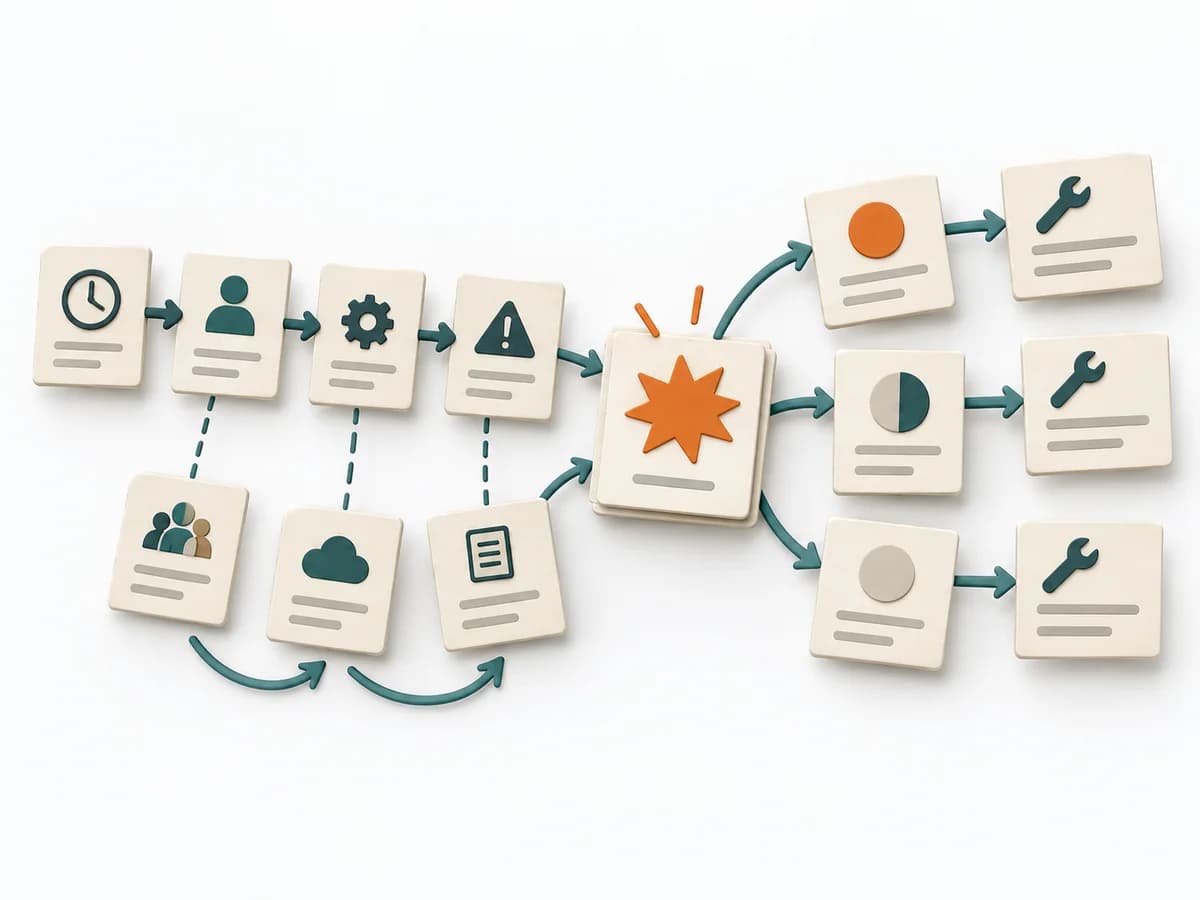
Instead of Family Tree Analysis, choose Causal Factor Analysis when you want to cleanly reconstruct an event chain with upstream influencing factors.
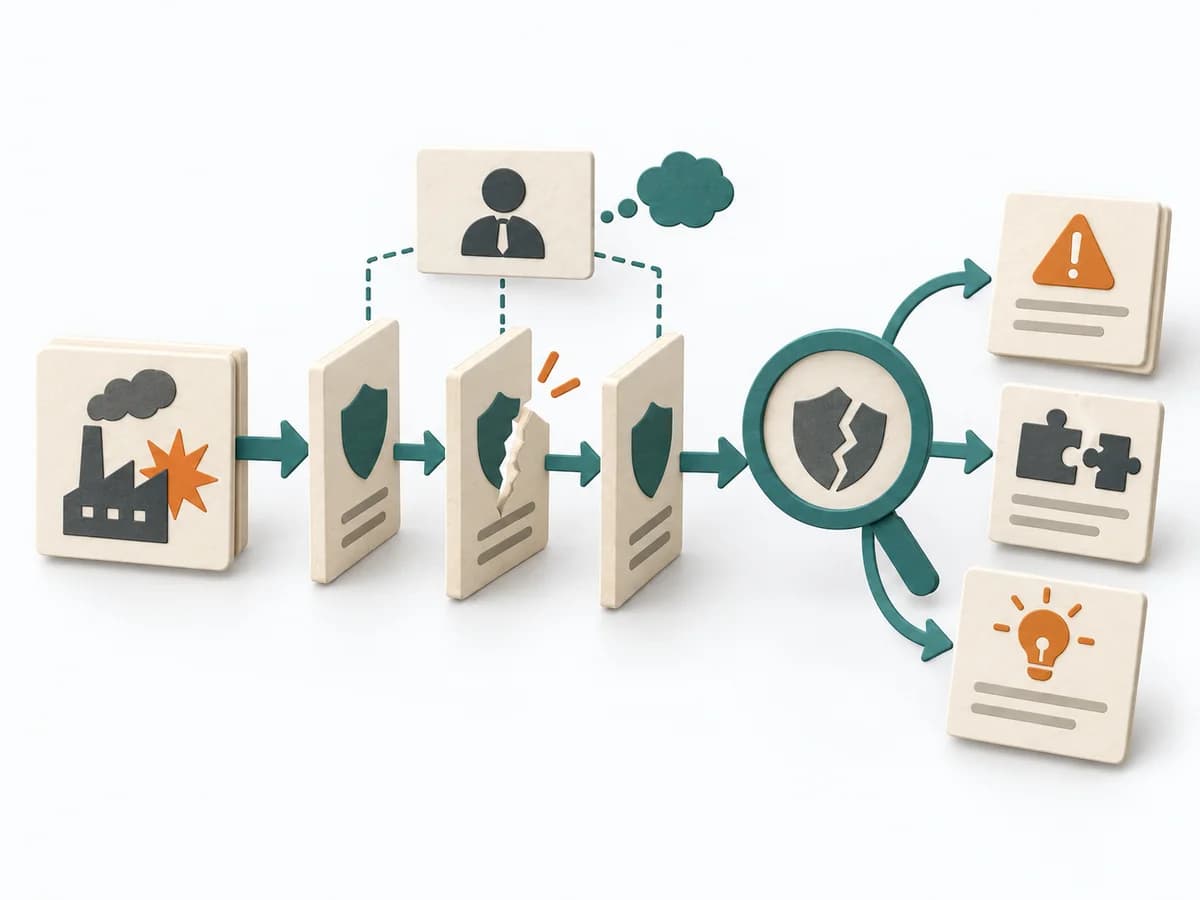
A structured accident tree separates management controls, barriers, and events so serious incidents become auditable.

Hazards, targets, and failed barriers are mapped so controls can be strengthened at the point of exposure.

Separates events, evidence, confirmed causes, and fitting actions so analysis does not turn into blame-finding.

Coordinates team, immediate actions, root cause analysis, and prevention across eight steps to a verified solution.

Clarifies workflows, data, causes, and improvements by defining scope and process, collecting failure modes, and assigning actions and owners.