Purpose
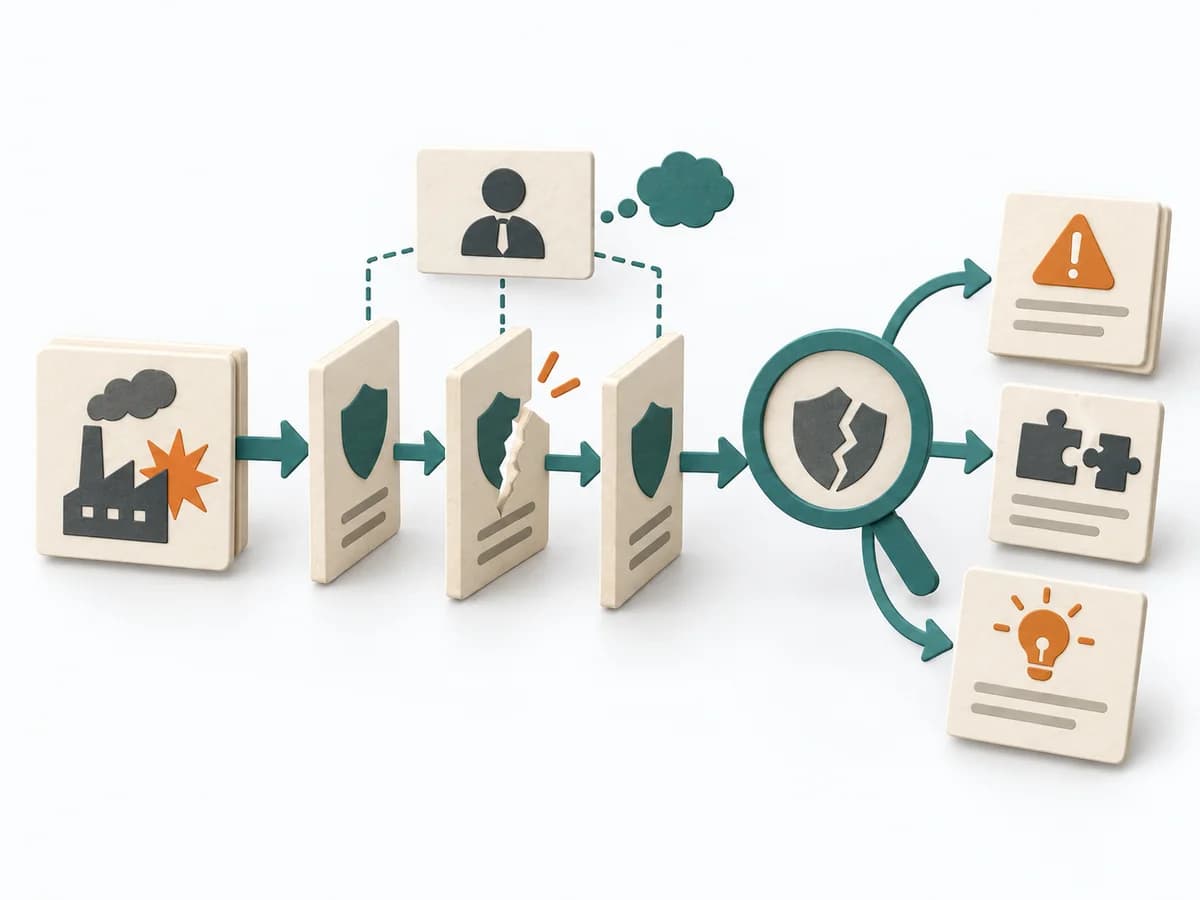
For a risk that can only be managed through multiple layers of protection, the method examines the effectiveness of each barrier. It shows where safeguards are missing, too weak, or fail under real conditions.
Operations Analysis method
Barrier analysis examines present, missing, and failed barriers between hazard, target, and unwanted event.
Barrier analysis defines the hazard, target, and energy or information path. Physical, administrative, and human barriers are tested by function, performance requirement, and actual condition.
Which barrier should interrupt the path, how did it fail, and which independent control is missing?
Barrier Analysis uses hazard-target path plus barrier function, condition, failure mode, and correction. Assessments remain justified and context-bound.

Define path
Specify hazard, target, and transfer path.
Inventory barriers
Inventory preventive, detective, and mitigating barriers.
Analyse failure
Test intended function, actual state, independence, and failure mode.
Improve barriers
Add missing or weak barriers and run negative tests.
Update after new evidence or a material context change and retain the previous version.
For incident or risk analyses with a clear hazard-target relationship.
barrier analysis table with traceable sources, assumptions, and domain decisions.
Owners, dates, and next review for barrier analysis table.
Fictional worked example
hazard-target path plus barrier function, condition, failure mode, and correction as a precise working structure with a fictional example.
| Subject | Hazard/Target | Barrier | Condition | Correction/Test |
|---|---|---|---|---|
| barrier analysis tableWorked example | Unvalidated data → export → customer. | Schema check; preventive; mandatory fields complete. | Present, nulls not covered. | Quarantine stop; null blocks export. |
The example demonstrates the domain logic of Barrier Analysis; worksheets remain blank.
U.S. Department of Energy: Accident Prevention and Investigation Program
Start with the core question: Which barrier should interrupt the path, how did it fail, and which independent control is missing?
For a risk that can only be managed through multiple layers of protection, the method examines the effectiveness of each barrier. It shows where safeguards are missing, too weak, or fail under real conditions.
Between hazard and harm, the existing protective mechanisms are checked one by one and tested for robustness. The analysis shows which barriers really hold and where a failure can easily break through. The resulting measures then strengthen the weakest points of protection in a targeted way.
Barrier Analysis examines protective mechanisms where hazard and harm should be separated by multiple layers. Every barrier is checked for existence, function, and sufficient strength. Value emerges when missing or weak barriers are improved in a targeted way. The method fits especially well when an event was possible despite seemingly existing controls.
List existing barriers across prevention, detection, and recovery, and check them against the specific scenario. The critical point is reached when it becomes visible which layers exist only on paper and which hold up under load. End the analysis with improvements per layer of protection and a priority for the weakest barriers.
The method guide walks execution through 4 phases, timing, 4 pitfalls, and clear stop criteria.
Open method guideYour perspective
Your feedback helps shape the next improvements to methodatlas.
Plan Barrier Analysis around its domain steps and the concrete decision question.
To be confirmed
To be confirmed
Full workshop Time: 60–120 minutes
Complete this worksheet on paper or in your own document during the work.
| Subject | Hazard · path · target | Function · type · standard | Present · effective · independent | Change · owner · negative test |
|---|---|---|---|---|
| barrier analysis table |
Enter only real input, sources, and decisions.
U.S. Department of Energy: Accident Prevention and Investigation Program
Expected artifact: hazard-target path
hazard-target path · source · uncertainty · next decision
Entry:
...
Expected artifact: barrier set
barrier set · source · uncertainty · next decision
Entry:
...
Expected artifact: failure analysis
failure analysis · source · uncertainty · next decision
Entry:
...
Expected artifact: barrier improvement
barrier improvement · source · uncertainty · next decision
Entry:
...
...
Method guide: https://methodatlas.meierhoff-systems.de/en/methods/barrier-analysis/run-sheet
Fitting alternatives with decision guidance, followed by other related methods.

Instead of Barrier Analysis, choose Fault Tree Analysis when you want to model failure paths and barriers are only part of the cause structure.

A recurring incident pattern links related cases across time so systemic causes become visible beyond one event.

Coordinates team, immediate actions, root cause analysis, and prevention across eight steps to a verified solution.

Separates events, evidence, confirmed causes, and fitting actions so analysis does not turn into blame-finding.
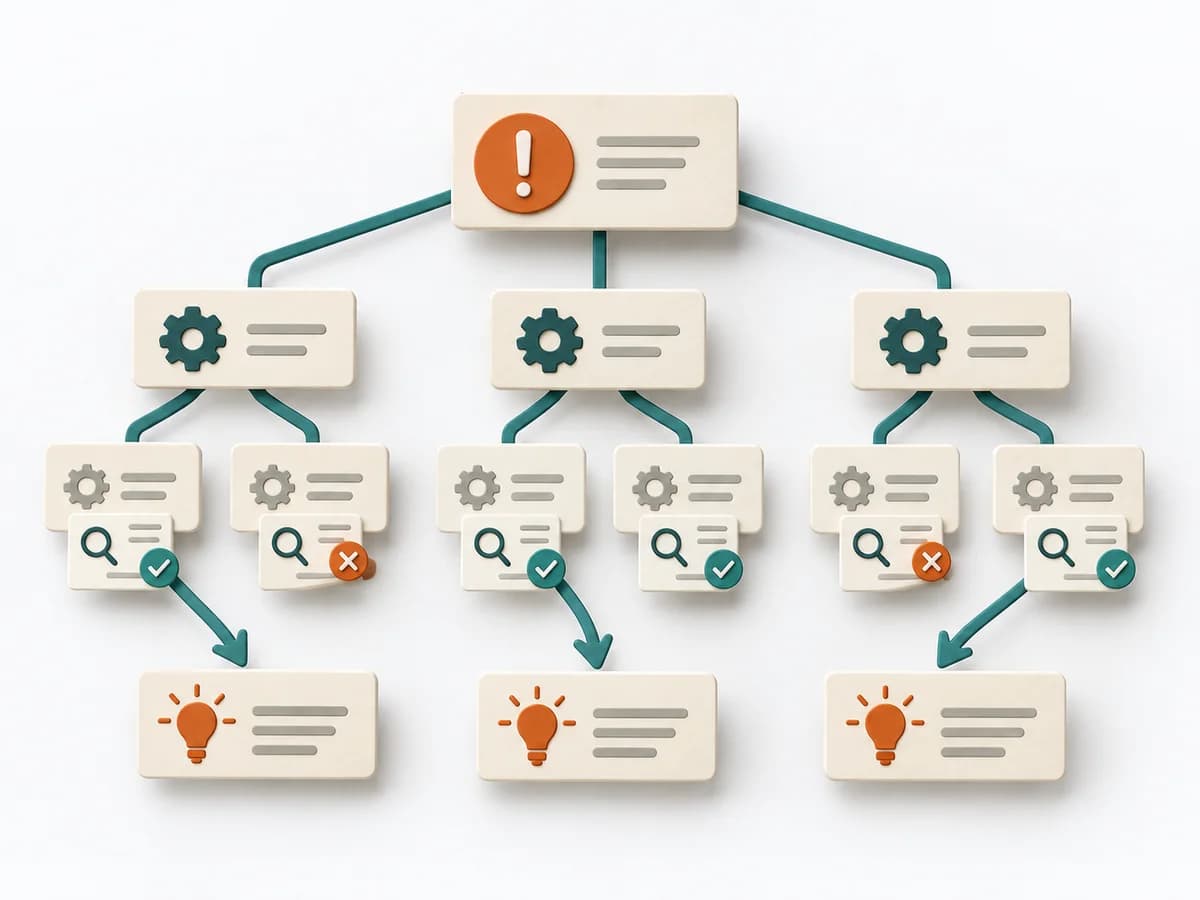
Clarifies workflows, data, causes, and improvements by framing the problem precisely, branching possible causes, and defining countermeasures.

Asks its way step by step to a controllable cause and stops only once an effective countermeasure is within reach.
