Purpose
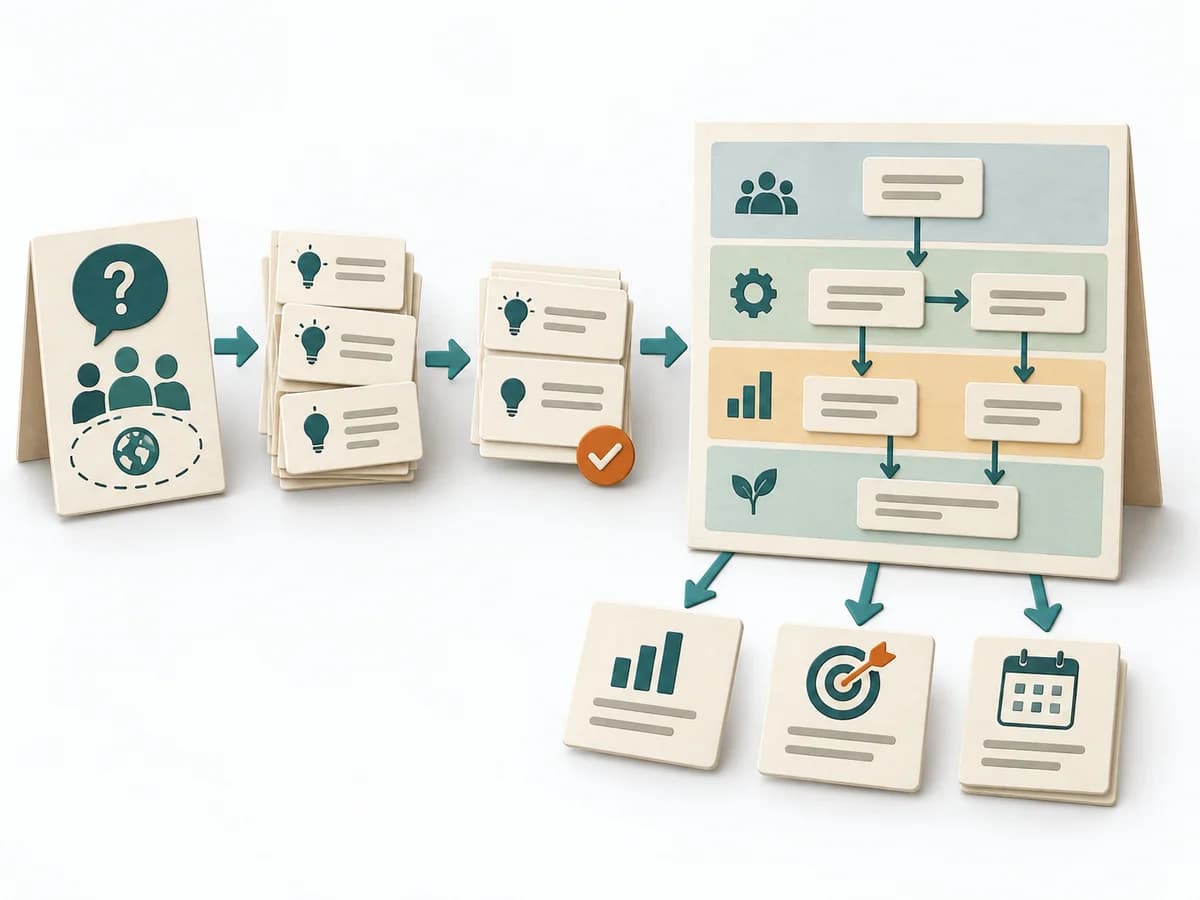
The Strategy Execution Loop helps avoid treating strategy as a one-off document. It makes visible how strategic decisions are turned into objectives, initiatives, operational work, measurement, and learning.
Business Strategy Process model
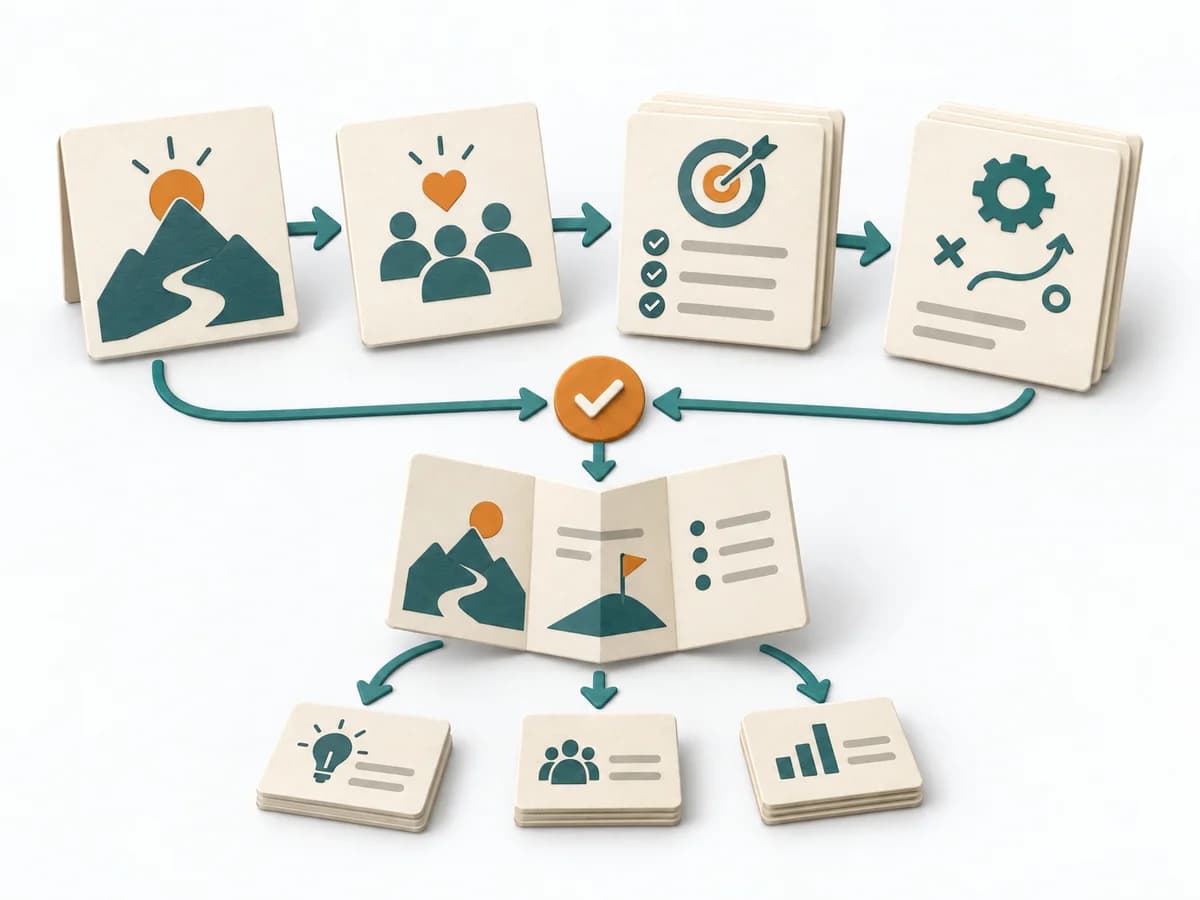
Connects strategy development, translation, operational planning, monitoring, learning, and adaptation in a closed loop.
Kaplan and Norton describe a six-stage management system. Operational and strategy reviews remain separate; learning changes assumptions, initiatives, or strategy.
How do we close the loop from strategy through operations to learning and adaptation?
Strategy Execution Loop uses develop → translate → plan operations → monitor/learn → test/adapt. Assessments remain justified and context-bound.

Develop
Set strategic assumptions, positioning, and goals.
Translate/plan
Connect strategy map, measures, initiatives, and operating resources.
Monitor/learn
Review operational performance and strategic hypotheses separately.
Adapt
Change strategy, initiative, or operations from evidence.
Update after new evidence or a material context change and retain the previous version.
For organisations with a defined strategy, initiative portfolio, and recurring management reviews.
strategy execution cycle with traceable sources, assumptions, and domain decisions.
Owners, dates, and next review for strategy execution cycle.
Fictional worked example
develop → translate → plan operations → monitor/learn → test/adapt as a precise working structure with a fictional example.
Strategy/assumption information to record
Retention durch Time-to-Value.
Translation/initiative information to record
Strategy Map + Importinitiative.
Operational review information to record
Kapazitätsengpass monatlich lösen.
Strategic learning information to record
Segment-B-Annahme quartalsweise neu testen.
The example demonstrates the domain logic of Strategy Execution Loop; worksheets remain blank.
Start with the core question: How do we close the loop from strategy through operations to learning and adaptation?
The Strategy Execution Loop helps avoid treating strategy as a one-off document. It makes visible how strategic decisions are turned into objectives, initiatives, operational work, measurement, and learning.
The cycle begins with strategy formulation and translation into objectives, maps, or scorecards. Organization, initiatives, and operational planning are then aligned. Monitoring and reviews deliver feedback from which the strategy is confirmed, adjusted, or reformulated.
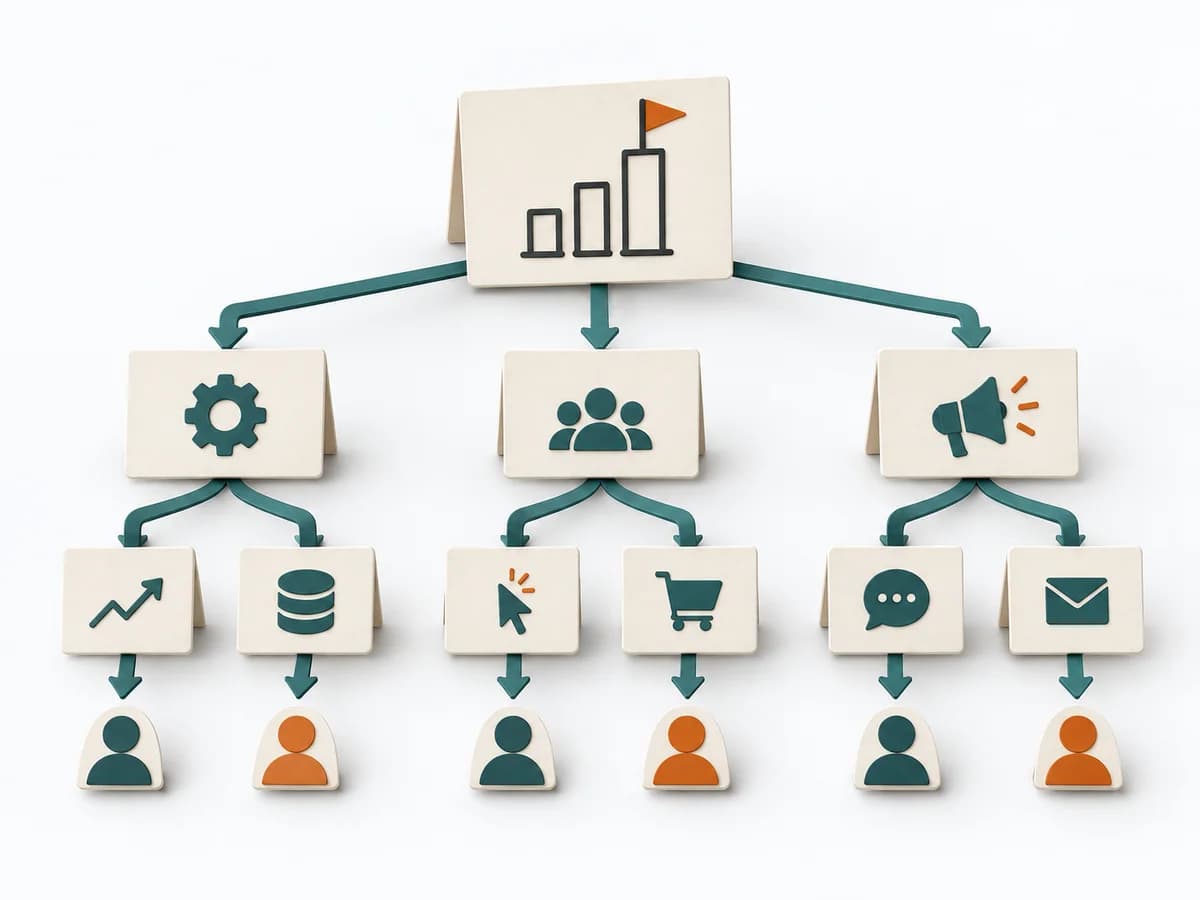
Strategy Execution Loops work because they treat the gap between strategy and operational control as a closed learning loop. A strategy is formulated, translated into objectives and metrics, connected to organization and resources, planned operationally, and checked against real signals. The loop becomes valuable when reviews not only measure progress against plan but also test strategic assumptions and explicitly allow adjustments.
In reviews, separate plan deviation from strategic learning. Ask not only whether initiatives are on plan but whether the underlying assumptions still hold. A good loop has a fixed cadence, clear owners, and visible decisions after every review.
The method guide walks execution through 4 phases, timing, 4 pitfalls, and clear stop criteria.
Open method guideYour perspective
Your feedback helps shape the next improvements to methodatlas.
Plan Strategy Execution Loop around its domain steps and the concrete decision question.
To be confirmed
To be confirmed
Establish and review the practice Time: Monthly operating and quarterly strategy reviews
Complete this worksheet on paper or in your own document during the work.
Strategy/assumption information to record
...
Translation/initiative information to record
...
Operational review information to record
...
Strategic learning information to record
...
Enter only real input, sources, and decisions.
Harvard Business Review: Mastering the Management System
Expected artifact: strategy
strategy · source · uncertainty · next decision
Entry:
...
Expected artifact: execution plan
execution plan · source · uncertainty · next decision
Entry:
...
Expected artifact: review evidence
review evidence · source · uncertainty · next decision
Entry:
...
Expected artifact: adaptation decision
adaptation decision · source · uncertainty · next decision
Entry:
...
...
Method guide: https://methodatlas.meierhoff-systems.de/en/methods/strategy-execution-loop/run-sheet
Fitting alternatives with decision guidance, followed by other related methods.

Instead of Strategy Execution Loop, choose Balanced Scorecard when the focus is on metrics, perspectives, and performance steering.
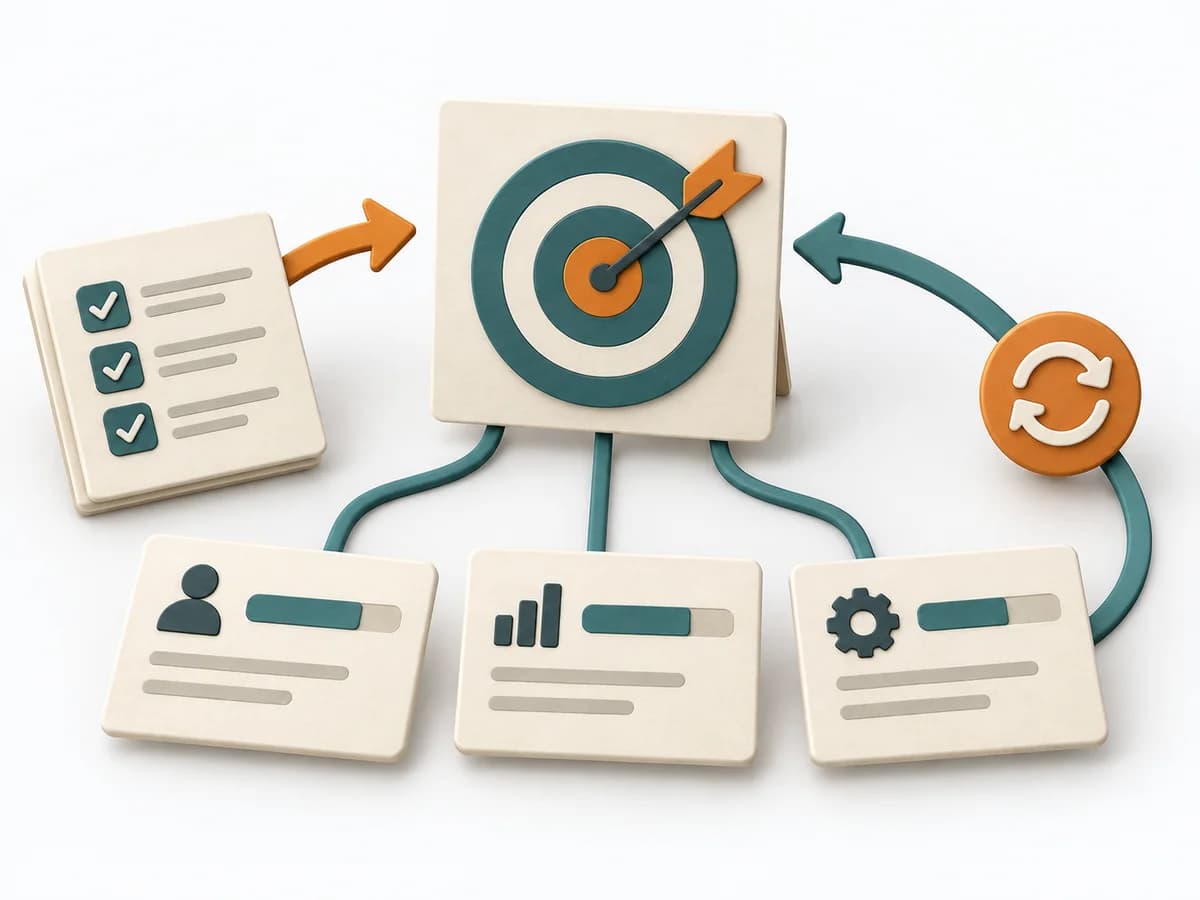
Instead of Strategy Execution Loop, choose OKRs when short goal cycles for teams and measurable outcomes are the priority.

Instead of Strategy Execution Loop, choose PDCA Cycle when the focus is process improvement in a narrower operational context.
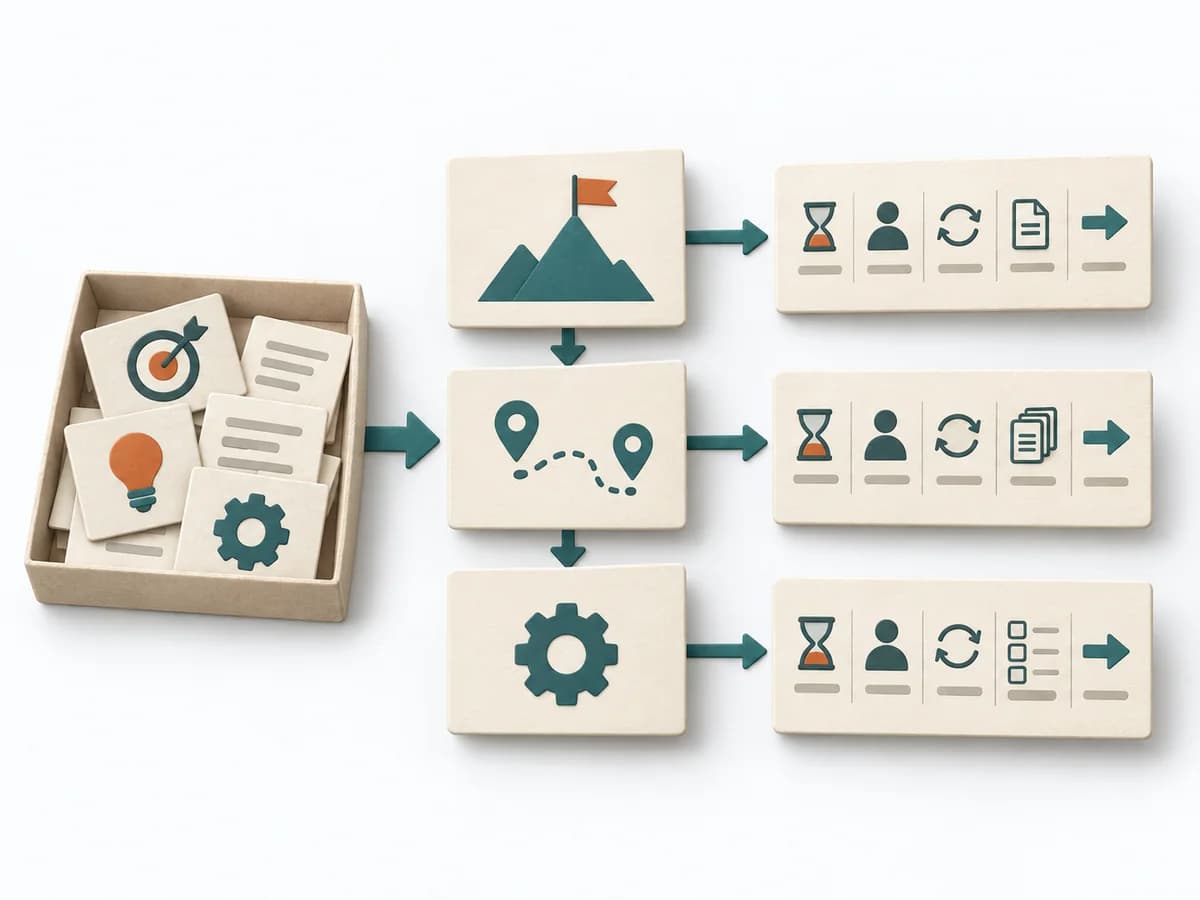
Separates planning levels by time horizon, decision type, and control logic, so strategy does not get mixed up with day-to-day business.

Structures current business, emerging growth fields, and future options across three horizons so portfolio decisions can balance today, tomorrow, and later.
Shapes vision, mission, goals, and strategies into a guiding logic that ties priorities and direction together.