
Purpose
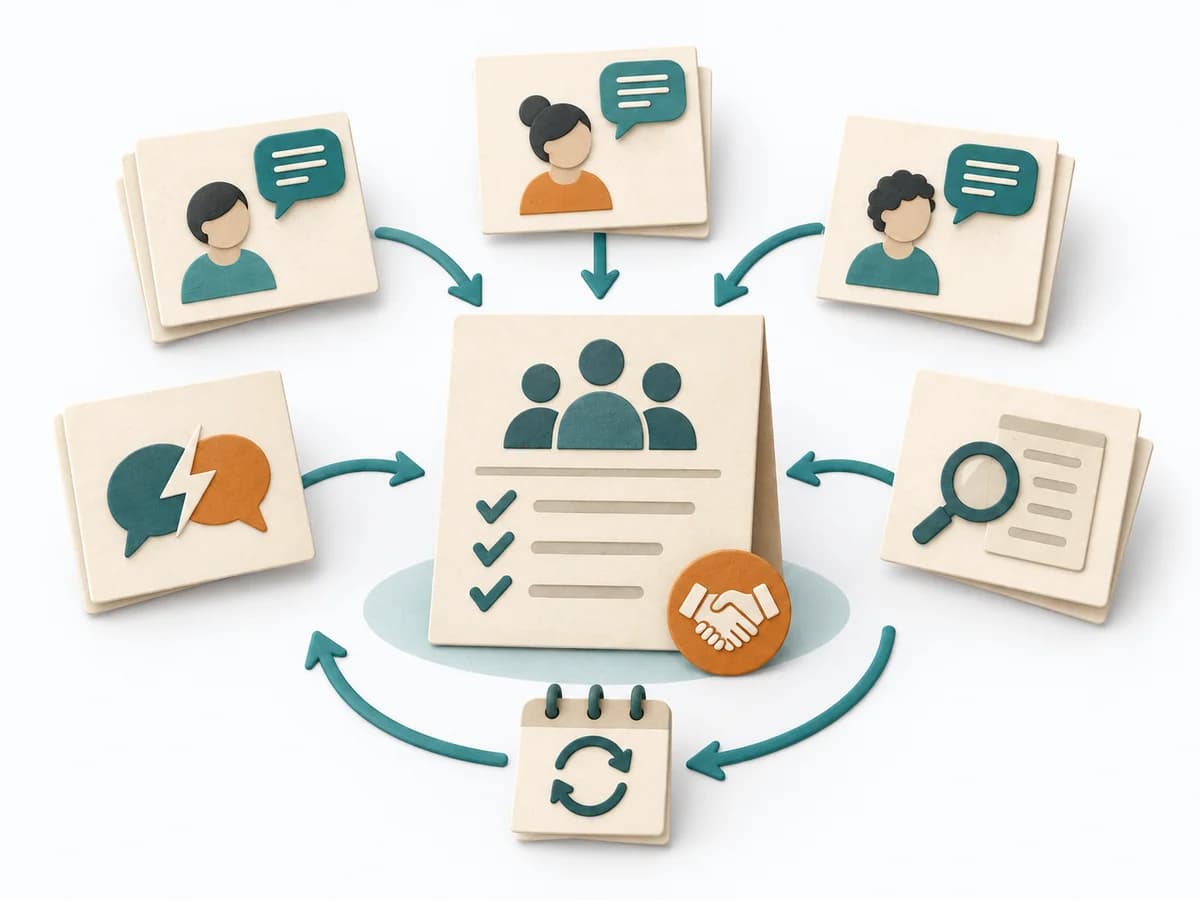
With defensive reactions to problems, the method shifts the view from justification to ownership. It makes visible which reaction stage a person or team is currently stuck on.
Operations Operating practice
The accountability ladder shows which next action a person can credibly take responsibility for in a situation.
The accountability ladder makes responses to a specific problem discussable: unawareness, blame, excuses, waiting, acknowledging reality, ownership, finding solutions and action. It is used here for voluntary self-reflection.
What next action can I credibly take responsibility for in this situation?
A common variant; rung labels differ between sources. Voluntary self-reflection, not a rating of others.

Situation
Describe one event with commitment, observed result and your response.
Response pattern
Compare your response with the eight rungs and choose the fitting pattern yourself.
Agency
Separate your influence from external limits and choose a more helpful response.
Action
Commit to an observable action with date, support and feedback.
After the committed action, review results and obstacles; agree new support or escalation.
For coaching or team reflection on a specific commitment when there is agency and psychological safety.
Self-assessment of a response and a feasible commitment with support, boundary and follow-up.
The follow-up shows the result and obstacles surfaced early.
Fictional example
The accountability ladder makes responses to a specific problem discussable: unawareness, blame, excuses, waiting, acknowledging reality, ownership, finding solutions and action. It is used here for voluntary self-reflection.
What information about the situation am I missing?
Fictional: I did not know the report was needed today.
What responsibility am I attributing to others?
I first point to the other team’s missing data export.
Which explanation am I using to avoid examining my part?
I say my calendar was full without addressing my commitment.
What am I waiting for and could I clarify anything?
I hope the meeting will be postponed.
What observable situation do I acknowledge?
The report is missing, so the group cannot decide today.
Which part is within my influence and what requires support?
I did not report the delay; only IT can grant data access.
Which feasible option, including help, do I choose?
I ask IT for an export and propose a partial decision using available data.
What will I do by when and how will I report results or obstacles?
I deliver the partial analysis by 15:00 and report at 13:00 whether the export is available.
All example details are fictional and illustrate the application.
Choose an observable situation and your own role; clarify voluntary participation, confidentiality and actual influence.
With defensive reactions to problems, the method shifts the view from justification to ownership. It makes visible which reaction stage a person or team is currently stuck on.
The current stance is compared with a next higher stage of awareness, responsibility, and action. This gradually turns explanation into effectiveness without increasing pressure or shame. Coaching starts where more clarity, freedom of choice, or commitment is needed.
The Accountability Ladder makes visible whether a person or group is stuck in explaining, justifying, or acting responsibly. The steps serve as a language for reflection, not as a judgment of other people. Value emerges when the model opens room for action and clarifies the next concrete step upward.
Start with observable situations and concrete language so the reflection doesn't become moralistic or abstract. The method works when people recognize the transition from justification to their own room for action themselves. End it with a next behavioral decision that can be visibly checked in daily life.
The method guide walks execution through 4 phases, timing, 4 pitfalls, and clear stop criteria.
Open method guideYour perspective
Your feedback helps shape the next improvements to methodatlas.
Choose an observable situation and your own role; clarify voluntary participation, confidentiality and actual influence.
To be confirmed
To be confirmed
Complete cycle Time: 15–30 minutes reflection; follow-up after the action
Complete this worksheet on paper or in your own document during the work.
What information about the situation am I missing?
...
What responsibility am I attributing to others?
...
Which explanation am I using to avoid examining my part?
...
What am I waiting for and could I clarify anything?
...
What observable situation do I acknowledge?
...
Which part is within my influence and what requires support?
...
Which feasible option, including help, do I choose?
...
What will I do by when and how will I report results or obstacles?
...
Answer the prompts with your own information. Explicitly mark unknowns and assumptions.
Sketchplanations: The Accountability Ladder
Expected artifact: Concrete situation note
Is the event described concretely without judgement?
Entry:
...
Expected artifact: Own pattern recognition
Is a response being described rather than a person rated?
Entry:
...
Expected artifact: Feasible action option
Does authority support the expected responsibility?
Entry:
...
Expected artifact: Reviewable commitment
Is the commitment specific, voluntary and achievable?
Entry:
...
...
Method guide: https://methodatlas.meierhoff-systems.de/en/methods/accountability-ladder/run-sheet
Fitting alternatives with decision guidance, followed by other related methods.

Instead of Accountability Ladder, when you want to learn quickly after an event and capture concrete improvements.

Examines an incident with a view to decisions, assumptions, and system factors, and records the resulting lessons.

Clarifies responsibility for tasks and deliverables, exposes gaps or overload, and improves alignment.

Makes accountability negotiable and visible, helping negotiate roles, expectations, and open questions cleanly.

Sorts review, learning points, and friction into Liked, Learned, Lacked, and Longed For for concrete improvements.

Asks its way step by step to a controllable cause and stops only once an effective countermeasure is within reach.