Plan my session
Plan a concrete work block with agenda, roles, preparation, and a copyable result artifact.
Session: Rich Picture
The plan translates the method into a concrete facilitated work block. Your inputs flow directly into the session brief and work artifact.
Method session with 2-10. The plan uses the existing method logic and the runsheet.
RunsheetUse the session for shared understanding. Contributions are collected visibly, assumptions are aligned, and open differences remain traceable in the artifact.
The session works directly toward Rich Picture. After the session, the artifact should be shareable, reviewable, or reusable.
- 1
Phase 1: Warm-up and rules
10 minShort sketch warm-up (everyone draws their office in 2 min). Repeat rules: no diagram notation, many actors, make conflicts visible. Hint: If someone says they cannot draw, emphasize that readability without artistic quality is the goal. Stick figures are enough.
FacilitatorRich Picture - 2
Phase 2: Draw actors and structures
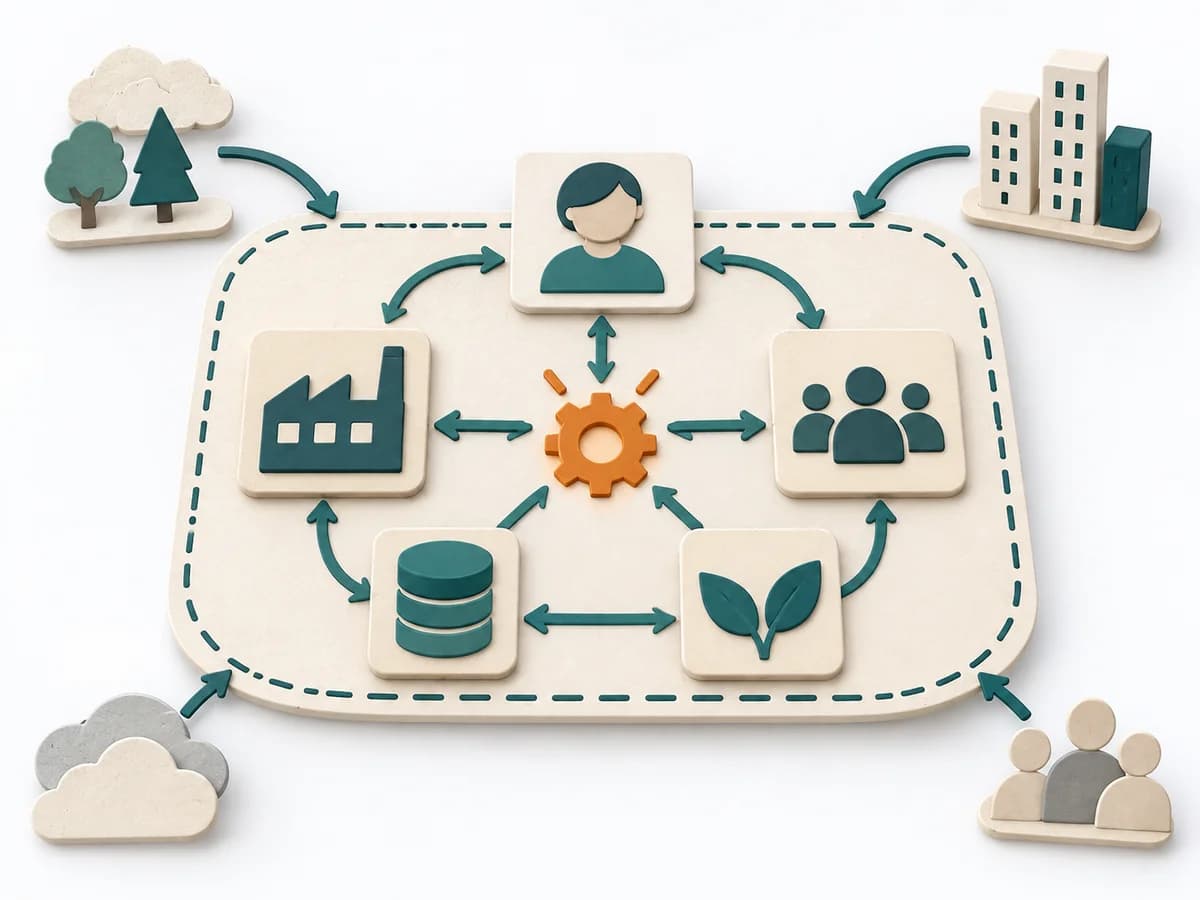
20-30 minActors and stakeholders as stick figures or symbols. Structures (departments, systems, tools) as boxes or clouds. Relationships as arrows. Hint: If all people look like robots, emotion is missing. Draw facial expressions (laughing, frowning, shouting) to make moods visible.
FacilitatorProblem Framing Notes - 3
Phase 3: Topics, tensions, symbols
20-30 minCurrent topics as clouds. Tensions or conflicts as lightning bolts. Wishes as thought bubbles. External influences (market, regulation) at the edge. Hint: The best Rich Pictures have controversial elements. If nobody draws anything political, facilitator asks explicitly about conflicts.
FacilitatorRich Picture - 4
Phase 4: Reading and discussion
30 minEach contributor explains their element. Scribe collects themes. Shared reading as list: what do we see, what is missing, what surprises us. Hint: Discussion is the main value. Anyone who only photographs the picture and skips discussion wastes the method. At least 20 min talk-through.
FacilitatorProblem Framing Notes - 5
Phase 5: Follow-up questions and next steps
15 minList follow-up questions: what must be researched, what clarified, which further method fits (for example Causal Loop Diagram, stakeholder interviews). 2-3 concrete actions with owner. Hint: Rich Picture alone improves nothing. Value arises through the consequences. If no action can be derived, the workshop was diagnostic and that is okay; document it explicitly.
OwnerRich Picture - 6
Publish artifact
10 minCheck the artifact for completeness, define location, set version or status, and name review recipients.
OwnerRich Picture
Session Brief
For invitations, boards, tickets, PR descriptions, or workshop notes.
session-brief.md
Session Brief: Rich Picture
Goal
Artifact: Rich Picture
Working Question
What picture of the situation emerges when actors, topics, tensions, structures and moods become visible at the same time?
Context
Description of the problem context in the participants' own words; known conflict lines; current practice and workarounds; relevant actors and systems.
Setup
- Format: Method session
- Duration: 60-120 min
- Mode: Workshop
- Participants: One facilitator who defends the norm that non-technical drawing is fine; 3-7 participants from affected stakeholder groups; one scribe who writes explanations.
- Owner: One facilitator who defends the norm that non-technical drawing is fine
- Participation mode: Team round, shared work and alignment
- Outcome logic: Finish artifact
Participation Logic
Use the session for shared understanding. Contributions are collected visibly, assumptions are aligned, and open differences remain traceable in the artifact.
Outcome Logic
The session works directly toward Rich Picture. After the session, the artifact should be shareable, reviewable, or reusable.
Input
Large paper (flipchart or A1) or digital whiteboard; colored pens; simple symbols (stick figures, clouds for topics, lightning bolts for conflicts, arrows for relationships); images or stickers for actors if useful.
Preparation
Paper in the center. Distribute pens. State rule: everyone draws, no beauty contest. Classic diagram notation is forbidden, as are bracketed explanations. Pictures allowed, stick figures encouraged.
Agenda
-
Phase 1: Warm-up and rules (10 min) Owner: Facilitator Action: Short sketch warm-up (everyone draws their office in 2 min). Repeat rules: no diagram notation, many actors, make conflicts visible. Hint: If someone says they cannot draw, emphasize that readability without artistic quality is the goal. Stick figures are enough. Output: Rich Picture
-
Phase 2: Draw actors and structures (20-30 min) Owner: Facilitator Action: Actors and stakeholders as stick figures or symbols. Structures (departments, systems, tools) as boxes or clouds. Relationships as arrows. Hint: If all people look like robots, emotion is missing. Draw facial expressions (laughing, frowning, shouting) to make moods visible. Output: Problem Framing Notes
-
Phase 3: Topics, tensions, symbols (20-30 min) Owner: Facilitator Action: Current topics as clouds. Tensions or conflicts as lightning bolts. Wishes as thought bubbles. External influences (market, regulation) at the edge. Hint: The best Rich Pictures have controversial elements. If nobody draws anything political, facilitator asks explicitly about conflicts. Output: Rich Picture
-
Phase 4: Reading and discussion (30 min) Owner: Facilitator Action: Each contributor explains their element. Scribe collects themes. Shared reading as list: what do we see, what is missing, what surprises us. Hint: Discussion is the main value. Anyone who only photographs the picture and skips discussion wastes the method. At least 20 min talk-through. Output: Problem Framing Notes
-
Phase 5: Follow-up questions and next steps (15 min) Owner: Owner Action: List follow-up questions: what must be researched, what clarified, which further method fits (for example Causal Loop Diagram, stakeholder interviews). 2-3 concrete actions with owner. Hint: Rich Picture alone improves nothing. Value arises through the consequences. If no action can be derived, the workshop was diagnostic and that is okay; document it explicitly. Output: Rich Picture
-
Publish artifact (10 min) Owner: Owner Action: Check the artifact for completeness, define location, set version or status, and name review recipients. Output: Rich Picture
Closeout
- Update result artifact: Rich Picture
- Define location, version, and review recipients.
- Define owner, next step, and review date.
Work artifact
Pre-filled starting point based on the matching template.
work-artifact.md
Rich Picture: Rich Picture
Working Question
What picture of the situation emerges when actors, topics, tensions, structures and moods become visible at the same time?
Context
Description of the problem context in the participants' own words; known conflict lines; current practice and workarounds; relevant actors and systems.
Participants
- Owner: One facilitator who defends the norm that non-technical drawing is fine
- Participants: One facilitator who defends the norm that non-technical drawing is fine; 3-7 participants from affected stakeholder groups; one scribe who writes explanations.
Input
Large paper (flipchart or A1) or digital whiteboard; colored pens; simple symbols (stick figures, clouds for topics, lightning bolts for conflicts, arrows for relationships); images or stickers for actors if useful.
Template
Rich Picture Working Template
Goal
An informal sketch of a complex situation with people, issues, tensions, and relationships.
Context
When and for what do we use this method?
Input
Which data, observations, decisions, or materials are available?
Execution
Short notes along the runsheet.
Output artifacts
- Rich Picture:
- Problem Framing Notes:
Assumptions and open questions
- ...
Decision / Next step
Owner, date, and success signal.
Completion Check
- Rich Picture is complete enough for review:
- Location:
- Version / status:
- Review by:
- Next step:
Next Step
- Review result
- Mark open questions
- Schedule review or decision
Rich Picture Working Template
View templateCompact working template for Rich Picture with context, input, output artifacts, and next step.markdown
rich-picture-working-template.md
Compact working template for Rich Picture with context, input, output artifacts, and next step.
Rich Picture Working Template
Goal
An informal sketch of a complex situation with people, issues, tensions, and relationships.
Context
When and for what do we use this method?
Input
Which data, observations, decisions, or materials are available?
Execution
Short notes along the runsheet.
Output artifacts
- Rich Picture:
- Problem Framing Notes:
Assumptions and open questions
- ...
Decision / Next step
Owner, date, and success signal.
- Working question, owner, and target artifact are visible.
- The result fits Rich Picture.
- Separate version per iteration with date. Archive predecessor picture as photo. Document changes between versions in the reading note.
- Open questions are noted as follow-ups.
- The next review or decision point is scheduled.