
Purpose
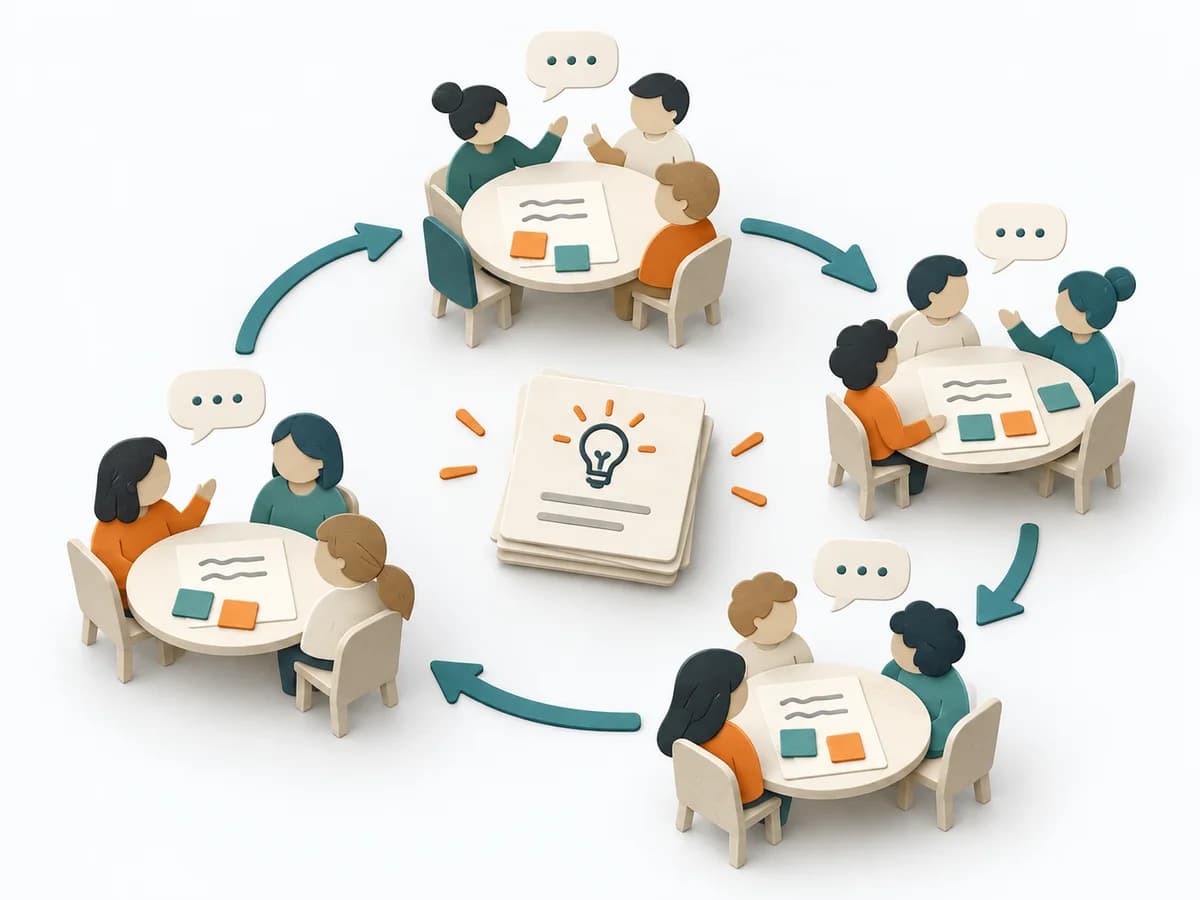
When a group needs to connect many viewpoints in a short time, World Café creates a calm alternation between closeness and rotation. It sets thinking in motion without forcing the conversation into full-plenary rigidity.
Facilitation Facilitation method
Rotates small conversation groups so Table Notes, questions, and emerging themes are developed together.
People discuss in small groups that change repeatedly and carry nuances from previous rounds into the next conversation. The discussions become richer step by step, turning individual ideas into a shared line of thought.
Which patterns emerge when different perspectives connect the same questions across table rounds?
The steps express the method mechanics in one complete run.
Questions
Define context, purpose, and two or three connected guiding questions
Tables
Prepare small tables, writable table surfaces, and host roles
Dialogue
Run the first dialogue round and connect ideas visibly on the table surface
Rotate
Participants rotate; the host welcomes the new group and shares earlier patterns
Harvest
Harvest insights in plenary, name tensions, and secure next steps
Test open questions through the agreed next step and append new evidence as a version.
Wenn eine Gruppe viele Sichtweisen in kurzer Zeit verknüpfen soll, schafft World Café einen ruhigen Wechsel zwischen Nähe und Rotation. Es bringt Gedanken in Bewegung, ohne das Gespräch in Vollplenumshärte zu zwingen.
Harvest with evidence, open points, owner, and review.
Fictional example
Fictional values are assigned to explicit method fields.
Define context, purpose, and two or three connected guiding questions
Purpose: How might we halve Saturday waiting time without adding staff?
Prepare small tables, writable table surfaces, and host roles
Four tables with writable covers; one host remains at each table.
Run the first dialogue round and connect ideas visibly on the table surface
Round 1 asks about causes: slot clustering, search time, and express cases.
Participants rotate; the host welcomes the new group and shares earlier patterns
Round 2 connects inventory visibility with staggered slots; the express rule remains disputed.
Harvest insights in plenary, name tensions, and secure next steps
Harvest: two-Saturday slot pilot owned by Lea; inventory-data check owned by Murat.
All details are fictional.
Set the purpose and two or three connected questions; prepare small tables, writable surfaces, and hosts.
When a group needs to connect many viewpoints in a short time, World Café creates a calm alternation between closeness and rotation. It sets thinking in motion without forcing the conversation into full-plenary rigidity.
People discuss in small, repeatedly changing groupings and carry the nuances of the previous round with them. This gradually enriches the conversations, and individual ideas grow into a shared thread.
World Café uses several short rounds of dialogue to let ideas move from table to table. Hosts capture interim results while new participants bring in fresh perspectives. Rotation creates links between ideas that often stay separate in fixed groups. The result is less a decision than a shared pattern of questions, insights, and possible next topics.
Prepare tables, writing surfaces, guiding questions, and a clear rotation. Ask hosts not to present, but to create continuity for the next round. Avoid too many questions; a few good ones lead to deeper conversations than a long question list.
The method guide walks execution through 5 phases, timing, 5 pitfalls, and clear stop criteria.
Open method guideYour perspective
Your feedback helps shape the next improvements to methodatlas.
Plan subject, participation, complete flow, and review.
To be confirmed
To be confirmed
Complete run Time: 60–120 minutes.
Complete this worksheet on paper or in your own document during the work.
Define context, purpose, and two or three connected guiding questions
...
Prepare small tables, writable table surfaces, and host roles
...
Run the first dialogue round and connect ideas visibly on the table surface
...
Participants rotate; the host welcomes the new group and shares earlier patterns
...
Harvest insights in plenary, name tensions, and secure next steps
...
The blank worksheet contains prompts only.
Reference source · original teaching example
Expected artifact: Guiding questions
Define context, purpose, and two or three connected guiding questions
Entry:
...
Expected artifact: Table setup
Prepare small tables, writable table surfaces, and host roles
Entry:
...
Expected artifact: Table record
Run the first dialogue round and connect ideas visibly on the table surface
Entry:
...
Expected artifact: Connected patterns
Participants rotate; the host welcomes the new group and shares earlier patterns
Entry:
...
Expected artifact: Harvest
Harvest insights in plenary, name tensions, and secure next steps
Entry:
...
...
Method guide: https://methodatlas.meierhoff-systems.de/en/methods/world-cafe/run-sheet
Fitting alternatives with decision guidance, followed by other related methods.
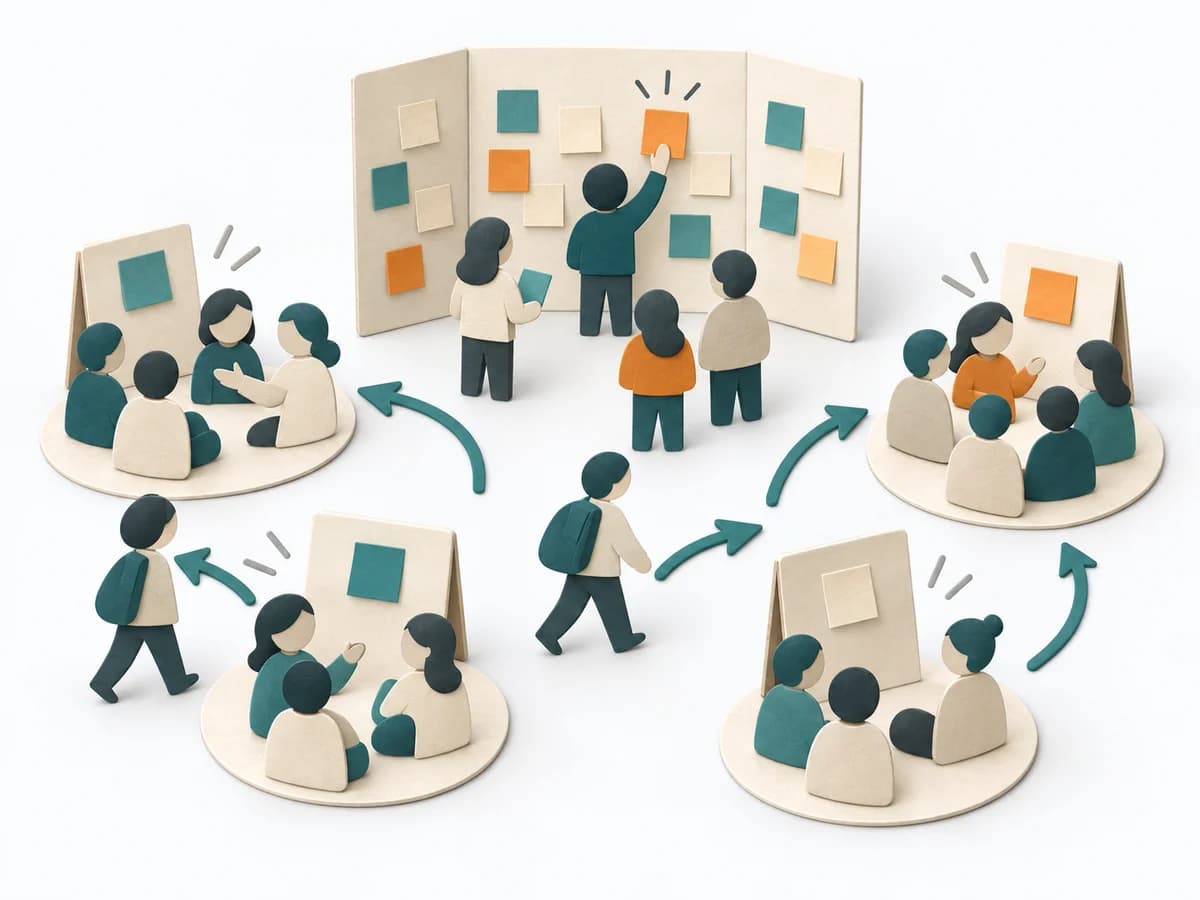
Instead of World Café, choose Open Space Technology when you want participants to organize topics and responsibilities themselves out of the group.
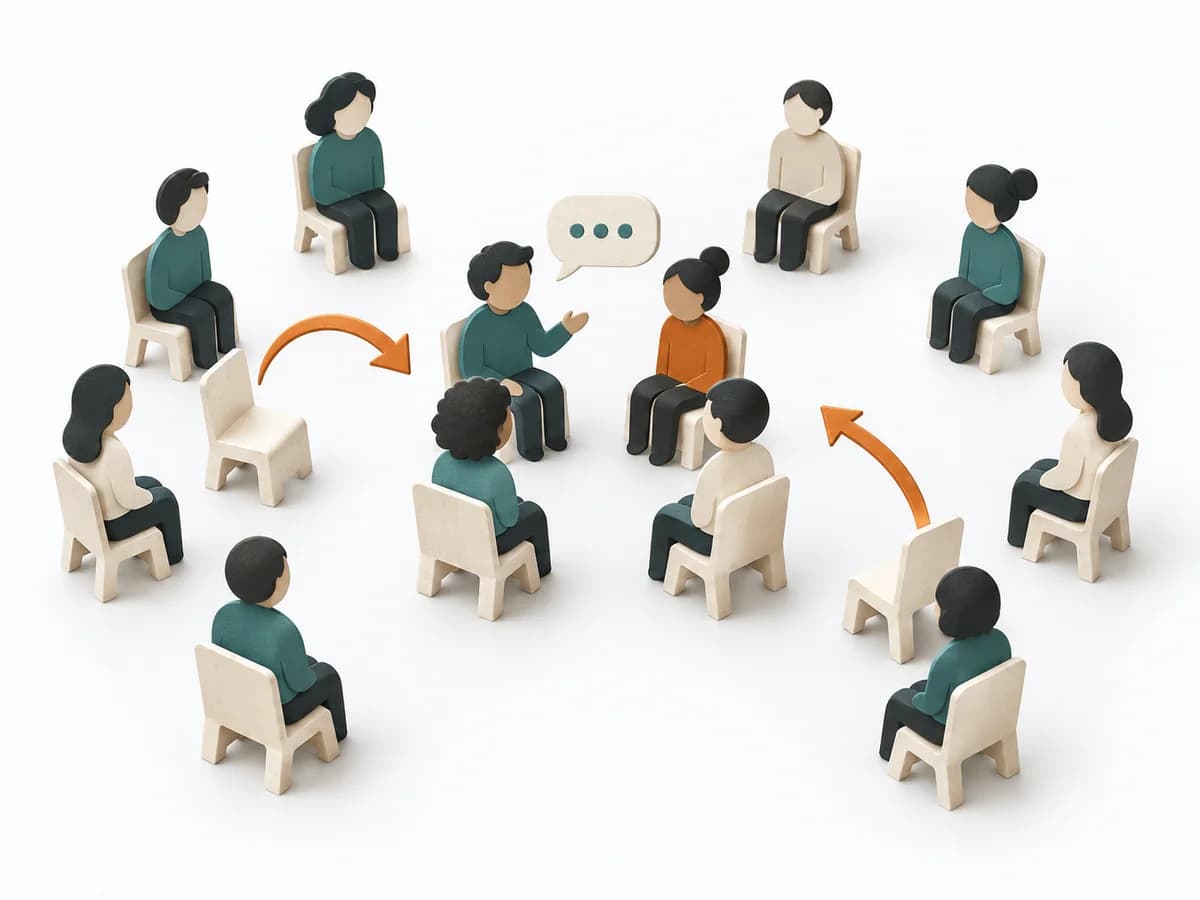
Separates an inner and outer circle so discussion, observation, and tensions become visible at the same time.

Organizes session proposals, agenda, and self-led conversations that produce documentable learnings.

Makes goals, concerns, and open gaps visible so clarification steps can be planned deliberately.

Collects ideas silently, clarifies understanding, and lets the group prioritize, so quiet voices don't get lost.
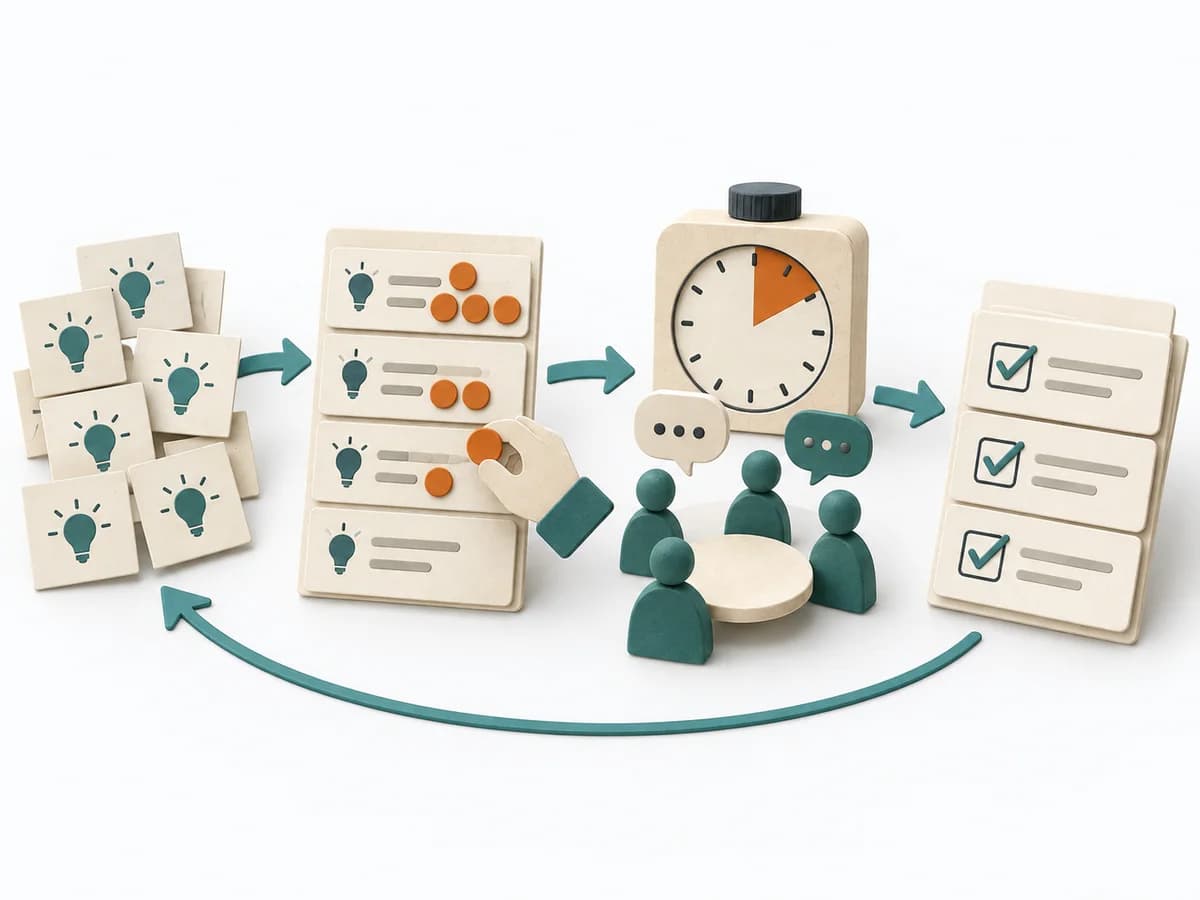
Prioritizes topics by voting and timeboxed discussion, so many points turn into clear action items.
