Complete firstFixed timeframe
Release date or timebox, goal, and available capacity are known.
Without a timeframe every item can become Must.
A practical method guide: clarify prerequisites and materials, understand the complete process, and look up outputs, pitfalls, and stop criteria.
What needs to be finished first
Release date or timebox, goal, and available capacity are known.
Backlog items have similar granularity and at least rough effort signals.
A person or role can commit the release scope.
What needs to be ready before start
Four-column board or backlog, item descriptions, rough estimates, capacity and dependency information, and a timer.
A Product Owner or accountable role decides. Facilitation protects the Must test and time. Delivery and domain voices check effort, risks, and workarounds.
Gather release goal, date, capacity, risks, dependencies, and known workarounds.
30 to 90 minutes for a first release sort. Detailed estimation and refinement follow separately.
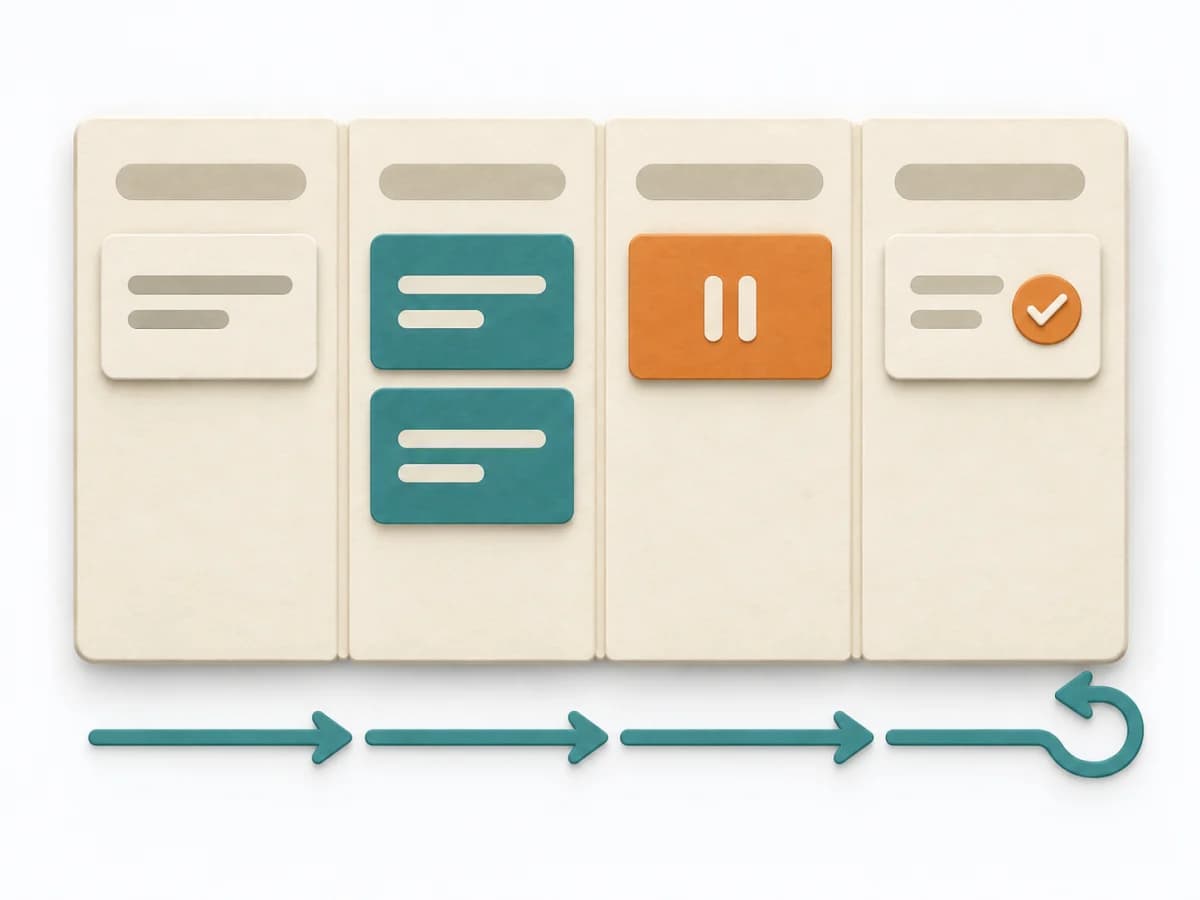
Create four columns for Must, Should, Could, and Won’t Have this time. Explain categories and change rule first.
The one question this method answers
Which requirements must be in this release, which are negotiable, and what is deliberately left for later?
Phases with goal, actions, output and pitfall
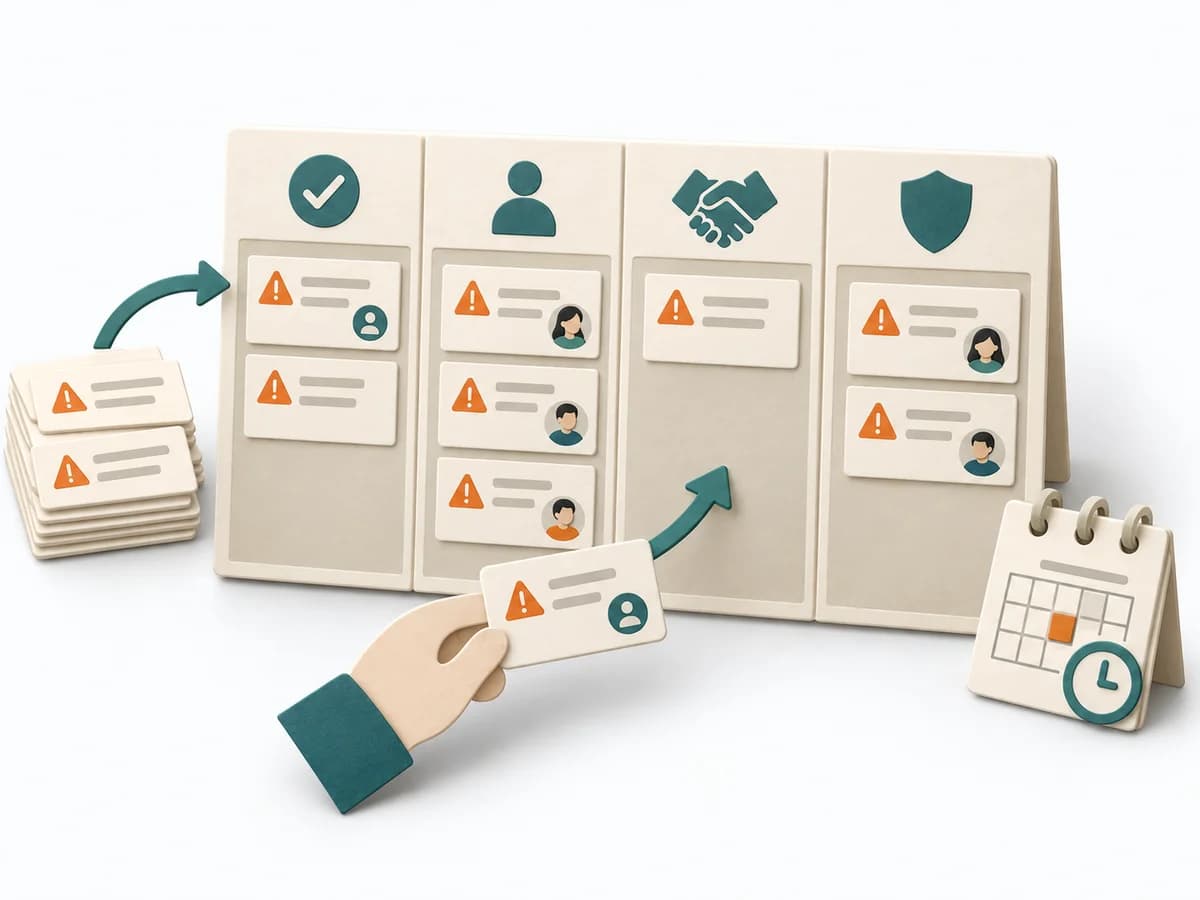
MoSCoW classifies requirements as Must, Should, Could, and Won’t Have this time. The classification is checked against the goal, dependencies, risks, and available capacity.
Fictional neighborhood tool-lending pilot
Time-bound release categories with visible flexibility.
Fictional: Record lending
Without a record, safe return is not possible.
Fictional: Reminder message
Important; a manual reminder is possible.
Fictional: Wishlist
Useful; first to drop under time pressure.
Fictional: Second pickup point
Deliberately deferred for this pilot period.
Frame
Goal
A binding basis for classification is agreed.
Inputs for this step
Actions
Output
Prioritization frame
Without time and capacity, the category loses force.
Quality check
Won’t explicitly means Won’t Have this time. Must describes a real delivery boundary, not mere importance.
Pitfall
Everything important becomes Must. Ask whether the release would be nonviable, unsafe, or illegal without the item.
Timing: 10 minutes
Classify

Goal
Every item has a reasoned category.
Inputs for this step
Actions
Output
Categorized backlog
Won’t describes a deliberate deferral in the current period.
Quality check
Every item is assigned exactly once. Should has no valid Must rationale.
Pitfall
Epics and detail tasks are compared directly. Bring items to a common granularity or plan separate levels.
Timing: 20–30 minutes
Constraints

Goal
A realistic core scope is visible.
Inputs for this step
Actions
Output
Checked core scope
MoSCoW does not create false precision; rough sizes are enough for the boundary.
Quality check
Musts fit available capacity or trigger a conscious escalation. Risks and dependencies have an owner or decision.
Pitfall
The Must list clearly exceeds capacity. Renegotiate criteria and scope before rating further items.
Timing: 15–20 minutes
Trade-offs

Goal
Trade-offs and fallback order are explicit.
Inputs for this step
Actions
Output
Negotiated flexibility
Coulds are not promised scope.
Quality check
Shoulds have an acceptable temporary workaround. Coulds can go first without breaking the release goal.
Pitfall
Coulds become a silent promise. Mark them optional and agree the removal order.
Timing: 15–20 minutes
Commit

Goal
Scope, ownership, and change path are traceable.
Inputs for this step
Actions
Output
Time-bound release decision
Reassess categories when constraints change.
Quality check
Won’t is visible and not phrased as permanent rejection. Changes require a traceable new decision.
Pitfall
The list quietly reopens after the workshop. Put change path and decision criterion in the release document.
Timing: 10–15 minutes
What comes out at the end
Sketch: what the artifact looks like
Dated categorized backlog with release scope, rough effort, rationale, owners, and visible trade-offs.
Keep one version per release and period. Record category changes with date, reason, and new decision.
Prepare a time-bound release decision with visible trade-offs.
To be confirmed
To be confirmed
Shape a release Time: 30 to 90 minutes for the first sort
Complete this worksheet on paper or in your own document during the work.
...
...
...
...
Must test ...
Time bound ...
Trade-off rule ...
Agile Business Consortium / DSDM
Expected artifact: Prioritization frame
Without time and capacity, the category loses force.
Entry:
...
Expected artifact: Categorized backlog
Won’t describes a deliberate deferral in the current period.
Entry:
...
Expected artifact: Checked core scope
MoSCoW does not create false precision; rough sizes are enough for the boundary.
Entry:
...
Expected artifact: Negotiated flexibility
Coulds are not promised scope.
Entry:
...
Expected artifact: Time-bound release decision
Reassess categories when constraints change.
Entry:
...
...
Method guide: https://methodatlas.meierhoff-systems.de/en/methods/moscow/run-sheet
Concrete filled scenario, fictional example
Fictional example for orientation. Counts and timings describe this case and are not universal requirements.
Concrete filled scenario, fictional example
Period: Four weeks, a small team, and a limited tool stock.
Must: Record lending, document returns, and explain safety rules. Should: Reminder message and simple utilization view. Could: Wishlist and automatic recommendations. Won’t Have this time: Multiple pickup points because staff and checking capacity are missing for this period.
Won’t applies to this pilot period. It can be revisited after review; it is not permanent exclusion.
Recognize symptoms and steer against them
Quick overview, the full text is in the matching phase in the flow
Everything important becomes Must.
Ask whether the release would be nonviable, unsafe, or illegal without the item.
Epics and detail tasks are compared directly.
Bring items to a common granularity or plan separate levels.
The Must list clearly exceeds capacity.
Renegotiate criteria and scope before rating further items.
Coulds become a silent promise.
Mark them optional and agree the removal order.
The list quietly reopens after the workshop.
Put change path and decision criterion in the release document.
When to pause, resolve prerequisites, or choose another approach
Go to the profile for purpose, similar methods, and sources or continue to the next method in the catalog.