Complete firstOpen agenda
A substantial part of the program may be shaped by those present.
Without open slots, the event remains a conventional conference.
A practical method guide: clarify prerequisites and materials, understand the complete process, and look up outputs, pitfalls, and stop criteria.
What needs to be finished first
A substantial part of the program may be shaped by those present.
Rooms, times, accessibility, conduct rules and contacts are clear.
What needs to be ready before start
Large blank session grid, session cards, markers, interest signals, room and accessibility details, documentation platform.
Hosting organization for frame and safety, facilitator for scheduling, session hosts and active participants.
Clarify audience, theme, capacity, accessibility, code of conduct, privacy and publication rules.
Half a day to two days; preparation over several weeks
Prepare the grid with rooms and slots only. Set up blank session cards, pitch area, visible room details and a help point.
The one question this method answers
Which sessions do the people present want to offer and attend today so that shared learning emerges?
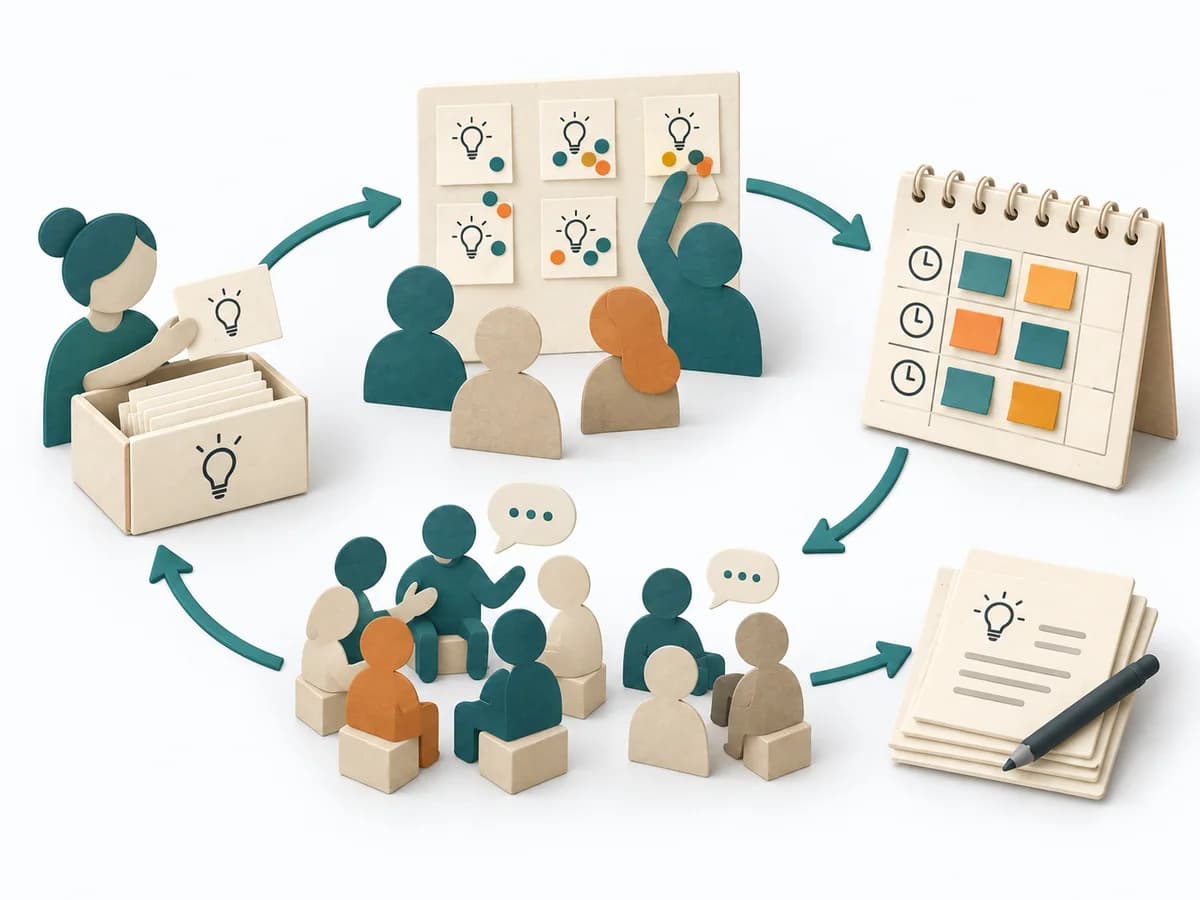
Phases with goal, actions, output and pitfall
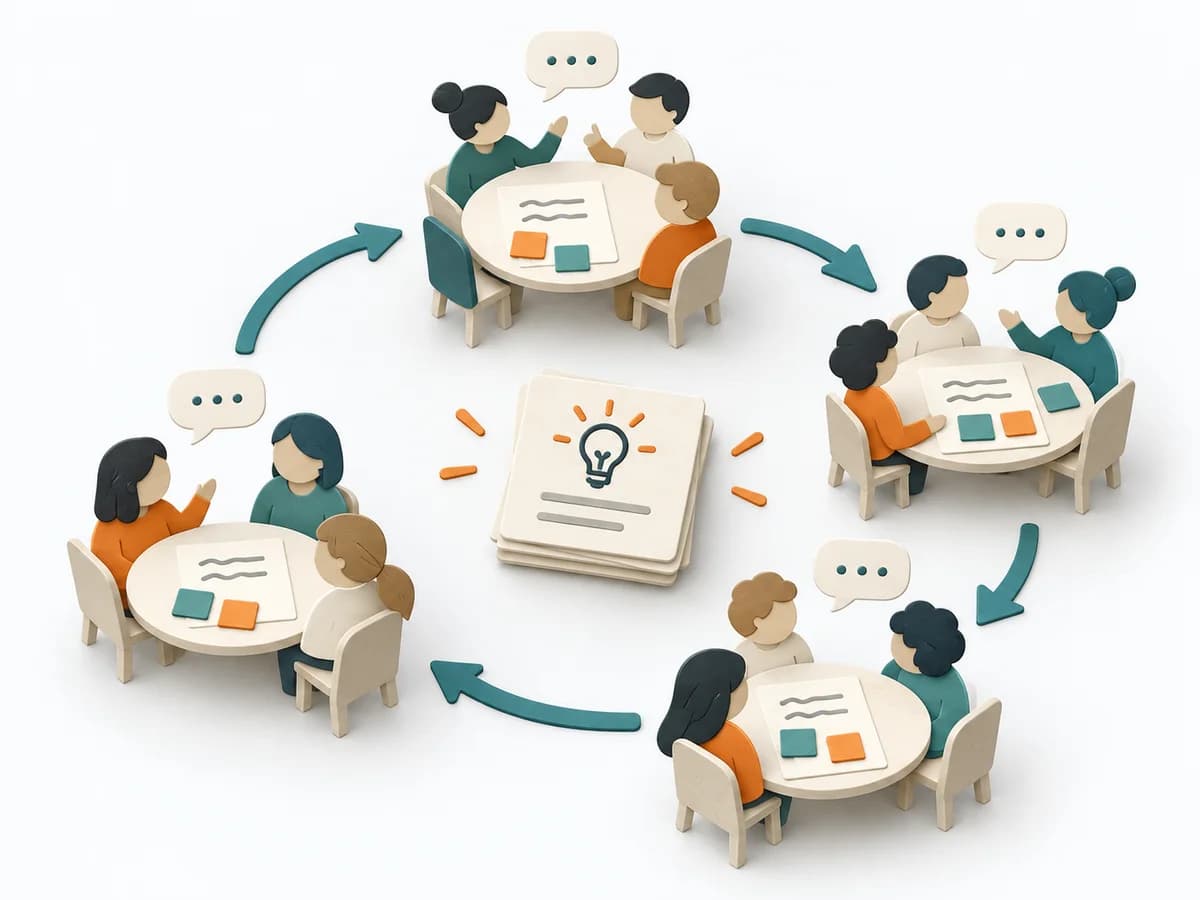
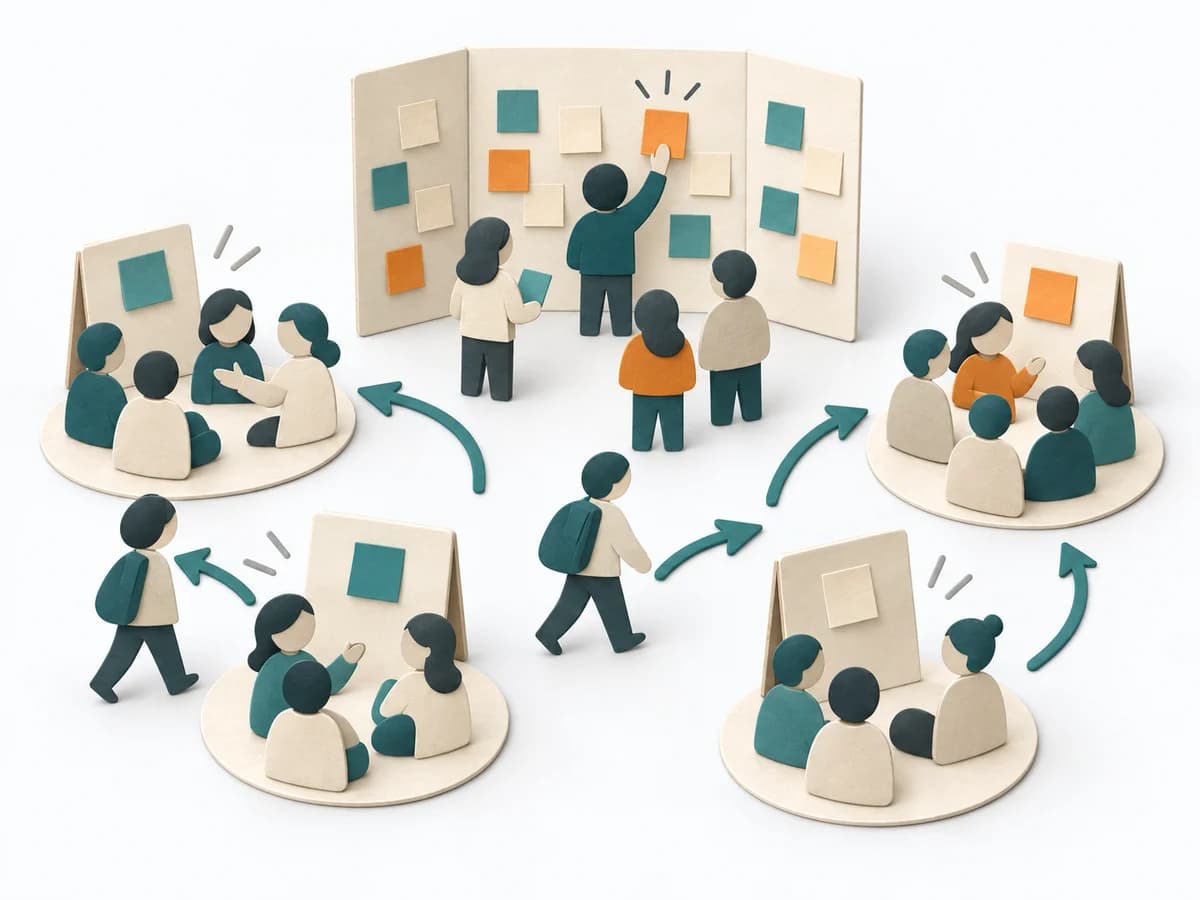
A Barcamp is a participant-driven unconference. The program emerges at the start through short session pitches and a shared room-time grid. Hosts frame exchange, workshop or consulting sessions; participants contribute actively and may move between sessions.
Fictional schedule
Fictional morning schedule for an internal BarCamp. The real grid is built with the people present.
| Time slot | Studio | Library | Online |
|---|---|---|---|
| 10:00–10:45First session block | Frictionless course start · workshop | Reading support signals · exchange | Accessible video · Q&A |
| 11:00–11:45Second session block | Sketch learning paths · co-creation | Meaningful metrics · discussion | Open clinic · consulting |
Room capacity, accessibility and interest conflicts were considered in placement.
Frame
Goal
An open theme and reliable logistics enable spontaneous program creation.
Inputs for this step
Actions
Output
BarCamp frame
Theme · rules · rooms · slots · accessibility
Quality check
Can a newcomer propose a session and find a room without prior knowledge?
Pitfall
The program is effectively curated in advance and leaves almost no open slots. Leave more slots open and make selection rules and roles transparent.
Timing: Preparation over days or weeks
Pitches
Goal
Everyone understands the rules, people and available session ideas.
Inputs for this step
Actions
Output
Session pool
Title · host · format · aim
Quality check
Is every pitch concrete enough for others to judge participation?
Pitfall
Long presentations during planning consume the shared program time. Limit pitches to title, question, format and aim; move details into the session.
Timing: 30–60 minutes per event day
Schedule
Goal
Interest, rooms, accessibility and conflicts become a visible day plan.
Inputs for this step
Actions
Output
Session grid
Time slot × room · title · host
Quality check
Are major interest conflicts and logistical limits visibly resolved?
Pitfall
Sessions are placed by host status rather than interest and logistics. Display interest and constraints openly and reorder the grid together.
Timing: 20–40 minutes per event day
Sessions
Goal
Hosts frame the exchange while participants contribute actively and move when needed.
Inputs for this step
Actions
Output
Session results
Learning · questions · contacts · artifacts
Quality check
Does the format enable exchange and respectful movement between sessions?
Pitfall
A slot announced as exchange becomes a long talk without participation. Clarify the format and expectation again or label the session transparently as a talk.
Timing: Typically 30–60 minutes per session
Harvest
Goal
Distributed learning becomes findable and the community can follow through.
Inputs for this step
Actions
Output
BarCamp harvest
Highlights · links · feedback · follow-ups
Quality check
Are session results findable without exposing confidential contributions?
Pitfall
After parallel sessions, learning remains only with those who attended. Request a lightweight shared format for highlight, link and contact per session.
Timing: 20–45 minutes plus follow-up
What comes out at the end
Sketch: what the artifact looks like
Co-created session grid, session notes, highlight harvest, contacts and voluntary follow-ups.
Show event date and day version on the grid; publish changes live and archive the final session list with links.
Prepare the whole flow or one selected phase with real inputs.
To be confirmed
To be confirmed
Prepare and run the Barcamp Time: Half a day to two days; preparation over several weeks
Complete this worksheet on paper or in your own document during the work.
| Time slot | Room 1 | Room 2 | Room 3 / online |
|---|---|---|---|
| 10:00–10:45 | |||
| 11:00–11:45 |
Prepare rooms and times; enter sessions only from pitches by those present.
Expected artifact: BarCamp frame
Theme · rules · rooms · slots · accessibility
Entry:
...
Expected artifact: Session pool
Title · host · format · aim
Entry:
...
Expected artifact: Session grid
Time slot × room · title · host
Entry:
...
Expected artifact: Session results
Learning · questions · contacts · artifacts
Entry:
...
Expected artifact: BarCamp harvest
Highlights · links · feedback · follow-ups
Entry:
...
...
Method guide: https://methodatlas.meierhoff-systems.de/en/methods/barcamp/run-sheet
Concrete filled scenario, fictional example
Fictional example for orientation. Counts and timings describe this case and are not universal requirements.
Concrete filled scenario, fictional example
After welcome and three-word introductions, 14 people pitch nine sessions. Interest and room capacity produce two morning blocks.
10:00 Studio: “Frictionless course start,” workshop with Jana. 10:00 Online: “Accessible video,” Q&A with Omid. 11:00 Library: “Meaningful metrics,” discussion with Lea.
Each session publishes one highlight and one link. The team does not assign tasks centrally; two hosts voluntarily schedule follow-ups.
Recognize symptoms and steer against them
Quick overview, the full text is in the matching phase in the flow
The program is effectively curated in advance and leaves almost no open slots.
Leave more slots open and make selection rules and roles transparent.
Long presentations during planning consume the shared program time.
Limit pitches to title, question, format and aim; move details into the session.
Sessions are placed by host status rather than interest and logistics.
Display interest and constraints openly and reorder the grid together.
A slot announced as exchange becomes a long talk without participation.
Clarify the format and expectation again or label the session transparently as a talk.
After parallel sessions, learning remains only with those who attended.
Request a lightweight shared format for highlight, link and contact per session.
When to pause, resolve prerequisites, or choose another approach
Go to the profile for purpose, similar methods, and sources or continue to the next method in the catalog.