
Purpose
An ADR permanently records an architecture decision with context, trade-offs, and consequence. It creates continuity for later changes because the decision path stays traceable.
Architecture Decision method
An Architecture Decision Record keeps an architecture decision and its rationale discoverable.
An Architecture Decision Record documents the relevant context, chosen solution, and consequences in a short, discoverable record. Current and future contributors can understand the decision and reassess it when context changes.
Which architecture decision are we making in this context, why choose it and which consequences does it carry?
An ADR records a decision. Investigation and review may require multiple sessions; their scope follows the question’s significance and uncertainty.

Frame
Focus the architectural question.
Compare
Expose decisive differences and uncertainties.
Decide
Explicitly agree on choice, rationale and consequences.
Maintain
Keep the decision discoverable and review changed context.
Review status and consequences when new evidence arrives. Explain a changed decision in a new linked ADR and mark its predecessor as superseded.
An architecturally significant decision needs a discoverable rationale, for example about structure, interfaces, dependencies or quality requirements.
Context, decision, status and consequences in a short reference.

Relevant options and the differences that matter.
Linked decisions and traceable status changes.
Fictional teaching example
Fictional draft about shared tool reservations. It demonstrates the document structure and has not been accepted.
Record a stable ID, decision question, date, contributors, owner and current status.
Fictional: ADR-007 · Shared reservation management · proposed · date open · Alex coordinates review.
Why is this decision needed? Which requirements and constraints shape it?
Fictional: Online access and the collection point allocate the same tools. Both channels must consider available inventory.
Briefly compare relevant options, decisive differences, sources and uncertainties.
Fictional: A uses a central reservation service. B keeps separate lists with periodic reconciliation. To investigate: conflicts between simultaneous requests.
Record the chosen option and its decisive rationale. Label a draft as a proposal.
Fictional proposal: A, so allocation has a shared decision point. Technical conflict prevention will be checked separately.
Describe relevant favorable and unfavorable consequences, uncertainties and concrete follow-up work.
Fictional: Shared validation rules; also a dependency on service availability and operation. Open: outage procedure and evidence of conflict-free allocation.
Document review, explicit decision and date. Link sources and any predecessor or successor.
Fictional: Product and operations review the proposal. Status remains proposed until the agreed decision is recorded.
This template combines Nygard’s short core structure with useful fields for trade-offs and review. Detail and process follow the decision need.
Formulate a concrete decision question and the context that makes it necessary. Name contributors and decision ownership.
An ADR permanently records an architecture decision with context, trade-offs, and consequence. It creates continuity for later changes because the decision path stays traceable.
First the problem, goals, and constraints are described precisely. Then the team documents the options, the chosen solution, and the main trade-offs. Finally the entry is versioned with date, status, and a reference to follow-up work.
An ADR works because architecture decisions are not just recorded but remain readable later together with their context and consequences. Good use documents the actual tension between options and openly names the weight of the chosen direction. This stops teams from knowing, months later, only the outcome while losing track of the reason and the deliberate trade-offs.
Before writing, gather the real decision question, the main alternatives, and the quality goals under tension. The format shows its value exactly where the chosen option has a clear consequence for operations, development, or coupling. Close with a precise status, a clear rationale, and a note on when a revision would be due.
The method guide walks execution through 4 phases, timing, 4 pitfalls, and clear stop criteria.
Open method guideYour perspective
Your feedback helps shape the next improvements to methodatlas.
Plan work on an ADR from context through trade-offs to the agreed review.
To be confirmed
To be confirmed
Prepare and review an ADR Time: Arrange drafting and review separately
Complete this worksheet on paper or in your own document during the work.
Record a stable ID, decision question, date, contributors, owner and current status.
...
Why is this decision needed? Which requirements and constraints shape it?
...
Briefly compare relevant options, decisive differences, sources and uncertainties.
...
Record the chosen option and its decisive rationale. Label a draft as a proposal.
...
Describe relevant favorable and unfavorable consequences, uncertainties and concrete follow-up work.
...
Document review, explicit decision and date. Link sources and any predecessor or successor.
...
Begin with proposed status. Record acceptance explicitly. Link a changed decision as a new ADR and preserve its original rationale.
Based on Michael Nygard, with options and review added
Expected artifact: Decision context
Question · significance · constraints · ownership
Entry:
...
Expected artifact: Traceable trade-offs
Option · relevant impact · uncertainty · source
Entry:
...
Expected artifact: ADR with an explicit status
Choice · rationale · consequences · status · date
Entry:
...
Expected artifact: Linked decision history
Follow-up · trigger · predecessor · successor
Entry:
...
...
Method guide: https://methodatlas.meierhoff-systems.de/en/methods/adr/run-sheet
Fitting alternatives with decision guidance, followed by other related methods.
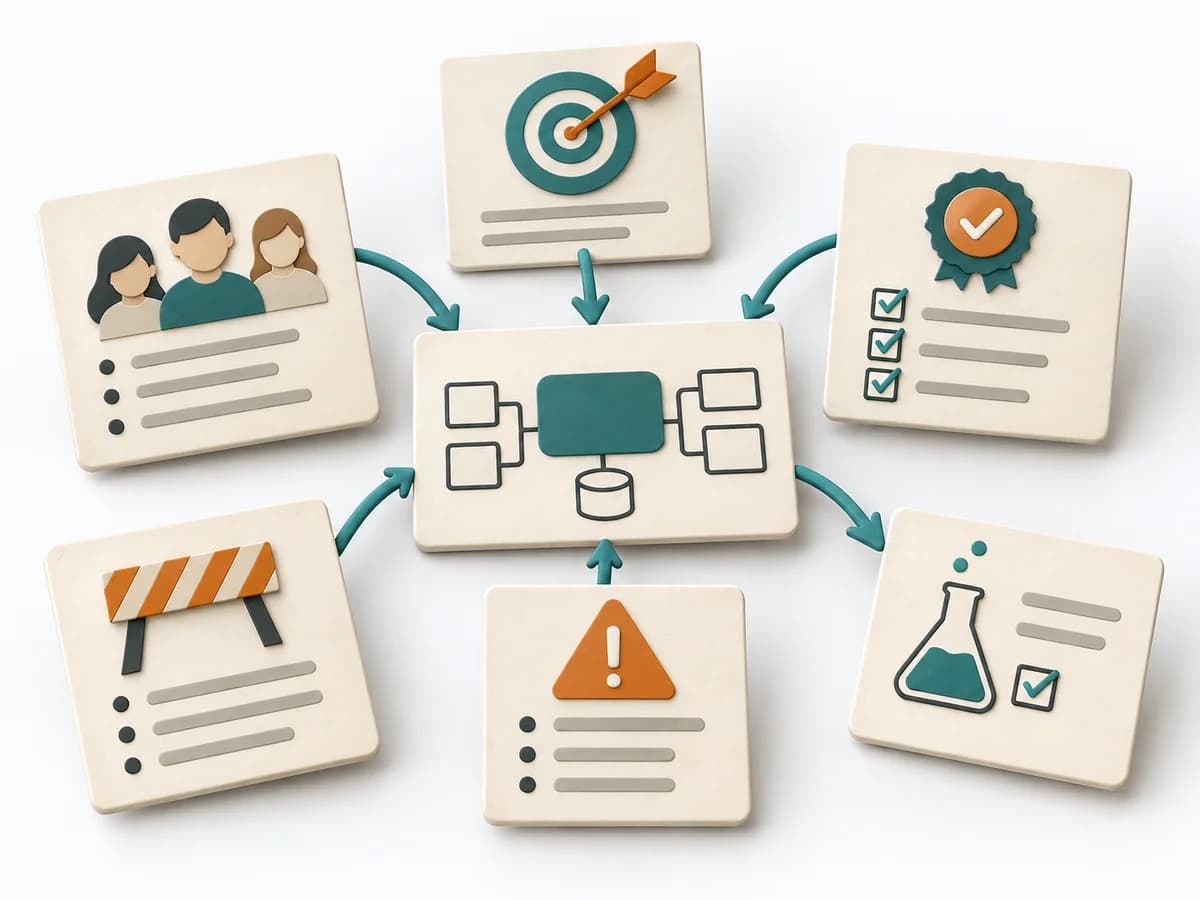
Instead of Architecture Decision Record, when you want to bundle the first architecture questions into a concise kickoff sheet.

Connects several views of large systems and keeps cross-view information for the overall picture.

Examines how architecture decisions support important quality goals and makes risks and trade-offs visible.

Uses concrete tasks to show how well an architecture supports use and change.

Uses a structured proposal and review process to make non-trivial technical or product changes discussable and decidable.

Moves architecture context, options, and consequences toward a concrete result through "place the architecture diagram or plan in the center", "set risk categories such as technical, organizational, and external", and "assign an owner and next steps for each top risk".