methodatlas
Playbook

Moderate Solution Ideation

Move from problem understanding to many ideas, structured selection, and first concept.

Steps4 methods
Time2-4 h
FormatWorkshop
Outcome

A prioritized shortlist with concept sketches and next validation step.

At the end you have

HMW QuestionsIdea PoolPrioritized IdeasStoryboard

Decision point

You can decide which idea should be developed or validated as the next concept.

Next step

Turn the selected idea into a test, prototype, or discovery step and mark open assumptions.
Ideal for

  • Product and service ideas
  • Workshop formats with mixed roles
  • Teams before a concept decision

Not good for

  • Decisions without problem understanding
  • pure quantitative prioritization
Preparation

What should be clear before you start

Roles

  • Facilitator
  • Product or service owner
  • Participants from relevant perspectives

Inputs

  • well-described problem
  • user or context signals
  • known constraints for solutions

Setup

  • Secure problem understanding before ideation
  • Separate divergent and convergent phases
  • Clarify decision criteria before voting
Flow

Method path

4 methods
  1. 1InnovationHMW Questions

    How Might We

    How might we enable the desired outcome in this situation without prescribing a solution?

    Why this step?

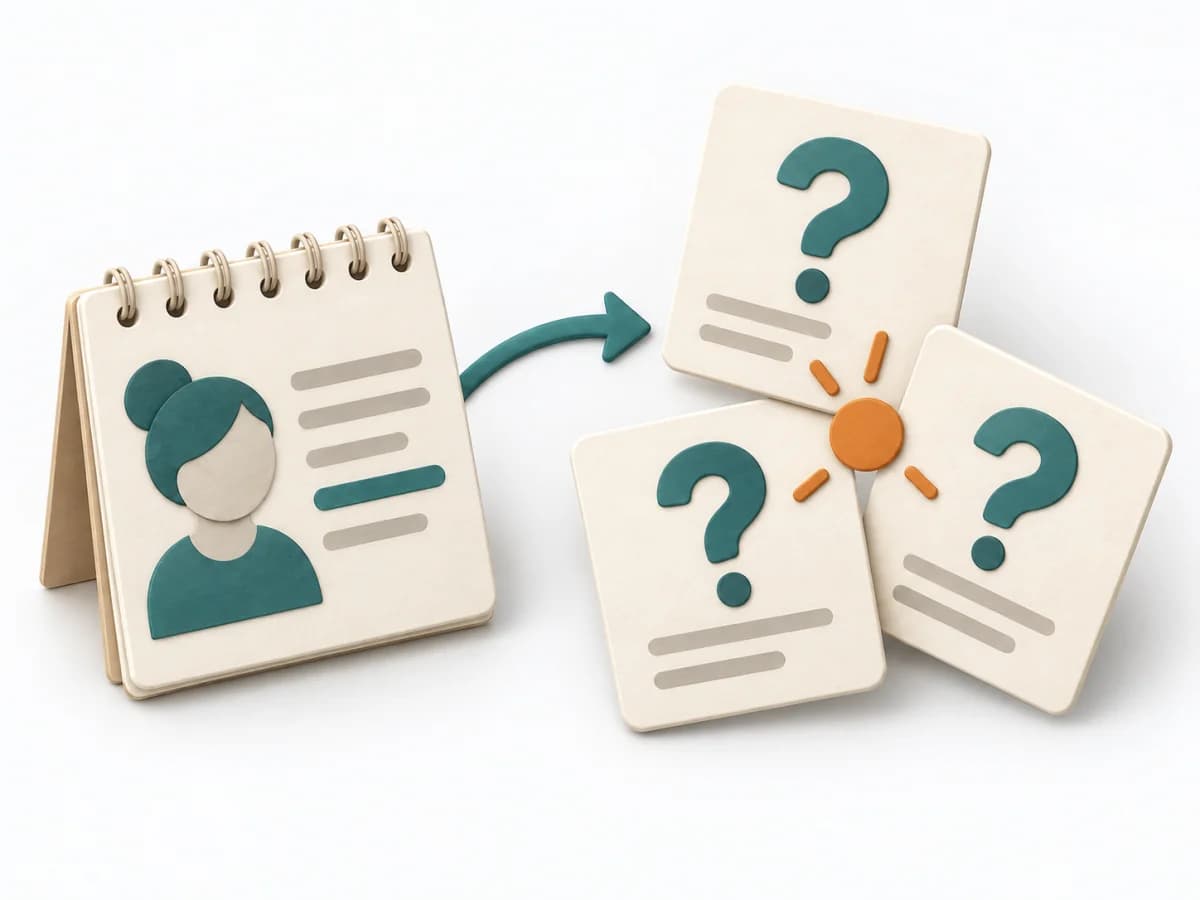
    How Might We translates a problem into open, solution-oriented questions without prescribing a single answer.

    The best questions then become the starting point for broad idea generation.

    How Might We
  2. 2InnovationIdea Pool

    Brainwriting

    What different ideas emerge when everyone writes silently first and then builds on others’ contributions?

    Why this step?

    Brainwriting creates many ideas in parallel and reduces dominance by individual voices in the workshop.

    The idea pool is then prioritized and made discussable.

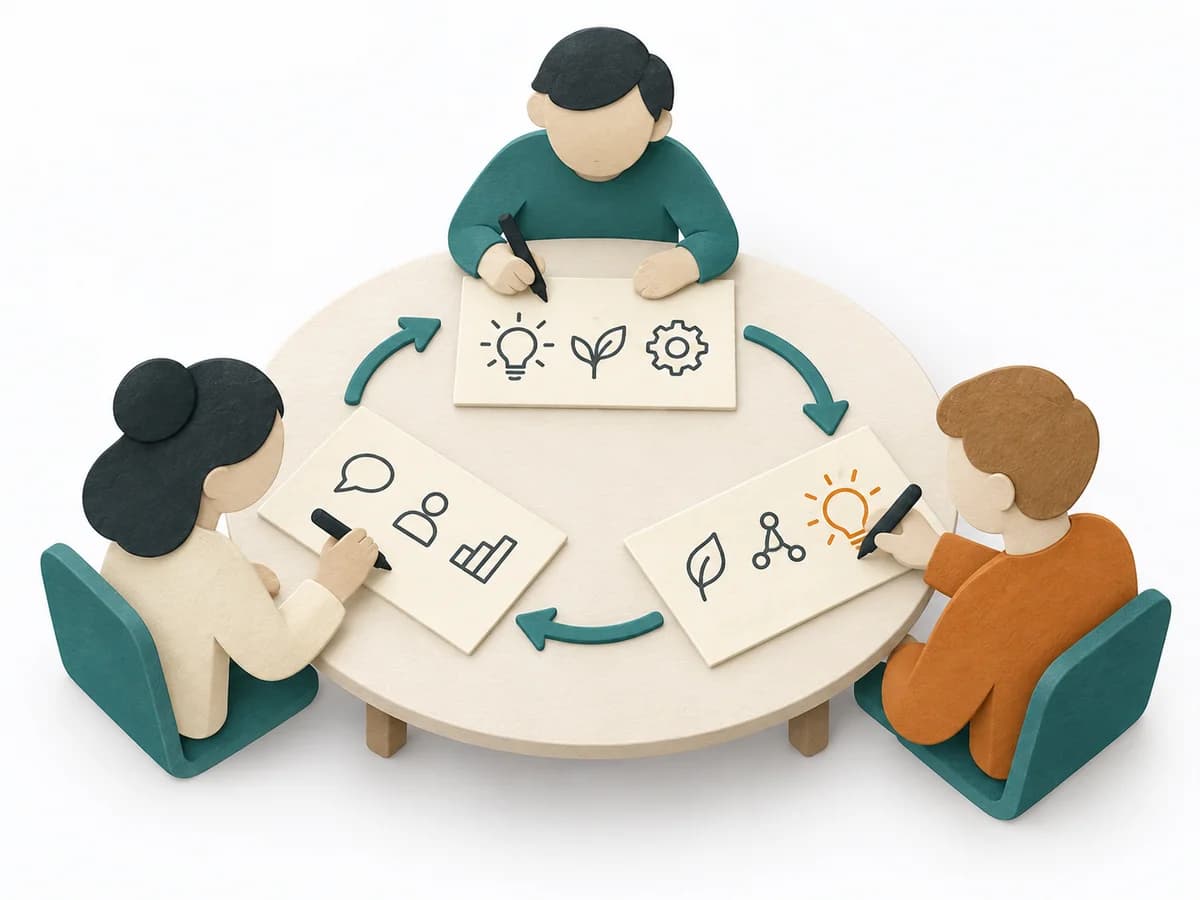
    Paper illustration of several people silently writing ideas and passing sheets around with arrows.
  3. 3FacilitationPrioritized Ideas

    Dot Voting

    Which options merit further examination based on the group's independent preferences?

    Why this step?

    Dot Voting quickly makes preferences and group energy visible without forcing a full scoring matrix.

    The prioritized ideas are then developed into concrete use situations.

    Paper illustration of shared options, independently placed voting dots, and a highlighted shortlist.
  4. 4UX DesignStoryboard

    Storyboarding

    Which situations, actions, and transitions shape this specific user flow or proposed experience?

    Why this step?

    Storyboarding makes an idea tangible as flow, context, and user experience.

    The storyboard provides a basis for prototyping, validation, or next concept work.

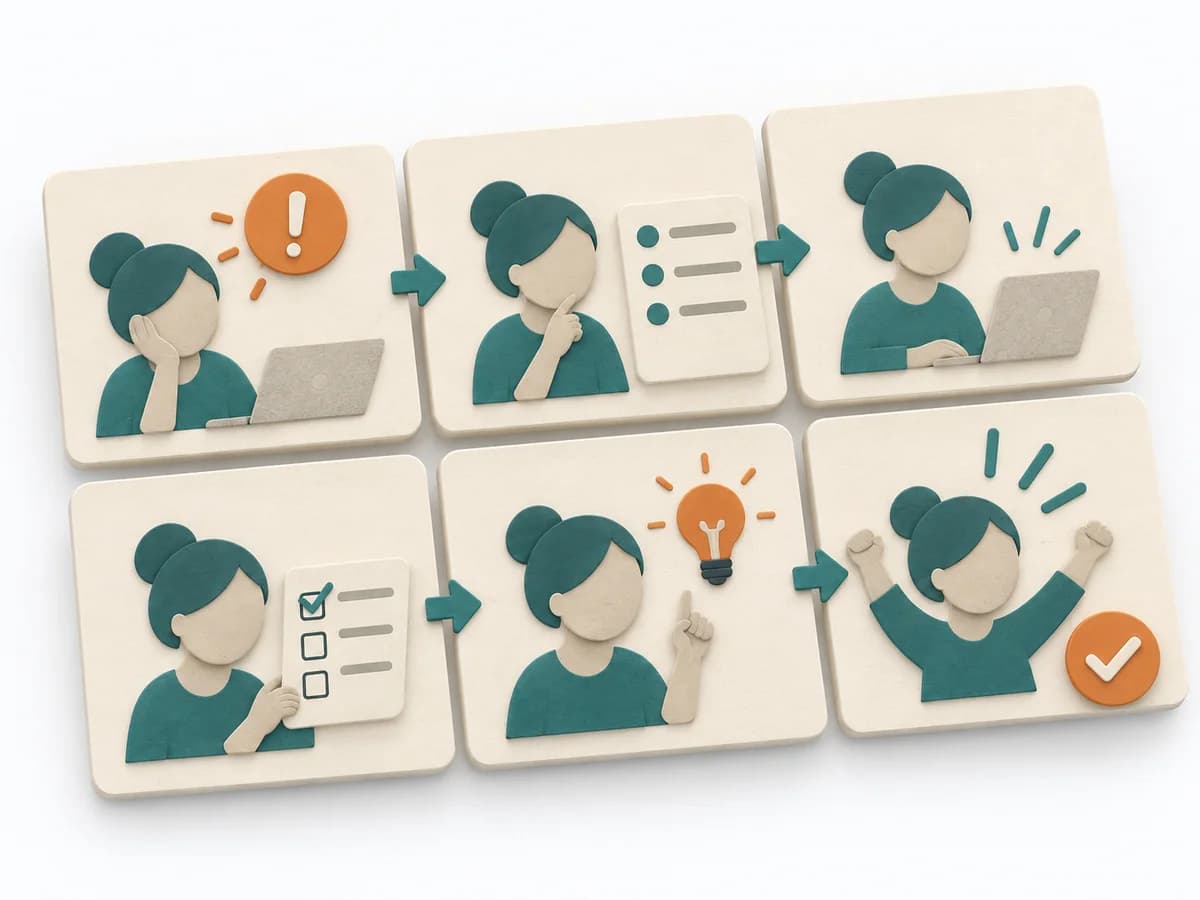
    Six paper cards show a person moving from a problem through a service flow to a completed outcome.
Completion criteria
Templates

Artifacts for this playbook

Artifacts stay collapsed until you actually need them.

AgendaShow template

Workshop Agenda

Compact agenda template for method sequences with timebox, purpose, and output.

# Workshop Agenda

**Goal:** ...
**Participants:** ...
**Duration:** ...

| Time | Method | Purpose | Output |
|---|---|---|---|
| 00:00 | Check-in | Set focus | Shared start |
| 00:10 | How Might We | Ideation questions | HMW list |
| 00:35 | Brainwriting | Generate ideas | Idea pool |
| 01:10 | Dot Voting | Prepare selection | Prioritized ideas |
| 01:30 | Storyboarding | Make the concept tangible | Storyboard |

## Close-out

Decision, owner, next test.
MarkdownShow template

Experiment Plan

Short plan for hypothesis, test design, success criteria, and decision.

# Experiment Plan

## Hypothesis

We believe that ...

## Target audience

Who are we testing for?

## Test design

What exactly will participants or users do?

## Success criterion

We count the test as positive if ...

## Risks and limits

What can the test not prove?

## Decision afterward

If positive: ...
If negative: ...

## Owner and date

...