Complete firstComparable options
Everyone sees the same concise, understandable description of each option.
Unclear or unevenly detailed entries direct votes toward wording quality rather than preference.
A practical method guide: clarify prerequisites and materials, understand the complete process, and look up outputs, pitfalls, and stop criteria.
What needs to be finished first
Everyone sees the same concise, understandable description of each option.
The decision owner knows whether the result is a shortlist, a conversation starter, or an initial selection.
What needs to be ready before start
Options on a board or readable cards, dots or equivalent digital votes, and a visible voting limit.
Facilitation protects independent votes. Decision owners explain beforehand how the signal will be used. Subject experts research material assumptions before voting.
Gather option descriptions, the question to be answered, and necessary evidence. For consequential options, give participants time to check their area of expertise.
5–15 minutes for prepared options; research, debate, and a formal decision take additional time.
Give everyone the same number of dots. A reasonable starting point is roughly one quarter of the options, adapted to the purpose and option count. Explain whether people may place several dots on one option and whether votes represent criteria or general preference. Votes are cast silently; discussion starts afterward.
The one question this method answers
Which options merit further examination based on the group's independent preferences?
Phases with goal, actions, output and pitfall
Dot voting makes relative preferences in a group visible through an equal voting budget used independently by participants. The distribution supports a shortlist and does not establish objective value or agreement.
Fictional teaching example
Fictional vote distribution from a prepared group choice.
| Option | Option | Dots | Interpretation and next check |
|---|---|---|---|
| Option 1Which option received votes, and what should be checked next? | Clearer reservation confirmation | 5 dots | Shortlisted. Check comprehension and process before implementation. |
| Option 2Which option received votes, and what should be checked next? | Reliable pickup time slots | 4 dots | Shortlisted. Check availability and operating effort. |
| Option 3Which option received votes, and what should be checked next? | Reminder before return | 2 dots | Deferred. The reason for the preference or rejection is unknown. |
| Option 4Which option received votes, and what should be checked next? | Short repair video | 1 dot | Deferred. This says nothing about objective value. |
Four fictional participants cast three dots each. The twelve dots are preference signals; they do not count distinct people or consensus. The shortlist needs further examination.
Scope

Goal
The group knows which decision the vote is preparing.
Inputs for this step
Actions
Output
Bounded vote
A shortlist is not automatically the decision.
Quality check
Will the result be used as a signal or a decision?
Pitfall
The task list mixes goals or periods. Clarify the decision path before starting.
Timing: 2 minutes
Options
Goal
Everyone votes on the same option set.
Inputs for this step
Actions
Output
Comparable option list
Dot Voting cannot assess quality that is not visible.
Quality check
Are the options described at similar levels of detail?
Pitfall
Options differ in clarity or level of detail. Align the wording and mark uncertainty.
Timing: 3 minutes
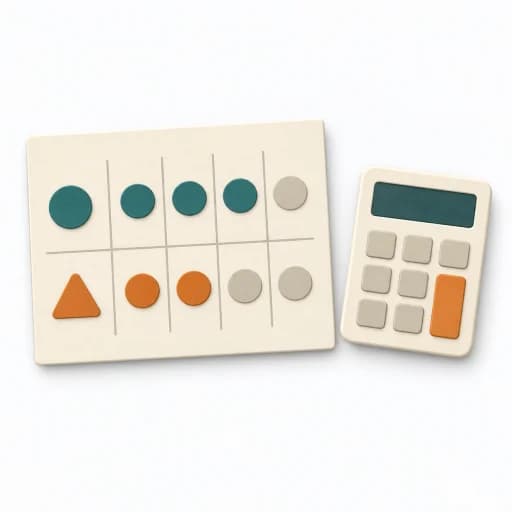
Silent vote
Goal
Each person can show a preference without seeing earlier votes.
Inputs for this step
Actions
Output
Submitted votes
Equal vote counts prevent unequal voting power, not unequal evidence.
Quality check
Other votes are visible before submission.
Pitfall
Other votes influence submissions. Cover the board or use private submission.
Timing: 3 minutes
Read the pattern

Goal
The group reads the result as a preference pattern with open questions.
Inputs for this step
Actions
Output
Prioritized shortlist and open questions
Dots can cluster on a few options without proving agreement.
Quality check
The highest count is treated as consensus.
Pitfall
The highest count is interpreted as consensus. Record the result separately from remaining concerns.
Timing: 4 minutes
Follow-up
Goal
The vote leads to a named next step.
Inputs for this step
Actions
Output
Clear follow-up step
Voting alone does not assess feasibility, risk, or obligations.
Quality check
Dots stay on the board without follow-up.
Pitfall
The voting signal has no follow-up. Assign an owner and date for the next decision step.
Timing: 3 minutes
What comes out at the end
Sketch: what the artifact looks like
Dated voting summary with question, options, voting rule, result, caveats, and the next decision step.
Save the question, option wording, rule, vote count, and date together. For a second round, record the narrowed options and why they were selected.
Compact agenda template for method sequences with timebox, purpose, and output.
Goal: ... Participants: ... Duration: ...
| Time | Method | Purpose | Output |
|---|---|---|---|
| 00:00 | Check-in | Set focus | Shared start |
| 00:10 | How Might We | Ideation questions | HMW list |
| 00:35 | Brainwriting | Generate ideas | Idea pool |
| 01:10 | Dot Voting | Prepare selection | Prioritized ideas |
| 01:30 | Storyboarding | Make the concept tangible | Storyboard |
Decision, owner, next test.
Plan the question, comparable options, equal voting budget, and how the result will feed into a decision.
To be confirmed
To be confirmed
Narrow a group of options Time: 5–15 minutes with a prepared board; follow-up discussion as needed
Complete this worksheet on paper or in your own document during the work.
| Option | Option | Dots | Observation or next check |
|---|---|---|---|
| Option 1 | |||
| Option 2 | |||
| Option 3 | |||
| Option 4 |
Blank worksheet: record the question, evenly described options, voting budget, and independent submission. Add votes and interpretation only after voting.
Expected artifact: Bounded vote
A shortlist is not automatically the decision.
Entry:
...
Expected artifact: Comparable option list
Dot Voting cannot assess quality that is not visible.
Entry:
...
Expected artifact: Submitted votes
Equal vote counts prevent unequal voting power, not unequal evidence.
Entry:
...
Expected artifact: Prioritized shortlist and open questions
Dots can cluster on a few options without proving agreement.
Entry:
...
Expected artifact: Clear follow-up step
Voting alone does not assess feasibility, risk, or obligations.
Entry:
...
...
Method guide: https://methodatlas.meierhoff-systems.de/en/methods/dot-voting/run-sheet
Concrete filled scenario, fictional example
Fictional example for orientation. Counts and timings describe this case and are not universal requirements.
Concrete filled scenario, fictional example
All details and votes are invented. Four team members choose from four similarly described improvements. Each receives three dots; placing several dots on one option is allowed. That makes twelve dots in total.
| Option | Dots |
|---|---|
| Clearer reservation confirmation | 5 |
| Reliable pickup time slots | 4 |
| Reminder before return | 2 |
| Short repair video | 1 |
The confirmation and pickup slots form the shortlist. The group next checks what observations and implementation questions sit behind the votes. Five dots do not mean five people or consensus. Before implementation, the decision owner checks safety, effort, and dependencies.
Recognize symptoms and steer against them
Quick overview, the full text is in the matching phase in the flow
The task list mixes goals or periods.
Clarify the decision path before starting.
Options differ in clarity or level of detail.
Align the wording and mark uncertainty.
Other votes influence submissions.
Cover the board or use private submission.
The highest count is interpreted as consensus.
Record the result separately from remaining concerns.
The voting signal has no follow-up.
Assign an owner and date for the next decision step.
When to pause, resolve prerequisites, or choose another approach
Go to the profile for purpose, similar methods, and sources or continue to the next method in the catalog.