Complete firstShared context
Period and goal are set.
Without a frame, contributions are hard to compare.
A practical method guide: clarify prerequisites and materials, understand the complete process, and look up outputs, pitfalls, and stop criteria.
What needs to be finished first
Period and goal are set.
What needs to be ready before start
Board, Stickies, Timer
The Scrum Master facilitates; Developers, Product Owner, and other Scrum Team members contribute observations; one person records actions.
Collect the Sprint Goal, Sprint Backlog, Increment, Definition of Done, relevant events, and known metrics beforehand.
90 minutes
Explain the safe frame and timebox. Collect observations about people, interactions, processes, tools, and the Definition of Done separately.
The one question this method answers
What affected the quality and effectiveness of the last Sprint, and which change will we inspect next Sprint?
Phases with goal, actions, output and pitfall
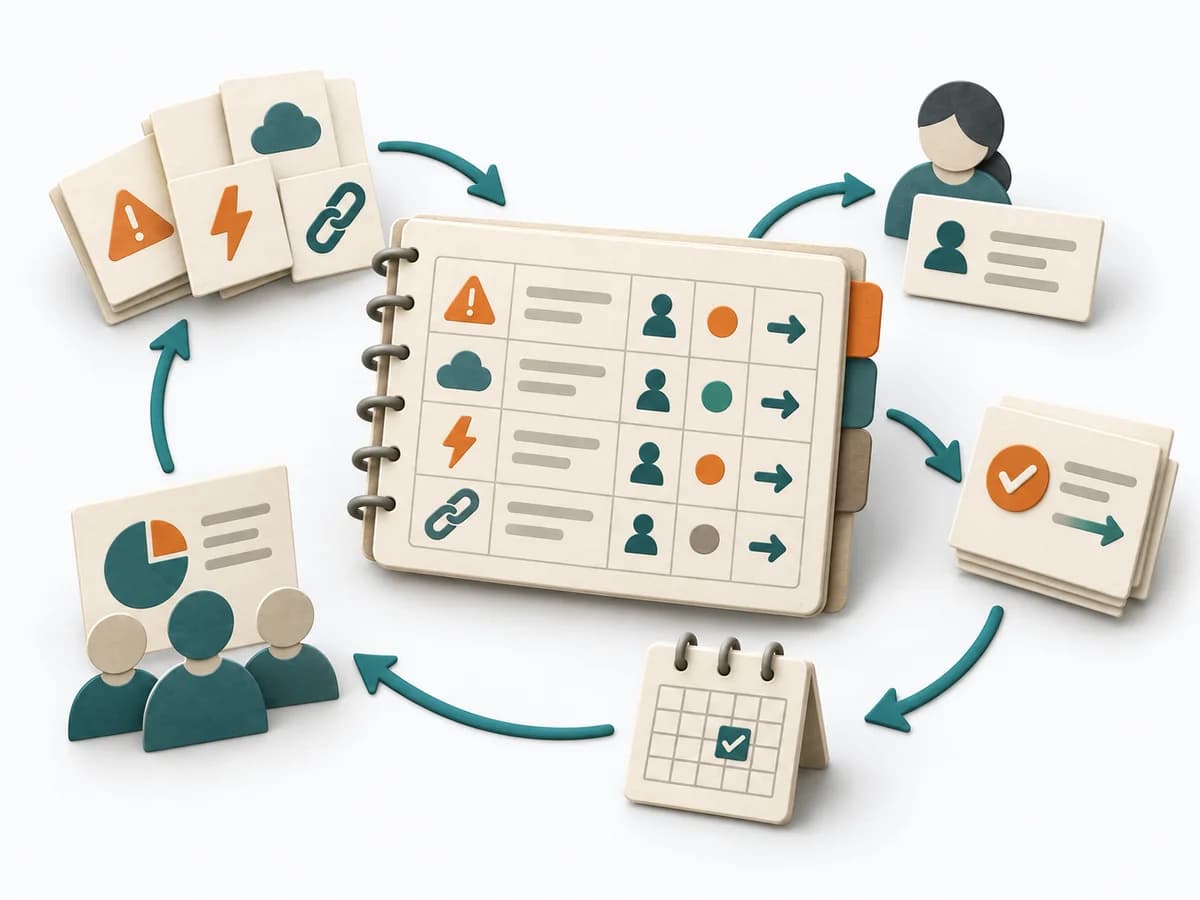
The Scrum Team inspects people, interactions, processes, tools, and the Definition of Done, then agrees on a few testable improvements.
Fictional example
Structured board with a blank workspace and fictional example view.
Fictional: offline cases unclear
Definition of Done does not visibly cover returns without network.
Fictional: handoffs lack acceptance note
Support and Development repeat questions.
Fictional: add offline checklist
Lea adds and tests one case by Sprint 12.
Frame
Goal
Recall the Sprint Goal, period, and conditions for a safe conversation.
Inputs for this step
Actions
Output
Sprint Goal, period
Sprint Goal, period
Quality check
Is the step concrete, safe, and actionable?
Pitfall
The discussion stays generic or blames people. Return to observable work, effects, and the next check.
Timing: 10–20 minutes
Inspect
Goal
Collect concrete observations about people, interactions, processes, tools, and the Definition of Done.
Inputs for this step
Actions
Output
Observations
Observations
Quality check
Is the step concrete, safe, and actionable?
Pitfall
The discussion stays generic or blames people. Return to observable work, effects, and the next check.
Timing: 10–20 minutes
Learn
Goal
Cluster patterns, ask about conditions, and value multiple perspectives without blame.
Inputs for this step
Actions
Output
Patterns and learnings
Patterns and learnings
Quality check
Is the step concrete, safe, and actionable?
Pitfall
The discussion stays generic or blames people. Return to observable work, effects, and the next check.
Timing: 10–20 minutes
Improve
Goal
Choose a few actions for the next Sprint with an owner, Definition of Done, and evidence of effect.
Inputs for this step
Actions
Output
Improvement plan
Improvement plan
Quality check
Is the step concrete, safe, and actionable?
Pitfall
The discussion stays generic or blames people. Return to observable work, effects, and the next check.
Timing: 10–20 minutes
Follow-up
Goal
Prepare a clear follow-up review.
Inputs for this step
Actions
Output
Agreed follow-up plan
Action · owner · review date · signal · record location
Quality check
Are owner, review date and effect signal clearly agreed?
Pitfall
The action is completed but its effect is not inspected. Carry the review date into the next retrospective.
Timing: 5–10 minutes to agree follow-up
What comes out at the end
Sketch: what the artifact looks like
Sprint retrospective record with observed conditions, patterns, a few improvement actions, owners, an action Definition of Done, and a review date in the next Sprint.
Keep date, period, and owner on the artifact.
Plan purpose, period, and the next work block.
To be confirmed
To be confirmed
Whole flow Time: In one session
Complete this worksheet on paper or in your own document during the work.
...
...
...
Learning over blame ...
Expected artifact: Sprint Goal, period
Sprint Goal, period
Entry:
...
Expected artifact: Observations
Observations
Entry:
...
Expected artifact: Patterns and learnings
Patterns and learnings
Entry:
...
Expected artifact: Improvement plan
Improvement plan
Entry:
...
Expected artifact: Agreed follow-up plan
Action · owner · review date · signal · record location
Entry:
...
...
Method guide: https://methodatlas.meierhoff-systems.de/en/methods/sprint-retrospective/run-sheet
Concrete filled scenario, fictional example
Fictional example for orientation. Counts and timings describe this case and are not universal requirements.
Concrete filled scenario, fictional example
Sprint Goal: Enable online return for three device types.
Observation: The Definition of Done was unclear for offline cases. Pattern: Support to Development handoffs lacked an acceptance note. Action: Lea adds an offline checklist by Sprint 12; done means one tested case in review. Check: Inspect questions and rework next Sprint.
Recognize symptoms and steer against them
Quick overview, the full text is in the matching phase in the flow
The discussion stays generic or blames people.
Return to observable work, effects, and the next check.
The discussion stays generic or blames people.
Return to observable work, effects, and the next check.
The discussion stays generic or blames people.
Return to observable work, effects, and the next check.
The discussion stays generic or blames people.
Return to observable work, effects, and the next check.
The action is completed but its effect is not inspected.
Carry the review date into the next retrospective.
When to pause, resolve prerequisites, or choose another approach
Go to the profile for purpose, similar methods, and sources or continue to the next method in the catalog.