Complete firstBounded subject
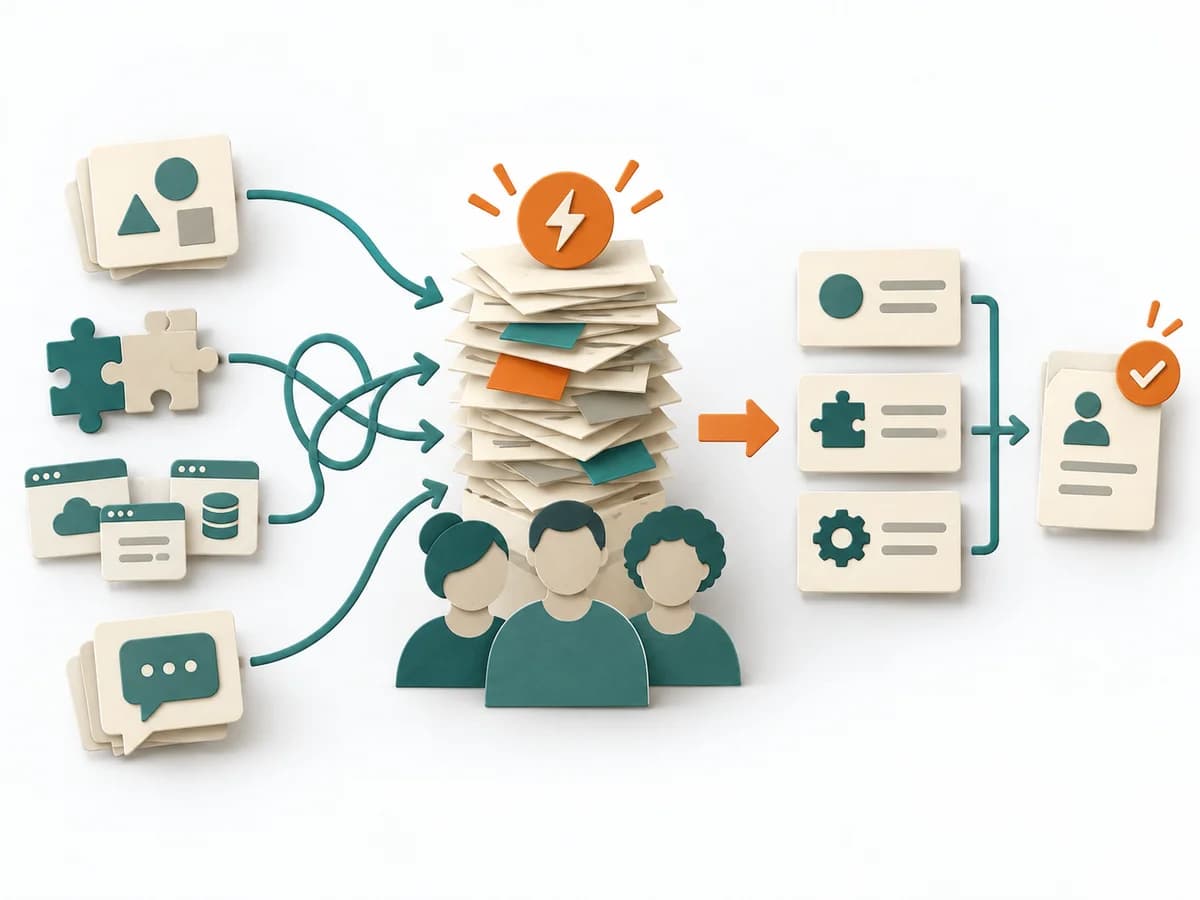
The scope and purpose of Team API are stated as a concrete question.
Without scope, team API becomes arbitrary.
A practical method guide: clarify prerequisites and materials, understand the complete process, and look up outputs, pitfalls, and stop criteria.
What needs to be finished first
The scope and purpose of Team API are stated as a concrete question.
Team mission and services, dependencies and contact routes, work and support data and domain decision makers are available.
What needs to be ready before start
Team mission and services, dependencies and contact routes, work and support data, shared workspace, source links, and decision log.
Whole team · team lead · key consuming teams
Collect Team mission and services, dependencies and contact routes, work and support data in advance and mark open assumptions.
90 minutes initially; 30-minute review
Prepare explicit team contract covering mission, ownership, interfaces, and working preferences visibly and calibrate assessment terms before starting.
The one question this method answers
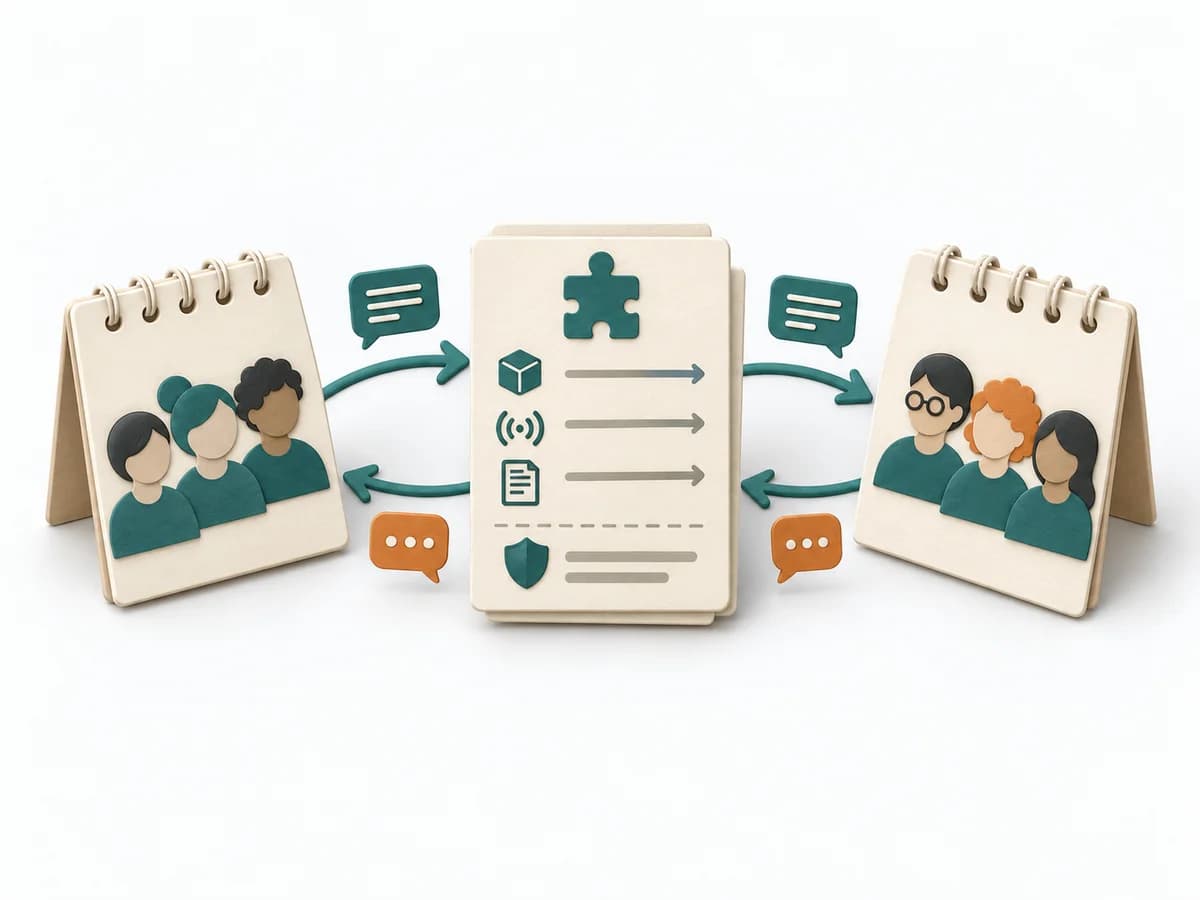
What must other teams know to work effectively with this team with minimal disruption?
Phases with goal, actions, output and pitfall
A Team API describes how others work with a team. It covers owned services, communication routes, work preferences, and known constraints and is maintained jointly.
Fictional worked example
explicit team contract covering mission, ownership, interfaces, and working preferences as a precise working structure with a fictional example.
Purpose · outcomes · ownership
Secure self-service deployments; deployment API.
Need · mode · contact
X-as-a-Service; office hour for new integration.
Support · response · preference
#platform-help; P1 via pager.
Out of scope · review date · owner
No app data migration; review 15 October.
The example demonstrates the domain logic of Team API; worksheets remain blank.
Mission
Goal
Produce ownership profile so the core question “What must other teams know to work effectively with this team with minimal disruption?” can be answered with stronger support.
Inputs for this step
Actions
Output
ownership profile
ownership profile · source · uncertainty · next decision
Quality check
Are responsibilities expressed as services or outcomes?
Pitfall
The team API becomes an org chart or promises support the team cannot sustain. Test against real consumer situations, clarify ownership and response routes, and remove unsustainable promises.
Timing: 10–20 minutes
Interfaces
Goal
Produce interaction catalogue so the core question “What must other teams know to work effectively with this team with minimal disruption?” can be answered with stronger support.
Inputs for this step
Actions
Output
interaction catalogue
interaction catalogue · source · uncertainty · next decision
Quality check
Is there one clear route for every need?
Pitfall
The team API becomes an org chart or promises support the team cannot sustain. Test against real consumer situations, clarify ownership and response routes, and remove unsustainable promises.
Timing: 10–20 minutes
Ways of working
Goal
Produce collaboration rules so the core question “What must other teams know to work effectively with this team with minimal disruption?” can be answered with stronger support.
Inputs for this step
Actions
Output
collaboration rules
collaboration rules · source · uncertainty · next decision
Quality check
Are commitments realistic and measurable?
Pitfall
The team API becomes an org chart or promises support the team cannot sustain. Test against real consumer situations, clarify ownership and response routes, and remove unsustainable promises.
Timing: 10–20 minutes
Consumer review
Goal
Produce validated team API so the core question “What must other teams know to work effectively with this team with minimal disruption?” can be answered with stronger support.
Inputs for this step
Actions
Output
validated team API
validated team API · source · uncertainty · next decision
Quality check
Can consumers find ownership and contact without asking?
Pitfall
The team API becomes an org chart or promises support the team cannot sustain. Test against real consumer situations, clarify ownership and response routes, and remove unsustainable promises.
Timing: 10–20 minutes
What comes out at the end
Sketch: what the artifact looks like
Versioned team API with date, sources, owners, and next review.
Retain date, source, assumption state, and decision for every version of team API.
Plan Team API around its domain steps and the concrete decision question.
To be confirmed
To be confirmed
Establish and review the practice Time: 90 minutes initially; 30-minute review
Complete this worksheet on paper or in your own document during the work.
Purpose · outcomes · ownership
...
Need · mode · contact
...
Support · response · preference
...
Out of scope · review date · owner
...
Enter only real input, sources, and decisions.
Team Topologies: Team API template
Expected artifact: ownership profile
ownership profile · source · uncertainty · next decision
Entry:
...
Expected artifact: interaction catalogue
interaction catalogue · source · uncertainty · next decision
Entry:
...
Expected artifact: collaboration rules
collaboration rules · source · uncertainty · next decision
Entry:
...
Expected artifact: validated team API
validated team API · source · uncertainty · next decision
Entry:
...
...
Method guide: https://methodatlas.meierhoff-systems.de/en/methods/team-api/run-sheet
Concrete filled scenario, fictional example
Fictional example for orientation. Counts and timings describe this case and are not universal requirements.
Concrete filled scenario, fictional example
Mission: secure self-service deployments. Ownership: deployment API and golden path. Interaction: X-as-a-Service; 30-minute office hour for new integrations. Support: #platform-help, P1 via pager. Known boundary: no application-specific data migrations.
Recognize symptoms and steer against them
Quick overview, the full text is in the matching phase in the flow
The team API becomes an org chart or promises support the team cannot sustain.
Test against real consumer situations, clarify ownership and response routes, and remove unsustainable promises.
The team API becomes an org chart or promises support the team cannot sustain.
Test against real consumer situations, clarify ownership and response routes, and remove unsustainable promises.
The team API becomes an org chart or promises support the team cannot sustain.
Test against real consumer situations, clarify ownership and response routes, and remove unsustainable promises.
The team API becomes an org chart or promises support the team cannot sustain.
Test against real consumer situations, clarify ownership and response routes, and remove unsustainable promises.
When to pause, resolve prerequisites, or choose another approach
Go to the profile for purpose, similar methods, and sources or continue to the next method in the catalog.