Complete firstBounded subject
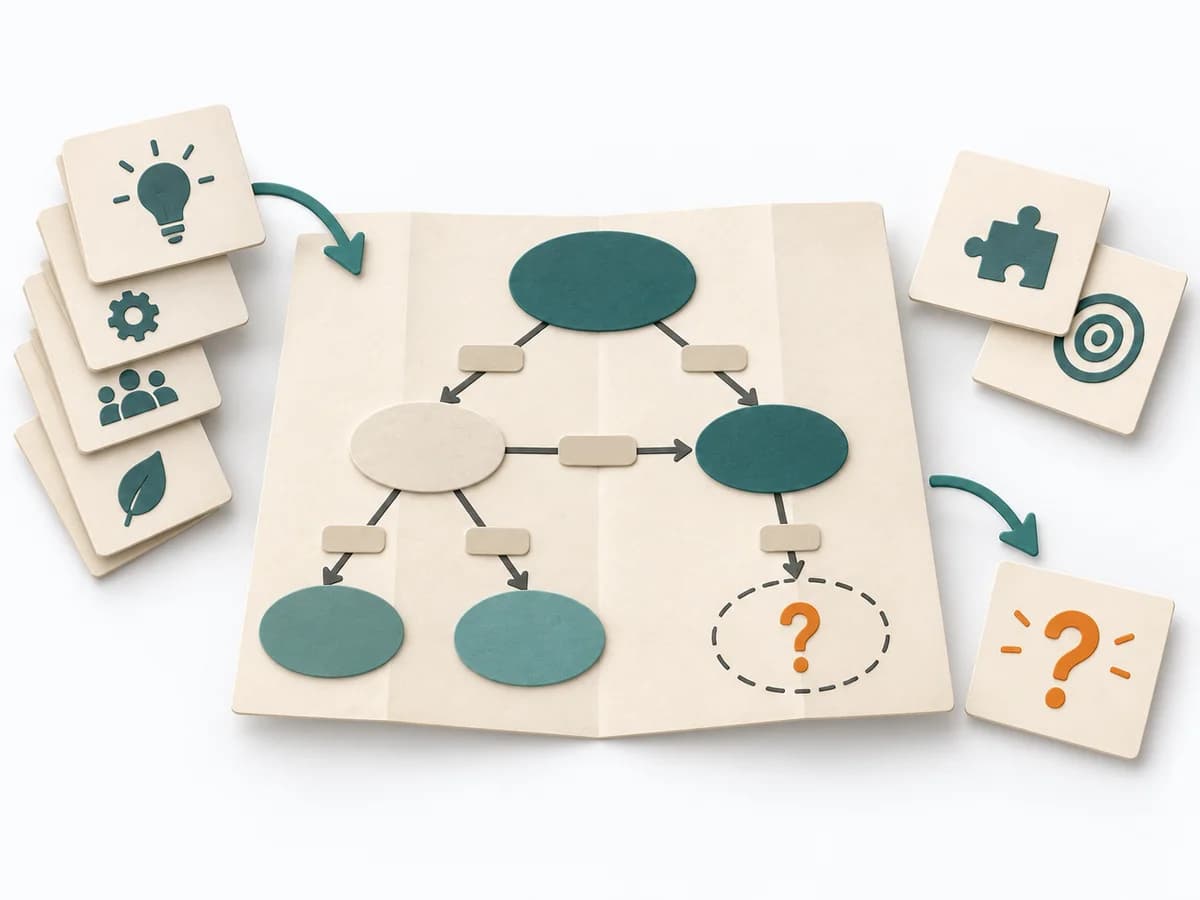
The scope and purpose of Property Graph Schema Design are stated as a concrete question.
Without scope, property graph schema becomes arbitrary.
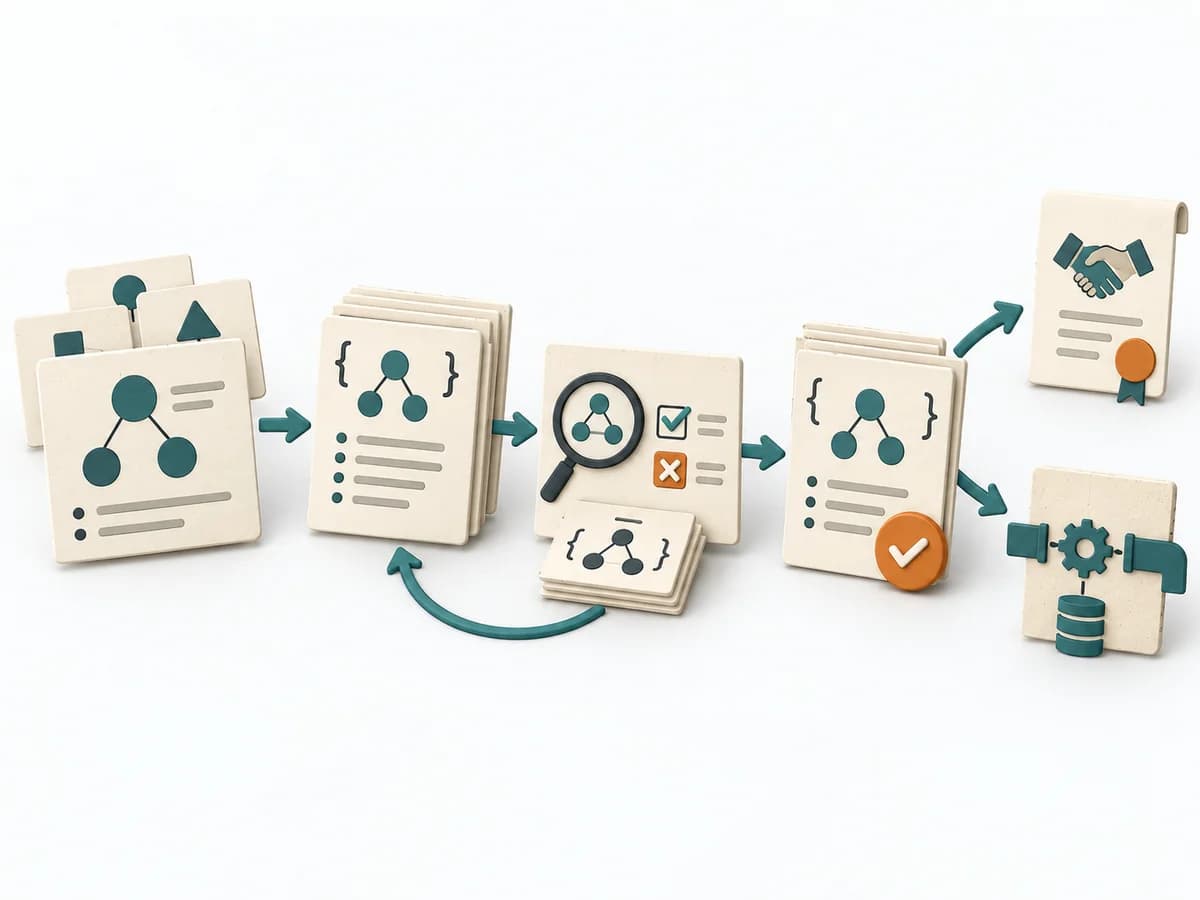
A practical method guide: clarify prerequisites and materials, understand the complete process, and look up outputs, pitfalls, and stop criteria.
What needs to be finished first
The scope and purpose of Property Graph Schema Design are stated as a concrete question.
prioritised queries, sample data and identity rules, volume and change assumptions and domain decision makers are available.
What needs to be ready before start
prioritised queries, sample data and identity rules, volume and change assumptions, shared workspace, source links, and decision log.
Domain expert · graph engineer · query consumer · data steward
Collect prioritised queries, sample data and identity rules, volume and change assumptions in advance and mark open assumptions.
2 × 90 minutes plus query testing
Prepare query-driven modelling of nodes, relationships, properties, and constraints visibly and calibrate assessment terms before starting.
The one question this method answers
Which graph schema answers the key queries correctly, understandably, and efficiently?
Phases with goal, actions, output and pitfall
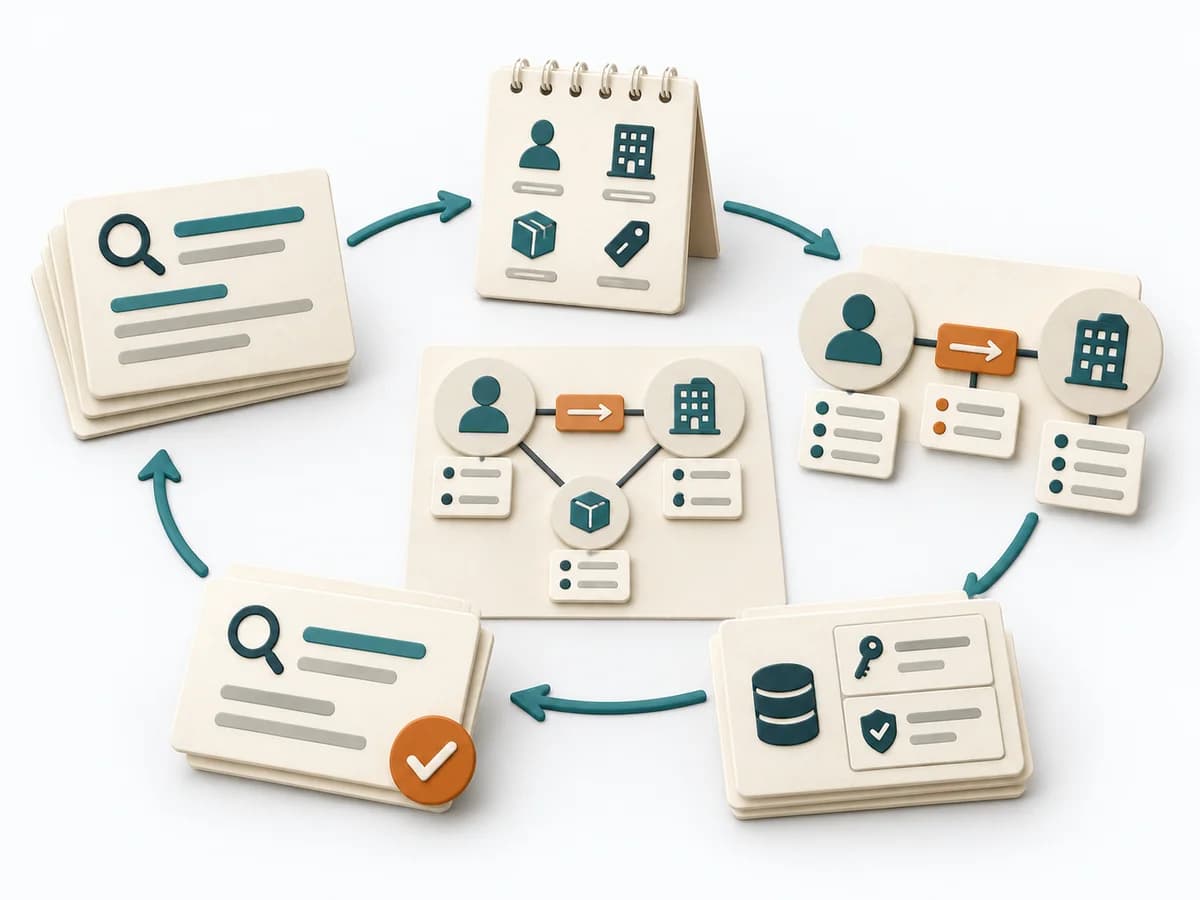
Property graph models are designed from domain queries and traversal paths. Identity, direction, cardinality, constraints, and temporal change are tested explicitly.
Fictional worked example
query-driven modelling of nodes, relationships, properties, and constraints as a precise working structure with a fictional example.
Question · expected answer · volume
Open actions + owner org per project.
Nodes · relationships · direction
Project-HAS_ACTION→Action-OWNED_BY→Person.
ID · constraint · cardinality
Action.id UNIQUE; one active owner.
Index · traversal · result
Index Project.id; bounded traversal.
The example demonstrates the domain logic of Property Graph Schema Design; worksheets remain blank.
Prioritise queries
Goal
Produce query catalogue so the core question “Which graph schema answers the key queries correctly, understandably, and efficiently?” can be answered with stronger support.
Inputs for this step
Actions
Output
query catalogue
query catalogue · source · uncertainty · next decision
Quality check
Are read and write patterns included?
Pitfall
Tables are copied one-to-one as nodes and domain relationships disappear into ID properties. Start from queries and domain statements, make identity explicit, and profile real Cypher queries.
Timing: 10–20 minutes
Model graph
Goal
Produce graph schema so the core question “Which graph schema answers the key queries correctly, understandably, and efficiently?” can be answered with stronger support.
Inputs for this step
Actions
Output
graph schema
graph schema · source · uncertainty · next decision
Quality check
Do relationships express domain verbs?
Pitfall
Tables are copied one-to-one as nodes and domain relationships disappear into ID properties. Start from queries and domain statements, make identity explicit, and profile real Cypher queries.
Timing: 10–20 minutes
Define integrity
Goal
Produce constraint set so the core question “Which graph schema answers the key queries correctly, understandably, and efficiently?” can be answered with stronger support.
Inputs for this step
Actions
Output
constraint set
constraint set · source · uncertainty · next decision
Quality check
Do constraints prevent invalid core data?
Pitfall
Tables are copied one-to-one as nodes and domain relationships disappear into ID properties. Start from queries and domain statements, make identity explicit, and profile real Cypher queries.
Timing: 10–20 minutes
Test queries
Goal
Produce validated schema so the core question “Which graph schema answers the key queries correctly, understandably, and efficiently?” can be answered with stronger support.
Inputs for this step
Actions
Output
validated schema
validated schema · source · uncertainty · next decision
Quality check
Are result and access path correct?
Pitfall
Tables are copied one-to-one as nodes and domain relationships disappear into ID properties. Start from queries and domain statements, make identity explicit, and profile real Cypher queries.
Timing: 10–20 minutes
What comes out at the end
Sketch: what the artifact looks like
Versioned property graph schema with date, sources, owners, and next review.
Retain date, source, assumption state, and decision for every version of property graph schema.
Plan Property Graph Schema Design around its domain steps and the concrete decision question.
To be confirmed
To be confirmed
Full workshop Time: 2 × 90 minutes plus query testing
Complete this worksheet on paper or in your own document during the work.
Question · expected answer · volume
...
Nodes · relationships · direction
...
ID · constraint · cardinality
...
Index · traversal · result
...
Enter only real input, sources, and decisions.
Neo4j Graph Data Modeling Guidelines
Expected artifact: query catalogue
query catalogue · source · uncertainty · next decision
Entry:
...
Expected artifact: graph schema
graph schema · source · uncertainty · next decision
Entry:
...
Expected artifact: constraint set
constraint set · source · uncertainty · next decision
Entry:
...
Expected artifact: validated schema
validated schema · source · uncertainty · next decision
Entry:
...
...
Method guide: https://methodatlas.meierhoff-systems.de/en/methods/property-graph-schema-design/run-sheet
Concrete filled scenario, fictional example
Fictional example for orientation. Counts and timings describe this case and are not universal requirements.
Concrete filled scenario, fictional example
Query: open actions for a project with owner organisation. Nodes: Project, Action, Person, Organization. Relationships: (:Project)-[:HAS_ACTION]->(:Action)-[:OWNED_BY]->(:Person)-[:MEMBER_OF {validFrom,validTo}]->(:Organization). Constraint: Action.id unique. Query profile tests index on Project.id and traversal.
Recognize symptoms and steer against them
Quick overview, the full text is in the matching phase in the flow
Tables are copied one-to-one as nodes and domain relationships disappear into ID properties.
Start from queries and domain statements, make identity explicit, and profile real Cypher queries.
Tables are copied one-to-one as nodes and domain relationships disappear into ID properties.
Start from queries and domain statements, make identity explicit, and profile real Cypher queries.
Tables are copied one-to-one as nodes and domain relationships disappear into ID properties.
Start from queries and domain statements, make identity explicit, and profile real Cypher queries.
Tables are copied one-to-one as nodes and domain relationships disappear into ID properties.
Start from queries and domain statements, make identity explicit, and profile real Cypher queries.
When to pause, resolve prerequisites, or choose another approach
Go to the profile for purpose, similar methods, and sources or continue to the next method in the catalog.