View methods side by side.
Choose up to four methods. Add them using the search and share the comparison by copying its link.
| Criterion | 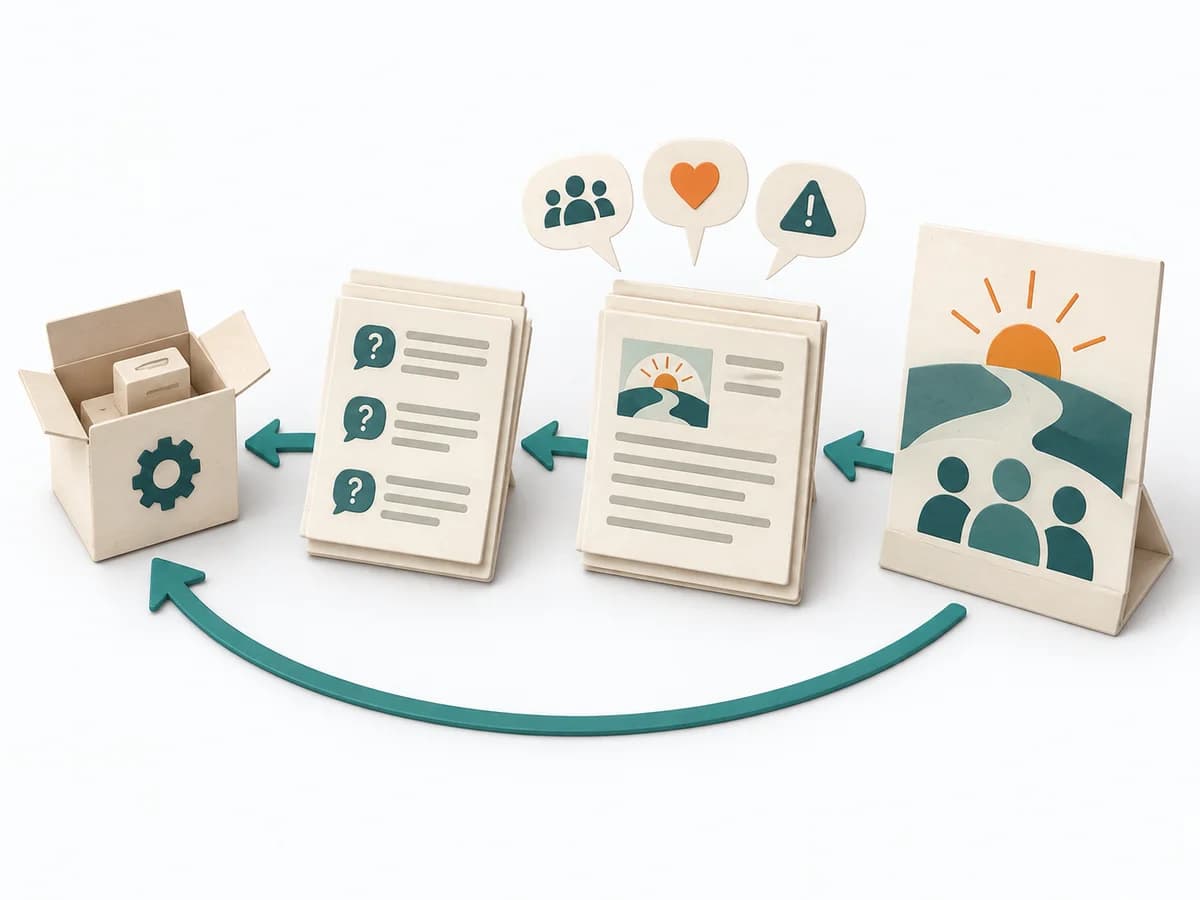 Product Discovery Working Backwards |  Operations Fault Tree Analysis |  Facilitation Stakeholder Salience Model |
|---|---|---|---|
Purposedifferent | When the target state and benefit need to be clear first, it thinks backward from the desired outcome into the product logic. It sharpens vision, objections, and value proposition before elaboration. | For a critical top event with several possible triggers, the method logically models failure paths. It makes visible which combinations of conditions can lead to damage. | When stakeholders appear to matter very differently, the Stakeholder Salience Model rates their actual priority through power, legitimacy, and urgency. It turns individual contributions into a visible selection. The result is captured as a Salience diagram and a class-based strategy. |
Complexitydifferent | Medium | High | Medium |
Timedifferent | 4-8 h, mehrere Iterationen | 2-6 h | 60-90 min |
Participantsdifferent | 2-6 | 3-8 | 3-6 |
Formatdifferent | Workshop + async | Workshop + async | Workshop |
Outputdifferent | Future Press Release, FAQ, Vision Statement | Fault Tree, Critical Paths, Cause Hypotheses, Control Actions | Salience Diagram, Strategy per Class |
Tagsno overlap | VisionNarrativeAlignment | RiskRoot causeSafety | StakeholdersFacilitationAlignmentGovernance |
Often compared together
Methods with strong topical overlap with the current selection, not yet in the comparison.