View methods side by side.
Choose up to four methods. Add them using the search and share the comparison by copying its link.
| Criterion | 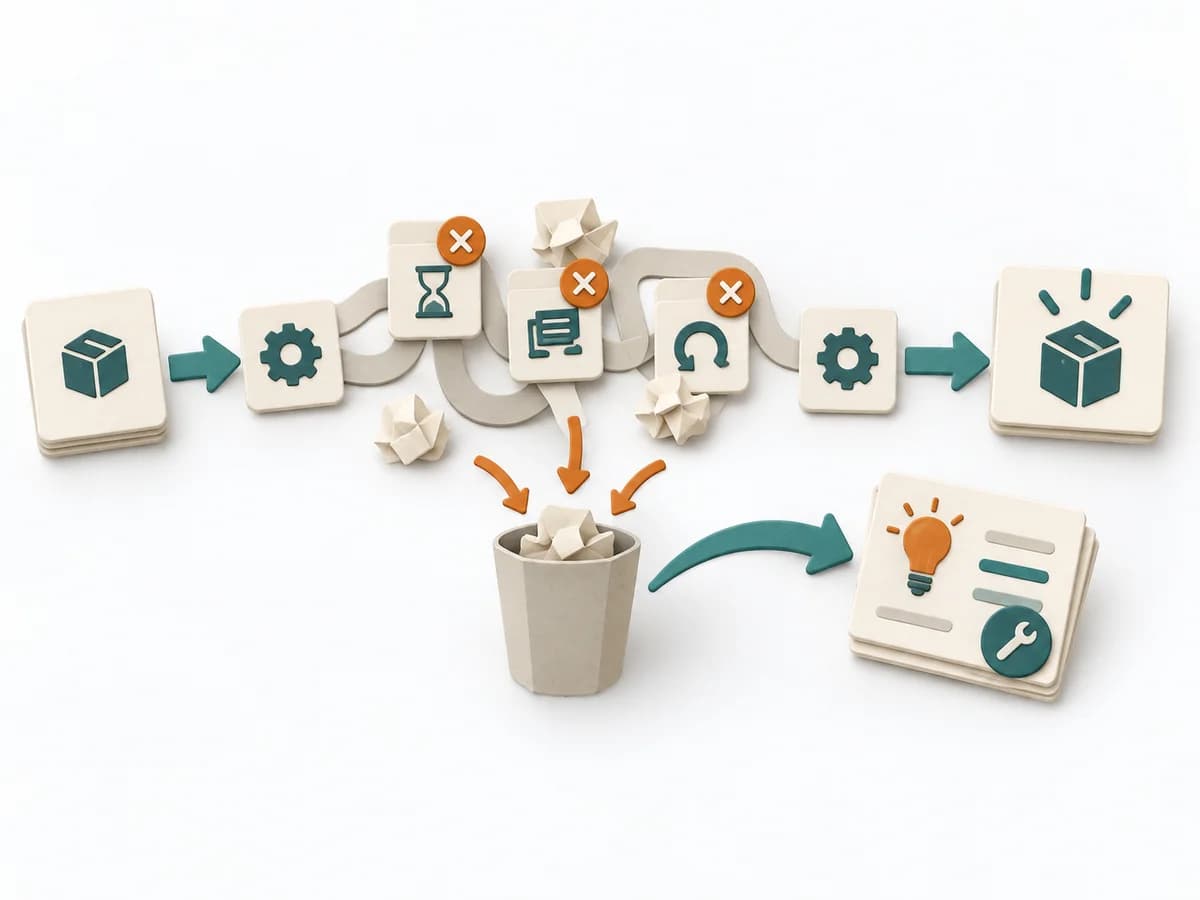 Operations Waste Analysis | 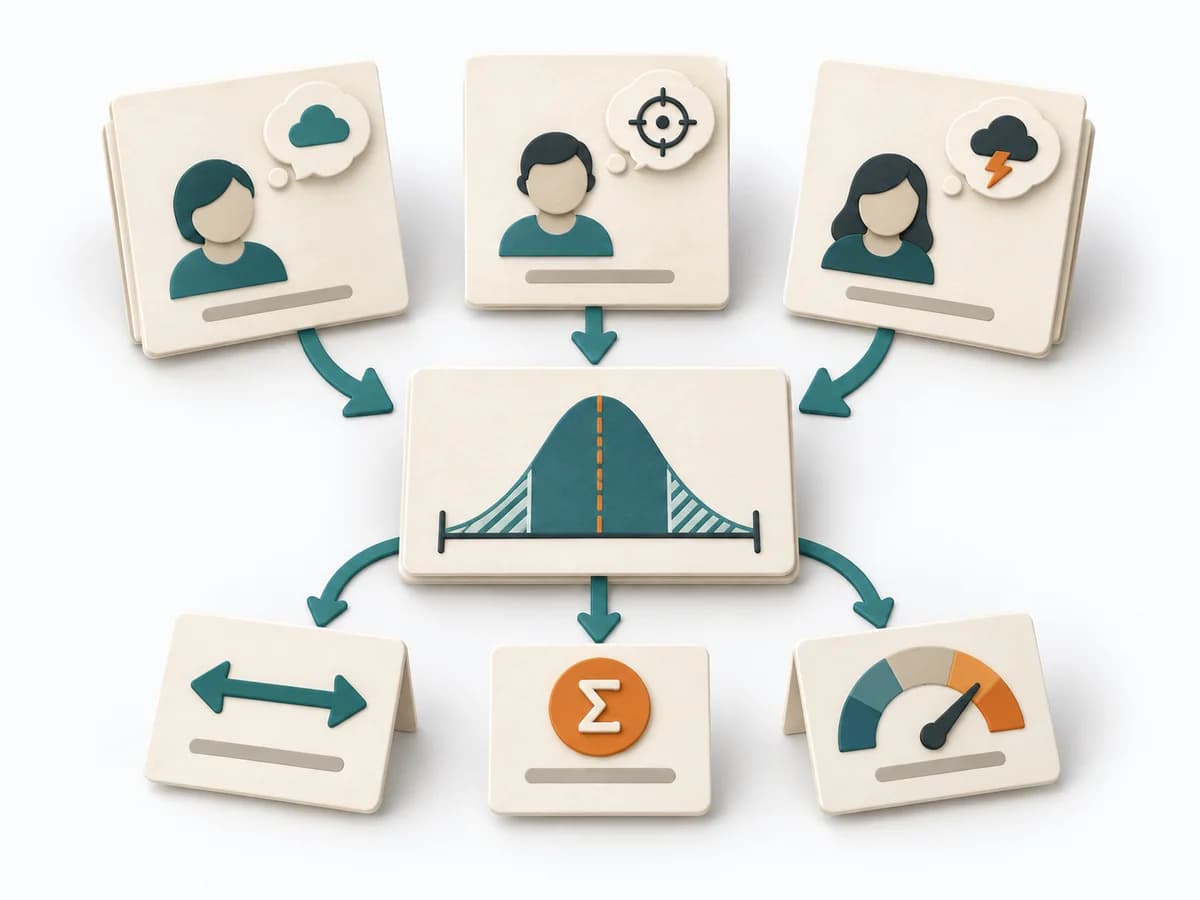 Decision Making Three-Point Estimation |  Systems Thinking Leverage Points |
|---|---|---|---|
Purposedifferent | For a process that keeps people busy but creates little value, the method exposes waste. It directs attention to unnecessary movement, waiting times, rework, and overdelivery. | A single estimate for effort, time, or risk often looks too smooth for the real uncertainty behind it. It separates options, evaluation criteria, and open risks. The result is captured as a Three-Point Estimate, Risk Range, and Assumption Notes. | Leverage Points show exactly where interventions in a system produce a disproportionate effect. It draws relationships, patterns, and feedback loops. The result is captured as a leverage map and action strategy. |
Complexitydifferent | Low | Medium | High |
Timedifferent | 45-120 min | 10-30 min je Item | Half day |
Participantsdifferent | 2-8 | 1-8 | 3-12 |
Formatdifferent | Workshop | Workshop + async | Workshop |
Outputdifferent | Waste Map, Prioritized Waste, Improvement Backlog | Three-Point Estimate, Risk Range, Assumption Notes | Leverage Map, Action Strategy |
Tagsno overlap | WasteLeanProcess improvement | EstimationUncertaintyForecasting | Systems thinkingChangeStrategy |
Often compared together
Methods with strong topical overlap with the current selection, not yet in the comparison.