View methods side by side.
Choose up to four methods. Add them using the search and share the comparison by copying its link.
| Criterion | 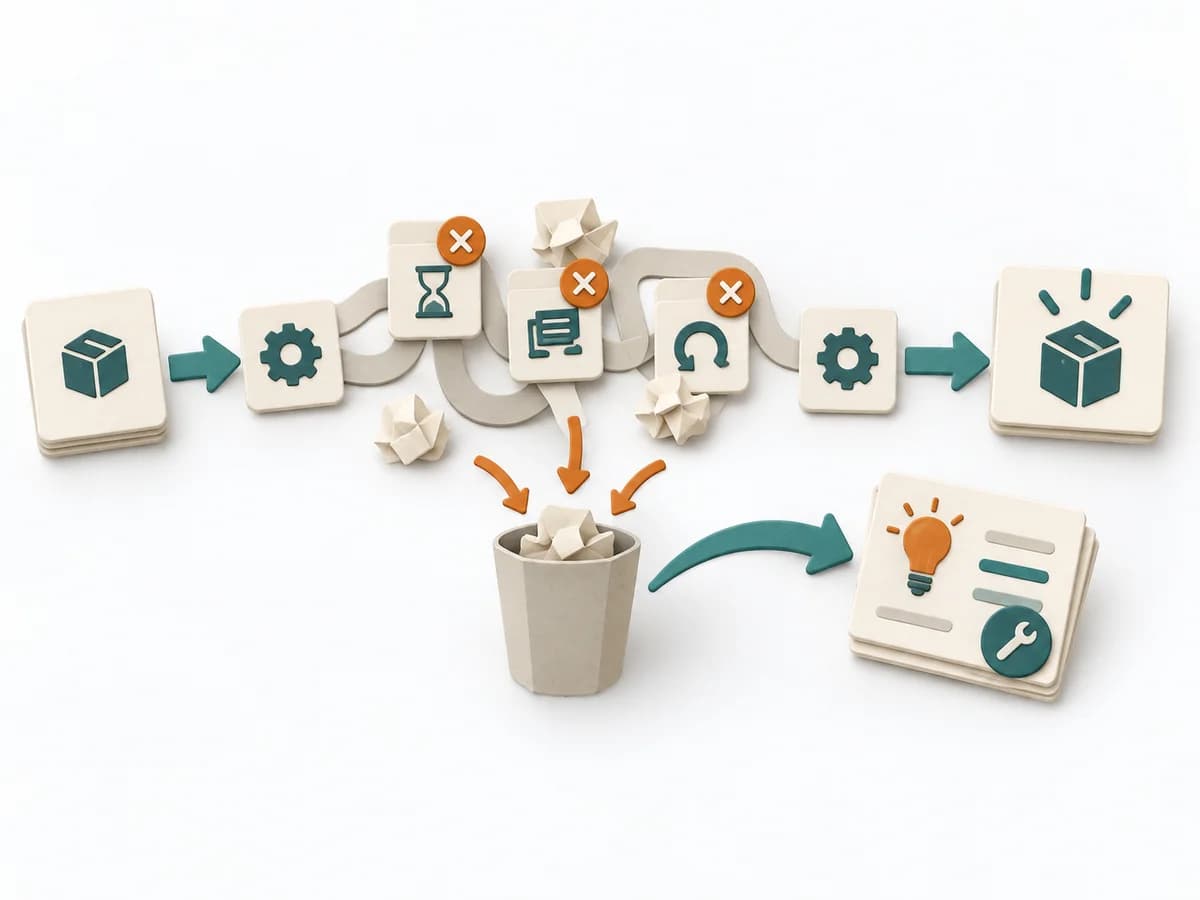 Operations Waste Analysis |  Systems Thinking Leverage Points |  Facilitation Power Interest Grid |
|---|---|---|---|
Purposedifferent | For a process that keeps people busy but creates little value, the method exposes waste. It directs attention to unnecessary movement, waiting times, rework, and overdelivery. | Leverage Points show exactly where interventions in a system produce a disproportionate effect. It draws relationships, patterns, and feedback loops. The result is captured as a leverage map and action strategy. | When many stakeholders compete for attention at once, the Power Interest Grid sorts them by influence and stake. It turns individual contributions into a visible selection. The result is captured as a Power Interest Grid and a stakeholder-specific strategy. |
Complexitydifferent | Low | High | Low |
Timedifferent | 45-120 min | Half day | 30-60 min |
Participantsdifferent | 2-8 | 3-12 | 2-8 |
Formatsame | Workshop | Workshop | Workshop |
Outputdifferent | Waste Map, Prioritized Waste, Improvement Backlog | Leverage Map, Action Strategy | Power Interest Grid, Strategy per Stakeholder |
Tagsno overlap | WasteLeanProcess improvement | Systems thinkingChangeStrategy | StakeholdersFacilitationAlignmentPlanning |
Often compared together
Methods with strong topical overlap with the current selection, not yet in the comparison.