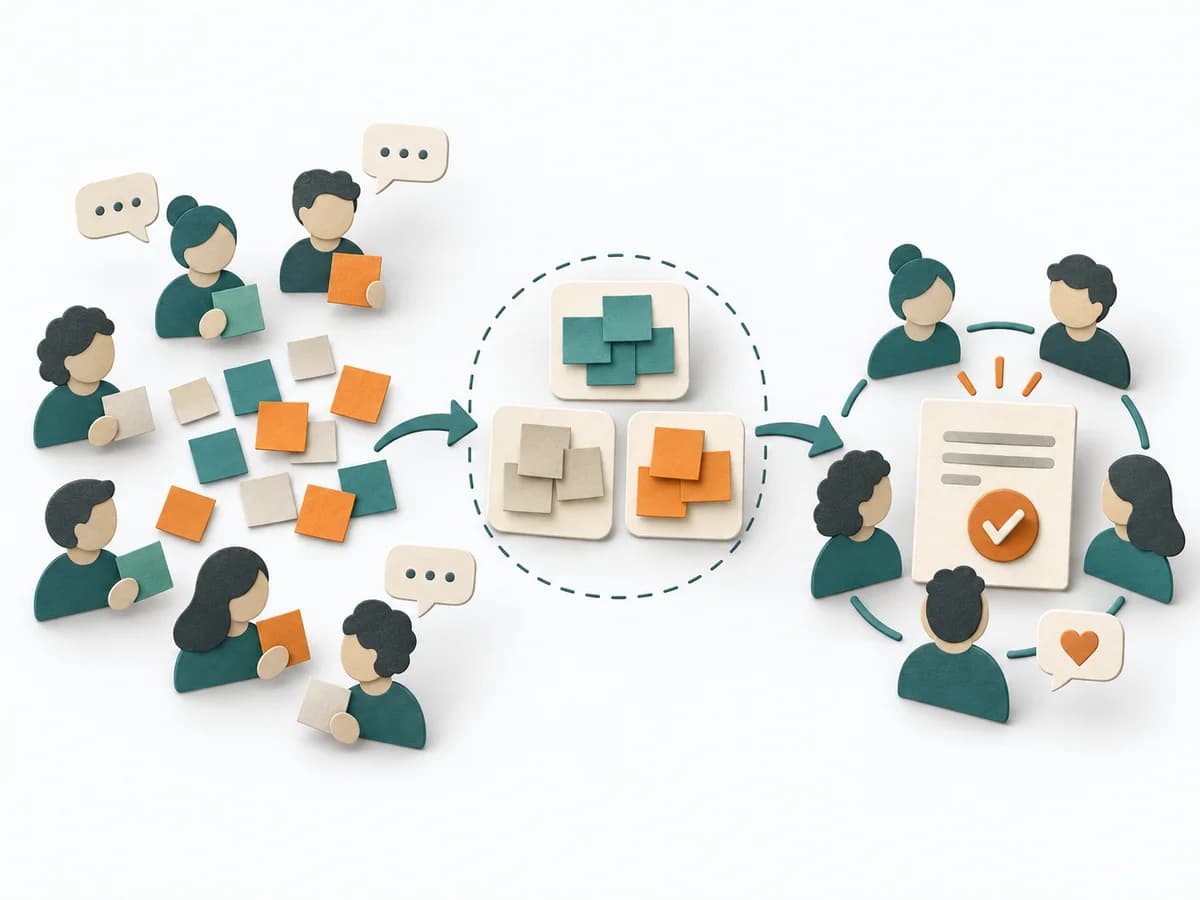
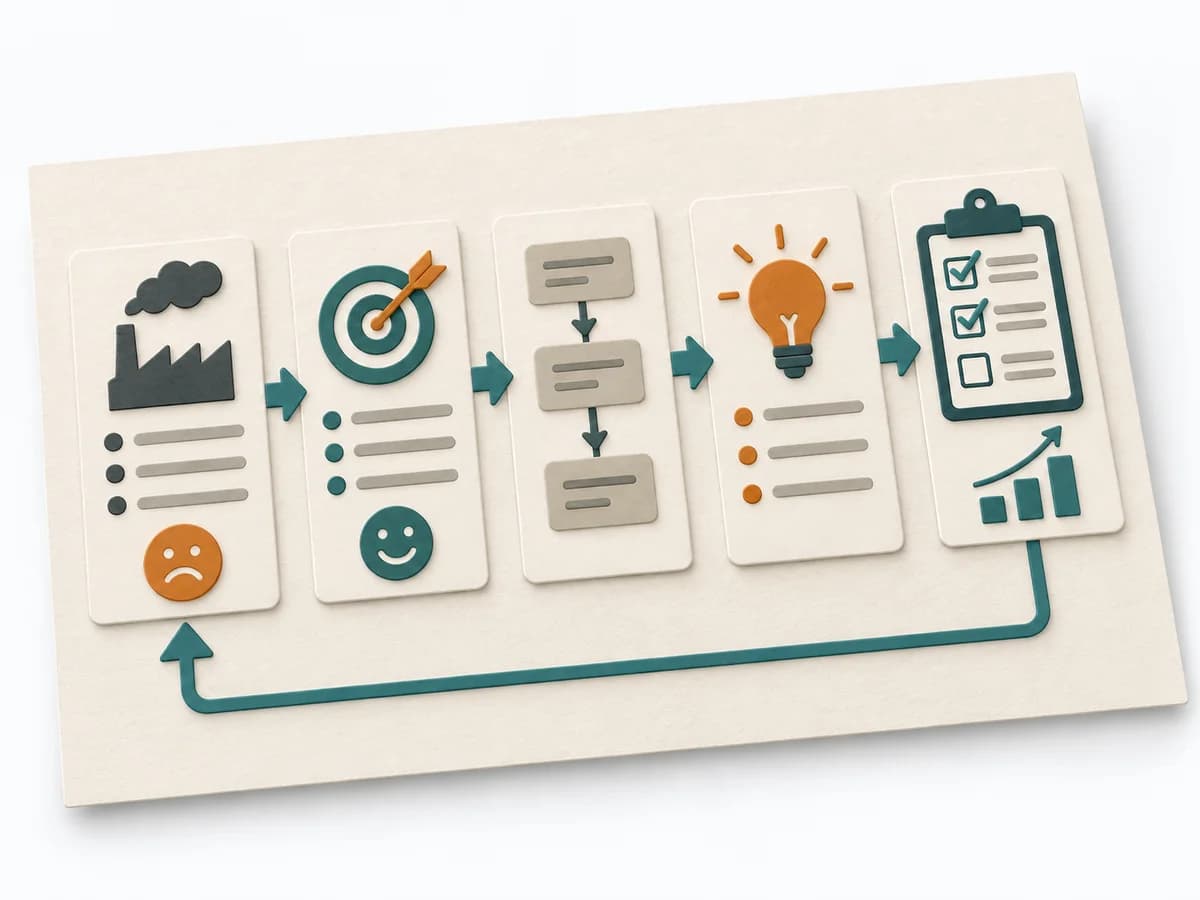
View methods side by side.
Choose up to four methods. Add them using the search and share the comparison by copying its link.
| Criterion | 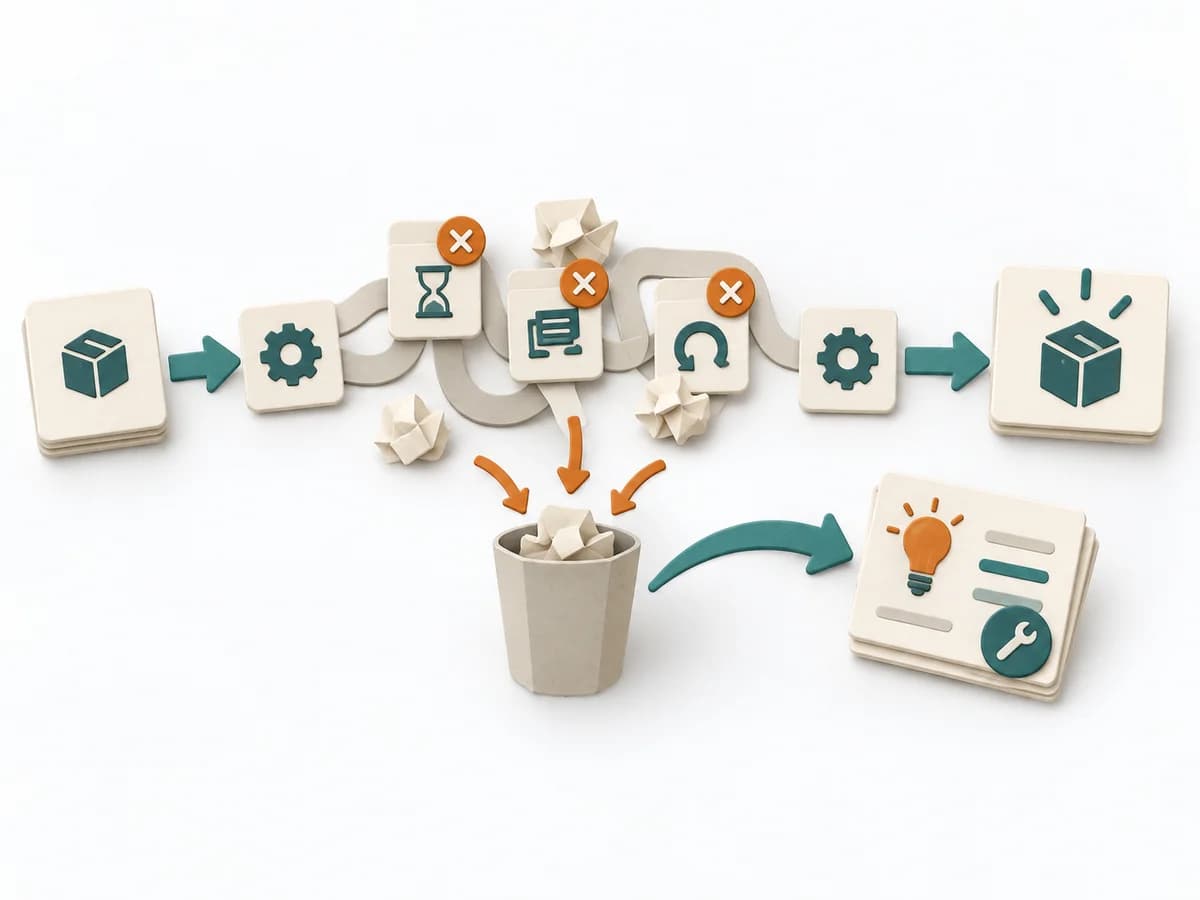 Operations Waste Analysis | 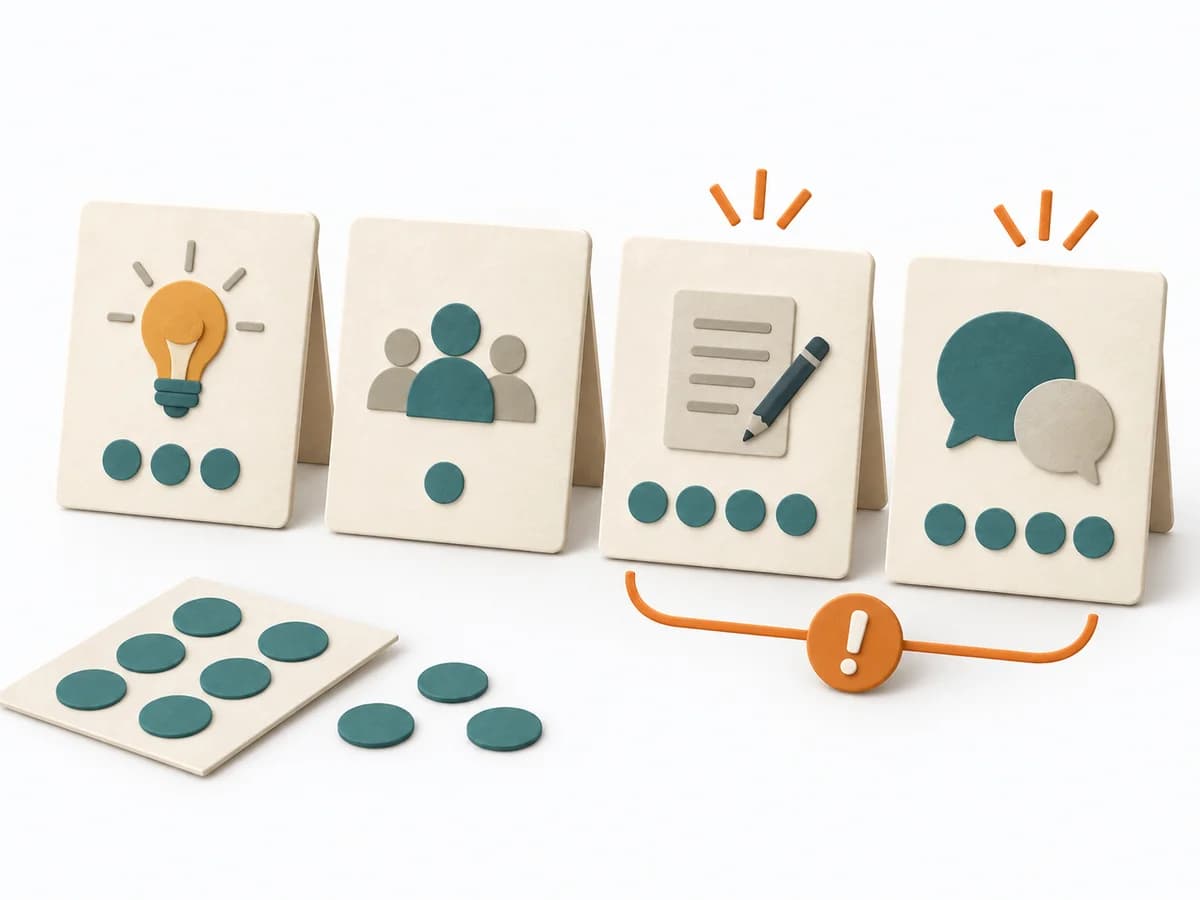 Facilitation Dot Voting | 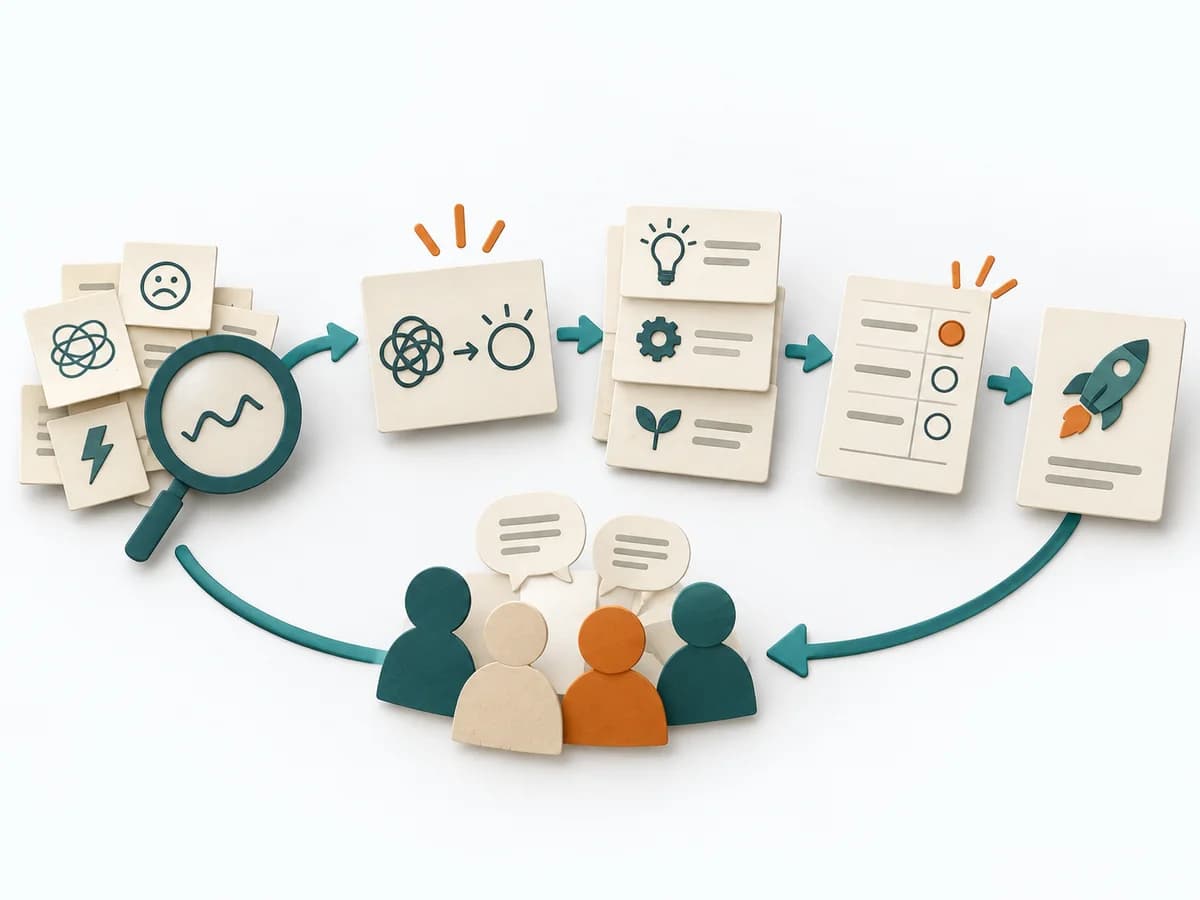 Facilitation Decision Jam |
|---|---|---|---|
Purposedifferent | For a process that keeps people busy but creates little value, the method exposes waste. It directs attention to unnecessary movement, waiting times, rework, and overdelivery. | When a workshop has produced too many options and the group needs to condense quickly, dot voting makes preferences visible in a short time. It bundles individual votes into a solid signal for the next selection. | When a decision is stuck, Decision Jam loosens the knot through structured separation of problem, idea, and selection. The format creates movement without jumping prematurely at the first seemingly elegant answer. |
Complexitysame | Low | Low | Low |
Timedifferent | 45-120 min | 5-15 min | 60-90 min |
Participantsdifferent | 2-8 | 3-20 | 4-10 |
Formatsame | Workshop | Workshop | Workshop |
Outputdifferent | Waste Map, Prioritized Waste, Improvement Backlog | Ranked list, Consensus signal, Shortlist | Problem Cluster, Prioritized Challenge, Experiment |
Tagsno overlap | WasteLeanProcess improvement | FacilitationVotingConsensusPrioritization | FacilitationDecisionProblem solvingWorkshop |
Often compared together
Methods with strong topical overlap with the current selection, not yet in the comparison.