View methods side by side.
Choose up to four methods. Add them using the search and share the comparison by copying its link.
| Criterion | 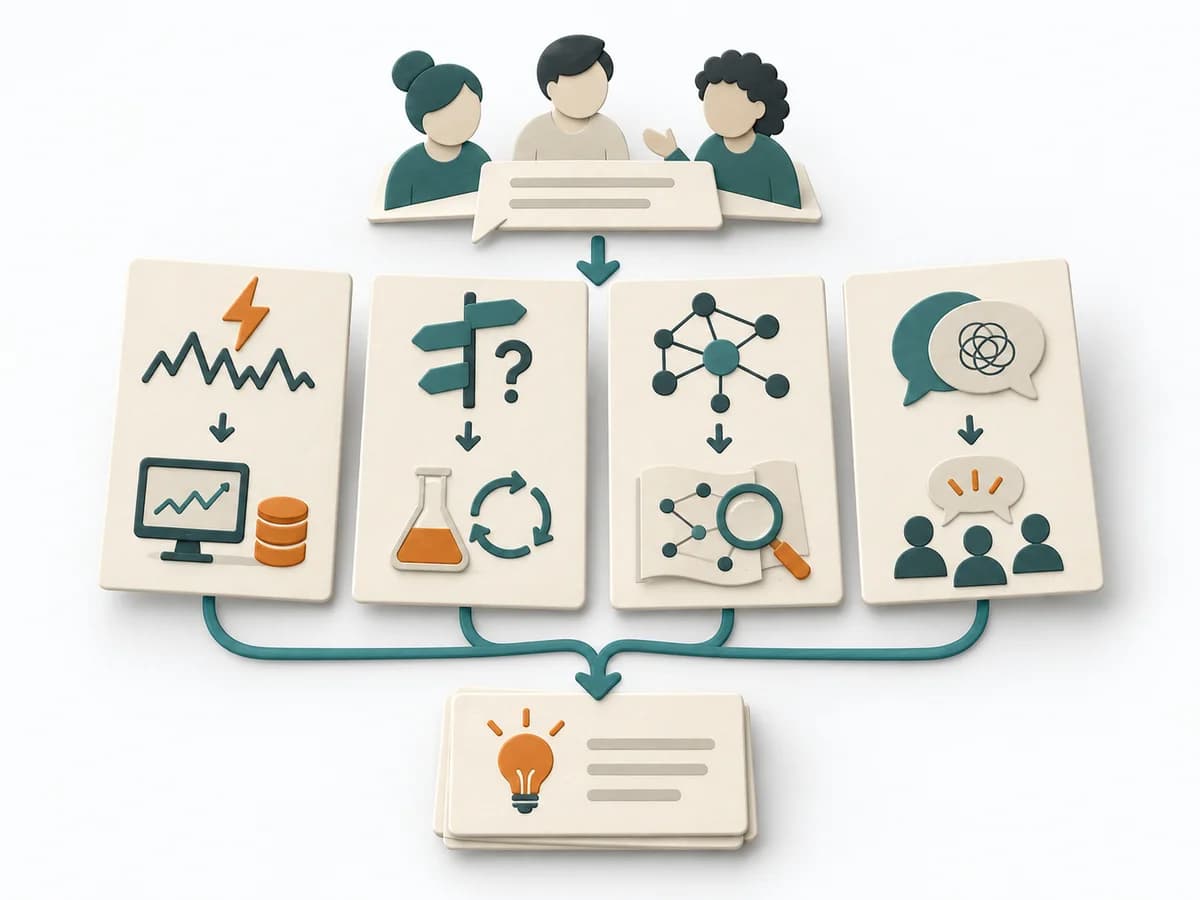 Systems Thinking VUCA Scan |  Architecture Architecture Decision Record |  Facilitation Stakeholder Salience Model |
|---|---|---|---|
Purposedifferent | The VUCA Scan helps read difficult situations more precisely. Instead of treating unclarity as generally complicated, the method separates fast change, missing knowledge, systemic entanglement, and ambiguous interpretation. | An ADR permanently records an architecture decision with context, trade-offs, and consequence. It creates continuity for later changes because the decision path stays traceable. | When stakeholders appear to matter very differently, the Stakeholder Salience Model rates their actual priority through power, legitimacy, and urgency. It turns individual contributions into a visible selection. The result is captured as a Salience diagram and a class-based strategy. |
Complexitydifferent | Low | Low | Medium |
Timedifferent | 30-90 min | 15-45 min | 60-90 min |
Participantsdifferent | 1-10 | 1-3 | 3-6 |
Formatdifferent | Workshop + async | Async | Workshop |
Outputdifferent | VUCA Map, Response Options, Signal and Learning Plan | ADR File, Decision Log, Rationale | Salience Diagram, Strategy per Class |
Tagsno overlap | SensemakingUncertaintyComplexityStrategyForesight | ArchitectureRationaleDocumentationGovernance | StakeholdersFacilitationAlignmentGovernance |
Often compared together
Methods with strong topical overlap with the current selection, not yet in the comparison.