View methods side by side.
Choose up to four methods. Add them using the search and share the comparison by copying its link.
| Criterion | 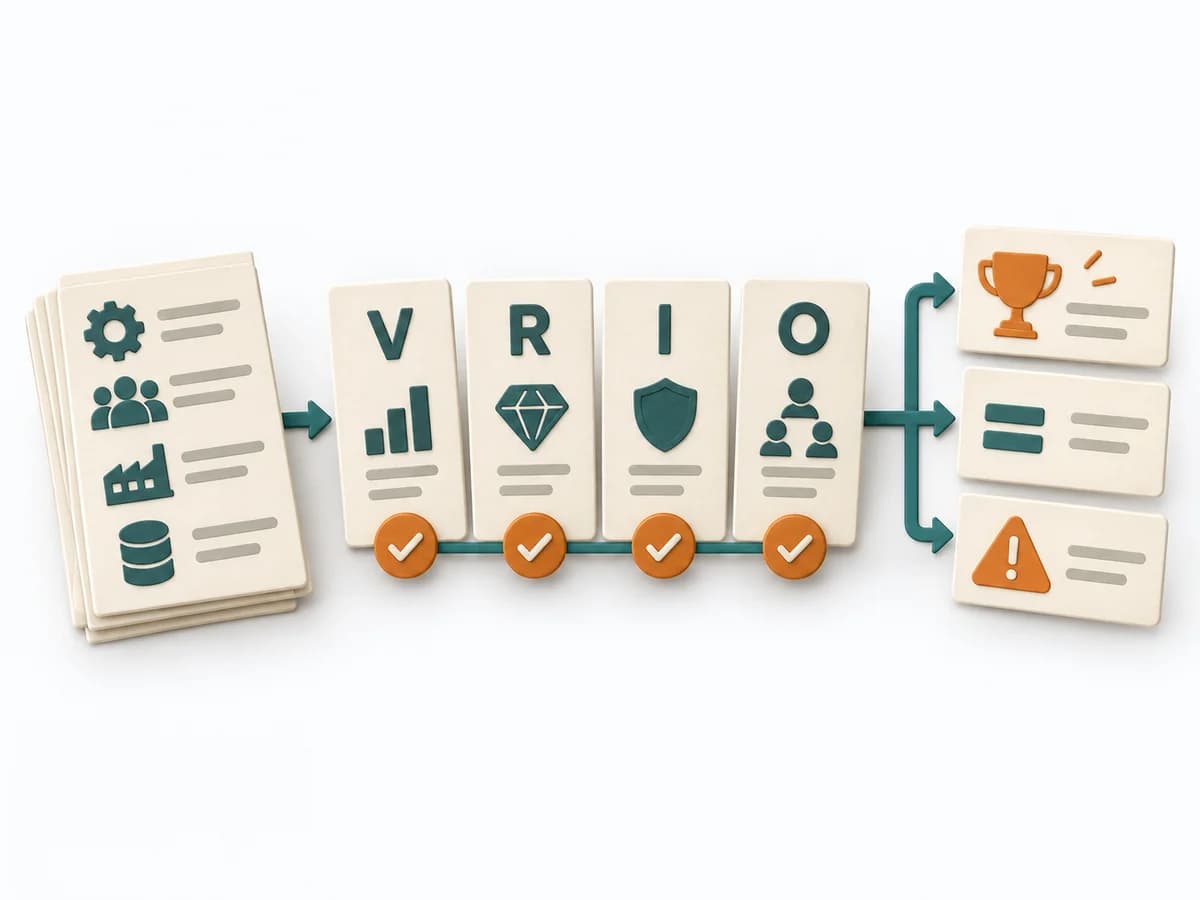 Business Strategy VRIO Framework |  Business Strategy Value Chain Analysis |  Team Design Team Topologies Interaction Modes |
|---|---|---|---|
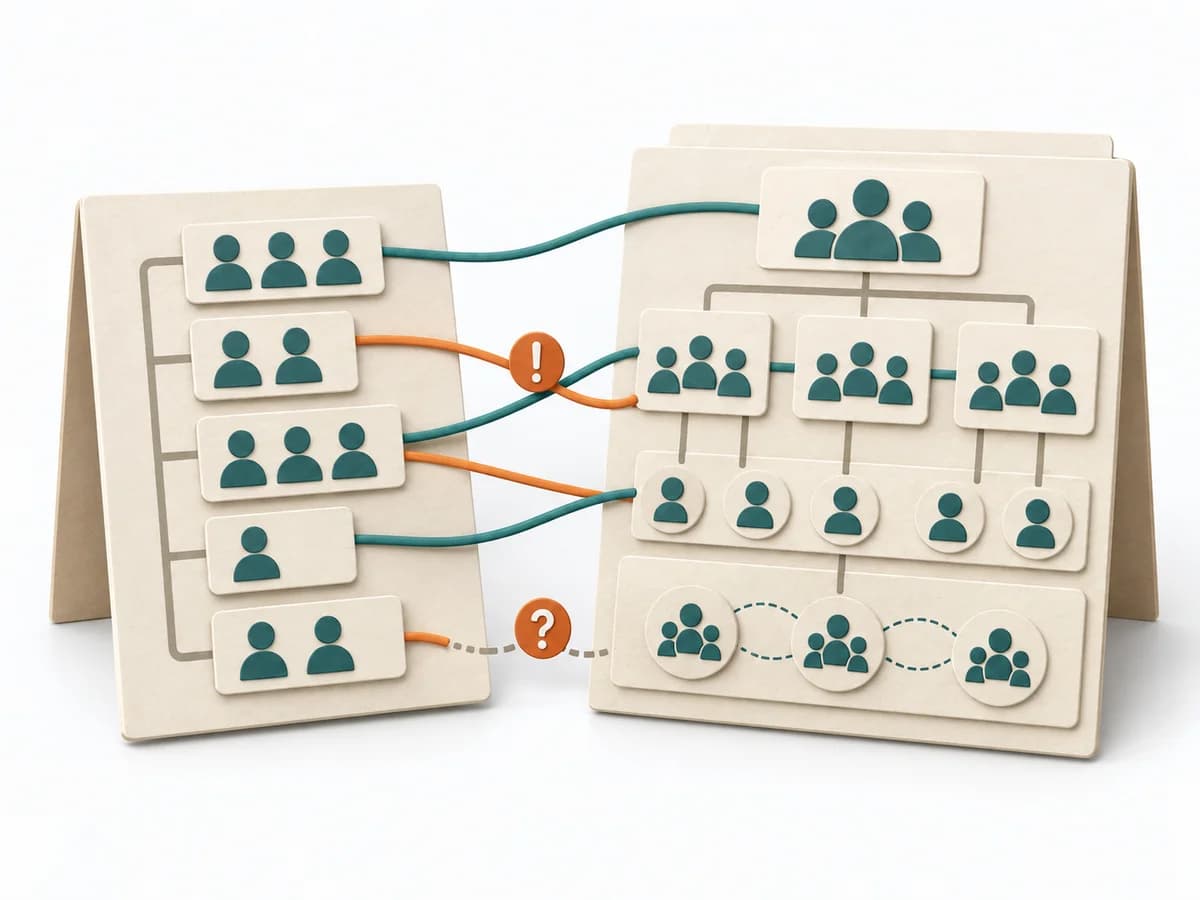
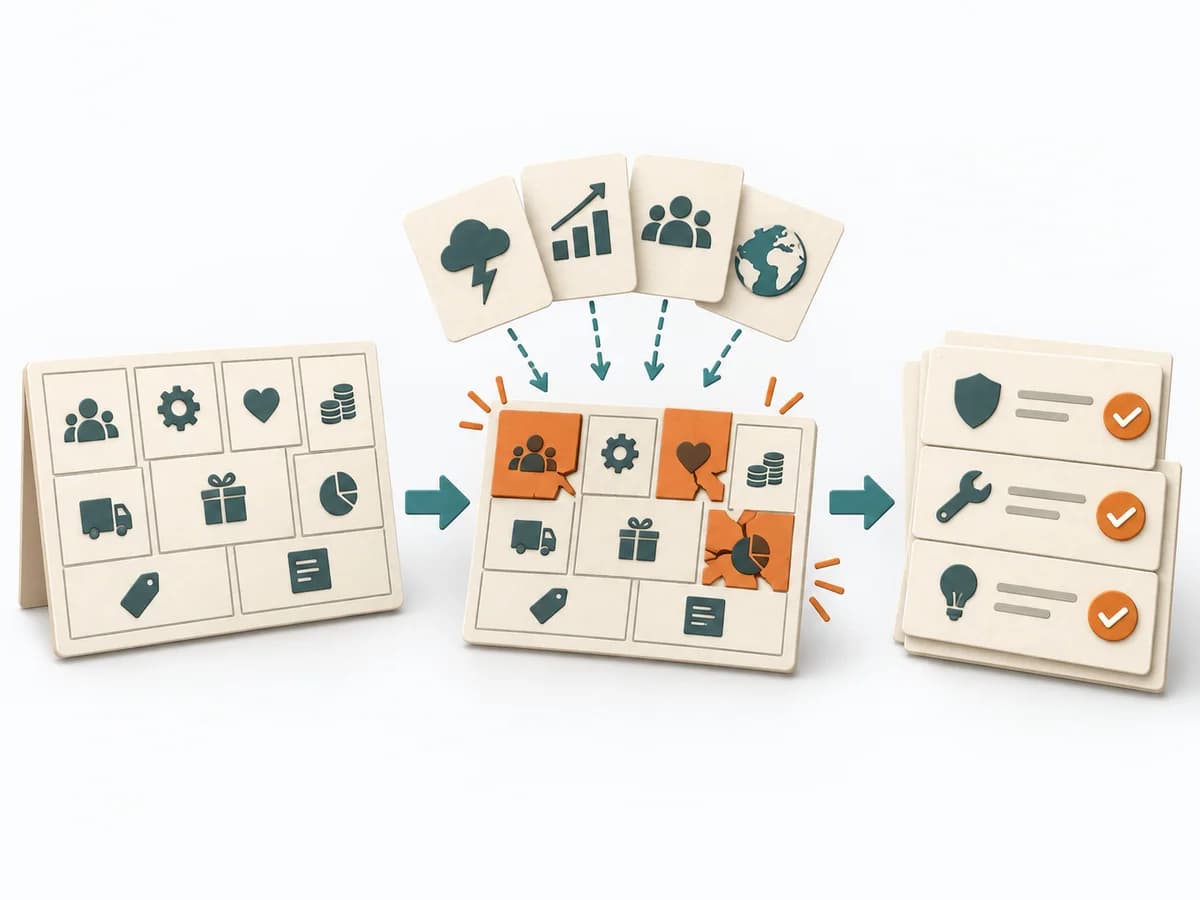
Purposedifferent | The VRIO Framework rates resources and capabilities on whether they are Valuable, Rare, Inimitable, and Organized. It compares strengths, risks, market logic, and courses of action. The result is captured as a VRIO table and strategic actions. | Value Chain Analysis shows where value is created, costs accrue, and differentiation becomes possible along the process. It compares strengths, risks, market logic, and courses of action. The result is captured as a value-chain map and lever list. | When several teams collaborate repeatedly, it describes the right interaction mode for each interface between them. It clarifies responsibility, interaction, and load between teams. The result is captured as an interaction heat map and pairwise agreements. |
Complexitydifferent | Medium | High | Medium |
Timedifferent | 90-180 min | Half day | Half day |
Participantsdifferent | 3-6 | 3-8 | Team-Leads plus Architecture |
Formatsame | Workshop | Workshop | Workshop |
Outputdifferent | VRIO Table, Strategic Actions | Value Chain Map, Lever List | Interaction Heat Map, Agreements per Pair |
Tagsno overlap | StrategyDiagnosisBusiness modelCapability | StrategyBusiness modelDiagnosisAnalysis | TeamAlignmentCollaborationOrganization |
Often compared together
Methods with strong topical overlap with the current selection, not yet in the comparison.