View methods side by side.
Choose up to four methods. Add them using the search and share the comparison by copying its link.
| Criterion |  UX Research User Interviews | 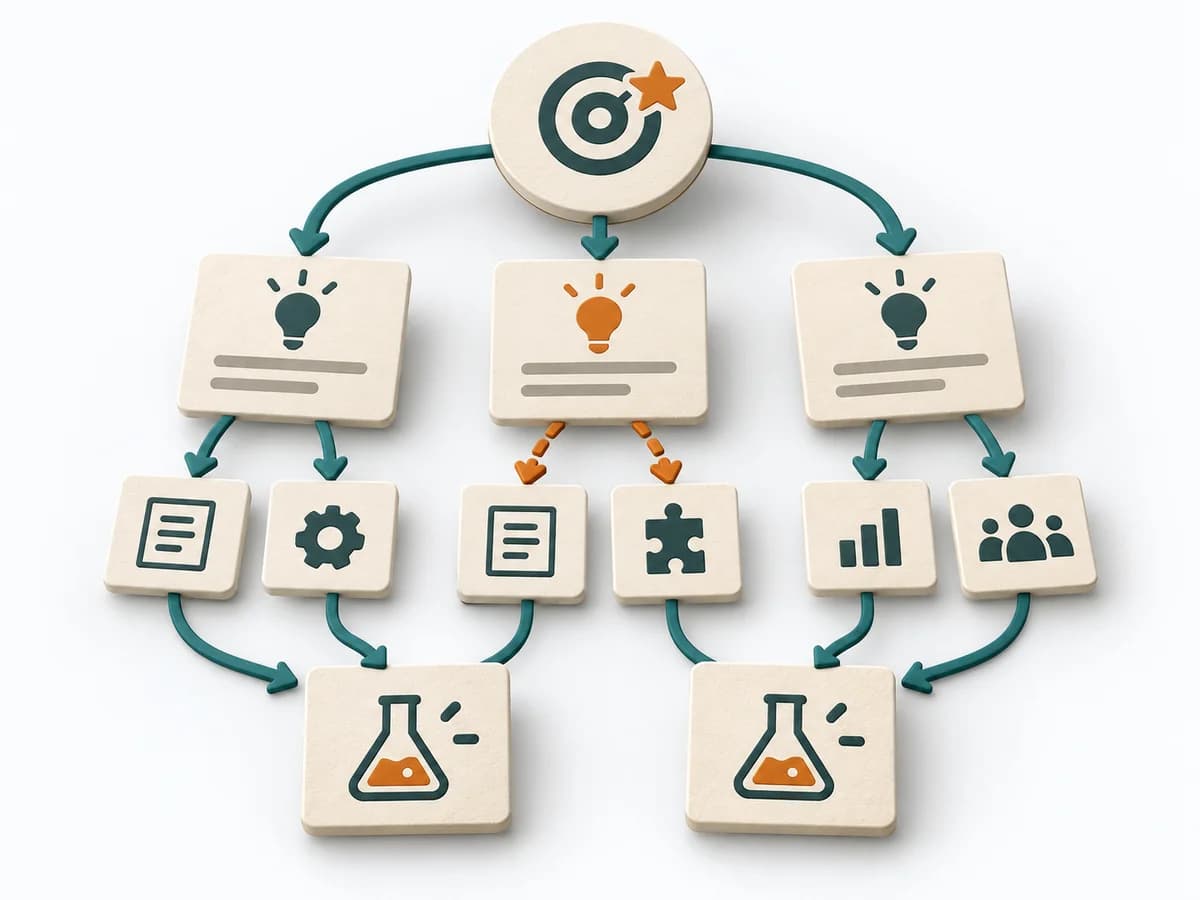 Product Discovery Opportunity Solution Tree | 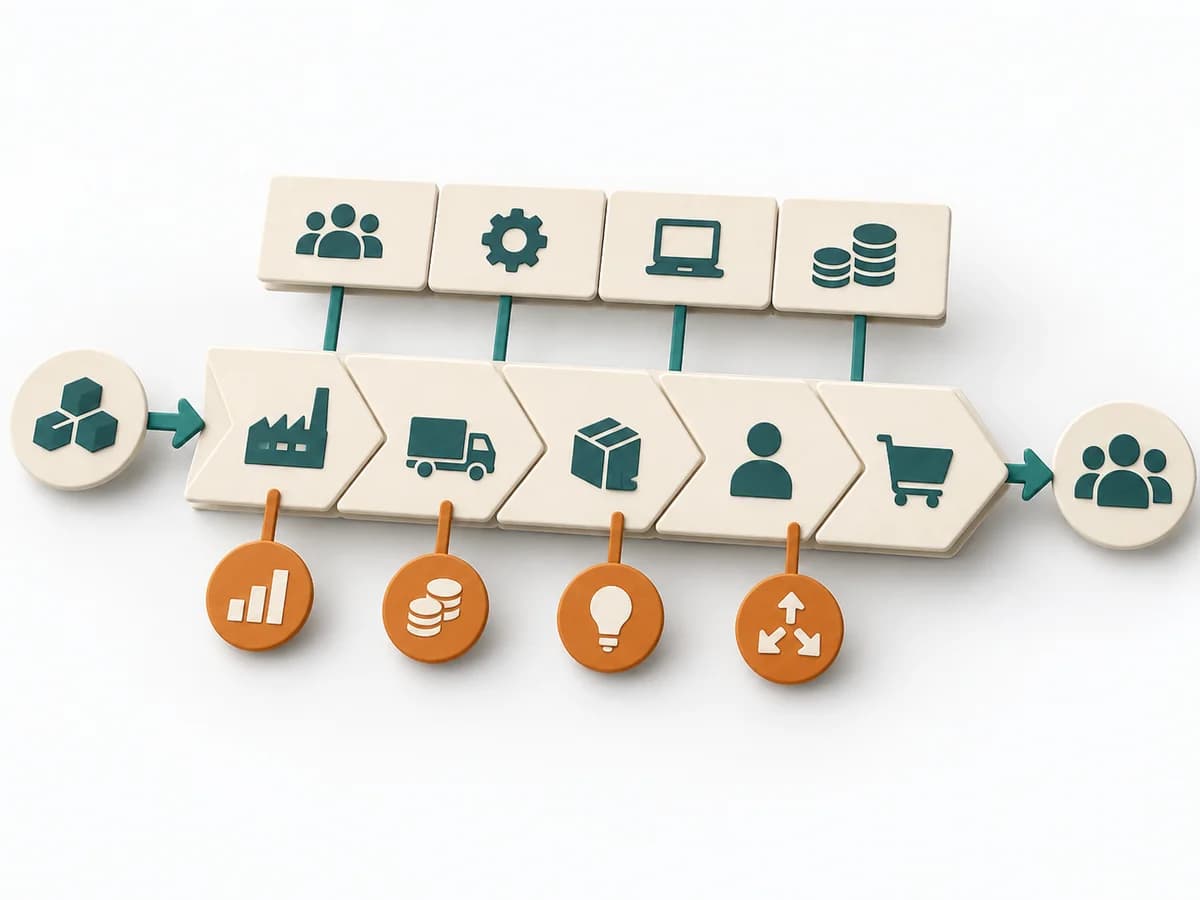 Business Strategy Value Chain Analysis |
|---|---|---|---|
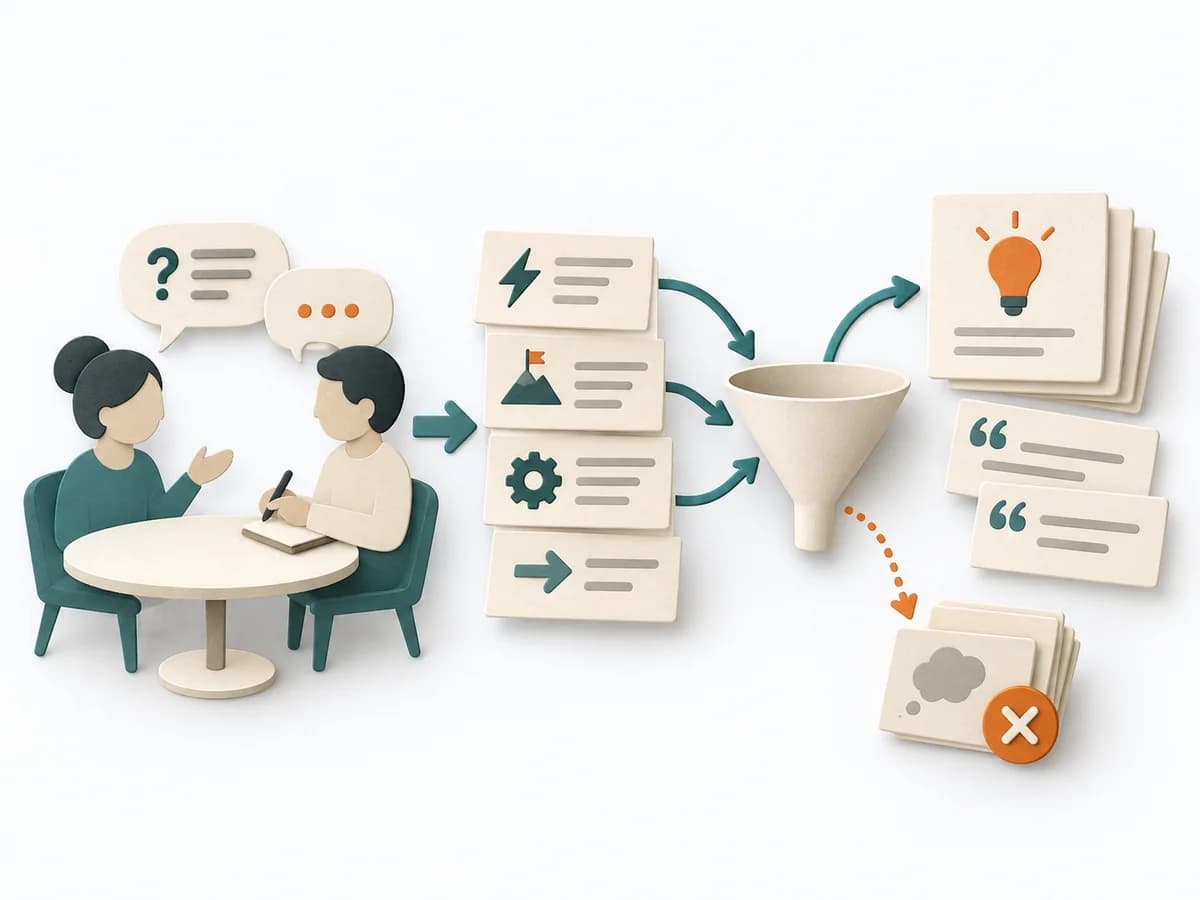
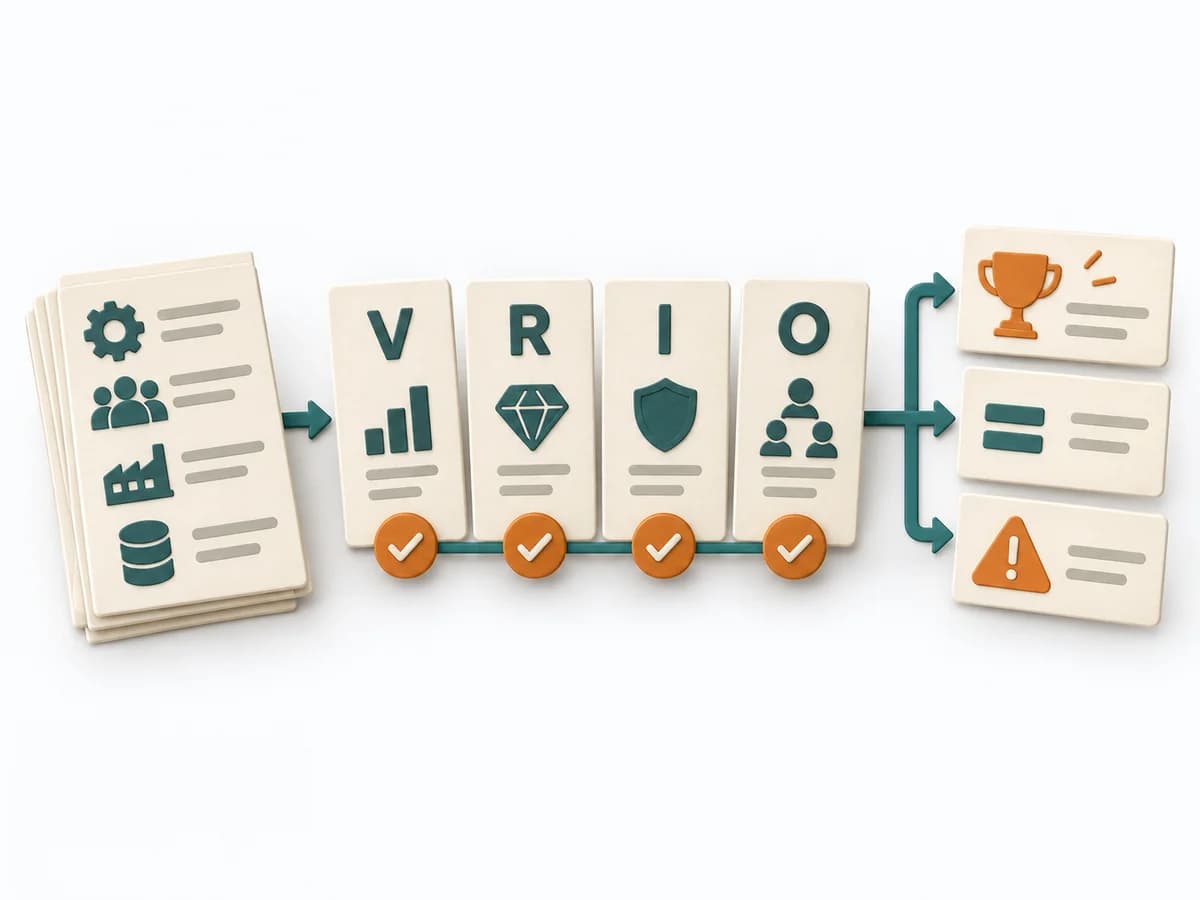
Purposedifferent | When teams derive needs only from assumptions and real motives are missing, user interviews give direct access to behavior and meaning. Conversations from the target group's everyday life make patterns, tensions, and open questions solidly visible. | When discovery keeps swinging between goals, ideas, and learning loops, it creates clear steering logic. It connects the desired outcome, opportunities, and experiments into a legible structure. | Value Chain Analysis shows where value is created, costs accrue, and differentiation becomes possible along the process. It compares strengths, risks, market logic, and courses of action. The result is captured as a value-chain map and lever list. |
Complexitydifferent | Low | Medium | High |
Timedifferent | 30–60 min per interview | 1-2 h Setup, laufend | Half day |
Participantsdifferent | 1 participant per interview | 2-6 | 3-8 |
Formatdifferent | Workshop + async | Workshop + async | Workshop |
Outputdifferent | Interview Notes, Themes, Insight Summary | Opportunity Solution Tree, Experiment Backlog, Learning Log | Value Chain Map, Lever List |
Tagsno overlap | QualitativeResearchCustomerDiscovery | DiscoveryOutcomesExperimentsOpportunity | StrategyBusiness modelDiagnosisAnalysis |
Often compared together
Methods with strong topical overlap with the current selection, not yet in the comparison.