View methods side by side.
Choose up to four methods. Add them using the search and share the comparison by copying its link.
| Criterion | 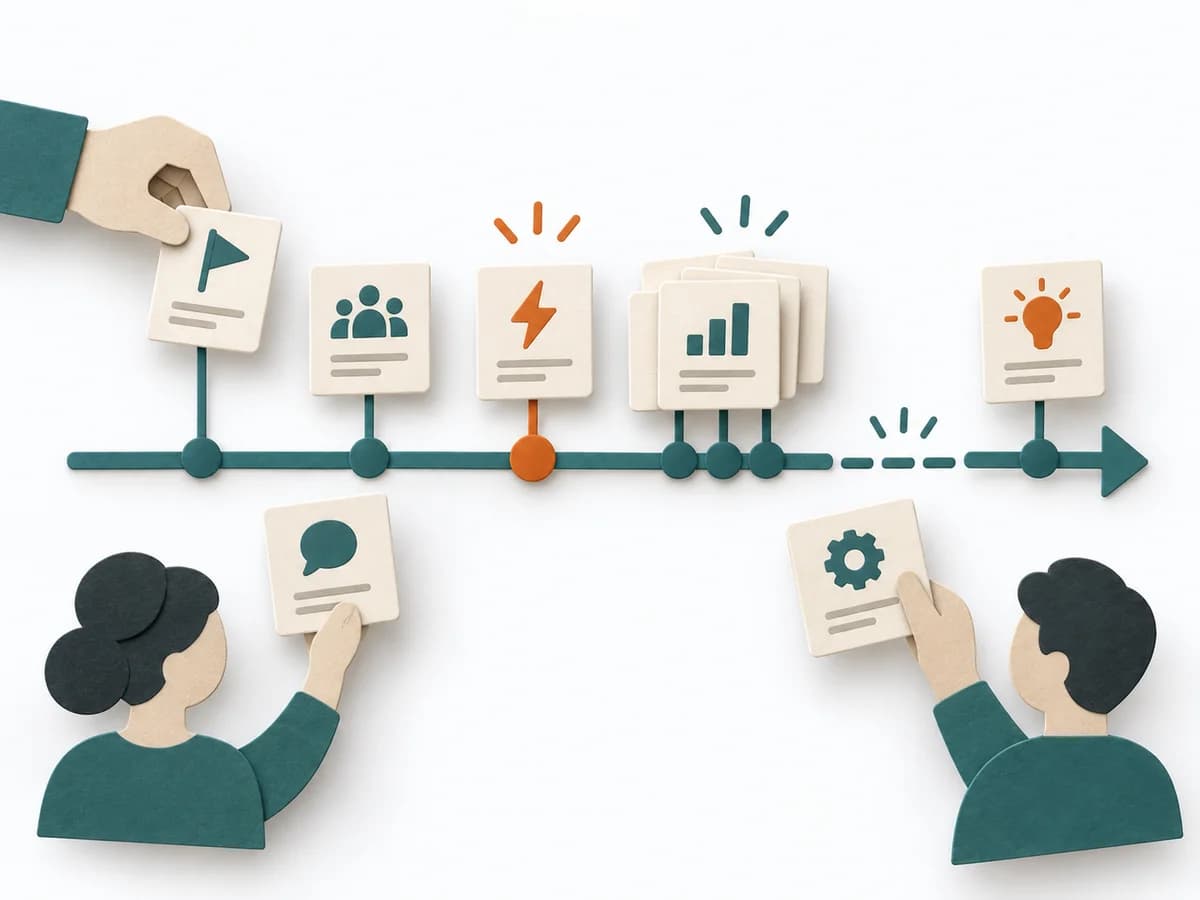 Facilitation Timeline | 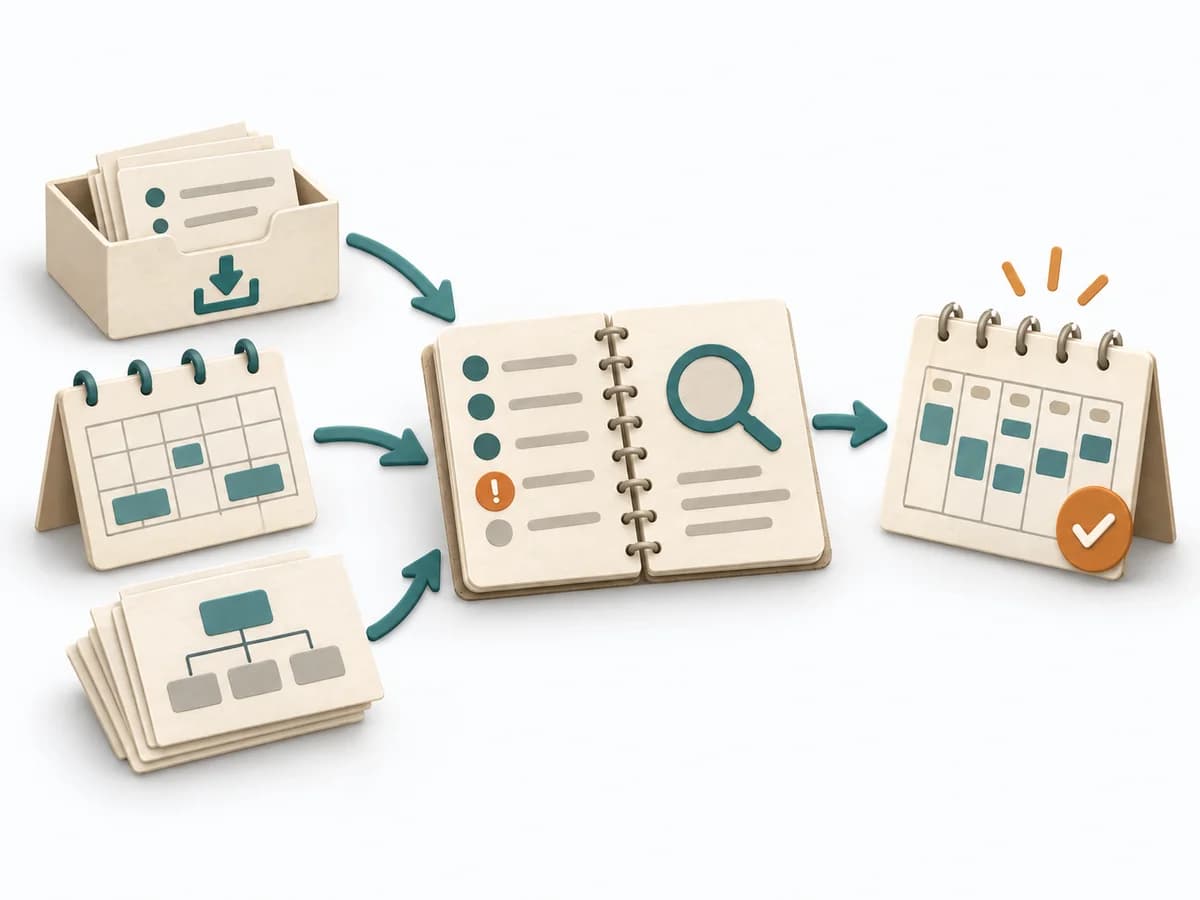 Operations Weekly Review |  Facilitation Stakeholder Mapping |
|---|---|---|---|
Purposedifferent | When a project, incident, or change process is only remembered in fragments, Timeline brings the sequence back into a readable form. It makes turning points, precursors, and after-effects recognizable over the course of time. | In a week with many open loops, the method creates distance from operational noise. It organizes commitments, calendar, and projects so the next week becomes workable. | When an initiative depends on many people, interests, and power dynamics, Stakeholder Mapping systematically orders the environment. It shows who influences, who is affected, and where relationship management or safeguarding matters first. |
Complexitysame | Low | Low | Low |
Timedifferent | 30-90 min | 30-60 min | 60–90 min |
Participantsdifferent | 2-12 | 1 | 2-8 |
Formatdifferent | Workshop + async | Async | Workshop + async |
Outputdifferent | Timeline, Milestones, Insight Notes | Updated Task System, Weekly Focus, Next Actions | Stakeholder Map, Engagement Plan, Risk Notes |
Tagsno overlap | TimelineFacilitationSequence | ProductivityExecutionPlanning | StakeholdersAlignmentFacilitationChange |
Often compared together
Methods with strong topical overlap with the current selection, not yet in the comparison.