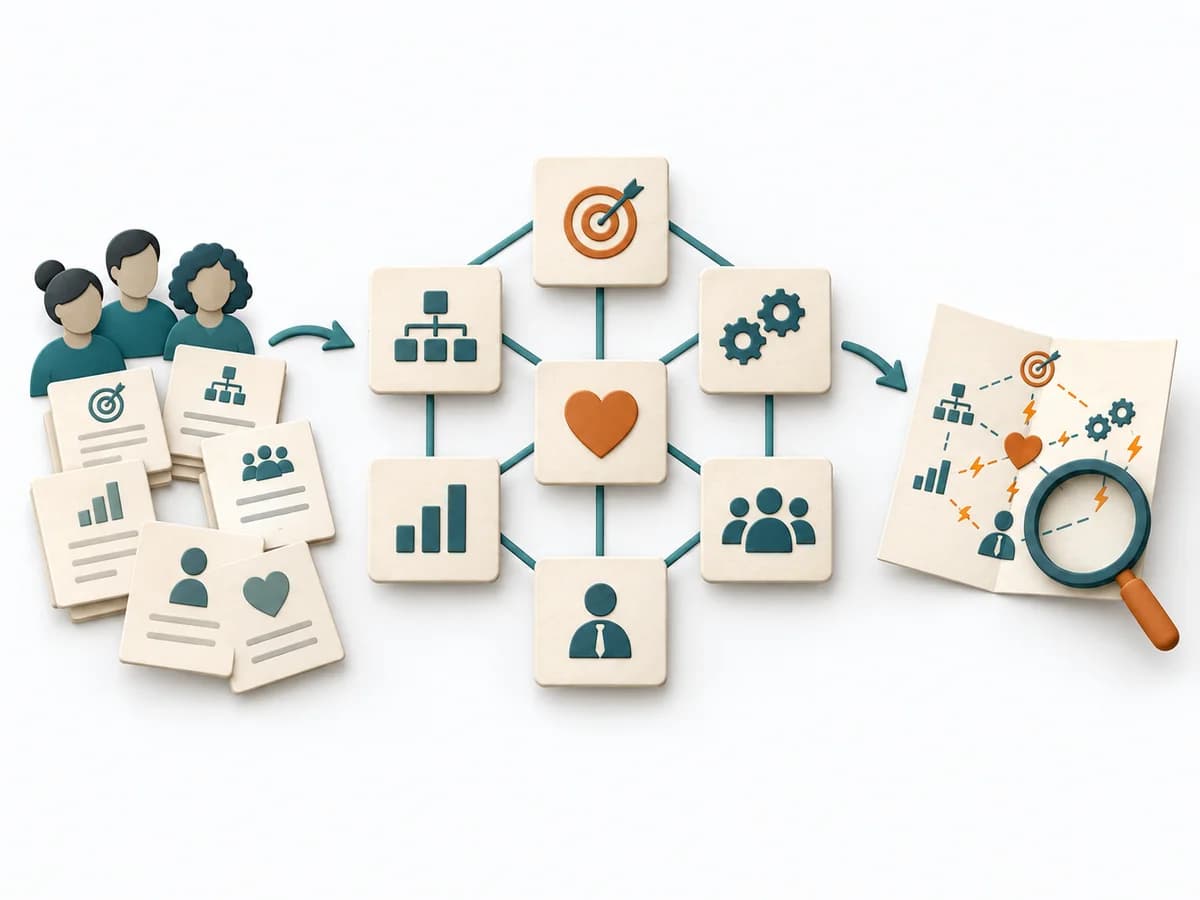
View methods side by side.
Choose up to four methods. Add them using the search and share the comparison by copying its link.
| Criterion |  Knowledge Modeling Teach-back |  Decision Making OODA Loop |  Facilitation Stakeholder Mapping |
|---|---|---|---|
Purposedifferent | Teach-back checks whether an explanation actually got through to the other person. The method makes misunderstandings visible early and strengthens shared understanding in advisory and learning situations. | In dynamic situations, decisions become outdated faster than they can be prepared. The OODA Loop holds observing, orienting, deciding, and acting together as a recurring rhythm so reaction does not slide into inertia. | When an initiative depends on many people, interests, and power dynamics, Stakeholder Mapping systematically orders the environment. It shows who influences, who is affected, and where relationship management or safeguarding matters first. |
Complexitydifferent | Low | Medium | Low |
Timedifferent | 5-20 min | 15-60 min je Zyklus | 60–90 min |
Participantsdifferent | 2-8 | 1-8 | 2-8 |
Formatsame | Workshop + async | Workshop + async | Workshop + async |
Outputdifferent | Understanding Check, Clarification Notes, Learning Gaps | Situation Assessment, Decision Loop, Action Updates | Stakeholder Map, Engagement Plan, Risk Notes |
Tagsno overlap | LearningUnderstandingCommunication | DecisionChangeLearningStrategy | StakeholdersAlignmentFacilitationChange |
Often compared together
Methods with strong topical overlap with the current selection, not yet in the comparison.