View methods side by side.
Choose up to four methods. Add them using the search and share the comparison by copying its link.
| Criterion | 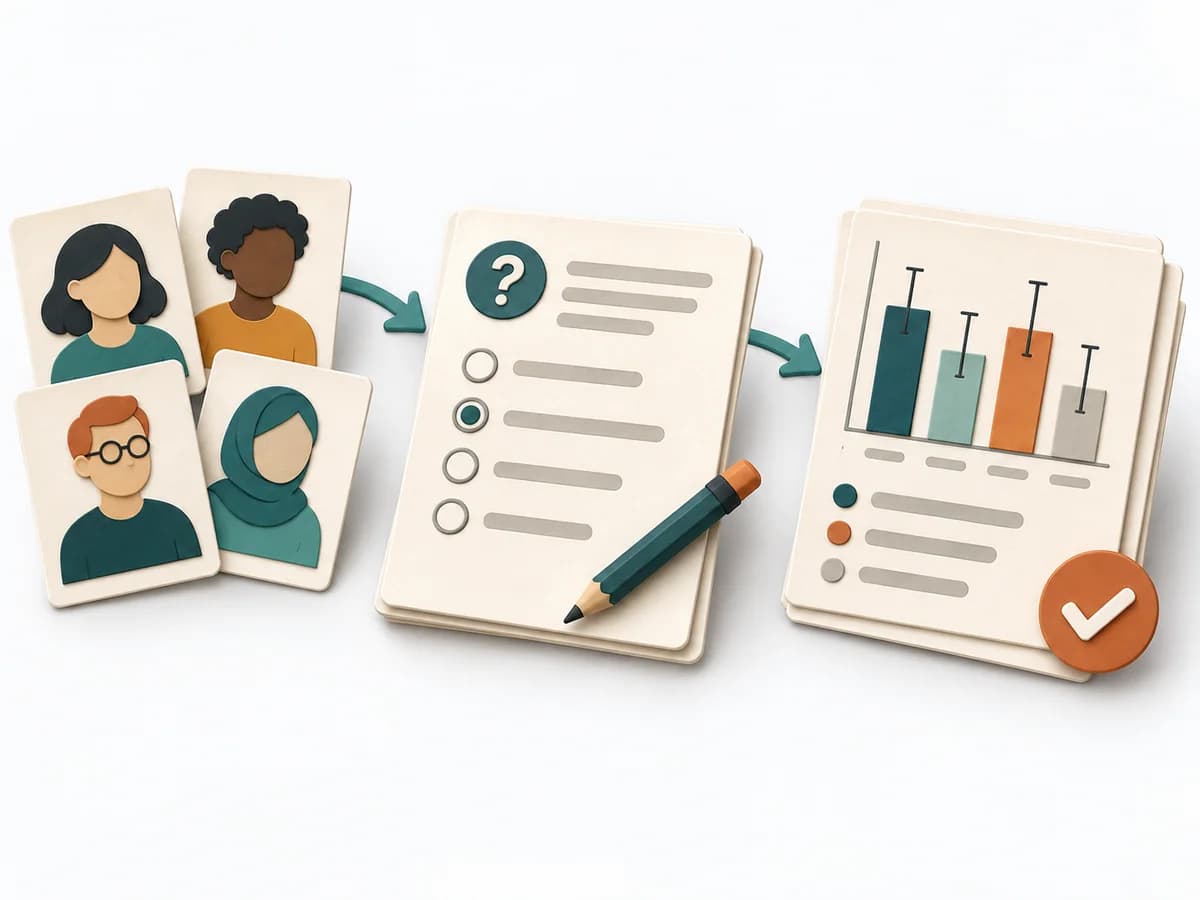 UX Research Surveys | 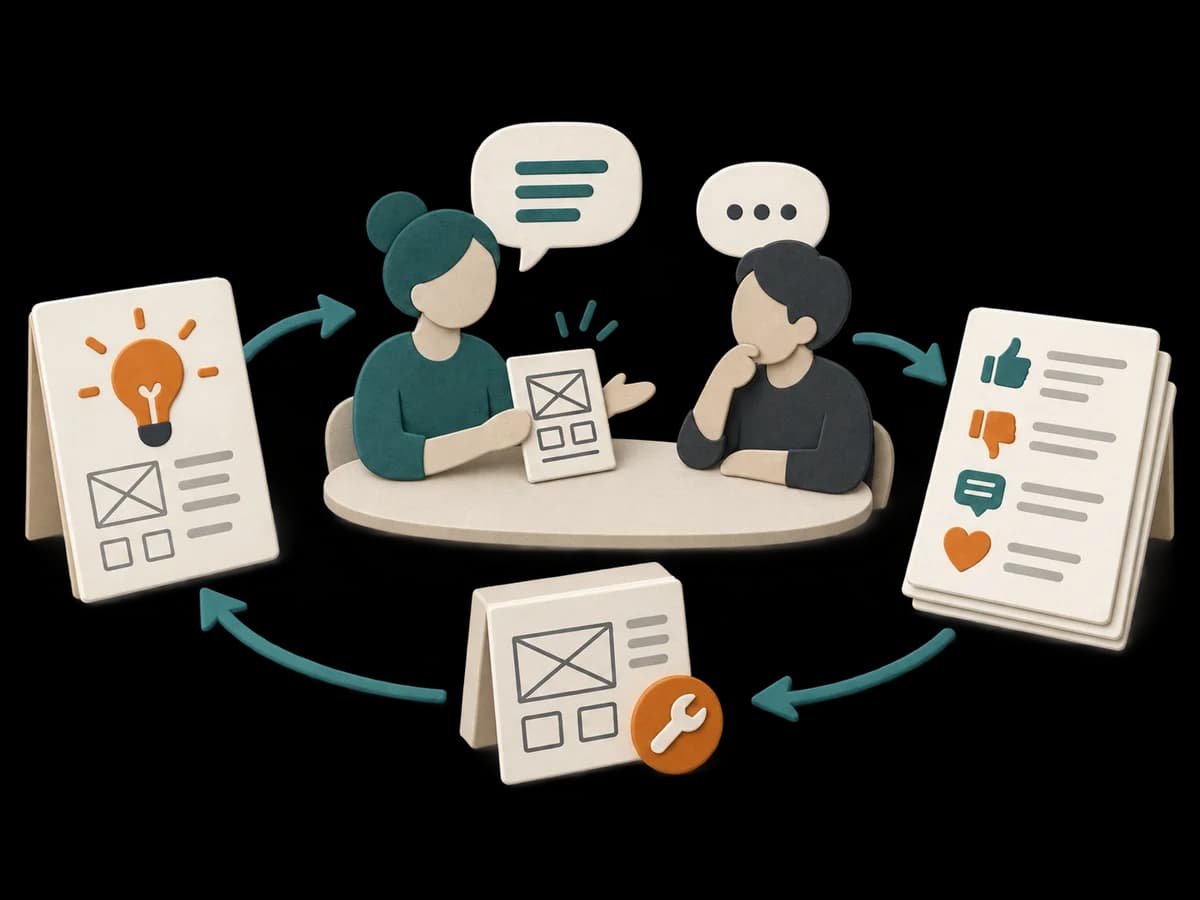 Product Discovery Solution Interview | 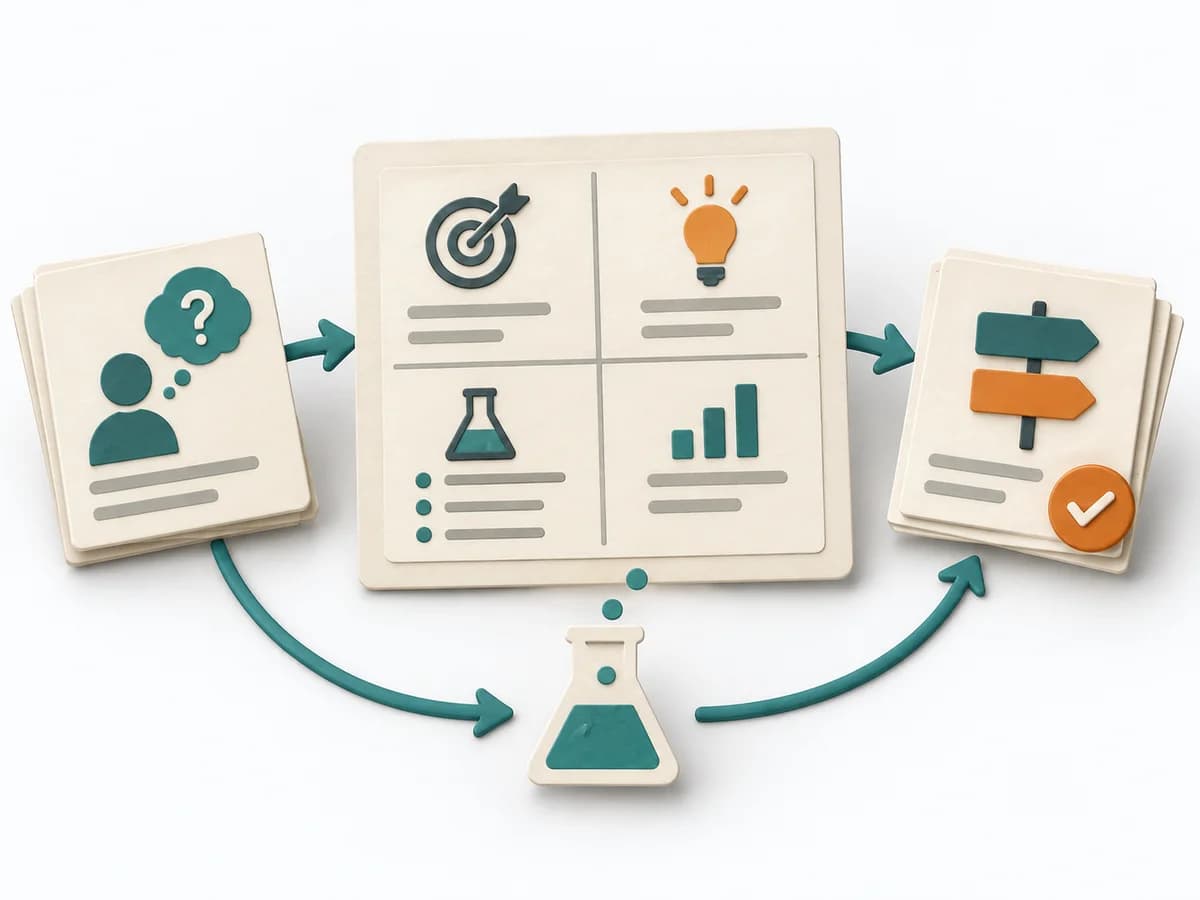 Product Discovery Experiment Canvas |
|---|---|---|---|
Purposedifferent | When a topic needs to be validated broadly and many people can answer the same question, surveys gather structured feedback in a scalable form. Answers become comparable and segmentable instead of remaining merely anecdotal. | When a solution idea is already on the table, it checks how it is understood and evaluated. It looks for resonance, objections, and missing fit early in the conversation. | When experiments become unreadable after the fact, it arranges hypothesis, signal, and learning goal on a single canvas. It separates problem, assumption, solution, and evidence. The result is captured as a Completed Experiment Canvas and a Success Metric. |
Complexitydifferent | Medium | Medium | Low |
Timedifferent | 3-14 Tage | 30-60 min je Interview | 30-60 min |
Participantsdifferent | 50+ | 5-10 Interviews | 1-5 |
Formatdifferent | Async | Workshop + async | Workshop + async |
Outputdifferent | Survey Results, Charts, Segment Insights | Solution Feedback, Objection List, Validation Notes | Completed Experiment Canvas, Success Metric |
Tags1 shared | QuantitativeResearchValidation | ValidationInterviewsPrototype | ExperimentsValidationDiscoveryHypothesis |
Often compared together
Methods with strong topical overlap with the current selection, not yet in the comparison.