View methods side by side.
Choose up to four methods. Add them using the search and share the comparison by copying its link.
| Criterion |  Agile Story Splitting | 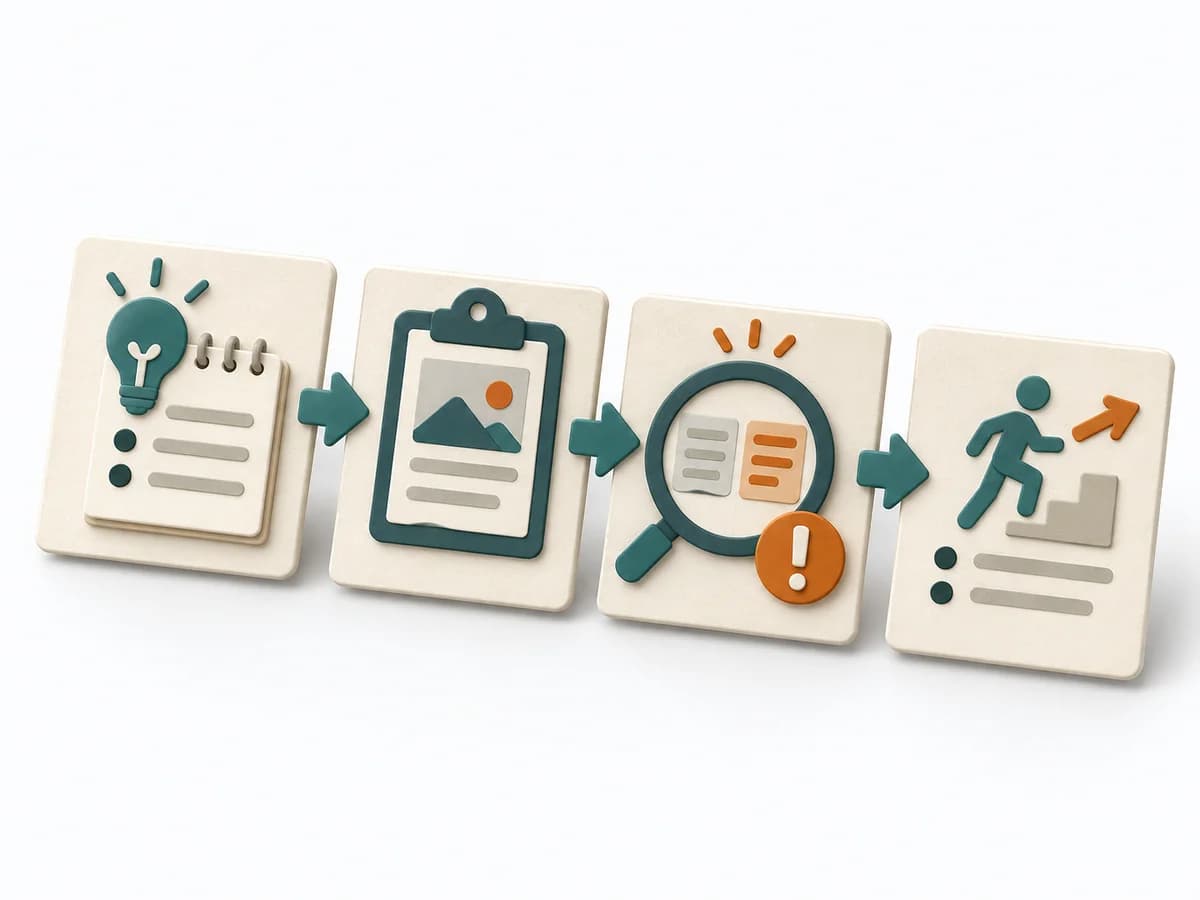 Operations After-Action Review | 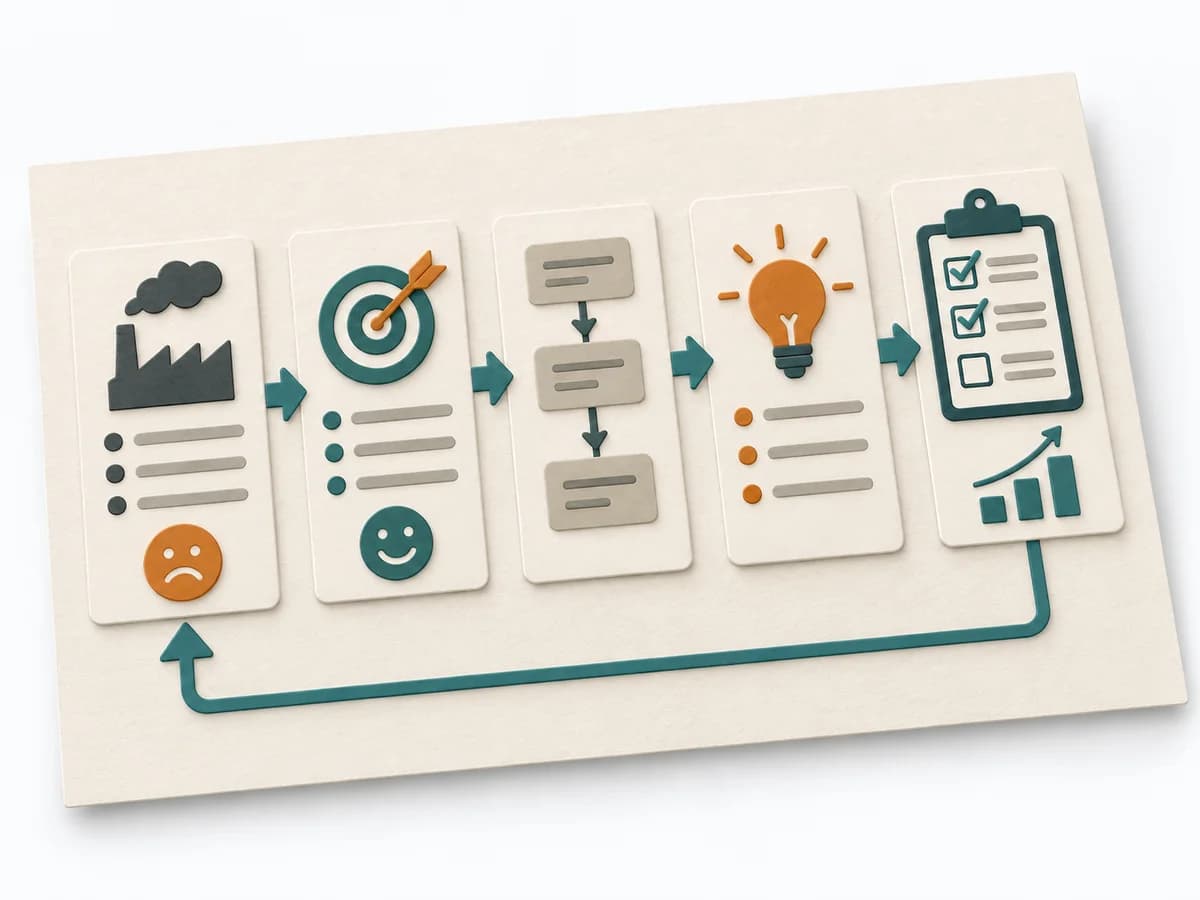 Operations A3 Problem Solving |
|---|---|---|---|
Purposedifferent | When a story becomes too large for a clean flow, it breaks scope down along value and risk. It shapes the work into a form that ships earlier and is easier to verify. | After missions or project phases with unclear outcomes, the method makes visible what actually happened and what can be learned from it. It separates course, effect, and causes so experience turns into solid improvement. | For a complex deviation with several people involved, the method bundles problem, analysis, and decision onto one page. It creates a shared working space where causes, countermeasures, and follow-up fit together. |
Complexitydifferent | Medium | Low | Medium |
Timedifferent | 30-60 min | 20-45 min | 45-90 min |
Participantsdifferent | 2-6 | 3-12 | 2-5 |
Formatsame | Workshop + async | Workshop + async | Workshop + async |
Outputdifferent | Smaller Stories, Acceptance Criteria, Split Rationale | Lessons learned, Action items, Event summary | A3 Report, Action Plan, Root Cause Analysis |
Tagsno overlap | BacklogIterationDelivery | LearningOperationsImprovement | LeanProblem solvingCoachingOperations |
Often compared together
Methods with strong topical overlap with the current selection, not yet in the comparison.