View methods side by side.
Choose up to four methods. Add them using the search and share the comparison by copying its link.
| Criterion | 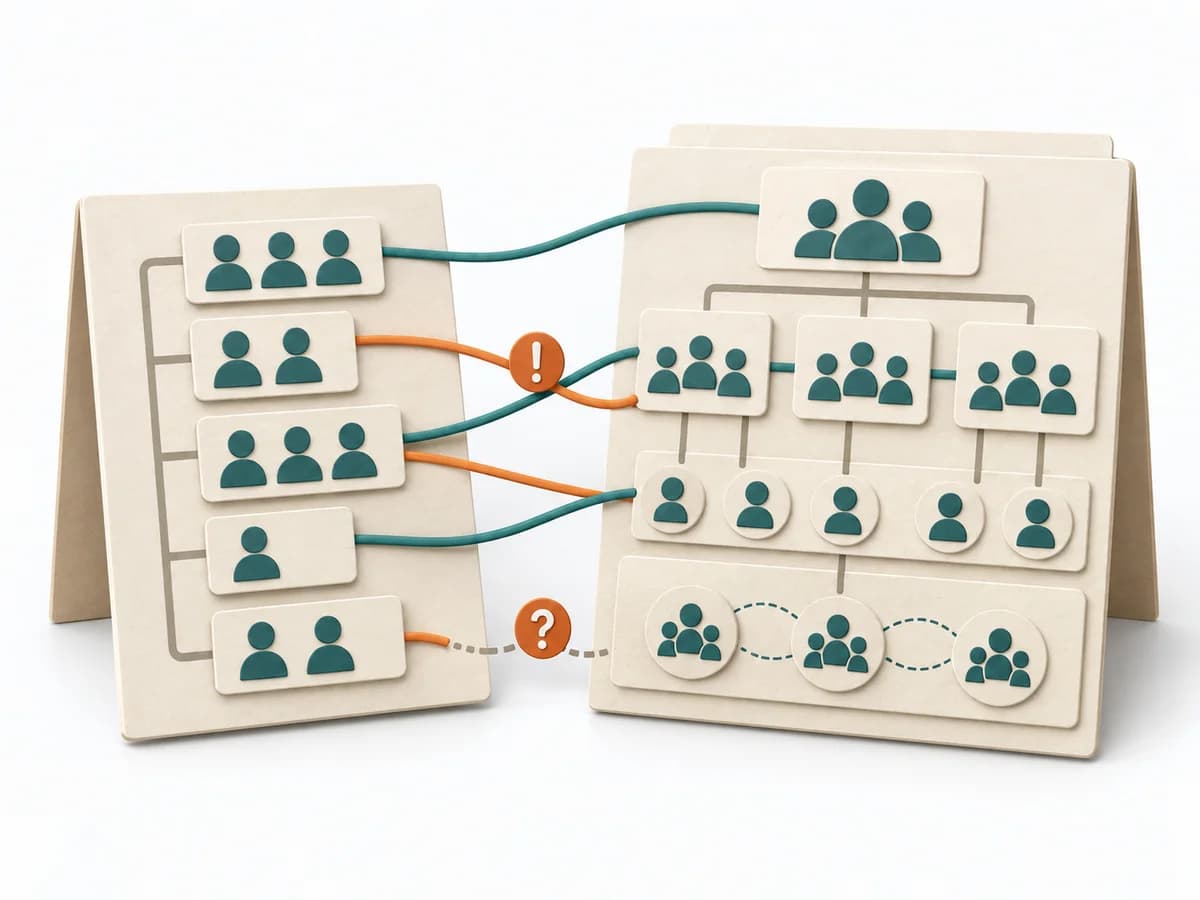 Team Design Spotify Model Mapping | 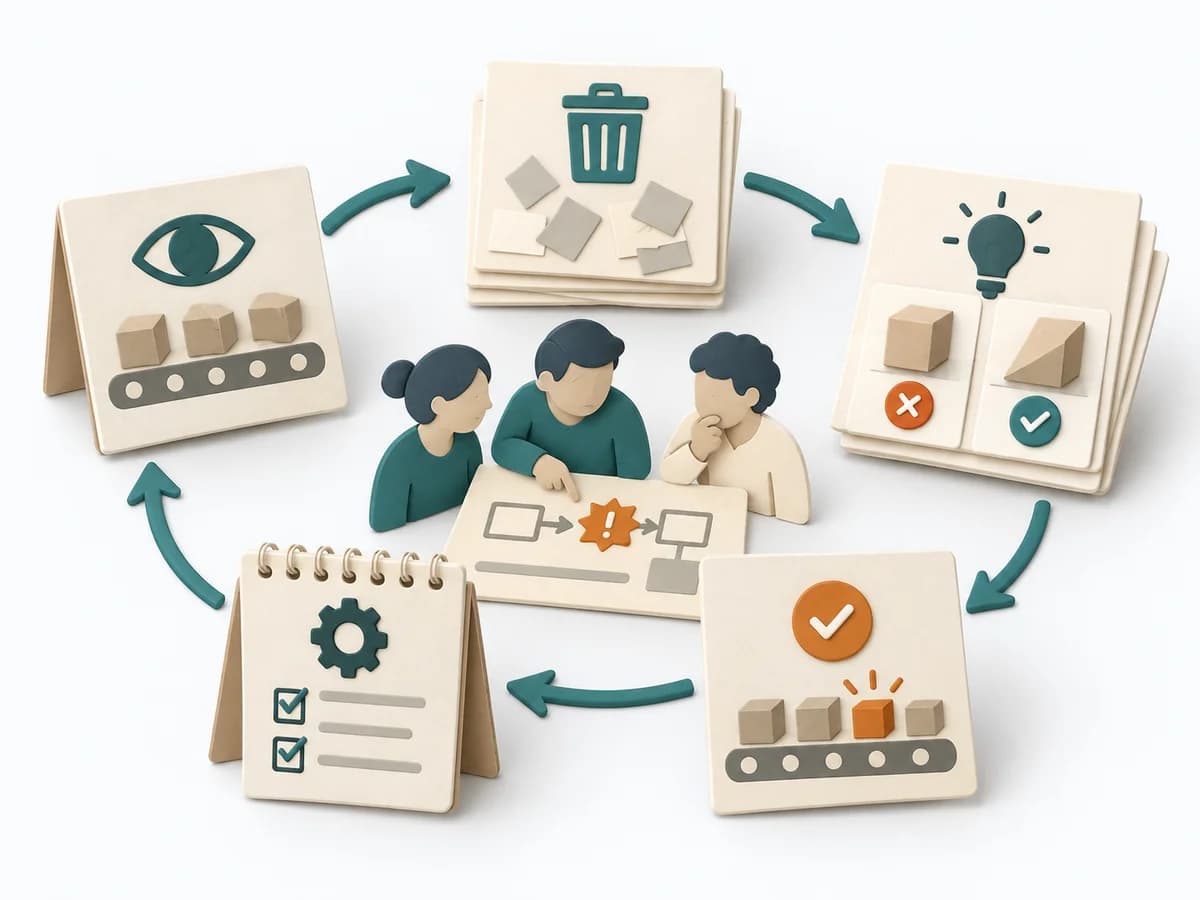 Operations Kaizen Event |  Operations 5 Whys |
|---|---|---|---|
Purposedifferent | When a team landscape has grown without clear grouping, it maps roles and relationships onto the Spotify model. It clarifies responsibility, interaction, and load between teams. The result is captured as a Spotify model map and action list. | For a tightly scoped process segment with noticeable waste, the method bundles shared energy for change. It suits situations that call for fast learning loops and visible adjustments. | For a single, hard-to-explain deviation, the method exposes the causal chain behind the visible symptom. It keeps the cause open until a controllable condition emerges instead of a mere description. |
Complexitydifferent | Medium | Medium | Low |
Timedifferent | 90-180 min | 0.5-5 Tage | 15-30 min |
Participantsdifferent | 5-15 | 4-10 | 2-6 |
Formatsame | Workshop | Workshop | Workshop |
Outputdifferent | Spotify Model Map, Action List | Kaizen Charter, Waste List, Improvement Experiments, Standard Work Update | Root cause notes, Countermeasures |
Tagsno overlap | TeamOrganizationAlignmentDiagnosis | LeanContinuous improvementOperations | Root causeIncidentLeanProblem solving |
Often compared together
Methods with strong topical overlap with the current selection, not yet in the comparison.