View methods side by side.
Choose up to four methods. Add them using the search and share the comparison by copying its link.
| Criterion | 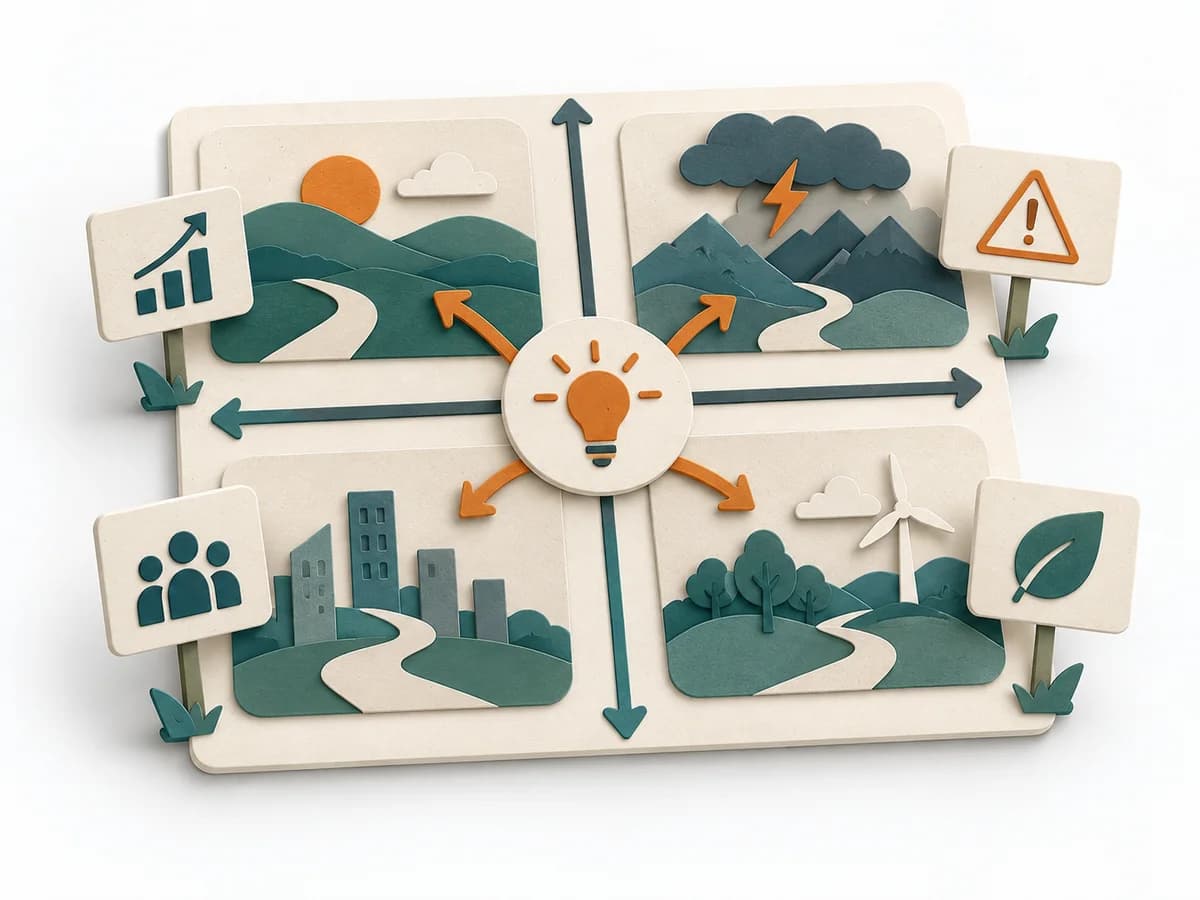 Business Strategy Scenario Planning |  Product Discovery Assumption Mapping | 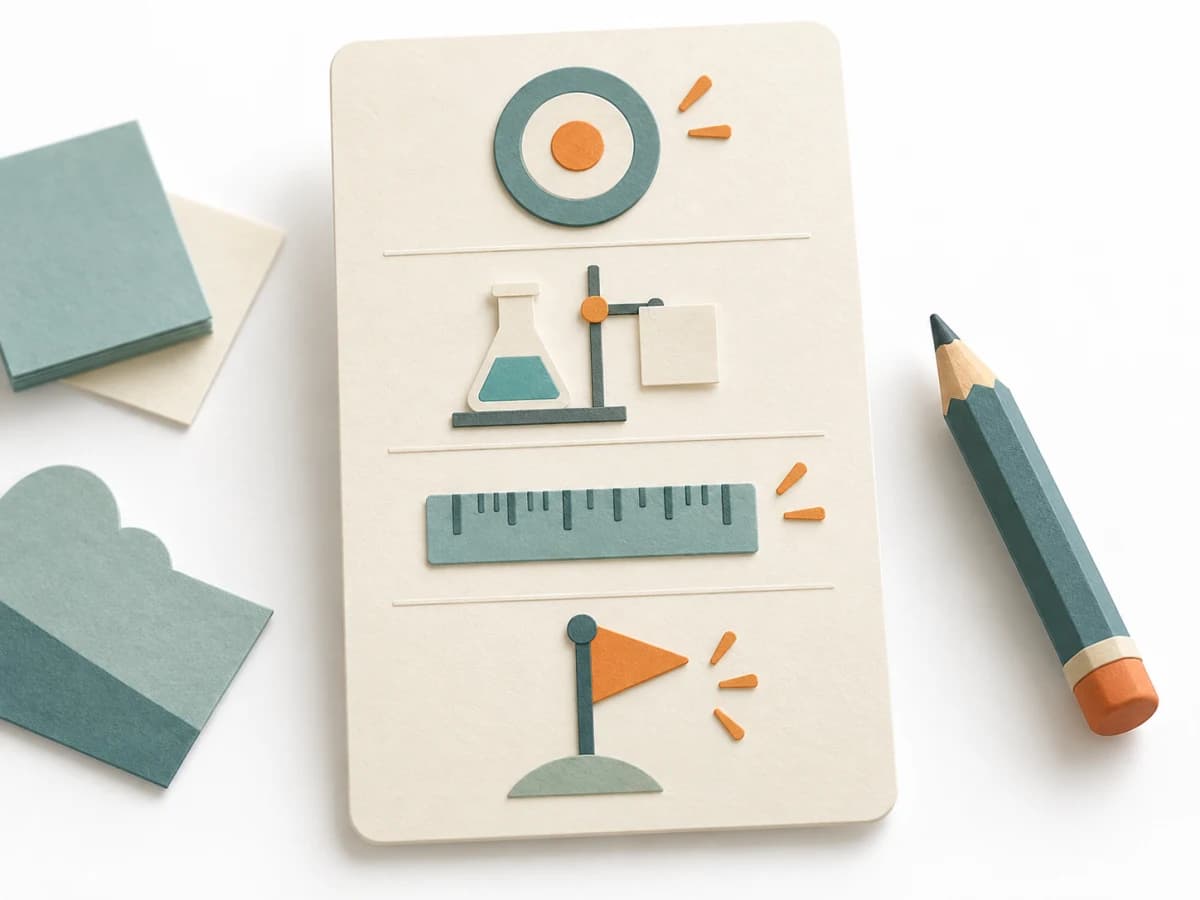 Product Discovery Test Card |
|---|---|---|---|
Purposedifferent | Scenario Planning opens the view to several plausible futures instead of a single forecast. The method protects strategies from depending on too narrow an expected path. | When assumptions still sit unordered in the room, it weighs uncertainty against leverage. It makes visible which hypotheses should be checked first. | The Test Card turns a critical assumption into a testable claim and specifies in advance which result counts as success. |
Complexitydifferent | High | Medium | Low |
Timedifferent | 0.5-2 Tage | 45-60 min | 20-35 min |
Participantsdifferent | 4-12 | 2-8 | 1-5 |
Formatdifferent | Workshop | Workshop + async | Workshop + async |
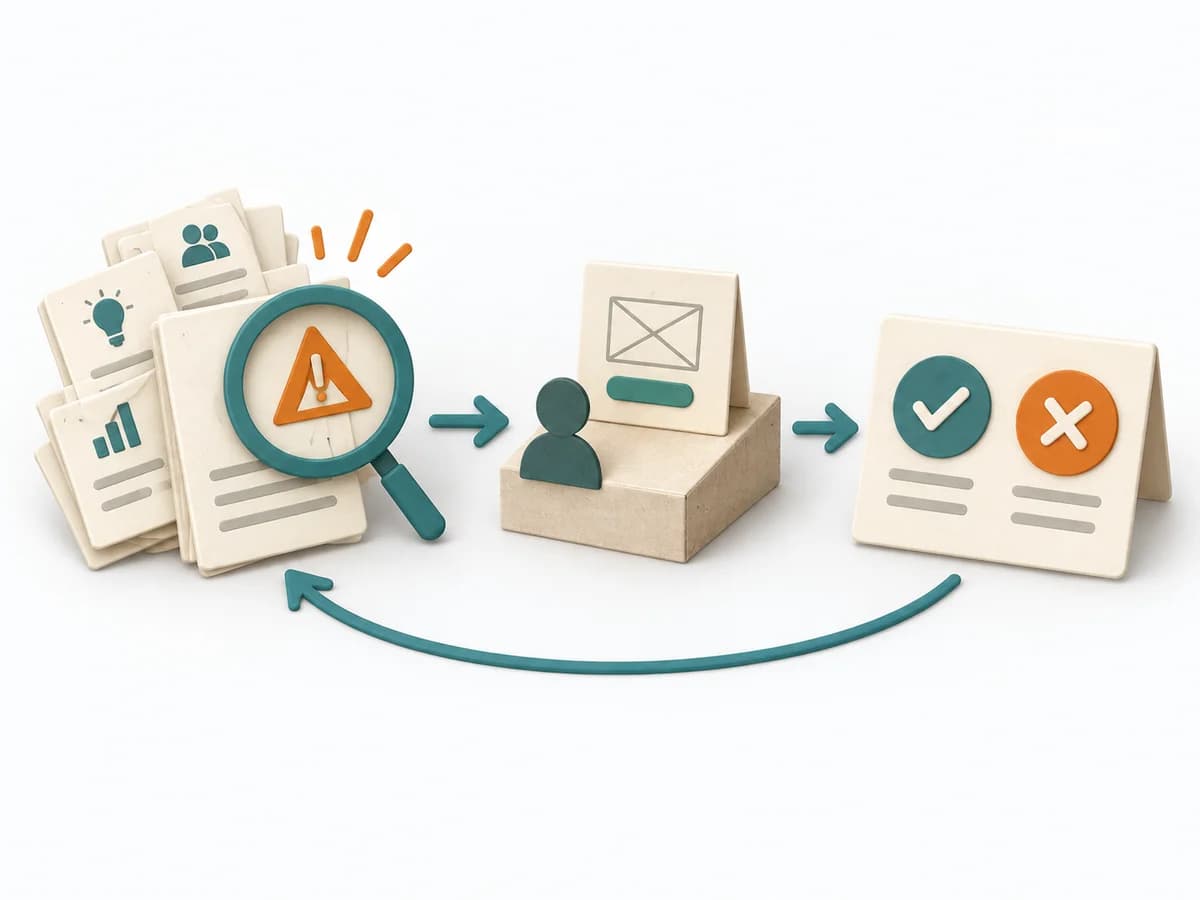
Outputdifferent | Scenario Set, Strategic Implications, Robust Options | Assumption map, Test backlog, Risk ranking | Test Card with a pre-set threshold |
Tagsno overlap | StrategyUncertaintyPlanning | AssumptionsRiskExperimentsValidation | ExperimentsValidationDiscoveryHypothesis |
Often compared together
Methods with strong topical overlap with the current selection, not yet in the comparison.